“I was not sorry when my brother Nhamo died. Perhaps I was insensitive, but I was not sorry.”
— The opening lines of the novel, establishing Tambu's detached perspective on her brother's death.


Tsitsi Dangarembga (1988)
Genre
Historical Fiction
Reading Time
240 min
Key Themes
See below
Sign in to track this book
In colonial Rhodesia, Tambudzai seeks education at a mission school, where she sees her Westernized cousin, Nyasha, struggle under cultural displacement and patriarchal control, leading to a tragic breakdown.
The story begins with Tambudzai (Tambu) thinking about her brother Nhamo's death. Nhamo was the favored son in their rural family, set to get a mission school education paid for by their rich uncle, Babamukuru. Tambu, smart and ambitious, expects a life of domestic work and limited chances, common for girls in her village. Nhamo's sudden death from mumps, however, creates an open spot. Tambu, who had already shown her drive by growing and selling maize to pay for her own schooling, sees a chance to attend the mission school in his place. Her mother, Ma'Shingayi, strongly opposes this, fearing education will separate Tambu from her family and traditions, as it has done to others.
After Nhamo's death, Babamukuru, the respected headmaster of the mission school, offers to pay for Tambu's education. This decision gets mixed reactions from her family; her father, Jeremiah, sees the benefits, but Ma'Shingayi stays worried. Tambu is happy to leave her poor home, though she feels a bit guilty leaving her mother and younger siblings. At the mission, she is struck by the difference between her old life and this new one. The mission house, with its running water, electricity, and plenty of food, seems like a dream. She meets her aunt, Maiguru, and her cousins, Nyasha and Chido, who recently returned from five years in England. Tambu wants to experience everything mission life offers, believing it is her future.
Tambu quickly notices the tension in Babamukuru's home. Nyasha, her cousin, is very independent and openly challenges her father, a behavior considered shocking in Shona culture. Having lived in England for five years, Nyasha struggles to fit back into Zimbabwean society and resents her father's strict, patriarchal rules. She often argues with Babamukuru, questioning his choices and expressing frustration with the submissive role expected of women. These arguments disturb Tambu, who was taught to respect elders without question. Tambu initially criticizes Nyasha, seeing her as disrespectful, but also finds herself interested in Nyasha's bravery and curiosity. Nyasha's rebellions often end with Babamukuru physically punishing her, showing the deep cultural divide.
Tambu starts to see her Aunt Maiguru's quiet unhappiness. Despite having a Master's degree and working as a teacher, Maiguru has little financial freedom, as Babamukuru controls all the family's money. She often defers to her husband, even when she disagrees with him, and silently endures his emotional abuse and infidelity. In one incident, Maiguru briefly leaves the mission after a humiliating argument with Babamukuru, only to return a few days later, seemingly defeated. This event deeply affects Tambu, who starts to question the real value of education for women if it does not give them independence and respect. She begins to see that even in the 'modern' mission, traditional patriarchal structures oppress women, regardless of their education.
Babamukuru insists that Tambu's parents, Jeremiah and Ma'Shingayi, have a Christian wedding, despite having been traditionally married for decades. This event is meant to legitimize their union to the church and 'civilize' them. Tambu finds the preparations and ceremony humiliating and fake. Her parents are uncomfortable and awkward, dressed in ill-fitting Western clothes, and treated as charity cases by the mission community. Ma'Shingayi is especially upset, feeling her traditional marriage and identity are being invalidated. Tambu, watching, feels a deep shame for her parents and growing disappointment with Westernization, seeing how it takes away their dignity instead of improving it. The wedding symbolizes colonial values replacing indigenous ones.
Tambu does well academically at the mission school, proving to be a diligent and smart student. Her success pleases Babamukuru, who sees her as a model student, unlike his own daughter, Nyasha. However, her academic achievements come with a price. The more she fits into the mission's educated world, the more she feels separate from her original family and their rural life. Visits home become harder, as she finds their poverty and traditional ways foreign and even embarrassing. Her mother, Ma'Shingayi, resents Tambu's growing distance and the subtle ways Tambu now judges their life. Tambu's success creates a gap between her and her past, leaving her caught between two worlds, belonging to neither.
Nyasha's internal conflict and rebellion grow, showing up as a severe eating disorder and mental distress. She withdraws more, suffering from insomnia, nightmares, and extreme mood swings. Her arguments with Babamukuru become more frequent and violent, often ending in physical fights. Tambu, initially cautious, grows closer to Nyasha, seeing her cousin's deep suffering and understanding the source of her pain: the struggle to balance her Western upbringing with the expectations of her Shona culture and her father's control. Nyasha's body becomes a battleground for these conflicting forces, as she starves herself, showing the destructive effect of cultural separation and patriarchal oppression on young African women.
Tambu's academic success earns her a scholarship to the Sacred Heart convent school, an even more elite place than the mission. This chance excites her, promising more advancement. However, this time also sees a severe decline in Nyasha's health. Nyasha's eating disorder and mental pain reach a breaking point, resulting in a complete breakdown. She is hospitalized, suffering from severe malnutrition and psychological trauma. Tambu is deeply affected by Nyasha's suffering, realizing the heavy cost of cultural displacement and the pressures on women. Nyasha's illness is a warning to Tambu about the dangers of seeking Western education and assimilation without a strong sense of self and cultural identity.
Tambu goes to Sacred Heart, initially feeling free. The convent school is mostly white, and Tambu finds herself in an environment where the traditional gender roles and expectations of her Shona culture are less openly enforced. She experiences a different kind of freedom, especially intellectual freedom, and begins to question many of her assumptions about her family and society. She thinks about Nyasha's suffering and her own journey, starting to understand the complexities of colonialism, patriarchy, and the search for identity. While still seeking education, Tambu begins to see the limits and biases within the Western education system itself. She starts to find her own path, seeking to combine her past and future, her African heritage and her intellectual goals.
At Sacred Heart, Tambu's critical awareness fully forms. She begins to analyze the 'nervous conditions' that have affected her family and community: the psychological and cultural harm from colonialism and patriarchy. She thinks about her mother's resignation, Maiguru's silent pain, and Nyasha's tragic breakdown. She recognizes them as different results of the same systemic oppression. Tambu realizes that simply getting an education is not enough; she must also understand and challenge the systems that limit women's lives. The novel ends with Tambu on the edge of adulthood, having gained a deep understanding of herself and her world. She is determined to create an identity that is both educated and authentically African, refusing to give in to the 'nervous conditions' that have harmed the women before her.
The Protagonist
Tambu evolves from an innocent, aspirational girl into a critically conscious young woman who questions the very systems she once admired, seeking a balanced identity between her Shona heritage and Western education.
The Supporting/Tragic Figure
Nyasha's arc is one of increasing internal and external conflict, culminating in a severe mental and physical breakdown, serving as a cautionary tale and catalyst for Tambu's own awakening.
The Antagonist/Head of Family
Babamukuru remains largely static, representing the entrenched patriarchal structures and the limitations of Western education when combined with traditional authoritarianism.
The Supporting
Maiguru's arc shows a brief flicker of rebellion before returning to her resigned acceptance, illustrating the difficulty of breaking free from deeply ingrained societal norms.
The Supporting
Ma'Shingayi's arc is one of increasing isolation and resentment as her children are drawn away by Western education, reinforcing her initial fears.
The Supporting
Jeremiah remains a static character, representing the passive male figure in a patriarchal society who benefits from the system but lacks personal power.
The Mentioned
Nhamo's death is a pivotal plot point, not a character arc.
The novel explores how colonialism affects Zimbabwean society, especially identity and gender roles. The 'nervous conditions' refer to the mental and emotional distress caused by Western values and the resulting separation from indigenous culture. Babamukuru and his family, living at the mission, are a colonized elite who have adopted Western ways, often losing their true African identities. Nyasha's breakdown results from being caught between two cultures, unable to fully belong to either. Tambu's journey reflects the struggle to navigate this post-colonial world without losing oneself.
“The story I have told here, is of the women and men who became what they were and who are what they are in the context of the colonisation of their minds and persons, by the colonial experience.”
A main theme is the widespread nature of patriarchy in both traditional Shona society and the 'modern' mission. Women, regardless of education or status, are subject to male authority. Ma'Shingayi faces poverty and lack of power in the rural home, while Maiguru, despite her education, depends financially on Babamukuru and suffers his emotional abuse silently. Nyasha's rebellion against her father's authority leads to her breakdown. Tambu's initial desire for education is mainly to escape these gender roles, and her eventual awakening involves seeing the systemic nature of female subjugation.
“I was not sorry when my brother Nhamo died. Nor am I apologising for my lack of feeling.”
Education is shown as having both good and bad sides. For Tambu, it offers a way out of poverty and traditional limits, symbolizing progress and chance. However, the novel also critiques Western education as a tool for cultural assimilation and separation. Nhamo's education makes him arrogant and scornful of his family's traditions. Nyasha's English education makes her an outsider in her own country, leading to her internal conflict and breakdown. Even Maiguru's advanced degrees do not give her true independence. Tambu's journey shows the challenge of gaining Western knowledge without losing one's cultural identity.
“The educated Africans were the ones who had been thoroughly colonised. It was a condition of their minds.”
The characters deal with complex questions of identity, especially as they balance African tradition and Western modernity. Tambu's search for education is a search for self-definition, as she tries to reconcile her rural Shona roots with her hopes for a different future. Nyasha's struggle is a clear picture of a fragmented identity, unable to combine her two cultural experiences. The novel explores how people, especially women, try to build a clear sense of self amid conflicting cultural expectations, family pressures, and the legacy of colonialism.
“It was difficult to decide whether I was a victim of the system or a beneficiary of it.”
The novel itself, narrated by Tambu looking back, highlights the importance of voice and storytelling as a way to understand and challenge oppressive systems. Tambu's ability to express her experiences and analyze the 'nervous conditions' shows the freeing power of self-expression. By giving voice to the often-silenced experiences of African women, the story reclaims agency and offers a path to healing and empowerment. This contrasts with the silence often forced on characters like Maiguru or Nyasha's destructive internal turmoil.
“I was at the beginning of my story, not at the end.”
Tambu narrates her story as an adult looking back on her youth.
The entire novel is narrated by Tambu from an adult perspective, reflecting on her childhood and adolescent experiences. This allows for a mature, analytical voice that can interpret events with greater insight and critical distance than her younger self possessed. It enables her to comment on the 'nervous conditions' and the broader societal forces at play, providing thematic depth and allowing the reader to understand the long-term impact of the events on her and other characters. The retrospective voice also lends authority to Tambu's eventual self-realization.
The mission school represents both opportunity and the corrupting influence of Westernization.
The mission school serves as a central symbol, embodying the complex impact of Western education and colonialism. For Tambu, it initially represents a gateway to a better life, knowledge, and escape from poverty. However, it also symbolizes the imposition of foreign values, the erosion of traditional culture, and the creation of a 'colonized' elite. The mission house, with its amenities, highlights the material benefits, while the psychological struggles of characters like Nyasha and Maiguru reveal the spiritual and cultural costs. It is a place of aspiration but also alienation.
A metaphor for the psychological and cultural damage inflicted by colonialism and patriarchy.
The title itself refers to the psychological and emotional distress, anxiety, and alienation experienced by the characters, particularly women, as a result of colonialism and patriarchal oppression. It manifests in various ways: Nyasha's eating disorder and mental breakdown, Maiguru's quiet resignation, Ma'Shingayi's bitterness, and Tambu's initial internal conflict. This metaphor underscores the pervasive, insidious nature of these systemic forces, which do not just affect political structures but deeply wound the individual psyche, creating a state of perpetual unease and internal conflict.
The juxtaposition of traditional rural life with Westernized mission life highlights cultural clashes.
The novel consistently uses contrast to highlight the cultural, social, and economic disparities between Tambu's rural homestead and the mission school. This contrast is evident in living conditions (poverty vs. relative luxury), gender roles (traditional subservience vs. a different, but still present, form of female subjugation), and values (communal vs. individualistic). This device allows Dangarembga to explore the tensions between tradition and modernity, and to critique the idea that Westernization is always a path to unequivocal progress, often revealing its damaging effects on indigenous culture and identity.
“I was not sorry when my brother Nhamo died. Perhaps I was insensitive, but I was not sorry.”
— The opening lines of the novel, establishing Tambu's detached perspective on her brother's death.
“My father's sister, Maiguru, was a much more important person in my life than my mother.”
— Tambu reflecting on the contrasting roles of her mother and aunt in her upbringing.
“The women at the mission were not like the women in the kraal. They had their own ideas.”
— Tambu observing the differences in the lives and aspirations of women in traditional village settings versus those at the mission.
“It was impossible to ignore the fact that my uncle was rich. His riches were real, tangible, and they were everywhere.”
— Tambu's early perception of her Uncle Babamukuru's wealth and its pervasive presence.
“For me, at fifteen, there was no other ambition than to be a successful student.”
— Tambu's singular focus on academic success as a means of escaping her impoverished background.
“But the truth was that I was not a person who was able to be comfortable with rebellion. I was too afraid.”
— Tambu's internal conflict and fear of challenging authority, contrasting with Nyasha's more defiant nature.
“They were all in the grip of the same disease, the disease of 'not enough'.”
— Tambu's observation about the pervasive sense of dissatisfaction and longing for more among her family members.
“It was a rebellion, a revolution, to be a woman who spoke her mind.”
— Reflecting on the societal expectations placed on women and the rarity of female outspokenness.
“I was at the mission, true, but I was still my mother's daughter.”
— Tambu acknowledging the enduring influence of her mother and her traditional upbringing despite her new environment.
“What it was, I think, was the nervous condition of the native.”
— The novel's title being referenced, describing the psychological impact of colonialism and cultural displacement.
“My mother said that it was a good thing to be educated, but that it was not a good thing to be too educated.”
— Tambu's mother expressing a cautious view on education, fearing it might lead to alienation from traditional ways.
“The problem was not simply that I had to go to school; it was that I had to make myself into a different person to do it.”
— Tambu realizing the profound personal transformation required to succeed in the colonial education system.
“Nyasha was not a person who was afraid to know. And she was not afraid to say what she knew.”
— Tambu describing her cousin Nyasha's intellectual courage and outspokenness, a stark contrast to her own temperament.
“It was as if there were two of me: the one who was going to school, and the one who was staying at home.”
— Tambu's feeling of being split between her aspirations for education and her connection to her family's traditional life.
Ready to see how well you understood this book? Take our interactive quiz with 10 questions.
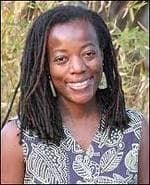
Tsitsi Dangarembga is a Zimbabwean novelist, playwright and filmmaker. Her debut novel, Nervous Conditions (1988), which was the first to be published in English by a Black woman from Zimbabwe, was named by the BBC in 2018 as one of the top 100 books that have shaped the world. She has won other literary honours, including the Commonwealth Writers' Prize and the PEN Pinter Prize. In 2020, her novel This Mournable Body was shortlisted for the Booker Prize. In 2022, Dangarembga was convicted in a Zimbabwe court of inciting public violence, by displaying, on a public road, a placard asking for reform.