“Everything's for sale. And every man has his price.”
— Leland Gaunt's philosophy as he opens his mysterious shop.

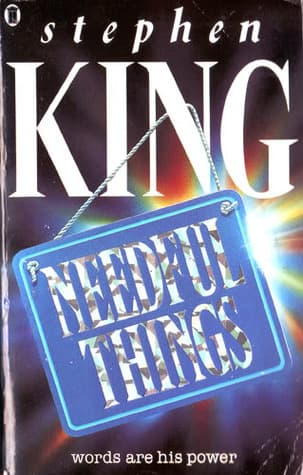
Stephen King (1991)
Genre
Thriller / Fantasy / Mystery
Reading Time
15-20 hours
Key Themes
See below
Sign in to track this book
In the quiet town of Castle Rock, a mysterious new shopkeeper grants everyone their deepest desires, but the price is paid in escalating pranks and betrayals that spiral the community into a maelstrom of self-destruction.
The quiet town of Castle Rock, Maine, is stirred by a new antique shop, 'Needful Things,' run by Leland Gaunt. Gaunt knows exactly what each resident wants most. Among his first customers is Brian Rusk, a young boy who finds a valuable Sandy Koufax baseball card. Gaunt sells it to him for a small sum and a 'deed' – a seemingly harmless prank against a local woman. This pattern repeats with other townspeople, including Nettie Cobb, who finds a locket that eases her arthritis, and Danforth 'Buster' Keeton, the town's selectman, who is offered a collection of rare coin-op machines. Each purchase comes with a 'deed' targeting another resident, often someone with whom the buyer already has a rivalry or grudge. Gaunt uses these desires and resentments to create chaos.
Gaunt's 'deeds' begin to take hold, slowly making old animosities worse. Brian Rusk, influenced by Gaunt, throws dog feces at Wilma Jerzyck's clean sheets, starting a feud between Wilma and Nettie Cobb, who Wilma suspects. Danforth Keeton, wanting money and power, is easily manipulated by Gaunt into performing more disruptive acts against his political rivals and anyone he sees as a threat. The pranks, at first minor, grow more personal and destructive. Sheriff Alan Pangborn, still grieving the loss of his family in a drunk driving accident, senses an unsettling change in the town, but struggles to find the cause, often seeing the growing tensions as just small-town squabbles.
The pranks Gaunt arranges get more aggressive and targeted. Nettie Cobb retaliates against Wilma Jerzyck, believing Wilma killed her dog, and Wilma, in turn, believes Nettie is harassing her. These two women, once friends, are pushed to violence by Gaunt. Ace Merrill, a local thug and drug dealer, returns to Castle Rock and is easily caught by Gaunt, who offers him buried treasure for even more destructive 'deeds' – including stealing dynamite from the town's quarry. Gaunt separates people, feeding their paranoia and turning them against their neighbors, friends, and even family. The town's social structure begins to break under the constant strain of suspicion and hostility.
Sheriff Alan Pangborn, seeing the rapid decline of civility in Castle Rock, starts to connect the town's growing madness with Leland Gaunt's shop. He notices that those who have bought items from Needful Things become more agitated, paranoid, and violent. His deputy, Norris Ridgewick, also expresses concern about the strange events. Alan's relationship with Polly Chalmers, who finds relief for her chronic aneurysm from one of Gaunt's items, becomes strained as she, too, falls under Gaunt's subtle influence. Alan's investigation is slowed because the 'deeds' seem random, yet he feels Gaunt is a malevolent force orchestrating the chaos. He realizes Gaunt is not just selling trinkets, but selling destruction.
Polly Chalmers's amulet, which helps her aneurysm, is stolen by Ace Merrill on Gaunt's orders. This theft, combined with the growing intensity of the pranks, pushes Polly further into despair and suspicion. The feud between Nettie Cobb and Wilma Jerzyck ends in a brutal, fatal knife fight, with both women dead. This shocking event finally makes the townspeople, and especially Alan Pangborn, realize the true depth of the horror. Alan, now sure of Gaunt's evil, seeks help. He finds an unexpected ally in Father Brian Massingale, the local Catholic priest, who also senses Gaunt's demonic nature, and Reverend Willie Rose, the Baptist minister, who eventually reaches the same conclusion after experiencing Gaunt's manipulations.
Gaunt's final, most destructive 'deeds' are unleashed, throwing Castle Rock into pandemonium. He convinces various residents that their neighbors are responsible for all their problems, giving them weapons and encouragement. Buster Keeton, driven mad by gambling debts and Gaunt's influence, tries to blow up the town hall. Ace Merrill, having stolen dynamite, places explosives throughout the town. Riots break out, fueled by alcohol and the carefully created hatreds. Houses are set on fire, people attack each other in the streets, and the small town becomes a war zone. Father Massingale and Reverend Rose, manipulated by Gaunt, fight each other publicly, further showing the town's complete moral collapse. The 'deeds' have resulted in a full-scale civil war, exactly as Gaunt intended.
Sheriff Alan Pangborn, with the help of Deputy Norris Ridgewick and a few other clear-headed individuals, tries to stop the growing violence. He confronts Buster Keeton, who is now a deranged, gun-wielding maniac, attempting to blow up the town hall. Alan realizes that Gaunt's goal is not just to sell 'needful things' but to destroy the town through its own internal hatreds. He races against time, disarming bombs, breaking up fights, and trying to save innocent lives amidst the chaos. He understands that Gaunt is a supernatural entity, a demon feeding on human misery, and that the only way to stop him is to confront him directly and show his true nature to the remaining sane townspeople. The fight for Castle Rock's soul is now in his hands.
Alan Pangborn finally confronts Leland Gaunt at Needful Things. He arrives as the town burns around them, with explosions rocking the ground. Alan, having gathered evidence and understood Gaunt's elaborate scheme, reveals Gaunt's true nature as a demonic entity. He forces Gaunt to show his true, horrifying form to the remaining townspeople who are still under his spell. Gaunt, unable to keep his human appearance under Alan's steady gaze and the collective realization of his evil, prepares to leave, but not before causing one final, massive explosion. However, Alan, using a magic trick taught to him by his late son, manages to distract Gaunt long enough to prevent the ultimate catastrophe.
Leland Gaunt, his plans for ultimate destruction stopped by Alan Pangborn's courage and a bit of 'magic,' is forced to leave Castle Rock. He drives away in his antique car, which transforms into a horse-drawn carriage, then a hearse, then a different vehicle, showing his timeless, shifting nature. He promises to return to another town someday. Castle Rock is left in ruins, with many buildings destroyed, several residents dead, and the survivors traumatized. However, with Gaunt's departure, the unnatural animosity disappears, and a fragile sense of community begins to reappear. The remaining townspeople, horrified by their actions, begin the long process of rebuilding their lives and their town, forever changed by the events caused by Needful Things. Alan and Polly, having survived, look towards a hopeful future.
The Antagonist
Gaunt arrives, orchestrates the town's destruction, and is ultimately forced to leave, though he vows to return to another place.
The Protagonist
From a grieving widower, he becomes the town's reluctant hero, confronting pure evil and saving his community.
The Supporting
Initially a victim of Gaunt's lure, she eventually helps Alan confront him, overcoming her own affliction and fear.
The Supporting
From a corrupt official, he descends into paranoid psychosis and ultimately dies in the chaos.
The Supporting
Returns to Castle Rock, becomes Gaunt's chief enforcer of chaos, and ultimately meets a violent end.
The Supporting
From a kind, ailing woman, she is driven to murderous rage and dies in a violent confrontation.
The Supporting
From an irritable neighbor, she is consumed by paranoia and hatred, leading to her death in a violent feud.
The Supporting
From an innocent boy manipulated by Gaunt, he experiences profound guilt and eventually helps Alan.
The Supporting
Remains a loyal and steady deputy, helping Alan navigate the town's descent into madness.
The Supporting
From a respected priest, he is manipulated into a public brawl, symbolizing the town's moral decay, before realizing Gaunt's true nature.
The Supporting
From a respected minister, he is manipulated into a public brawl, symbolizing the town's moral decay, before realizing Gaunt's true nature.
The main theme is how unfulfilled desires and material greed can be used to corrupt individuals and society. Leland Gaunt offers each resident of Castle Rock what they want most, whether it's a valuable baseball card, a healing amulet, or rare collectibles. These objects, while bringing joy or relief, come with a price much greater than money: the buyers must commit 'deeds' that feed their inner resentments and turn them against their neighbors. The book shows that unchecked desire, when manipulated by an external evil, can lead to moral decay, paranoia, and self-destruction, as seen in Buster Keeton's pursuit of wealth and power.
“What do you want, son? What do you want most of all?”
Stephen King explores the nature of evil through Leland Gaunt, who is a demonic entity. Gaunt does not force people to be evil; instead, he acts as a catalyst, making existing human flaws stronger: jealousy, resentment, anger, and prejudice. The novel suggests that evil is not always a grand, obvious force, but often a hidden presence that preys on everyday failings and grudges within a community. Gaunt's method of manipulation – turning neighbor against neighbor through minor pranks – shows how small acts of malice, when unchecked, can grow into catastrophic violence and widespread destruction. The town's fall into chaos is a manifestation of its own hidden darkness, brought out by Gaunt.
“He understood that the world was a great engine, and the human heart was a part of it, and Gaunt was the operator, twisting the knobs and pulling the levers.”
The novel details the rapid breakdown of a seemingly normal small-town community. Castle Rock, initially shown with its typical quirks and rivalries, is systematically dismantled by Gaunt. The 'deeds' he arranges target existing tensions between neighbors, religious groups, and political factions, making them worse until they explode into open warfare. The feuds between Nettie Cobb and Wilma Jerzyck, and Father Massingale and Reverend Rose, show how easily social bonds can break when trust disappears and suspicion takes hold. The climax, with the town in riots, arson, and murder, is a powerful depiction of a community tearing itself apart from within, showing how fragile social order is.
“The town was a pressure-cooker, and Gaunt had turned up the heat.”
Sheriff Alan Pangborn's personal journey connects with themes of grief and healing. He is still mourning the tragic death of his wife and son, which makes him vulnerable and somewhat detached. Polly Chalmers also carries the burden of her painful aneurysm. Gaunt tries to use these vulnerabilities, offering false comfort or temporary relief in exchange for their souls. However, Alan's ability to resist Gaunt's influence and his determination to save the town represent his own path to healing and finding purpose beyond his personal tragedy. His eventual relationship with Polly symbolizes the possibility of hope and rebuilding even after great loss and trauma.
“He had grieved for his wife and son, and that grief had been a private thing. But this was different. This was the grief of a whole town.”
The idea of 'needful things' itself represents the appeal of what is forbidden or hard to get. Gaunt's items are not just ordinary antiques; they are objects that promise to fulfill a deep, often unspoken, longing. This appeal is so strong that people overlook the suspicious nature of the shop and Gaunt's increasingly disturbing requests. The book explores the human tendency to be drawn to things that seem too good to be true, and the moral compromises people make to get them. This theme is clear in characters like Buster Keeton and Ace Merrill, who are blinded by the promise of wealth and power, no matter the cost.
“Every man has his price, but every man also has his needful thing.”
Gaunt's method of manipulating residents into escalating acts of malice.
The 'deed' system is the primary plot device driving the narrative. For a small sum, Gaunt sells a desired item, but the true payment is a 'deed' – a seemingly innocent prank or act of mischief targeting another resident. These deeds are carefully chosen by Gaunt to exploit existing grudges, rivalries, or prejudices between individuals. As the story progresses, the deeds become increasingly destructive and violent, culminating in widespread chaos, arson, and murder. This system allows Gaunt to remain largely in the background, making the townspeople complicit in their own destruction, while he merely provides the catalyst.
A physical manifestation of temptation and a hub for Gaunt's manipulations.
The shop 'Needful Things' functions as more than just a setting; it is a central plot device and a symbol of temptation. It appears mysteriously, seemingly out of nowhere, and its interior shifts and changes to reflect the deepest desires of each customer. The shop acts as Gaunt's base of operations, the place where all the threads of his manipulation converge. It is a place of false promise, where dreams are bought at the cost of one's soul and community. The shop itself seems to possess a malevolent aura, drawing people in and subtly influencing their choices, making it a character in its own right.
A seemingly innocuous item that triggers the initial chain of destructive events.
The Sandy Koufax baseball card, desired by young Brian Rusk, serves as a crucial inciting incident. It is the first 'needful thing' sold by Gaunt, and Brian's 'deed' (throwing dog feces on Wilma Jerzyck's sheets) directly triggers the bitter feud between Wilma and Nettie Cobb. This seemingly minor event demonstrates how Gaunt's plan works: a small, almost childish act of mischief, when placed in the right psychological context, can ignite a chain reaction of escalating hatred and violence. The card itself, a symbol of childhood innocence and desire, becomes stained by the dark consequences of its acquisition.
An item that offers false hope and creates dependence, making Polly vulnerable.
The healing amulet, desired by Polly Chalmers to alleviate her severe aneurysm pain, is a significant plot device. It initially provides her with genuine relief, making her dependent on Gaunt and resistant to Alan's warnings. This creates a rift between them and highlights how even the desire for health and freedom from suffering can be exploited by evil. Gaunt later orchestrates its theft, further destabilizing Polly and pushing her to the brink. The amulet symbolizes the dangerous allure of quick fixes and the potential for even benevolent desires to be weaponized.
“Everything's for sale. And every man has his price.”
— Leland Gaunt's philosophy as he opens his mysterious shop.
“Sometimes the things that are most real are the things you can't see.”
— Reflection on the supernatural influence in Castle Rock.
“A man's heart is a wretched, wretched thing.”
— Observation on human nature during the town's descent into chaos.
“The devil's greatest trick is convincing the world he doesn't exist.”
— Allusion to Gaunt's true nature and manipulation.
“In a small town, the past is never really past.”
— Commentary on Castle Rock's history of secrets and grudges.
“You can't buy happiness, but you can rent it for a little while.”
— Irony about the temporary satisfaction from Gaunt's deals.
“Fear is the most contagious disease of all.”
— Describing how paranoia spreads through the town.
“The price of a thing is often more than what's on the tag.”
— Warning about the hidden costs of Gaunt's offerings.
“When you look into the abyss, the abyss looks into you.”
— Reference to the darkness within the characters.
“A town is like a person; it has a soul, and sometimes that soul gets sick.”
— Metaphor for Castle Rock's moral decay.
“The things we desire most are the things that destroy us.”
— Theme of the novel as characters pursue their deepest wants.
“Evil doesn't always come with horns and a pitchfork; sometimes it comes with a smile and a deal.”
— Description of Leland Gaunt's charming yet malevolent persona.
“In the end, we are all just prisoners of our own wants.”
— Reflection on the characters' enslavement to their desires.
“The first step to hell is always a small one.”
— Observation on how minor compromises lead to major downfalls.
Ready to see how well you understood this book? Take our interactive quiz with 10 questions.
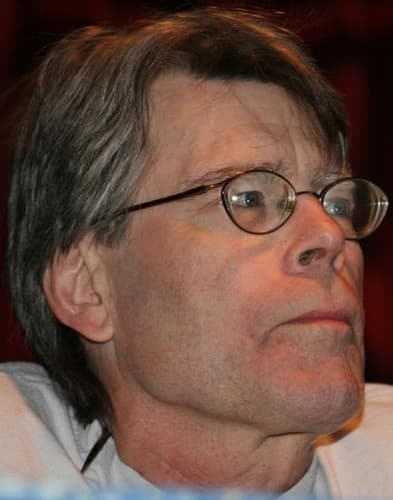
Stephen Edwin King is an American author of horror, supernatural fiction, suspense, crime, science-fiction, and fantasy novels. Described as the "King of Horror", his books have sold more than 350 million copies as of 2006, and many have been adapted into films, television series, miniseries, and comic books. King has published over 65 novels/novellas, including seven under the pen name Richard Bachman, and five non-fiction books. He has also written approximately 200 short stories, most of which have been published in book collections.







