“Because to take away the vote from a man is to take away his freedom, and to take away his freedom is to take away his humanity.”
— Nathan is explaining the importance of voting to Rukmani.

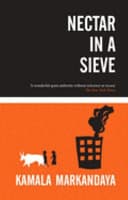
Kamala Markandaya (2023)
Genre
Historical Fiction
Reading Time
420 min
Key Themes
See below
Sign in to track this book
In a South Indian village, a young woman named Rukmini navigates the cycles of monsoon, drought, and famine, enduring industrialization and poverty.
Rukmani, the youngest daughter of a village headman, marries Nathan, a tenant farmer, at age twelve. Unlike her sisters who marry into wealthier families, Rukmani's dowry is small, leading to a more humble union. She leaves her childhood home and adapts to life in Nathan's small hut in a village dependent on the land. Despite initial shyness, their relationship grows into deep affection and mutual respect. They work hard on their small plot of land, cultivating rice, and Rukmani learns farm life, finding contentment as a farmer's wife. Their early years have hard work and the simple joys of their growing family.
Rukmani and Nathan's family grows, though their first child is a daughter, followed by several more. Rukmani struggles to conceive a son, a societal expectation, and consults Kennington, an elderly white doctor, who treats her for infertility. She eventually gives birth to five sons: Murugan, Raja, Thambi, Selvam, and Kuti. Kennington becomes a trusted friend and confidant, often treating villagers without charge. His presence blends modern medicine and traditional village life, and Rukmani, at first wary, appreciates his wisdom and kindness, especially during family and community illnesses and hardships.
A large tannery arrives in the village, changing their traditional farming life. At first, the tannery brings jobs and money, offering a possible escape from farming's uncertainty. Rukmani's sons, drawn by the promise of wages, begin to work there, much to Nathan's initial disapproval, as he values their connection to the land. However, the tannery also brings noise, pollution, and a new, harsher social dynamic. The land around the tannery becomes infertile, and the once-clear river is contaminated. The village slowly changes, losing some of its innocence and peace as it deals with industrialization.
A severe drought leads to famine, destroying crops and plunging the village into extreme poverty. Food becomes scarce, and prices rise, making survival impossible for many. Rukmani and Nathan struggle to feed their children, selling their few possessions. Their daughter, Ira, desperate to save her starving infant, turns to prostitution. Raja, one of their sons, is tragically killed trying to steal a hide from the tannery, a desperate act caused by hunger. This period tests the family's resilience and forces them to face the brutal facts of their existence, showing the fragility of life for tenant farmers.
Ira, married and abandoned by her husband, returns home with her infant son. When the famine worsens, and her baby starves, she resorts to prostitution to earn money for milk and food. This decision deeply shames Rukmani but comes from desperate love. Despite Ira's efforts, the youngest son, Kuti, dies from starvation, a heartbreaking loss for the family. Ira's sacrifice, while morally complex, shows the extreme measures people take to survive during unimaginable hardship, and poverty's deep impact on family dynamics and individual choices.
After years of farming their land, the landlord sells the property to the tannery, and Rukmani and Nathan are evicted. With their sons having left for the city or the tannery, and their daughters married, only Nathan and Rukmani remain. They decide to travel to the city where their son Murugan is believed to be working as a servant. This journey uproots their lives, leaving behind their only home and the land that defined them. It is a journey into the unknown, driven by hope for a better future and the desire to reunite with their son.
Upon arriving in the chaotic and indifferent city, Rukmani and Nathan are overwhelmed. They struggle to find Murugan, discovering he abandoned his wife and children and moved on. Homeless and penniless, they live on the streets and sleep in a temple courtyard. They meet other destitute individuals, including an old street vendor, Puli, a young albino boy who helps them. The city, far from offering solace, presents new suffering and a stark contrast to their rural life, showing the impersonal and harsh realities of urban poverty.
Desperate for work, Nathan and Rukmani find jobs at a stone quarry, breaking rocks under the scorching sun. The work is back-breaking and poorly paid, but it offers a temporary break from starvation. They endure harsh conditions and relentless labor, their bodies aching from the unaccustomed strain. This period shows their enduring resilience and unwavering commitment to each other, even with immense physical hardship. The quarry symbolizes their struggle to survive and their continuous battle against poverty, showing the lengths they must go to earn a meager living.
Nathan, weakened by age, malnutrition, and hard labor at the quarry, falls gravely ill. Despite Rukmani's desperate attempts to care for him, he dies peacefully in her arms in the city. His death is a deep loss for Rukmani, ending their long and loving partnership. With Puli's help, she arranges a simple cremation. Heartbroken and alone, Rukmani decides to return to her village, accompanied by Puli, whom she adopted. Her return is a bittersweet journey, leaving behind the city's harshness but carrying her grief and Nathan's memory.
Rukmani returns to her village, finding it changed but still home. Her daughter Ira, now a single mother, welcomes her. Rukmani finds solace in the familiar rhythms of the land and her remaining family, including Ira's albino son. Puli, the orphaned boy from the city, has become her surrogate son, providing companionship and support. Though her life has immense loss and hardship, Rukmani finds quiet strength and acceptance. She continues to face poverty's challenges with resilience, surrounded by family and community bonds, showing endurance amidst adversity.
The Protagonist
Rukmani evolves from an innocent, hopeful young bride to a seasoned, resilient matriarch who endures immense suffering but never loses her capacity for love and acceptance.
The Supporting
Nathan remains a constant, loving presence, slowly worn down by the hardships of life until his ultimate demise.
The Supporting
Ira transforms from a hopeful bride to a tragic figure who makes profound sacrifices, ultimately finding a quiet strength in motherhood.
The Supporting
Kenny remains a consistent figure of aid and wisdom, a steadfast support for Rukmani and the village.
The Supporting
Murugan leaves the village with hope, but his path in the city leads to irresponsibility and a severed connection with his family.
The Supporting
Raja's brief life is marked by the struggle for survival, ending tragically as a victim of famine and the changing world.
The Supporting
Puli transforms from a street urchin to a cherished member of Rukmani's family, finding a home and belonging.
The Supporting
Old Granny's arc is one of decline, symbolizing the vulnerability of the elderly and poor in times of crisis.
Despite poverty, famine, loss, and industrialization, the characters, especially Rukmani, show a strong spirit. They find strength in their relationships, their connection to the land (even when it's gone), and their will to survive. This theme appears in Rukmani's quiet acceptance of her fate, her love for Nathan, and her ability to find joy and solace even in the bleakest times, such as adopting Puli and returning to the village. It is about finding dignity and meaning amidst suffering.
“To endure what is unendurable is to endure what is unendurable. It is the beginning of hope.”
The novel shows the clash between the traditional farming life of the Indian village and industrialization, represented by the tannery. The tannery brings economic opportunity but also pollution, social disruption, and the breakdown of traditional family structures as sons leave the land for factory work. This conflict is seen in Nathan's deep attachment to farming versus his sons' desire for tannery wages, and the overall degradation of the natural environment. The city also represents a harsh, impersonal modernity that contrasts sharply with the village's close-knit community.
“The land is a mother. She will always feed you if you are good to her.”
Suffering is throughout the novel, from chronic poverty and hunger to the loss of children, eviction, and the death of a spouse. The characters, especially Rukmani, often meet these adversities with stoic acceptance rather than rebellion. This is not passive resignation but a deep understanding of life's cyclical nature and their limited control over external forces like drought or economic change. Rukmani's narrative voice often reflects a philosophical view on hardship, seeing it as a part of the human condition, which allows her to continue.
“Our life is a long cycle of suffering, but it is also a long cycle of endurance.”
Despite severe challenges, love and loyalty within Rukmani's family remain a strong force. The family unit provides comfort, support, and a reason to keep going. This is clear in Nathan and Rukmani's lasting partnership, Ira's selfless sacrifices for her child and family, and Rukmani's eventual adoption of Puli. Even when children leave or disappoint, the core bond remains. Family is shown as a refuge against the harshness of the outside world, providing emotional sustenance even when material sustenance is scarce.
“A man's worth is not in the coins he has, but in the love he gives and receives.”
The novel values the dignity of manual labor, especially farming. Nathan and Rukmani find meaning and identity in working the land, despite its hardships. Their connection to the soil is spiritual and cultural, representing stability and self-sufficiency. Losing their land is a devastating blow, not just economically but existentially. The book contrasts this with the dehumanizing labor of the tannery and quarry, suggesting that while all work is necessary for survival, some forms of labor offer more intrinsic dignity and connection to life.
“The land is ours. It is our body, our blood, our life.”
Rukmani recounts her life story from an older, reflective perspective.
The entire novel is told through Rukmani's eyes, looking back on her life from old age. This allows for a deeply personal and emotional account, giving the reader intimate access to her thoughts, feelings, and resilience. The retrospective view enables her to reflect on events with wisdom and perspective, providing insights into the broader themes of suffering, endurance, and change. It also creates a sense of foreboding and poignancy, as the reader knows the outcome of certain events even as Rukmani describes their unfolding.
The land represents life, sustenance, tradition, and identity.
The land is a powerful symbol throughout the novel. For Rukmani and Nathan, it represents life, sustenance, tradition, and their very identity. Their connection to their small plot of rice paddy is almost spiritual. The fertility and barrenness of the land directly mirror their prosperity and suffering. The eventual loss of their land to the tannery symbolizes the destruction of their traditional way of life and the triumph of industrialization over nature and human connection to the earth. It is a constant reminder of their precarious existence and the source of their deepest joys and sorrows.
The tannery represents the destructive and transformative power of industrialization.
The tannery serves as a potent symbol of modernity's double-edged sword. Initially, it offers economic opportunity and hope for a better life for some villagers, particularly Rukmani's sons. However, it quickly becomes a symbol of environmental degradation (polluting the river, rendering land infertile), social disruption (breaking down traditional family structures, introducing new forms of exploitation), and moral decay. Its presence ultimately leads to the family's eviction and the tragic death of Raja, illustrating the destructive consequences of unchecked industrial expansion on a traditional society.
The recurring famine acts as a brutal force that exposes vulnerabilities and drives desperate actions.
Famine is not just an event but a recurring plot device that acts as a brutal catalyst, forcing characters into desperate circumstances and revealing their deepest strengths and weaknesses. It strips away any illusion of security, forcing choices like Ira's prostitution and Raja's theft. Each famine period accelerates the family's decline, pushing them closer to the brink of survival and ultimately leading to their eviction and move to the city. It underscores the fragility of life for the rural poor and highlights the devastating impact of natural disasters exacerbated by societal neglect.
“Because to take away the vote from a man is to take away his freedom, and to take away his freedom is to take away his humanity.”
— Nathan is explaining the importance of voting to Rukmani.
“The earth is a mother to us, as she is to all who live upon her.”
— Rukmani reflects on their dependence on the land.
“What is a man without land? He is nothing.”
— Nathan expresses his despair over losing their land.
“To want something is to be able to get it, if you want it badly enough.”
— Rukmani's mother encourages her to pursue her desires.
“We are like the river, flowing on, never stopping, always moving towards the sea.”
— Rukmani muses on the continuous flow of life and time.
“Hunger is a monster, and it makes monsters of us all.”
— Rukmani observes the desperate actions of people driven by starvation.
“There is no knowing what is in a man's heart until he is tried by adversity.”
— Rukmani reflects on how challenges reveal true character.
“Hope is a bird with a broken wing, but it still sings.”
— Rukmani finds a glimmer of hope amidst her struggles.
“Money is a cruel master, and it leaves its mark on all who serve it.”
— Rukmani observes the corrupting influence of wealth on some characters.
“The past is like a dream, and the future is like a dream, and only the present is real.”
— Rukmani contemplates the nature of time and existence.
“Life is a journey, and we are all travelers on that journey.”
— Rukmani reflects on the shared human experience of life's path.
“To be born a woman is to be born a burden, a thing to be disposed of, if not in the womb, then in the marriage bed.”
— Rukmani reflects on the societal challenges faced by women in her culture.
“Sorrow and joy are like the two sides of a coin; one cannot exist without the other.”
— Rukmani finds balance in understanding the duality of emotions.
“We live in a world where the strong prey on the weak, and the weak must learn to fend for themselves.”
— Rukmani observes the harsh realities of survival in their society.
Ready to see how well you understood this book? Take our interactive quiz with 10 questions.

Kamala Markandaya, pseudonym of Kamala Purnaiya, married name Kamala Taylor, was a British Indian novelist and journalist. She has been called "one of the most important Indian novelists writing in English".







