“The past isn't just something you remember; it's something that can reach out and grab you.”
— A general reflection on the lingering impact of past events, particularly relevant to the protagonist's haunted present.

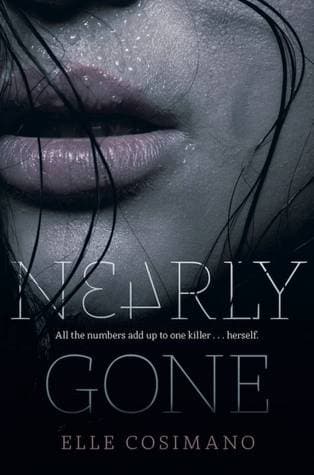
Elle Cosimano (2014)
Genre
Thriller / Fantasy / Mystery / Young Adult / Romance
Reading Time
9-10 hours
Key Themes
See below
Sign in to track this book
A trailer park teen with a secret power to taste emotions must decipher cryptic newspaper ads left by a serial killer preying on her classmates before she becomes the next victim.
Nearly Boswell, a high school student in a trailer park with her exotic dancer mother, keeps a low profile, hiding her home life and her unusual sensory abilities. She has a unique form of synesthesia, tasting emotions upon physical contact. Her only confidantes are her best friends, Reese and Sylvia. The story opens with the murder of a popular student, Sarah, found in the woods. The police, led by Detective Ryan, are baffled, and the community is scared. Nearly feels drawn to the case, noticing a cryptic personal ad in the newspaper that seems connected, a detail the police miss.
As the town deals with Sarah's death, another student, Tyler, is found murdered, also with a cryptic personal ad in the newspaper. The killer's pattern, dubbed 'The Poet' by the media, becomes clearer, but the police are no closer to a suspect. Nearly, convinced the personal ads are vital clues, starts her own investigation, analyzing their content. Her ability to taste emotions, especially fear and deceit, makes her wary of many people. She finds an unexpected ally in Reece, her best friend, who, despite initial skepticism, helps her decipher the killer's messages. Their shared interest in the ads brings them closer.
A new student, Liam, transfers to Nearly's school, instantly drawing attention with his quiet manner and intelligence. He quickly becomes a person of interest for Nearly, who feels both attracted to him and suspicious of his secretive nature. Liam shows a knack for solving riddles and an interest in literature, particularly poetry, which matches the killer's style. Nearly's emotional synesthesia further complicates her feelings; she tastes a confusing mix of emotions from him, making it hard to know his true intentions. Despite her suspicions, a romantic tension grows between them, pulling Nearly into a dangerous emotional situation.
Nearly and Reece work harder to decode the personal ads. They discover that the ads, seemingly random verses and phrases, form a cohesive story when put together. The killer uses them to communicate a twisted tale, a dark poem that hints at their motives and future victims. Their discoveries lead them to believe the killer targets students who represent certain types or perceived flaws. The investigation becomes more urgent as the killer's next move seems close. Nearly starts to realize the killer is not just sending messages, but telling a story, and she might be a character in it.
As Nearly looks deeper into the killer's messages, she uncovers a disturbing pattern: the victims connect to her own life and experiences, though subtly. The killer seems to choose victims based on characteristics that relate to Nearly's own struggles or observations. This realization chills her, making her question if she is just an investigator or an unwitting participant in the killer's game. Her synesthesia, while providing insights, also makes her vulnerable, as the overwhelming emotions from the victims' last moments become a burden she struggles to carry. The killer's focus feels increasingly on her.
Through a series of intense deductions, combining the decoded ads, her synesthesia, and observations, Nearly finally unmasks the killer. The revelation is devastatingly personal: it is someone she knew, someone close to her, who had been carefully planning these murders. The killer's motive is a twisted form of revenge and a desire for recognition, stemming from past trauma and a perceived injustice. The killer saw Nearly as a kindred spirit, or perhaps a rival, and used the murders to create a story that would draw her in. The betrayal cuts deep, as Nearly struggles to reconcile the person she knew with the monstrous killer.
The final confrontation between Nearly and the killer happens in a tense, isolated place. Nearly, with her intellect and unique senses, must use all her courage to outwit and survive the killer. The killer, driven by their twisted ideas, sees Nearly as the ultimate audience for their 'art,' and intends for her to be the final victim, completing their macabre work. The fight is not just physical but psychological, as the killer tries to break Nearly with manipulation and reveal the full extent of their deranged plan. Nearly must rely on her quick thinking and her friends' support to make it out alive.
After the killer's capture, Nearly is left to put her shattered world back together. While the immediate threat is gone, the psychological scars remain. She struggles with the trauma of her close call, the betrayal, and the weight of the emotions she absorbed from the victims. Her relationship with Liam is complicated by the events, as she re-evaluates her feelings and trust. The experience forces Nearly to face her own vulnerabilities and the true nature of her synesthesia, recognizing its power and its burden. Life in the trailer park continues, but Nearly is changed by her ordeal, no longer able to hide from the world.
Nearly begins the long process of healing, finding comfort in her renewed and stronger friendships with Reece and Sylvia. The shared trauma has created an even deeper bond between them. She starts to understand and accept her synesthesia not just as a curse, but as a unique part of herself that helped her solve the case. While the romance with Liam remains complex, there is a tentative hope for their future as they both try to move past the darkness. Nearly learns to open up more, realizing that keeping secrets, while once a way to survive, can also isolate her. She begins to trust others with her true self.
As things settle, Nearly looks towards an uncertain future. She has faced unimaginable horror and emerged stronger, though forever changed. Her experiences have forced her to mature quickly, facing identity, trust, and the darkness that can hide beneath ordinary surfaces. While the killer is caught, the memory of their actions and the personal ads they left behind still haunt her. Nearly still lives with her mother in the trailer park, but she has a newfound sense of self and purpose. The novel ends with Nearly embracing her unique abilities, ready to face whatever challenges lie ahead, no longer just 'Nearly Gone' but Nearly here.
The Protagonist
Nearly evolves from a withdrawn and secretive individual to a courageous young woman who accepts her unique abilities and learns to trust others.
The Supporting
Reece grows from a supportive friend to an active, courageous partner in Nearly's dangerous investigation, openly expressing his feelings for her.
The Supporting
Liam moves from a mysterious outsider and potential suspect to a love interest and someone who eventually supports Nearly, revealing his own vulnerabilities.
The Supporting
Sylvia remains a steadfast and supportive friend, her loyalty reinforcing Nearly's emotional strength.
The Supporting
Her character remains largely static, serving as a backdrop to Nearly's struggles and motivations, though there are subtle hints of her trying to connect with Nearly.
The Supporting
Detective Ryan slowly shifts from skepticism to a reluctant acceptance of Nearly's insights, highlighting the clash between intuition and traditional police work.
The Antagonist
The killer's actions escalate throughout the story, their identity is revealed, and their reign of terror is ultimately brought to an end.
Nearly's life is defined by the secrets she keeps: her trailer park home, her mother's job, and especially her synesthesia. She builds a guarded identity to avoid judgment and vulnerability. The killer's use of cryptic ads reflects this theme, as they hide their identity and motives behind coded messages. Nearly's journey forces her to confront the dangers of extreme secrecy, eventually leading her to selectively open up and embrace her true self, including her unique abilities, as seen when she finally tells Reece about her synesthesia.
“Keeping secrets was second nature to Nearly Boswell. It was how she survived.”
The novel uses various forms of communication, especially the cryptic personal ads left by the killer. These ads are a twisted form of communication, a 'poem' meant to be deciphered, showing how meaning can be hidden or revealed. Nearly's synesthesia is another form of non-verbal communication, letting her 'taste' emotions. The lack of open communication between Nearly and her mother, or between the police and Nearly, initially hinders the investigation. The story emphasizes how understanding and interpreting messages, both clear and subtle, is essential for solving mysteries and building relationships.
“The killer wasn't just leaving clues; they were telling a story.”
Nearly's unique synesthesia and intuitive deductions are constantly set against the police's more logical, evidence-based approach, particularly Detective Ryan's. While the police struggle with tangible clues, Nearly's ability to 'taste' emotions and her skill for pattern recognition let her see connections others miss. This theme explores the value of different ways of knowing and solving problems. Ultimately, a combination of both intuition and logic, as shown by Nearly's collaboration with Reece, is needed to solve the complex mystery.
“Sometimes, the things you couldn't see were the most dangerous.”
The novel explores the impact of trauma, both on the victims and on Nearly. The serial murders create an atmosphere of fear and grief, affecting the entire community. Nearly carries her own past traumas, including her difficult home life and the burden of her synesthesia, which worsens when she absorbs the victims' final emotions. Her journey is one of resilience, as she faces extreme danger, copes with loss, and ultimately finds the strength to heal and move forward. The ending shows her learning to live with her experiences, not be defined by them.
“The taste of fear was a bitter, metallic tang that clung to her tongue.”
Nearly's unique ability to 'taste' emotions through touch.
This is Nearly's primary supernatural ability and a central plot device. It allows her to gain insights into characters' true feelings, detect lies, and even experience the final emotions of victims by touching their belongings or bodies. While a powerful tool for investigation, it also acts as a burden, as she is overwhelmed by intense emotions like fear, grief, and anger. This device adds a unique sensory layer to the mystery, providing clues that are inaccessible to conventional police work and deepening Nearly's connection to the victims.
The killer's chosen method of communication and clue-dropping.
The personal ads in the newspaper are the core mystery element. They are not just random clues but a meticulously crafted 'poem' or narrative left by 'The Poet.' Decoding these ads drives the plot forward, revealing the killer's motives, their next targets, and their twisted worldview. This device functions as a complex puzzle that challenges both Nearly and the reader, creating suspense and a sense of intellectual engagement as the pieces slowly come together.
Misleading clues or suspects designed to divert attention.
The novel employs several red herrings to keep the reader guessing about the killer's identity. Liam, with his mysterious past and poetic interests, is a significant red herring, leading both Nearly and the audience to suspect him. Other characters or seemingly suspicious events also serve to distract from the true killer. This device effectively builds suspense and makes the final reveal more shocking, playing on the reader's assumptions and Nearly's own biases.
The last woman alive to confront the killer in a horror narrative.
While not a pure horror novel, 'Nearly Gone' utilizes elements of the 'Final Girl' trope, common in thrillers and slasher films. Nearly, as the intelligent, resourceful, and morally upright protagonist, is ultimately the one who directly confronts and outwits the serial killer. This device builds tension towards the climax, as the killer's focus narrows on Nearly, making her the ultimate target and forcing her into a desperate fight for survival, cementing her role as the heroine.
“The past isn't just something you remember; it's something that can reach out and grab you.”
— A general reflection on the lingering impact of past events, particularly relevant to the protagonist's haunted present.
“Sometimes, the only way to find yourself is to get completely lost first.”
— Early in the story, as the protagonist grapples with a new, disorienting reality.
“Fear can be a compass, pointing you towards what you truly value.”
— A character offering advice on how to interpret strong emotions.
“The line between what's real and what's imagined is often blurred by desire.”
— A philosophical observation about human perception and longing.
“Not all monsters hide in the dark. Some walk in plain sight, smiling.”
— A warning about deceptive appearances and hidden dangers.
“Love isn't always gentle. Sometimes it's a storm that rips everything apart, only to rebuild it stronger.”
— A character reflecting on the tumultuous nature of a significant relationship.
“Secrets are like shadows; they grow longer and darker the longer you try to hide them.”
— The protagonist realizing the futility and danger of keeping vital information concealed.
“The greatest magic isn't in spells, but in the choices we make.”
— A mentor figure imparting wisdom about agency and personal power.
“You can't outrun your destiny, but you can choose how you face it.”
— A pivotal moment where the protagonist must accept their fate but decide their approach.
“Sometimes, the quietest whispers hold the loudest truths.”
— The protagonist discovering crucial information in an unexpected, subtle way.
“Forgiveness isn't about letting someone off the hook; it's about freeing yourself from the weight of anger.”
— A character grappling with past betrayals and seeking closure.
“The world isn't black and white. Most of it is a thousand shades of grey, and that's where the real story lies.”
— A character challenging another's simplistic view of morality and situations.
“Even the strongest walls can crumble if the foundation is built on lies.”
— The unraveling of a seemingly stable situation due to underlying deceptions.
“To truly live, you have to be willing to die a little inside, to let go of who you thought you were.”
— The protagonist undergoing a profound transformation and shedding old identities.
Ready to see how well you understood this book? Take our interactive quiz with 10 questions.







