“Being lonely is like being thirsty, but for people.”
— Jeremy's internal reflection on his social isolation.

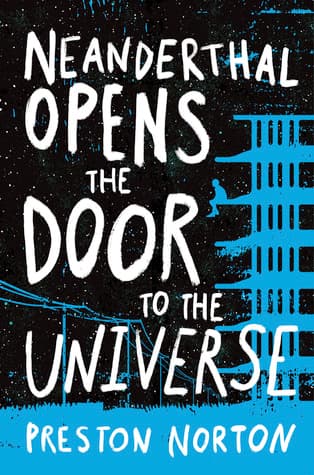
Preston Norton (2018)
Genre
Young Adult / Romance
Reading Time
550 min
Key Themes
See below
Sign in to track this book
A grieving outcast teams up with the jock who used to torment him. Together, they embark on a quest to fix their broken high school, finding unexpected healing along the way.
Cliff Hubbard, a large and isolated student at Happy Valley High, deals with the pain of his older brother Shane's suicide. He faces constant bullying, especially from the popular quarterback, Aaron Zimmerman, who calls him 'Neanderthal.' But Aaron returns to school after a car accident and a near-death experience, claiming he saw God. God, Aaron says, gave him a 'List' of tasks to improve Happy Valley High and told Aaron to get Cliff's help. Despite his initial disbelief and strong dislike for Aaron, Cliff, needing a purpose, agrees to join this strange mission.
The first item on Aaron's 'God List' is to 'Make Mrs. Rinaldi Cool.' Mrs. Rinaldi is the strict English teacher everyone dislikes, who gives seemingly pointless essays. Cliff struggles at first, but Aaron, surprisingly smart, suggests they find out what Mrs. Rinaldi really cares about. They learn she is a passionate, but frustrated, poet. Cliff, using his own grief and understanding of hidden pain, helps Mrs. Rinaldi anonymously publish one of her poems in the school newspaper. This changes how students see her and creates new respect, including from Cliff and Aaron.
The 'List' continues, leading Cliff and Aaron to investigate 'The Hacker,' who has been defacing school property with strange messages. They discover the hacker is a quiet, overlooked student named Penelope, who uses her skills to expose hypocrisy and unfairness in the school. Later, they deal with the 'Jesus Teens,' a very religious group led by Bethany, who push their conservative views on other students. Cliff and Aaron plan to gently challenge their strict beliefs, encouraging more open-minded spiritual talk in the school, instead of direct arguments.
The 'List' becomes more dangerous when it tells them to 'Stop the Drug Dealers.' They uncover a network operating in the school, leading to a tense meeting where Cliff's large size helps in an unexpected way. After this, they must face 'The Bully,' a student named Diesel known for being aggressive. Instead of fighting him, Cliff and Aaron learn about Diesel's difficult home life and why he acts the way he does. They find a way to offer him support and another path, showing that real change often needs understanding and empathy, not force.
As Cliff and Aaron work through the List, their initial dislike slowly turns into a real, though still awkward, friendship. Cliff starts to talk about his grief over Shane, and Aaron reveals his own weaknesses and the pressures of being the popular quarterback. They learn to use each other's strengths – Cliff's quiet strength and Aaron's social charm. Through their interactions with Penelope, Mrs. Rinaldi, and even Diesel, they begin to see the hidden struggles and complexities of their classmates, changing their old ideas about the 'cool' and 'unpopular' groups at Happy Valley High.
The List begins to point to problems with the school system, specifically involving Principal Thompson. Cliff and Aaron realize that some of the school's issues come from the principal's neglect and focus on image over student well-being. They gather evidence and, using skills learned from Penelope, expose some of the principal's questionable choices. This forces the school board to act, which starts to fix bigger problems, not just individual ones. This shows Cliff and Aaron the power of working together.
As the List nears its end, Cliff feels a growing unease. He realizes that many of the issues they've fixed – bullying, loneliness, hidden pain, and lack of support – are like what his brother, Shane, faced before his suicide. The last item on the List, left vague by Aaron, is 'Heal the Heart of Happy Valley.' Cliff starts to think that Aaron's 'divine' mission is not just about the school, but about helping Cliff deal with his grief and find peace. This suggests a deeper, more personal link to Aaron's near-death experience and the 'List.'
Aaron finally tells Cliff the full truth. During his near-death experience, he didn't see God, but Shane, Cliff's dead brother. Shane, as a spirit or vision, gave Aaron the 'List' and told him to help Cliff. Shane wanted Cliff to find purpose, face the issues that led to his own despair, and ultimately, to heal. Aaron, deeply changed by this meeting, felt he had to follow Shane's instructions, even if it meant risking his popularity and becoming friends with someone he used to torment. This news changes everything for Cliff.
The truth about Shane's involvement forces Cliff to face his unresolved grief and the guilt he's carried since his brother's death. He realizes that Shane's 'List' was a final act of love, a way to guide Cliff towards healing and prevent others from suffering the same way. Cliff processes the anger he felt towards Shane for leaving him, and begins to understand the depth of his brother's pain. This moment is a turning point, letting Cliff move from passive suffering to active healing, finding a path towards forgiving both Shane and himself.
With the List done and the truth known, Happy Valley High slowly begins to change. The principal is held responsible, Mrs. Rinaldi does well, Penelope finds her voice, and even Diesel starts to improve his life. Cliff, no longer just 'Neanderthal,' has found a community and a sense of belonging. His friendship with Aaron becomes stronger, built on shared experience and respect. He realizes that while the 'List' started things, real change comes from people choosing empathy, understanding, and working together, and he now has the strength to be part of that change.
The Protagonist
Cliff transforms from a solitary, grieving individual to someone who finds purpose, friendship, and a voice, ultimately confronting his past and embracing his future.
The Co-protagonist
Aaron moves beyond superficial popularity to embrace genuine leadership and friendship, finding a deeper purpose beyond sports.
The Mentioned/Catalyst
Shane's posthumous influence serves as a catalyst for healing and change, both for Cliff and the school.
The Supporting
Penelope moves from anonymous activism to finding a voice and connection within a trusted group.
The Supporting
Mrs. Rinaldi regains her passion for teaching and finds renewed purpose through the students' actions.
The Supporting
Diesel moves from being an aggressor to a recipient of empathy, showing potential for change.
The Antagonist
Principal Thompson's authority is challenged and his shortcomings exposed, leading to accountability.
The Supporting
Bethany's rigid worldview is subtly challenged, opening her to a broader understanding of faith and community.
The novel explores grief, especially after suicide. Cliff's journey is shaped by his unresolved sadness and guilt over Shane's death. The 'List' helps him process this grief, not just by helping others but by confronting the issues that led to Shane's despair. The reveal that Shane created the List helps Cliff find peace and understand his brother's last act as one of love and guidance. The story shows that healing is about finding meaning and connection within the pain, not forgetting.
“Maybe the whole point of the List wasn't for God to fix Happy Valley High, but for me to fix myself.”
A main theme is how empathy changes things, helping overcome prejudice and isolation. Cliff and Aaron, who started as enemies, learn to see past their old ideas about each other and their classmates. By taking time to understand Mrs. Rinaldi's poetry, Penelope's reasons, and Diesel's hard home life, they make real change. The novel suggests that real solutions to problems, even in a high school, come from true connection and a willingness to understand 'why' people act as they do, rather than just judging 'what' they do.
“It was amazing what you could learn about people if you just took the time to look.”
Cliff starts the novel feeling lost and alone, a direct result of his brother's death and being an outcast. The 'List' gives him a mission, a reason to engage with the world, and a sense of direction. Through working with Aaron, he starts to build meaningful relationships and see his own worth. This theme shows how contributing to something bigger than oneself, and being part of a community, can fight loneliness and bring a renewed sense of self-worth. By helping others, Cliff ultimately helps himself find his place.
“For the first time since Shane died, I felt like I was part of something. Like I mattered.”
The novel always challenges characters, and the reader, to look past appearances. Aaron, the popular quarterback, has insecurities and a strong sense of responsibility. Cliff, the intimidating 'Neanderthal,' is sensitive and deeply hurt. Mrs. Rinaldi, the strict teacher, is a frustrated poet. The 'Jesus Teens' mean well but exclude others. The 'List' forces Cliff and Aaron to look deeper into their peers' lives, showing the hidden complexities and struggles beneath high school's social masks. This theme encourages looking critically at stereotypes and understanding people in a more nuanced way.
“Everyone had their own secret List, I realized. Their own battles they were fighting that no one else knew about.”
A seemingly divine mandate that drives the plot and character development.
The 'God List' serves as the primary plot driver, providing a clear, episodic structure to the narrative. Initially presented as a genuine divine instruction to Aaron, its true origin (Shane's posthumous guidance) is a major twist. It functions as a MacGuffin that forces Cliff and Aaron into unlikely collaboration, leading them to confront various social issues and personal demons. Beyond its literal tasks, the List is a symbolic journey for Cliff's healing and a catalyst for change within the school community.
Aaron's initial claim of seeing God, which is later revealed to be a vision of Shane.
Aaron's initial claim of seeing God and receiving the 'List' acts as an unreliable narrative element. While Aaron believes it to be true at first, the reader is encouraged to question its literal divinity. This device builds suspense and allows for the eventual reveal that it was Shane, not God, who appeared to Aaron. This twist deepens the emotional impact of the story, personalizing the mission for Cliff and transforming the seemingly random tasks into a profound act of love and guidance from his deceased brother.
A derogatory nickname that symbolizes Cliff's isolation and self-perception.
Cliff's nickname, 'Neanderthal,' is a powerful symbol of his physical size, his social ostracization, and his internalized sense of being an outsider. It highlights how others perceive him based on appearance and how he, in turn, views himself. As the story progresses and Cliff gains confidence and purpose, the nickname's power diminishes. By the end, he is defined by his actions and his growing sense of self, rather than by a label given to him by bullies, signifying his personal growth and acceptance.
A past tragic event that serves as the story's emotional core and catalyst.
Shane's suicide, which occurred a year before the story begins, is not merely a backstory element but the foundational trauma that drives Cliff's character arc and motivates the entire 'List.' It provides the story with its emotional depth, exploring themes of grief, guilt, and the lingering impact of mental health struggles. The mystery surrounding Shane's motivations and his posthumous involvement in the 'List' gives the narrative a compelling underlying purpose beyond the immediate tasks, ultimately leading to Cliff's confrontation with his unresolved feelings.
“Being lonely is like being thirsty, but for people.”
— Jeremy's internal reflection on his social isolation.
“The universe is full of amazing things, and sometimes, those things are right in front of you.”
— Mr. Henderson encouraging Jeremy to look beyond his immediate problems.
“Maybe the point of life isn't to be perfect, but to be perfectly yourself.”
— Amber's advice to Jeremy about self-acceptance.
“Sometimes the biggest adventures start with the smallest steps.”
— Jeremy musing on how his journey began with a simple act of helping someone.
“It's hard to see the stars when you're always looking at your feet.”
— Mr. Henderson's metaphorical encouragement for Jeremy to broaden his horizons.
“Everyone's got their own kind of weird. The trick is finding someone whose weird matches yours.”
— Amber's candid observation about compatibility.
“Silence isn't empty. It's full of possibilities.”
— Jeremy's evolving understanding of quiet moments.
“You don't have to be a genius to do something great. You just have to try.”
— Mr. Henderson's simple wisdom to Jeremy.
“Love isn't about finding someone to complete you. It's about finding someone who accepts your incomplete parts.”
— Amber sharing her view on true love with Jeremy.
“The past can hurt, but you can either run from it, or learn from it.”
— Jeremy reflecting on his past traumas and deciding to move forward.
“Sometimes the best way to find yourself is to get a little lost.”
— Jeremy's journey of self-discovery through unexpected events.
“The world is a lot bigger than your high school hallway, Jeremy.”
— Mr. Henderson urging Jeremy to see beyond his immediate social struggles.
“Being different isn't a curse. It's a superpower waiting to be discovered.”
— Amber's encouragement to Jeremy about embracing his unique qualities.
“It's okay to not have all the answers. The universe doesn't either.”
— Mr. Henderson offering comfort to Jeremy about uncertainty.
Ready to see how well you understood this book? Take our interactive quiz with 10 questions.