“He knew that he was black, and to be black meant that he had to live in a world that was white.”
— Bigger Thomas's early realization about his place in society.

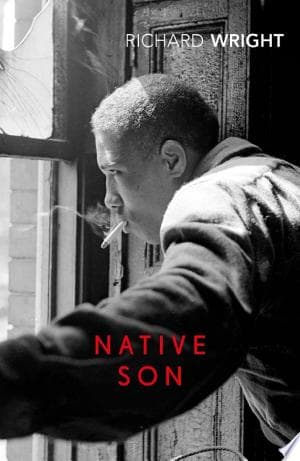
Richard Wright (2016)
Genre
Historical Fiction
Reading Time
10-12 hours
Key Themes
See below
Sign in to track this book
Trapped by poverty in 1930s Chicago, Bigger Thomas's desperate act for survival after a catastrophic encounter with a wealthy white family leads to an examination of systemic racism and the brutal consequences of a society that denies a Black man's humanity.
The novel opens in the one-room apartment of the Thomas family on Chicago's South Side. Bigger Thomas, his younger siblings Vera and Buddy, and his mother are awakened by a large rat. Bigger, fueled by frustration and a desire to assert dominance, hunts and kills the rat, terrifying his family. This incident highlights Bigger's internal rage and his feeling of being trapped. His mother reminds him of his new job interview that day with the wealthy white Dalton family, a position secured through a relief agency. Bigger resents the charity and the implication of his family's reliance on white benefactors, but also feels a glimmer of hope for escape.
Bigger arrives at the opulent Dalton mansion, feeling intimidated and out of place. He is met by Mr. Dalton, Mrs. Dalton (who is blind), and their daughter, Mary. Mr. Dalton, a philanthropic businessman who owns the tenement where Bigger's family lives, attempts to be benevolent, but Bigger perceives only condescension. Bigger is assigned the role of chauffeur and is immediately tasked with driving Mary. He is aware of the vast social and racial gap between himself and the Daltons, leading to unease and a fear of making a mistake. His first encounter with the white world of wealth is marked by terror and a feeling of being under intense scrutiny.
Bigger's duties become complicated by Mary Dalton's rebellious nature. Instead of driving her to her university lecture, she insists he take her to meet her communist boyfriend, Jan Erlone. Bigger is uncomfortable being involved in Mary's secret life, especially with a white man, as it places him in a precarious position. Later that evening, Mary and Jan force Bigger to join them at a diner, where they discuss radical politics and try to engage him in their ideas. Bigger feels patronized and humiliated by their attempts to bridge the racial divide, which only highlight his feelings of alienation and fear of misinterpretation by white society. He is aware of the potential consequences of being seen with them.
After the evening with Mary and Jan, Bigger drives an intoxicated Mary back to the Dalton home. Mrs. Dalton, Mary's blind mother, hears Mary's return and comes to check on her. Fearing discovery and the severe repercussions of being found in Mary's room late at night, especially with her inebriated state, Bigger panics. He covers Mary's mouth with a pillow to silence her and prevent Mrs. Dalton from hearing her. In his terror, he accidentally suffocates Mary to death. The realization of what he has done sends Bigger into a frenzy. He knows he will be blamed for murder and rape, regardless of the truth, and immediately decides he must hide the body.
In a frantic attempt to cover up Mary's death, Bigger carries her body down to the basement furnace. He realizes the body is too large to fit whole, so in an act of desperation, he dismembers her with a hatchet. He then shoves the remains into the roaring furnace, burning them to ashes. This act, while horrifying, gives Bigger a perverse sense of power and control he has never experienced before. He feels a strange, cold calm as he meticulously cleans up the scene, trying to erase all traces of his crime. He believes he has successfully hidden his deed, momentarily escaping the consequences of his actions.
The next morning, the Daltons discover Mary is missing. Mr. Dalton calls the police, and a search begins. Bigger, feigning ignorance, participates in the search, playing the role of the innocent chauffeur. He attempts to deflect suspicion by planting Mary's trunk in Jan Erlone's apartment and fabricating a ransom note, hoping to pin the disappearance on Jan and the Communists. However, the plan is flawed, and the police, along with a zealous newspaper reporter named Britten, begin to suspect Bigger due to his race and his proximity to the crime. The pressure mounts as Bigger struggles to maintain his facade amidst intense scrutiny.
During the investigation, the Daltons' furnace fails to function properly. Bigger is instructed to tend to it. As he shovels coal, one of the investigators, Britten, notices an unusual smell and insists on examining the furnace's contents. The discovery of Mary Dalton's bones and jewelry within the ashes ignites a furious outcry. Bigger, realizing his crime has been uncovered, makes a dash for freedom. He flees the mansion, becoming the target of a widespread manhunt. In his frantic escape, he encounters his girlfriend Bessie Mears and persuades her to join him, hoping to find refuge from the overwhelming pursuit.
Bigger and Bessie take refuge in an abandoned building, but Bessie is terrified and wants to turn herself in. Bigger, fearing she will betray him and driven by his own terror and the belief that Bessie is a liability, rapes her and then bludgeons her to death with a brick, throwing her body down an air shaft. He then tries to escape the dragnet that has engulfed the city. The police finally corner Bigger on the rooftops of the South Side tenements. A dramatic chase ensues, with Bigger leaping across buildings, but he is eventually trapped and captured by a large mob and police officers, bringing an end to his flight.
Bigger is subjected to brutal interrogations by the police and District Attorney Buckley, who are determined to portray him as a monstrous, subhuman rapist and murderer. The media sensationalizes the case, fueling public outrage and racial prejudice. The NAACP, recognizing the racial injustice, assigns a communist lawyer, Boris Max, to defend Bigger. Max attempts to explain Bigger's actions as a product of systemic racism and the oppressive conditions he grew up in, arguing that society bears responsibility. However, the courtroom is a hostile environment, and Bigger's testimony is often misinterpreted or dismissed.
During the trial, Boris Max delivers a powerful, impassioned speech, arguing that Bigger is not an evil monster but a product of the racist society that created him. He details the poverty, discrimination, and psychological toll of living as a Black man in America, explaining how these forces warped Bigger's worldview and led to his acts. Max contends that Bigger's crimes, while horrific, were born from a desperate search for identity and agency in a world that denied him both. He tries to make the jury understand that Bigger's violence was a distorted cry for recognition and an attempt to break free from the invisible walls of segregation.
Despite Boris Max's eloquent defense, the all-white jury is swayed by the prosecution's portrayal of Bigger as a savage animal and the pervasive racial prejudice of the time. Bigger is found guilty of murder. The judge, adhering to public demand and legal precedent, sentences Bigger Thomas to death in the electric chair. The verdict is a devastating blow, confirming Bigger's long-held belief that the white world would never truly see him as human or offer him justice. The courtroom erupts in a mix of satisfaction from the white community and despair from the few Black observers.
In his prison cell awaiting execution, Bigger has a final conversation with Boris Max. He expresses a disturbing realization: despite the horror of his actions, killing Mary and Bessie gave him a sense of identity and agency he had never known before. He felt alive and powerful in those moments, even as he committed heinous crimes. He understands that this feeling came from breaking through the invisible walls of oppression, albeit in a destructive way. He thanks Max for trying to understand him and, in a chilling final statement, expresses a defiant, almost joyful acceptance of his fate, having finally felt his own existence, even if it led to death.
The Protagonist
Bigger begins as a frightened, oppressed individual who acts out of fear and resentment, but through his violent acts and subsequent trial, he achieves a terrifying, albeit destructive, sense of self and agency.
The Supporting
Max remains steadfast in his commitment to justice and understanding, serving as the moral and intellectual voice attempting to contextualize Bigger's tragedy.
The Supporting
Mary's character remains largely static, serving primarily as a plot device whose actions and death reveal the racial and class tensions that define Bigger's world.
The Supporting
Jan transitions from a naive, well-meaning liberal to someone who gains a deeper, albeit still limited, understanding of the systemic racism that shaped Bigger.
The Supporting
Bessie's arc is one of increasing fear and victimization, culminating in her brutal murder by Bigger.
The Supporting
Mr. Dalton remains largely static, unable to see beyond his own limited, benevolent worldview, even in the face of tragedy.
The Supporting
Mrs. Dalton's character remains static, her blindness serving as a powerful symbol throughout the narrative.
The Antagonist
Buckley remains a staunch antagonist, unyielding in his pursuit of Bigger's conviction and reflecting the deep-seated racial bias of the justice system.
The Supporting
Britten remains a static character, serving as a mouthpiece for racist propaganda and contributing to the hostile environment Bigger faces.
The novel explores how systemic racism and the resulting poverty, lack of opportunity, and constant fear warp the individual psyche. Bigger's rage, fear, and violence are direct consequences of living under oppressive white supremacy. His actions, while horrific, are presented as a desperate, distorted response to a world that denies his humanity. The constant threat of being misunderstood or condemned by white society drives Bigger's initial panic and subsequent attempts to cover up his crimes, showing how oppression can lead to self-destructive behavior. The entire legal process, from the biased investigation to the prejudiced trial, highlights how the system perpetuates racial inequality.
“He knew that he had to die. He had known that ever since he had killed Mary. He was a murderer, a Negro murderer, and they would kill him for it. He was outside of the world now.”
Bigger's life is characterized by a lack of agency and a struggle to define himself outside the dehumanizing stereotypes imposed by white society. He feels invisible and powerless, constantly reacting to external pressures. Ironically, it is through murder, and the subsequent attempts to cover it up, that Bigger experiences a terrifying, albeit destructive, sense of power and self-definition. He feels 'alive' and 'real' for the first time, not because of the violence itself, but because he has acted and made choices that impact his world, however tragically. This theme explores the desperate human need for self-determination, even if it manifests in warped and destructive ways when denied legitimate outlets.
“What he had done made him feel that he was alive, that he was living, that he was a man.”
Fear is a pervasive emotion throughout the novel, driving many of Bigger's actions. He lives in a constant state of anxiety, fearing white people, fearing discovery, fearing the consequences of any misstep. This fear, coupled with deep-seated resentment, often erupts into violence. The killing of the rat, the accidental suffocation of Mary, and the deliberate murder of Bessie are all rooted in Bigger's panic, his desire to escape, and a twisted attempt to assert control in a world where he feels powerless. The novel suggests that violence, while condemned, can be an understandable, albeit tragic, outcome of extreme and prolonged oppression, a desperate cry for existence.
“He hated his family because he knew that they were suffering and that he was powerless to help them. He knew that he was a Negro, and that the world was white.”
The novel critiques the superficiality of white liberal goodwill, particularly through the characters of Mr. Dalton, Mary Dalton, and Jan Erlone. While they believe themselves to be progressive and benevolent, their actions often highlight their own blind spots and inherent prejudices. Mr. Dalton's philanthropy does not address the systemic issues that create Bigger's poverty. Mary and Jan's attempts to bridge the racial divide are often condescending, making Bigger feel more alienated and exposed. Their well-intentioned but ultimately naive interactions inadvertently contribute to Bigger's predicament, demonstrating how even 'good' intentions can be harmful when divorced from a true understanding of systemic oppression.
“They were good people, he knew; but they were good to him in a way that made him feel he was not a man.”
The novel illustrates how the media and public opinion contribute to racial injustice. The sensationalized newspaper reports, particularly those by Britten, demonize Bigger, portraying him as a monstrous, subhuman rapist. This biased coverage fuels public hysteria and racial prejudice, making a fair trial impossible. The media's portrayal reinforces existing stereotypes and prevents any nuanced understanding of Bigger's character or the societal forces at play. This theme highlights how narratives can be manipulated to justify oppression and how a prejudiced public can demand a predetermined outcome, regardless of truth or justice.
“The newspapers called him a 'brute,' a 'fiend,' a 'rapist,' a 'murderer.'”
The Dalton mansion represents the stark divide between white wealth and Black poverty.
The Dalton house serves as a critical plot device, acting as a microcosm of the larger racial and class divide in America. Its opulent interior, filled with modern conveniences and a sense of untouchable privilege, stands in stark contrast to Bigger's squalid one-room apartment. This setting immediately highlights Bigger's alienation and fear. More significantly, it is within this 'white' space that Bigger's first major crime occurs, symbolizing the collision of two worlds and the explosive consequences when an oppressed individual is forced into an environment that simultaneously entices and terrifies him. The house is where Bigger's fate is sealed, trapping him within its walls both physically and symbolically.
Mrs. Dalton's physical blindness symbolizes the moral blindness of white society.
Mrs. Dalton's physical blindness is a powerful symbolic plot device. It represents the moral and intellectual blindness of white society to the true nature of racial oppression and the lived experiences of Black people. While Mrs. Dalton cannot see Bigger, her presence in Mary's room, perceived by Bigger, directly triggers his panic and the accidental suffocation of Mary. This suggests that even without direct visual awareness, the 'presence' of white society and its ingrained prejudices are enough to induce fear and catastrophic outcomes for Bigger. Her blindness highlights the inability of many white characters to truly 'see' Bigger as a human being, only as a 'Negro problem'.
The furnace is a symbol of concealment, destruction, and Bigger's desperate acts.
The furnace in the Dalton basement is a crucial plot device, representing concealment, destruction, and Bigger's desperate attempts to erase his crime. It is the site where he dismembers and incinerates Mary Dalton's body, a gruesome act that gives him a momentary, perverse sense of control. The eventual discovery of Mary's remains within the furnace, however, signifies the futility of trying to hide the truth and the inevitability of consequences. It also symbolizes the consuming fire of Bigger's fear and rage, which ultimately destroys not only his victims but also himself.
The opening scene with the rat foreshadows Bigger's own trapped existence and violent nature.
The rat in the opening scene is a significant symbolic plot device. It immediately establishes the squalid, oppressive environment in which Bigger lives and foreshadows his own trapped, cornered existence. Bigger's violent reaction to the rat, his need to assert dominance over it, mirrors his own internal struggles and his desperate, often violent, attempts to break free from the constraints of his world. The rat, like Bigger, is seen as a pest, an unwanted creature, and Bigger's actions against it reflect the violence he experiences and eventually perpetrates himself.
“He knew that he was black, and to be black meant that he had to live in a world that was white.”
— Bigger Thomas's early realization about his place in society.
“He felt that he had been living in a dream for a long time, and that now he was awake.”
— Bigger's feeling of awakening after the murder of Mary Dalton.
“He was a man, no matter what they said, and he would not let them make him a slave.”
— Bigger's internal defiance against the system trying to dehumanize him.
“He was outside the law, and he felt a wild, keen joy.”
— Bigger's initial, perverse sense of power and liberation after committing murder.
“He had done something. To him, that meant he was alive.”
— Bigger's warped sense of existence and validation through his violent acts.
“He was walled in by a white world, and by the fear and hate that world inspired.”
— Describing Bigger's constant experience of racial oppression and its psychological effects.
“Every time he felt a pang of hunger, he knew that it was not merely hunger but a symbol of the entire world that had been denied him.”
— Bigger's understanding of hunger as a metaphor for his broader deprivation.
“He was trying to tell them what it felt like to be black in a white world.”
— Max's defense of Bigger, attempting to explain the social forces at play.
“He had killed because he was afraid. He was afraid because he was being hunted.”
— Bigger's realization about the cycle of fear and violence.
“He had wanted to be like them, but they had made him hate them.”
— Bigger's conflicted feelings towards the white world that both fascinated and repelled him.
“He had lived in a world where the only way to be free was to die.”
— Bigger's bleak conclusion about his ultimate fate and the nature of his freedom.
“No, he was not a man of God. He was a man of the world, and the world was a hard place.”
— Bigger's rejection of religious comfort and his acceptance of his harsh reality.
“He was conscious of himself as a black man, and that consciousness was a burden.”
— The constant weight of racial identity on Bigger.
“He had killed the thing that had sought to kill him.”
— Bigger's internal justification for his actions, viewing them as self-defense against a hostile world.
Ready to see how well you understood this book? Take our interactive quiz with 10 questions.
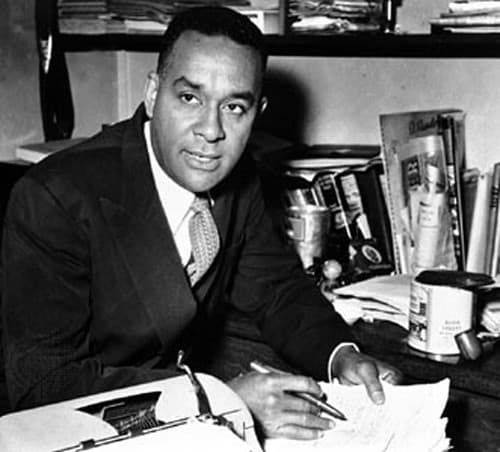
Richard Wright may refer to:







