“I am Nate the Great. I am a detective. I like to solve mysteries. I am looking for a mystery right now.”
— Nate's opening self-introduction, establishing his identity and purpose.

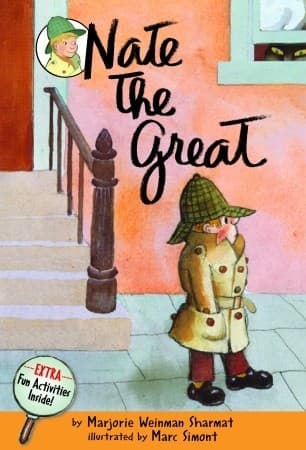
Marjorie Weinman Sharmat (1972)
Genre
Children's / Mystery / Young Adult
Reading Time
30 min
Key Themes
See below
Sign in to track this book
Armed with pancakes and a love for methodical inquiry, boy detective Nate the Great sifts through clues and suspects to find his friend Annie's missing, dog-painted picture.
Nate the Great, a young detective, begins his day with a breakfast of pancakes. He prefers them plain. His peaceful morning is interrupted when his friend Annie calls, sounding very upset. She tells Nate that she has lost a picture she painted of her dog, Fang, and needs his help to find it. Nate, ever the professional, agrees to take the case. He knows he needs to start by gathering all the facts and observing everything carefully, a necessary first step in any mystery.
Nate heads over to Annie's house, bringing his dog, Sludge. Annie explains that she painted the picture of Fang and placed it on her easel to dry. When she returned, it was gone. Nate observes the scene, noting the empty easel. He then questions Annie, asking about anyone who might have been near the picture. Annie mentions her cat, Supercat, a large and somewhat playful feline. Nate finds Supercat looking guilty under a chair. He doesn't immediately accuse the cat, but he adds him to his list of potential suspects, considering Supercat's known playful nature.
Following a hunch, Nate decides to visit Claude, another friend of Annie's. Claude is known for collecting things, and Nate wonders if the picture might have ended up with him. When Nate arrives, Claude is busy looking for his own lost item: a red rubber ball. Claude denies having seen Annie's painting, but his distracted behavior and the fact that he's also missing something make Nate consider him a person of interest. Nate makes a mental note of the missing red ball, thinking it might be connected, or at least a distraction.
Nate's next stop is Rosamond's house. Rosamond is a peculiar girl who loves cats and art, often painting strange, dark pictures. She lives with her four black cats: Big Hex, Little Hex, Super Hex, and Plain Hex. Nate questions Rosamond about Annie's picture. Rosamond shows Nate her own recent painting, which is a dark and abstract depiction. She claims not to have seen Annie's painting but mentions that her cats often play with things. Nate notices a small, red smudge on one of Rosamond's cat's paws, adding to his growing list of observations and potential connections.
Nate decides to visit Oliver, another friend, hoping for more information. Oliver is known for his tidiness and for often finding things. Nate asks Oliver if he has seen Annie's painting. Oliver states he hasn't, but he mentions that he found a piece of paper earlier that day and, thinking it was trash, threw it away. He directs Nate to the trash can where he discarded it. This new lead excites Nate, as it suggests the picture might be misplaced or discarded by mistake.
Nate, with Sludge by his side, investigates the trash can Oliver indicated. He carefully sifts through the contents and finds a picture. However, it's not Annie's original painting of Fang. Instead, it's a painting of a purple monster. Nate is momentarily confused, as this doesn't fit the description of the lost item. He realizes that while he found a picture, it's not the right one, meaning the mystery is far from solved. He knows he needs to re-evaluate his clues and think harder.
Feeling a bit stumped, Nate decides to return to Annie's house to re-examine the original scene. He asks Annie to describe the painting again. As Annie talks, Nate notices something he missed before: a small, red stain on the paw of Annie's dog, Fang. This detail immediately sparks a connection in Nate's mind, making him think back to the red smudge he saw on one of Rosamond's cats, and Claude's missing red ball. The color red seems to be a recurring element in his investigation.
Nate puts all the pieces together. He realizes that Annie's dog, Fang, must have been playing with the red ball from Claude. Fang, with the red paint on his paw, then walked across Annie's wet painting of himself, smudging it. Annie, seeing the smudged painting, thought it was ruined and, in her frustration, threw it away. The picture Oliver found and discarded was the purple monster painting, not Annie's original. Nate's final deduction is that Annie herself, unknowingly, got rid of her own painting.
Nate explains his deduction to Annie, carefully walking her through the chain of events: Fang's red paw print, the smudged painting, and Annie's mistaken disposal of it. Annie, realizing her error, remembers throwing away a painting she thought was ruined. Nate then directs her to the trash can where she had discarded it. Annie retrieves her original painting of Fang, albeit a bit smudged. She is happy to have it back, and Nate is satisfied to have solved another case, proving his detective skills once again.
The Protagonist
Nate consistently demonstrates his established detective skills, reinforcing his reputation as a reliable problem-solver.
The Supporting/Client
Annie learns to be more careful and observant about her own actions and possessions.
The Supporting
Sludge remains a steadfast and reliable companion throughout the story, reinforcing his role.
The Supporting/Suspect
Claude's role is largely static, serving as a plot point for Nate's investigation.
The Supporting/Suspect
Rosamond remains a quirky and artistic character, contributing to the mystery.
The Supporting/Source of Information
Oliver's actions indirectly move the plot forward by providing a key piece of misdirection.
The Mentioned/Catalyst
Fang's actions indirectly lead to the central mystery.
The Mentioned/Brief Suspect
Supercat's role is minor, serving as an initial red herring.
The core theme is Nate's careful observation and logical deduction. From noticing the empty easel at Annie's to the red smudge on Rosamond's cat and finally the red paint on Fang's paw, Nate pieces together seemingly different clues. His internal monologue details his thought process, showing how attention to detail and logical reasoning lead to the correct solution, even when other characters like Oliver or Annie herself provide misdirection.
“I like to eat pancakes. And I like to solve mysteries. This was a mystery. I had to find a picture.”
Nate shows persistence in problem-solving. Despite encountering false leads (Oliver's discarded monster picture) and initial confusion, Nate never gives up. He systematically visits each potential suspect and revisits the scene of the 'crime' when new information arises. His commitment to the case, even for a small problem like a lost painting, shows the importance of seeing a task through to completion and using a structured approach to challenges.
“I thought. I thought hard. I had found a picture. But it was not Annie's picture. I had to think again.”
Nate emphasizes the need for facts. He asks precise questions, avoids jumping to conclusions, and bases his deductions solely on the evidence he gathers. This theme teaches young readers the value of gathering information accurately and not relying on assumptions or emotions. Annie's initial distress and quick action in discarding the painting, without fully understanding why it was smudged, contrasts with Nate's fact-based approach.
“I had to get the facts. I had to ask the right questions.”
The story uses misdirection and red herrings to engage the reader in the mystery. Annie's cat, Supercat, is an early suspect. Claude's missing red ball seems important but is only indirectly connected. Oliver's discarded 'picture' leads Nate down the wrong path initially. These elements complicate the plot and challenge Nate's (and the reader's) deductive skills, making the eventual reveal more satisfying as Nate sifts through the distractions to find the truth.
“I looked in the trash can. I found a picture. It was a picture of a purple monster. It was not Annie's picture.”
Provides direct insight into Nate's thought process.
The story is narrated by Nate the Great himself. This first-person perspective allows readers to directly follow Nate's logical deductions, observations, and internal monologues. It immerses the reader in his methodical approach to solving mysteries, making them privy to his thoughts as he gathers clues, considers suspects, and ultimately pieces together the solution. This device is crucial for establishing Nate's character as a thoughtful and analytical detective.
Nate's internal reflections guide the investigation.
Throughout the book, Nate engages in internal monologues where he verbalizes his observations, questions, and theories. These monologues are not just narrative fillers but are integral to the plot, serving as a roadmap for the reader through Nate's investigative process. They highlight his dedication to facts, his systematic elimination of possibilities, and his logical progression towards the solution, reinforcing the theme of observation and deduction.
Misleading clues that divert the investigation.
Several red herrings are employed to complicate the mystery. Supercat is an initial suspect, Claude's missing red ball seems important, and Oliver's discarded 'purple monster' picture leads Nate astray. These false clues serve to challenge Nate's deductive abilities and keep the reader guessing. They demonstrate how a good detective must sift through irrelevant information to find the true connections, making the eventual solution more impactful.
A seemingly minor detail that becomes a crucial link.
The red rubber ball (and the subsequent red paint) acts as a recurring object that subtly links different parts of the mystery. Claude is looking for his red ball, Rosamond's cat has a red smudge, and ultimately, Fang has red paint on his paw. This seemingly minor detail becomes the critical piece of evidence that allows Nate to connect the dots and understand how the painting was smudged and subsequently discarded, showcasing the importance of seemingly small details.
“I am Nate the Great. I am a detective. I like to solve mysteries. I am looking for a mystery right now.”
— Nate's opening self-introduction, establishing his identity and purpose.
“I eat pancakes for breakfast. Sometimes I eat pancakes for lunch. Sometimes I eat pancakes for dinner.”
— Nate describing his love for pancakes.
“I went home. I ate a pancake. I thought about Annie's picture. I thought about it a lot.”
— Nate reflecting on the missing picture after his initial investigation.
“I looked at Annie. She was sad. I looked at Sludge. He was sad. Even Fang was sad.”
— Nate observing the emotional state of Annie and her pets.
“I looked for clues. I looked under the bed. I looked under the rug. I looked under the cat.”
— Nate's methodical search for clues in Annie's room.
“It was dark. It was cold. It was time for a pancake.”
— Nate's recurring thought about pancakes, even in challenging situations.
“I looked at the note. It said, 'I will not eat liver.'”
— Nate finding a strange note that turns out to be a key clue.
“I looked at the picture. It was a picture of a cat. It was a picture of Super Hex.”
— Nate identifying the subject of the missing picture.
“I knew where the picture was. It was in the wrong place. But it was not lost.”
— Nate's realization about the nature of the 'missing' item.
“I knew who took the picture. I knew why. I knew where it was.”
— Nate's triumphant moment of solving the mystery.
“I like mysteries. But I like my friends more.”
— Nate expressing his values at the end of the story.
“I smiled. Annie smiled. Sludge wagged his tail. Fang barked.”
— The happy resolution after the mystery is solved.
“I am Nate the Great. I found the picture. I am a good detective.”
— Nate's concluding statement, reinforcing his identity and success.
“I will wait for another mystery. I will be ready.”
— Nate's anticipation for future detective work.
Ready to see how well you understood this book? Take our interactive quiz with 10 questions.

Dan Gemeinhart
4.5
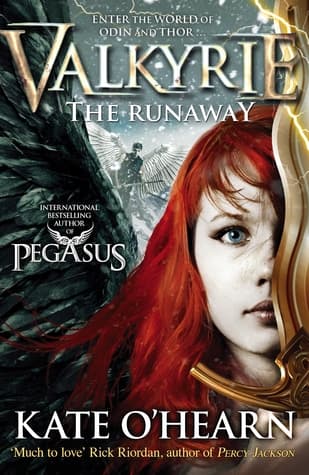
Kate O'Hearn
4.4

Jeanne Birdsall
4.4

Jen Wang
4.4
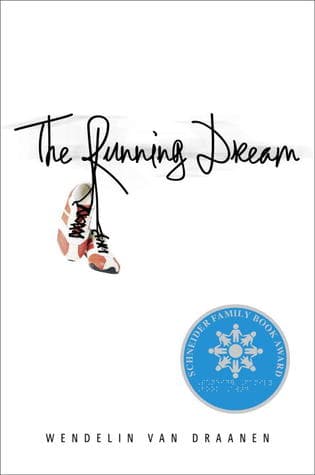
Wendelin Van Draanen
4.3

John Marsden
4.3

Chris Van Allsburg
4.3
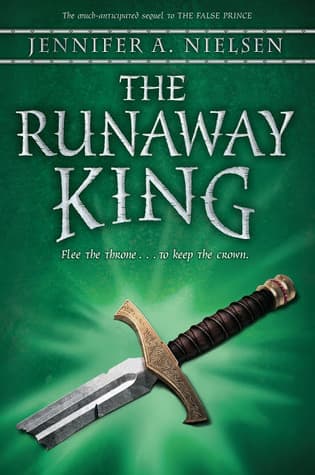
Jennifer A. Nielsen
4.2