“The past is a living thing. It breathes, it whispers, it demands to be heard.”
— Penn Cage reflecting on the history of Natchez and its impact on the present.

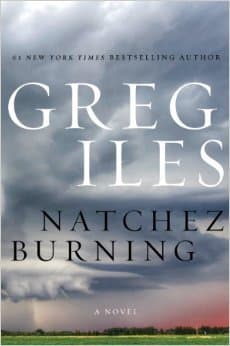
Greg Iles (2011)
Genre
Thriller / Historical Fiction / Mystery
Reading Time
16-20 hours
Key Themes
See below
Sign in to track this book
A Mississippi lawyer uncovers a violent, decades-old KKK conspiracy to save his father from a murder charge, revealing the past's deadly hold on the present.
The novel begins with Dr. Tom Cage, a respected physician in Natchez, Mississippi, arrested for the 1968 murder of Viola Turner, his Black nurse and mistress. Penn Cage, Tom's son and a former prosecutor, immediately returns to Natchez with his fiancée, Caitlin Masters, a journalist. Penn believes his father is innocent and that the accusation is a political attack by corrupt forces that have long controlled Natchez. The arrest shocks the community, threatening to expose long-buried secrets from its racially charged past. Penn quickly understands the depth of the conspiracy against his father, leading him on a dangerous path to find the truth.
As Penn investigates, he finds evidence linking his father to the Double Eagles, a KKK splinter group responsible for unsolved murders and acts of terror in the 1960s. He learns that Tom, despite his progressive views, was forced into an alliance with the group, using his medical skills to treat their members while secretly trying to undermine them. This revelation complicates Penn's view of his father, making him confront the morally questionable choices Tom made to survive and protect his family in a segregated and dangerous society. The Double Eagles are led by some of Natchez's most prominent citizens, including the wealthy Brody Royal.
Caitlin Masters, Penn's fiancée, starts her own journalistic investigation into the Viola Turner murder and Natchez's racial history. Her inquiries quickly lead her to the Double Eagles, and she uncovers connections between the group and powerful community figures. Her persistent digging attracts the attention of the Double Eagles, who see her as a threat to their secrets. She is abducted and tortured by members of the group, including a sadistic individual known as the 'Archer.' Her ordeal shows the extreme lengths the Double Eagles will go to protect their past and silence anyone who tries to expose them, raising the stakes for Penn.
Under pressure, Dr. Tom Cage finally tells Penn the full extent of his involvement with the Double Eagles. He reveals that he was forced to treat their members, using the opportunity to secretly gather intelligence for the FBI. He recounts a critical moment when he betrayed his handler, a Black FBI agent named James Wesley, to save his family from the Double Eagles. This betrayal led to Wesley's murder and Viola Turner's disappearance and presumed death, as she was also involved in intelligence gathering. Tom's confession paints a picture of a man caught between impossible choices, haunted by his past actions and the lives lost.
Guided by clues from his father and his own research, Penn, along with his childhood friend and former sheriff, John Kaiser, and other trusted allies, begins a desperate search for James Wesley's buried remains. Wesley's body holds crucial evidence that could clear Tom and expose the Double Eagles. Their search takes them to abandoned plantations and remote areas of the Mississippi Delta, places with a violent civil rights history. The hunt is dangerous, as the Double Eagles actively work to prevent the discovery of any evidence linking them to past crimes.
Through his investigation, Penn uncovers the identity of the 'Archer,' the sadistic Double Eagle responsible for Caitlin's torture. The Archer is Brody Royal's son, Forrest Royal, a seemingly respectable member of the Natchez community who is deeply depraved. This revelation shows the hidden nature of the Double Eagles, whose members often hide behind normal appearances. The discovery strengthens Penn's resolve to bring the entire organization to justice, not only to clear his father's name but also to avenge Caitlin and prevent further suffering.
Penn, with new knowledge and determination, confronts Brody Royal and the surviving Double Eagles at the Royal Plantation, their secret headquarters. This confrontation is a tense and violent climax, with Penn facing the men who have terrorized Natchez for decades and nearly destroyed his family. He uses his legal skills and understanding of their history to challenge their power and expose their crimes, but the Double Eagles are formidable and ruthless, ready to kill to protect their secrets. The scene is a desperate struggle for truth and justice against overwhelming odds.
During the confrontation at the Royal Plantation, Caitlin Masters is found and rescued from captivity. Her rescue starts a brutal standoff between Penn, his allies, and the Double Eagles. The ensuing battle is chaotic and violent, with casualties on both sides. Penn, along with John Kaiser and others, fights desperately to protect Caitlin and escape the compound, while the Double Eagles use their full power. The standoff ends in a desperate struggle for survival, highlighting the lethal nature of the conspiracy Penn has uncovered.
In a shocking twist, one of Penn's seemingly trusted allies, someone deeply involved in the community, betrays him, further complicating the dangerous situation. This betrayal shows the widespread reach of the Double Eagles and the difficulty of knowing whom to trust in Natchez. Amidst the chaos and violence, the Royal Plantation is set on fire. Its destruction symbolizes the burning away of old secrets and the hope for a new beginning, but also the dangerous volatility of the situation. The fire consumes evidence and lives, leaving a charred landscape that reflects the emotional devastation experienced by the characters.
Though the Royal Plantation is destroyed and some key Double Eagles are neutralized, the immediate aftermath shows that the organization's influence is deep and wide. Penn and his family are left to cope with the emotional and physical scars of their ordeal. While some justice is achieved, the novel concludes with the understanding that the fight against the systemic corruption and racial hatred of the Double Eagles is far from over. The lingering threats and the revelation that not all members of the conspiracy have been brought to justice set the stage for future installments in the trilogy, leaving Penn and Natchez in a precarious state.
The Protagonist
Penn transforms from a man seeking to defend his father to a crusader exposing deep-seated corruption, forcing him to confront uncomfortable truths about his family and hometown.
The Supporting/Central Figure
Tom evolves from a silent, accused man to one who finally unburdens himself of decades of secrets, revealing his role as an informant and the compromises he made.
The Supporting
Caitlin's arc moves from an objective journalist to a traumatized survivor, deeply scarred but still committed to exposing the truth.
The Antagonist
Brody Royal remains a steadfast villain, his power slowly eroded as his secrets are exposed, but he never truly repents.
The Supporting
Kaiser solidifies his role as Penn's most trusted confidant and ally, demonstrating unwavering courage in the face of danger.
The Supporting/Catalyst
Viola's story is revealed posthumously, her life and death serving as the catalyst for exposing the town's dark past.
The Antagonist
Forrest remains a purely evil character, his actions serving to highlight the extreme depravity of the Double Eagles.
The Supporting/Catalyst
Wesley's arc is revealed through flashbacks and testimony, showing his heroic but ultimately tragic fight against injustice.
The novel explores how the violent and racist history of the American South, especially the Civil Rights era, continues to affect the present. The Double Eagles' secrets, buried for decades, erupt into the contemporary lives of the Cage family, showing that unresolved injustices demand attention. The landscape of Natchez, with its grand plantations and hidden burial grounds, reminds readers of this oppressive past. Dr. Tom Cage's lifelong guilt over his actions in the 1960s, and the town's silence, show how ignored history can become a destructive force.
“History is not dead. It is not even past. It is present, and it is a monster.”
A central theme is the difficult and often morally unclear choices people make to survive in oppressive situations. Dr. Tom Cage's decision to treat Double Eagles members while secretly informing, and his subsequent betrayal of James Wesley to protect his family, highlight the extreme pressures and ethical dilemmas faced by individuals caught in violent extremism. The novel examines the long-term psychological cost of such compromises, showing how they can haunt a person for decades and affect future generations. Penn struggles to accept his father's heroic image alongside the morally gray actions Tom took.
“Sometimes, to save the ones you love, you have to do things you can never forgive yourself for.”
Natchez Burning directly addresses the deep-seated racial injustice and systemic evil that permeated the Jim Crow South and continues to influence the present. The Double Eagles are not just individual bigots, but a powerful, interconnected network of wealthy and influential men who used violence and intimidation to maintain white supremacy and protect their economic interests. The novel exposes how law enforcement, political structures, and even respected institutions were complicit or actively involved in perpetuating racial terror, making the fight for justice difficult and dangerous, as seen in the murders of Viola Turner and James Wesley.
“Justice in Natchez wasn't blind; she had one eye open, and it was always looking out for the powerful white man.”
The dynamics of family loyalty and the impact of betrayal are central to the story. Penn's strong loyalty to his father drives his investigation, even as he uncovers truths that shatter his perception of Tom. Conversely, Tom's betrayal of James Wesley, driven by a desperate desire to protect his own family, has catastrophic consequences. The theme also extends to the Royal family, where Brody Royal's ruthless protection of his son, Forrest, continues a cycle of violence. The novel explores the lengths to which individuals will go for family, for good and for ill, and the pain when trust is broken.
“Family was a bond forged in fire, but sometimes, that fire could burn you alive.”
Dr. Tom Cage initially withholds or distorts information, revealing truths gradually.
Dr. Tom Cage serves as an unreliable narrator, particularly in the initial stages of the investigation. He initially denies the murder and then slowly, agonizingly, reveals fragmented truths about his past involvement with the Double Eagles and the circumstances surrounding Viola Turner's disappearance and James Wesley's murder. This device creates suspense and forces Penn, and the reader, to constantly re-evaluate the facts and question the full extent of Tom's secrets. It highlights the profound guilt and fear that have silenced Tom for decades, making his eventual confessions more impactful and tragic.
Interspersed scenes from the 1960s reveal the backstory of the Double Eagles and specific events.
The narrative frequently shifts between the present-day investigation and detailed flashbacks to the 1960s, providing crucial historical context for the current events. These flashbacks, along with the discovery of old documents, letters, and FBI files, gradually piece together the story of the Double Eagles, Dr. Tom Cage's involvement, Viola Turner's activism, and James Wesley's undercover work. This device effectively builds suspense, deepens character motivations, and illustrates how the past directly impacts and explains the present-day conspiracy, immersing the reader in the racially charged atmosphere of the era.
The search for James Wesley's buried body drives a significant portion of the plot.
The buried body of FBI agent James Wesley, and the evidence it potentially holds, functions as a MacGuffin. Its discovery is presented as the key to exonerating Tom Cage and exposing the Double Eagles. The search for Wesley's remains provides a clear, tangible goal for Penn and his allies, propelling them into dangerous situations and through various locations. While the body itself is important, its primary function is to motivate the characters' actions, create urgency, and facilitate encounters with antagonists, driving the plot forward through a series of escalating challenges and revelations.
The Double Eagles' fear of their past being exposed fuels their violent actions.
The Double Eagles' primary motivation for their present-day violence and intimidation is the threat of their decades-old crimes being exposed. Penn Cage's investigation, and particularly Caitlin Masters's journalistic pursuit, directly threatens their carefully constructed lives and reputations. This device creates constant tension, as the reader understands that every step Penn takes closer to the truth puts him and those he loves in greater danger. The Double Eagles' desperation to maintain their secrets leads them to commit increasingly brutal acts, escalating the stakes throughout the novel.
“The past is a living thing. It breathes, it whispers, it demands to be heard.”
— Penn Cage reflecting on the history of Natchez and its impact on the present.
“Sometimes you have to break the law to do the right thing.”
— Penn Cage contemplating the moral ambiguities of his investigation.
“Hate is a cancer. It eats away at you from the inside, until there's nothing left.”
— A character observing the destructive nature of racial prejudice in the South.
“There are secrets that want to stay buried, and then there are secrets that refuse to die.”
— Penn Cage realizing the depth and persistence of the conspiracies he's uncovering.
“The South remembers. It remembers everything, even what it tries to forget.”
— A recurring theme highlighting the indelible mark of history on the region.
“Courage isn't the absence of fear, it's the triumph over it.”
— Penn Cage facing dangerous situations and the weight of his family's past.
“The truth is rarely simple, and never convenient.”
— Penn Cage grappling with the complex and uncomfortable revelations of his investigation.
“Some wounds never heal, they just scar over, waiting for the right moment to bleed again.”
— A reflection on the lasting trauma of past injustices and violence.
“A man without a past is a man without a future.”
— Penn Cage understanding the importance of confronting history to move forward.
“Justice isn't always fair, but it's always worth fighting for.”
— Penn Cage's determination to seek justice despite the obstacles.
“The greatest evil often hides behind the most respectable masks.”
— Penn Cage discovering the true nature of powerful figures in Natchez.
“Family can be a blessing and a curse, sometimes at the very same time.”
— Penn Cage's complicated relationship with his father and the legacy of his family.
“The dead don't forget. They wait.”
— A chilling reminder of the unresolved past and the victims of violence.
“Sometimes the only way out is through.”
— Penn Cage facing overwhelming challenges and realizing he must confront them directly.
Ready to see how well you understood this book? Take our interactive quiz with 10 questions.

Biography coming soon.







