“Bombay, you will always be my first, my last, my only love. You will always be the city of my dreams, the city of my nightmares.”
— The narrator's conflicted feelings about Bombay.

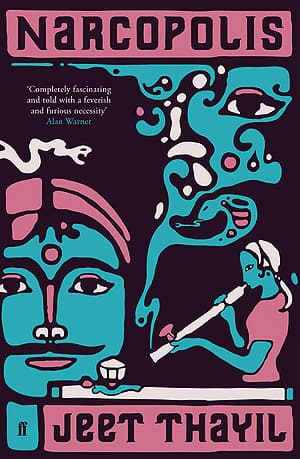
Jeet Thayil (2012)
Genre
Literary Fiction / Historical Fiction
Reading Time
300 min
Key Themes
See below
Sign in to track this book
In 1970s Bombay, poets and pimps drift in opium dens, a city balanced between beauty and squalor, as a killer targets its invisible poor.
The novel begins in 1970 with Dom Ullis, an American, arriving in Bombay and finding Rashid's opium den on Shuklaji Street. There, he meets Dimple, a eunuch and former courtesan, who carefully prepares and serves the opium pipes. Dimple, a striking figure, introduces Dom to his first opium experience, an entry into the den's hazy, time-bending world. The den is a haven for its regulars, including poets, hustlers, and dreamers, all seeking escape from Bombay's harsh realities. Dom observes the rituals and the strong sense of community among the addicts, feeling an immediate pull to this hidden world. Rashid, the owner, oversees his space with quiet authority, a keeper of secrets and dreams.
The story then explores Dimple's past, showing her life as a famous courtesan named Laxmi. She describes her experiences in the kothas (brothels), her relationships with various clients, and the complex social rules of that world. Driven by a wish for change and a rejection of the traditional female role, Laxmi undergoes a voluntary castration to become a eunuch, taking the name Dimple. This act is both a liberation and a redefinition of self, allowing her to navigate Bombay's underworld with a unique viewpoint. Her transition is a main theme, looking at identity, gender, and the search for belonging in a society that often pushes aside the unconventional.
Newton Francis X. D'Souza, a struggling poet and a regular at Rashid's den, is in love with Dimple. His life is a cycle of opium dreams and attempts to write about his experiences. Newton sees Dimple as a muse and an ideal he cannot reach. His unreturned love fuels his creative efforts and his sadness. He often reads his poetry in the den, seeking approval and connection. His story shows how addiction, art, and the search for meaning are linked in a life lived on society's edges. His inner struggles reflect the wider themes of longing and the hard-to-reach nature of beauty.
Rumi, a young man from a wealthy Parsi family, finds Rashid's opium den, looking for an escape from his privileged but restrictive life. Despite his background, he finds comfort and a sense of belonging among the den's residents. He quickly forms a close, almost family-like, relationship with Dimple, who sees in him a vulnerability that connects with her own past. Rumi's presence brings a different social class into the den, showing how opium appeals to people from all backgrounds as a refuge. His journey into addiction is marked by a slow separation from his old life and a deeper immersion into the den's world.
Throughout the story, the shadow of the Pathar Maar, a serial killer who attacks Bombay's homeless and poor by crushing their heads with stones, hangs over the city. This figure represents the city's brutality and indifference towards its marginalized people. The fear of the Pathar Maar highlights the dangerous lives of those on the streets and in the city's hidden parts, including many who visit Rashid's den. The police are largely ineffective, and the murders are a stark reminder of how little value is placed on the lives of the invisible poor, contrasting sharply with the relative safety and escape offered by the opium den.
As the 1970s turn into the 1980s, Bombay changes significantly. The traditional opium dens, like Rashid's, begin to fade as a new, stronger drug, heroin, appears. This shift marks a darker turn in the city's drug culture, as heroin addiction is shown as more destructive and less communal than opium. The novel captures the end of an era, showing the slow death of the opium dens and the rise of a more dangerous, isolating form of addiction. This transformation is not just about drugs but also reflects wider social and economic changes in Bombay, as the city modernizes and its underworld adapts.
Wanting change and perhaps feeling disappointed with the fading opium culture, Dimple decides to leave Bombay and travel to Delhi. This journey represents a symbolic break from her past and an attempt to create a new identity beyond Shuklaji Street. Her departure is a sad moment for the remaining den regulars, especially Newton and Rumi, who feel her absence deeply. In Delhi, Dimple tries to fit into a new community, but her past and the challenges of her unique identity continue to shape her experiences. Her journey shows the ongoing search for belonging and self-acceptance.
With more heroin and a changing social scene, Rashid's opium den slowly but surely declines. Many of its regulars either die from addiction, move on, or switch to heroin, which Rashid dislikes. The communal spirit of the opium den starts to disappear, replaced by the more isolating and destructive nature of heroin use. Rashid, a steady figure for decades, struggles to keep his establishment going, a symbol of a past era. The den, once a lively sanctuary, becomes a quieter, sadder place, reflecting the wider loss of a particular cultural and historical moment in Bombay.
Years after his first visit, Dom Ullis returns to Bombay, now a different city, and tries to find out what happened to the people he met in Rashid's den. He discovers that much has changed: the opium dens have mostly vanished, replaced by the heroin trade, and many of the characters have died tragically or become forgotten. Dom's return is a journey of sadness and memory, as he deals with the passing of time and addiction's destructive power. He looks for any remaining connections, piecing together the fates of Dimple, Newton, Rumi, and Rashid, offering a look back at their intertwined lives and the city's transformation.
The novel ends by revealing what ultimately happened to its main characters. Dimple, despite her resilience, continues to live a marginalized life, her journey marked by both strength and vulnerability. Newton Francis X. D'Souza, the poet, dies from his addiction, his artistic hopes overcome by his dependence on opium. Rumi, the young Parsi, also falls deeper into addiction, losing his connection to his privileged past. Rashid, the quiet owner, eventually closes his den, a victim of changing times and the shifting drug scene. Their individual stories combine to form a sad picture of life, loss, and the enduring spirit of Bombay's forgotten people.
The Protagonist
Dimple transforms from a celebrated courtesan to a eunuch, seeking self-realization beyond gender constraints, and ultimately finds a form of belonging in the opium den and through her journey to Delhi.
The Protagonist/Narrator (Frame)
Dom transitions from a naive outsider to a reflective observer, haunted by the past and the destinies of the people he encountered.
The Supporting
Newton's artistic aspirations are ultimately consumed by his addiction and unrequited love, leading to a tragic end.
The Supporting
Rumi descends from a privileged background into deep addiction, losing his former life and finding a new, albeit tragic, identity within the drug culture.
The Supporting
Rashid oversees the decline of his traditional opium den as the drug landscape changes, ultimately succumbing to the inevitable shift.
The Antagonist/Mentioned
The Pathar Maar remains an elusive, terrifying force, embodying the city's inherent violence and disregard for its most vulnerable.
Addiction, especially to opium and later heroin, is a main theme, shown not just as destructive but also as a way to escape and find community. Rashid's opium den offers a sanctuary where people like Dimple, Newton, and Rumi can briefly forget their pain and social pressures. The shared ritual of preparing and sharing pipes creates a sense of belonging. However, the novel also contrasts the 'gentler' opium addiction with the isolating and more destructive nature of heroin, showing the increasing toll of drug use on individuals and the city. The characters' lives are tied to their chosen escapes, shaping who they are and what happens to them, as seen in Newton's inability to write without opium or Rumi's complete separation from his old life.
“You introduce only your worst enemy to opium. But in that den, in that moment, it felt like the only friend I had.”
The novel deeply explores how identity is fluid and created, especially through Dimple's character. Her journey from Laxmi, a male-born courtesan, to Dimple, a eunuch, is a strong act of self-creation and defiance against what society expects. This change allows her to navigate the world with a unique perspective, challenging traditional ideas of gender and belonging. Other characters also struggle with who they are, whether it's Newton as a poet-addict, Rumi as a privileged youth lost to drugs, or Rashid as the keeper of a dying tradition. Bombay itself is always changing, mirroring the personal transformations of its residents, as seen in the shift from opium to heroin dens.
“I was born a man, became a woman, and then became something else entirely. It was a choice, you see, a freedom.”
Memory and nostalgia fill the story, especially through Dom Ullis's look back. The novel brings to life a specific time and place—Bombay of the 1970s and 80s—as a lively yet decaying place. The opium den itself holds memories and stories, a place where time seems to slow. Dom's return to Bombay years later is a search to recover these memories and understand what happened to the characters, creating a sense of longing for a lost era and its unique culture. The shift from opium to heroin symbolizes a loss of innocence and a city transformation that can only be fully understood through memory, as the past is constantly re-evaluated through the present.
“Bombay was a city of ghosts, and I was one of them, searching for the shadows of a life I had once touched.”
Bombay (Narcopolis) is presented as a character itself, particularly its chaotic, lively, and often brutal hidden parts. The novel vividly shows the lives of pimps, pushers, poets, and eunuchs who live on Shuklaji Street, revealing a hidden world beneath the city's surface. This theme highlights the resilience of those marginalized by society, but also the dangers they face, shown by the terrifying figure of the Pathar Maar. The squalor, the illegal trades, and the sense of community among the outcasts all contribute to a rich, complex picture of a city that is both beautiful and cruel. This hidden world serves as a background for the characters' struggles to survive and find meaning.
“The city was a beast, and we were its fleas, clinging to its skin, feeding off its waste, and sometimes, if we were lucky, catching a ride.”
The story jumps between different time periods and character perspectives.
The novel employs a non-linear narrative structure, shifting between the 1970s and later decades, and between the perspectives of various characters, primarily Dom Ullis, Dimple, Newton, and Rumi. This fragmented approach mirrors the hazy, time-bending experience of opium use and the fractured memories of addiction. It allows the author to gradually reveal character backstories and the city's transformation, creating a rich tapestry of interconnected lives and events. The jumps in time and perspective contribute to the dreamlike, hallucinatory quality of the narrative, immersing the reader in the chaotic and often disorienting world of Bombay's underworld.
Dom Ullis's later return to Bombay frames the retrospective recounting of events.
Dom Ullis's initial visit to Rashid's opium den in 1970 and his subsequent return years later serve as a frame for the entire narrative. His later journey to trace the fates of the characters he knew allows for a reflective, retrospective examination of the past. This device provides a sense of closure and allows the author to comment on the passage of time, the impact of addiction, and the changing face of Bombay. Dom acts as an anchor for the reader, guiding them through the complex lives of the characters and the city's transformation, while also embodying the theme of memory and loss.
The drugs symbolize different eras and forms of escape/destruction.
Opium and heroin function as powerful symbols throughout the novel. Opium, particularly in Rashid's den, symbolizes a communal, ritualistic escape, a gentler form of oblivion associated with a fading era of Old Bombay. It represents a shared experience, a haven from harsh reality. Heroin, conversely, symbolizes a darker, more isolating, and destructive form of addiction, representative of the city's modernization and a more brutal drug culture. The transition from opium to heroin mirrors the decline of traditional Bombay and the rise of a more dangerous, unforgiving urban landscape, highlighting the escalating stakes of addiction and societal change.
Bombay is depicted with its own personality, influencing characters' lives.
Bombay is not merely a setting but a living, breathing character in 'Narcopolis.' It possesses its own personality, moods, and transformative powers, directly impacting the lives and destinies of its inhabitants. The city's squalor, vibrancy, brutality, and beauty are meticulously detailed, shaping the characters' choices and experiences. Shuklaji Street, with its opium dens and red-light districts, becomes a microcosm of the city's underbelly. The city's evolution, from the opium-infused 1970s to the heroin-ridden later decades, mirrors the personal transformations and declines of the characters, making Bombay an integral and dynamic force in the narrative.
“Bombay, you will always be my first, my last, my only love. You will always be the city of my dreams, the city of my nightmares.”
— The narrator's conflicted feelings about Bombay.
“The opium den was a place where time ceased to exist, where the past and the future dissolved into an eternal present.”
— Describing the experience of an opium den.
“Every addiction is a story, a long and winding tale of desire and despair.”
— A reflection on the nature of addiction.
“The city was a palimpsest, layers of history written over each other, each layer revealing a different truth.”
— Describing Bombay as a city with a rich and complex history.
“To live in Bombay was to live in a constant state of flux, to be always on the verge of something new, something unexpected.”
— The dynamic and unpredictable nature of life in Bombay.
“We were all searching for something, some elusive truth, some forgotten memory, some lost love.”
— A general observation about the human condition and the characters' motivations.
“The silence of the opium pipe was a language in itself, a language understood by those who had tasted its bitter sweetness.”
— The shared experience and understanding among opium users.
“History is not a straight line, but a labyrinth, full of dead ends and unexpected turns.”
— A philosophical take on the nature of history.
“In the city of dreams, nightmares were just as real, just as vivid.”
— The duality of Bombay as a place of both hope and despair.
“He was a connoisseur of oblivion, a collector of forgotten moments.”
— Describing a character's relationship with memory and forgetting.
“The past was not something to be left behind, but something to be carried, a burden and a blessing.”
— A reflection on the enduring impact of the past.
“Every face in the opium den told a story, a silent narrative of longing and loss.”
— Observing the hidden stories of the people in the opium den.
“The most dangerous addiction is the one you don't even know you have.”
— A subtle warning about unconscious habits or dependencies.
“Bombay teaches you how to disappear, how to become invisible in plain sight.”
— The experience of anonymity and blending into the vastness of Bombay.
Ready to see how well you understood this book? Take our interactive quiz with 10 questions.
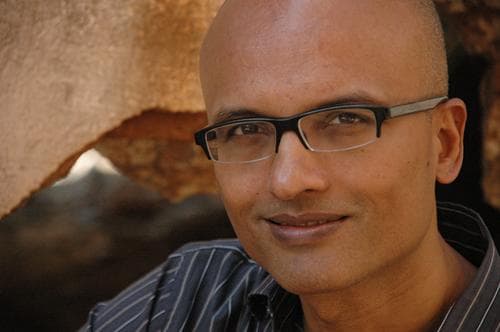
Biography coming soon.







