“There are some things in this world that are meant to be broken. And some things that are meant to break us.”
— A reflection on the nature of destiny and sacrifice.

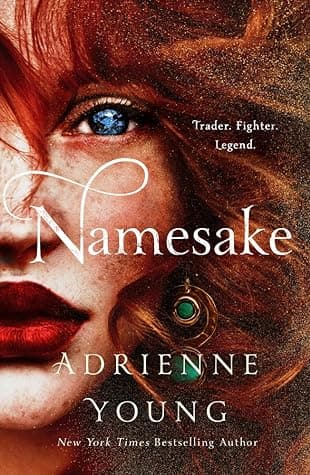
Young, Adrienne Young (2021)
Genre
Fantasy / Young Adult / Romance
Reading Time
736 min
Key Themes
See below
Sign in to track this book
To protect her new family and the boy she loves, Fable, a seasoned trader and survivor, must navigate a treacherous web of lies and betrayal, confronting her mother's dangerous past while brokering a perilous alliance with a powerful gem trader.
After escaping her father, Saint, and reclaiming the Marigold, Fable and her crew, led by West, sail towards Ceros to establish their own trading business. Their newfound freedom shatters when Zola, a ruthless trader with a vendetta against Fable's mother, Isolde, ambushes and captures them. Zola believes Fable possesses a map or knowledge related to a legendary treasure, the Sunken City, which he seeks. He forces Fable to become his captive, threatening her crew if she doesn't cooperate. This turn of events disrupts Fable's plans and forces her into a dangerous new alliance under duress.
Zola's immediate goal is to partner with Holland, a formidable, secretive gem trader who controls a significant portion of the trading routes and resources in the Narrows. Zola believes Holland holds a key to finding the Sunken City, or at least has information that can lead him there. Fable, under constant threat to her crew, must act as Zola's emissary and negotiator. She must use her trading skills and knowledge of the Narrows to convince Holland, a woman known for her shrewdness and distrust, to ally with Zola. This task is perilous, as Holland is not easily swayed and has her own hidden agenda.
As Fable works to facilitate the alliance between Zola and Holland, she uncovers startling truths about her mother, Isolde. It becomes clear that Isolde was not merely a renowned trader but was deeply involved in the mystery of the Sunken City and had a complex, long-standing relationship with Holland. Fable learns that Isolde understood the Narrows' ancient lore and hidden pathways, and that her mother's past actions are directly impacting the present. These revelations challenge Fable's perception of her mother and make her question everything she thought she knew about her family's history and the Narrows.
Through cryptic clues and hidden messages left by Isolde, Fable slowly pieces together a map to the Sunken City. These clues are often embedded in seemingly ordinary objects or locations, requiring Fable's keen observational skills and knowledge of the Narrows. She discovers that her mother had intricately planned for someone to follow her trail, anticipating the dangers that would arise. The deciphered map reveals not just a location, but a complex series of trials and knowledge required to access the legendary city, confirming its immense significance and the reason behind Zola's relentless pursuit.
While Fable is forced to cooperate with Zola, West and the Marigold crew are held captive, their lives constantly at risk. West grapples with the impossible choice between protecting Fable and ensuring the survival of their chosen family. He tries to subtly assist Fable from afar, relaying messages and gathering information when possible, but his hands are largely tied. His frustration and fear for Fable's safety are palpable, highlighting the deep bond they share and the immense pressure placed upon their nascent relationship and leadership of the Marigold. He is torn between direct action and strategic patience.
As Fable gets closer to uncovering the Sunken City's secrets, the fragile alliance between Zola and Holland begins to fray. Holland, true to her reputation, is revealed to have her own motivations and is not entirely trustworthy. She subtly manipulates Zola and Fable, pursuing her own agenda related to the Sunken City's power and resources. This leads to betrayals and double-crosses, forcing Fable to constantly re-evaluate who she can trust and to navigate a treacherous landscape of shifting loyalties, where every interaction could be a trap. The true nature of their partnership, built on coercion, inevitably leads to its collapse.
Adding another layer of complexity to Fable's predicament, her father, Saint, reappears. Having learned of the Sunken City's potential, he too is drawn into the hunt, creating a dangerous three-way dynamic between him, Zola, and Holland. Fable has a tense, emotional confrontation with Saint, where she grapples with her unresolved feelings towards him—a mixture of resentment, longing, and a complicated understanding of his motivations. Saint's presence further complicates Fable's already perilous journey, as he represents another powerful force vying for control over the legendary treasure and her destiny.
With the map finally pieced together, Fable, West, and a small group of trusted allies from the Marigold, along with a reluctant Holland, embark on the treacherous journey to the Sunken City. The path is not easy, involving navigating treacherous waters, ancient riddles, and confronting physical challenges. They face natural dangers and the constant threat of being followed or ambushed by Zola and Saint, both of whom are still determined to claim the city's riches. This journey tests their skills, their courage, and the strength of their bonds, pushing them to their limits as they near their ultimate destination.
Upon reaching the Sunken City, Fable discovers it is more than just a legendary treasure trove. It is an ancient, powerful place, not just of material wealth but of immense knowledge and a unique connection to the Narrows' balance. She learns that her mother, Isolde, wasn't seeking to plunder it, but to protect it, and that its true power lies in its ability to influence the very fabric of their world. Fable realizes the responsibility that comes with this discovery and understands the danger if it falls into the wrong hands. The city holds a secret that could reshape the Narrows.
As Fable and her allies move deeper into the Sunken City, Zola, Saint, and their respective factions converge, leading to a climatic confrontation. A desperate battle for control over the city's power ensues, with Fable caught in the middle. She must use all her trading cunning, fighting prowess, and new understanding of the city's true purpose to protect it from those who would exploit it. The fight is intense, with high stakes and personal betrayals coming to a head, forcing Fable to make difficult choices that will determine the fate of the Sunken City and the Narrows itself. Lives are lost, and alliances are tested.
In the midst of the chaos and the battle for the Sunken City, Fable faces a profound choice. She realizes that the city's power cannot be controlled or owned by any single individual without devastating consequences for the Narrows. Drawing upon her mother's legacy and her own innate wisdom, Fable makes a selfless decision to ensure the Sunken City's protection and prevent its power from being misused. This choice involves a significant personal sacrifice, potentially affecting her future with West and the life she had envisioned for herself. It solidifies her role as a guardian of the Narrows, not just a trader.
Following the resolution at the Sunken City, the Narrows begins to find a new equilibrium. The power dynamics shift, and the secrets of the past are brought into the light. Fable, having navigated the treacherous waters of betrayal and self-discovery, emerges as a stronger, more resolved leader. While the ending leaves room for the Narrows to heal and rebuild, Fable finds a sense of purpose and belonging, not just with West and her crew, but within the larger Narrows. She accepts her destiny, understanding the weight of her lineage and the unique role she plays in shaping the future of her world, finally finding her true home.
The Protagonist
Fable evolves from a survivor seeking a personal haven to a guardian of the Narrows, accepting her lineage and the responsibility of protecting its balance.
The Supporting
West's loyalty and leadership are tested to their limits, solidifying his role as Fable's unwavering partner and confidante.
The Antagonist
Zola remains largely unchanged in his ruthless pursuit, ultimately facing the consequences of his relentless ambition.
The Supporting
Holland shifts from a guarded, self-interested player to a reluctant participant in protecting the Narrows' balance, revealing a deeper morality.
The Supporting
Saint remains a powerful, morally ambiguous figure, whose pursuit of power is ultimately challenged by Fable's choices.
The Mentioned
Though deceased, Isolde's character arc is revealed posthumously, showing her evolution from a legendary trader to a guardian of ancient secrets.
The Supporting
Pryde's loyalty is tested, but ultimately solidified through shared hardship, reinforcing his role as a trusted friend.
The Supporting
Journeyman's unwavering support for Fable and West is deepened through shared adversity.
Fable's primary motivation throughout the duology is to find a place where she truly belongs and feels safe. After being cast out by her father, the Marigold and its crew, led by West, represent this elusive home. However, in Namesake, this sense of belonging is constantly threatened by external forces like Zola and the resurfacing of her past. She must fight not just for her life, but for the stability of her chosen family. Ultimately, her journey reveals that home is not just a physical place, but a state of being, found in her relationships and her acceptance of her own identity and purpose in the Narrows. This is evident when she chooses to protect the Sunken City, solidifying her commitment to the Narrows' future.
““Home wasn’t a place. It was a feeling. A feeling of safety and belonging, of being seen and loved. And I had found it.””
Fable grapples with the weight of her mother, Isolde's, legacy and how it shapes her own identity. Isolde's hidden past and her connection to the Sunken City force Fable to re-evaluate everything she thought she knew about her family. Fable's journey becomes one of uncovering not just her mother's secrets, but also understanding her own place within this complex lineage. She must decide whether to embrace or reject the path laid out by her mother, ultimately forging her own identity that acknowledges her heritage while asserting her independence. The final decision she makes regarding the Sunken City is a direct embodiment of her chosen legacy.
““I was a daughter of the Narrows, born of the sea and tempered by its currents. My mother’s blood ran in my veins, but my choices were my own.””
The Sunken City represents immense power, and the novel explores how different characters seek to wield it. Zola and Saint desire it for personal gain and control, while Holland has more complex, self-serving motives. Fable, however, through her journey and understanding of her mother's true intentions, comes to realize that true power lies in protection and balance, not exploitation. Her ultimate decision to safeguard the Sunken City, even at personal cost, highlights the theme of responsibility that accompanies great power. This theme is central to the climax, where the various factions clash over who will control the city's fate.
““Power wasn’t about taking. It was about protecting. About knowing when to hold on, and when to let go.””
The romantic relationship between Fable and West is a core element, providing emotional grounding amidst the danger. Their love is tested repeatedly as Fable's life, and by extension, West's, is constantly at risk. West's unwavering loyalty and his willingness to sacrifice his own safety for Fable's show the depth of their bond. Fable, in turn, makes significant personal sacrifices to protect West and their crew, and ultimately, to secure the future of the Narrows. Their love story is intertwined with the larger narrative of survival and selflessness, demonstrating that true love often requires difficult choices and sacrifices for the greater good. This is clear in Fable's final decision about the Sunken City, which impacts her future with West.
““His hand found mine, and in that simple touch, I found all the courage I needed. We were in this, together.””
A legendary, ancient city holding immense power and secrets, central to the plot.
The Sunken City serves as the primary MacGuffin and the ultimate destination for most of the characters. It is initially presented as a fabled treasure trove, driving Zola's and Saint's relentless pursuit. However, its true nature evolves throughout the story, becoming a symbol of ancient power, knowledge, and the balance of the Narrows. It acts as a catalyst for revealing Isolde's past, forcing Fable to confront her lineage, and ultimately serving as the site of the climatic confrontation and Fable's defining choice. Its mystery and power drive the entire plot forward.
A series of cryptic messages and objects left by Fable's mother, guiding her path.
Isolde's clues function as a form of posthumous guidance for Fable. These aren't just literal maps, but also embedded knowledge, historical accounts, and subtle hints that Fable must decipher. This device allows Isolde's character to remain central to the narrative despite her absence, shaping Fable's understanding of her mother and the Narrows. It also provides a structured investigative element to the plot, where each clue uncovered brings Fable closer to the truth about the Sunken City and her mother's true intentions, gradually revealing the larger mystery.
The constant formation and dissolution of temporary partnerships between characters.
The device of shifting alliances creates a dynamic and unpredictable narrative, keeping readers on edge. Characters like Zola, Holland, and Saint constantly form and break partnerships based on their immediate self-interest and the evolving hunt for the Sunken City. This forces Fable to be constantly vigilant, questioning everyone's motives and relying on her sharp instincts to navigate the treacherous political landscape of the Narrows. It highlights the cutthroat nature of their world and emphasizes the theme of trust and betrayal, making Fable's loyalty to West and her crew stand out even more.
Fable's ship and chosen home, representing freedom and found family.
More than just a vessel, the Marigold symbolizes Fable's independence and her dream of a stable life with West and their crew. It acts as a mobile safe haven and a representation of her chosen family. When the Marigold is threatened or captured, it directly jeopardizes Fable's sense of belonging and freedom, making the stakes incredibly personal. Its presence reinforces the theme of home and belonging, and its fate is often intertwined with Fable's own journey, representing the foundation upon which she builds her new life.
“There are some things in this world that are meant to be broken. And some things that are meant to break us.”
— A reflection on the nature of destiny and sacrifice.
“A name, she realized, was more than just a sound. It was a promise, a burden, a whispered echo of who you were meant to be.”
— Elara ponders the significance of her own name and its implications.
“The magic wasn't in the spell itself, but in the belief that it could work. The belief was the true incantation.”
— A wise mentor explains the source of true magical power.
“Love was not a gentle whisper, but a roaring fire, capable of both warmth and destruction.”
— Elara grapples with her complicated romantic feelings.
“Sometimes the greatest strength lies not in fighting, but in knowing when to yield.”
— A lesson learned during a difficult confrontation.
“The past is a stubborn ghost, always lingering, always reminding you of what was, and what could have been.”
— A character reflects on past regrets and their impact.
“Even in the darkest of forests, there is always a path, if you are brave enough to look for it.”
— A moment of hope amidst despair and danger.
“True power isn't about what you can take, but what you can protect.”
— A hero defines their understanding of leadership and responsibility.
“Fear was a cold companion, but it could also be a sharp blade, if you learned how to wield it.”
— A character learns to use their fear as a motivator.
“Every choice, no matter how small, ripples through time, shaping the world in ways we can never fully comprehend.”
— A philosophical musing on the butterfly effect of decisions.
“The most dangerous illusions are the ones we weave for ourselves.”
— A character confronts their self-deception.
“Home wasn't a place on a map, but a feeling in your heart, a connection to the people who understood your soul.”
— Elara finds a sense of belonging with her companions.
“Sometimes, the greatest battles are fought not with swords, but with words, and the courage to speak them.”
— A pivotal moment of diplomatic or emotional confrontation.
“To forget who you are is a far greater tragedy than to lose everything you have.”
— A warning about the importance of retaining one's identity.
Ready to see how well you understood this book? Take our interactive quiz with 10 questions.

Biography coming soon.

Adrienne Young is a USA Today bestselling author known for her immersive fantasy novels. Her notable works include "Namesake" and "Sky in the Deep," which explore themes of identity, belonging, and adventure within richly imagined worlds. Young's writing is characterized by its strong female protagonists and evocative storytelling.







