“Every cop has a dark secret, something they bury deep, something that could destroy them if it ever came to light.”
— Eve considers the weight of secrets held by police officers, mirroring her own.

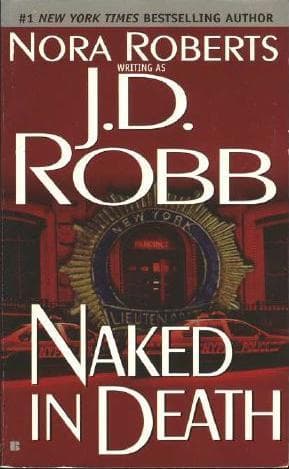
J.D. Robb (1995)
Genre
Thriller / Mystery / Science Fiction / Romance
Reading Time
300 min
Key Themes
See below
Sign in to track this book
In 2058 New York, a cynical homicide detective investigates the murder of a senator's daughter, uncovering high-society secrets, illicit passions, and a dangerous attraction to her prime suspect, a charismatic billionaire.
In a future New York City, Lieutenant Eve Dallas responds to a gruesome murder. The victim is Sharon DeBlass, daughter of Senator DeBlass, found dead in her upscale apartment. Initial findings show Sharon was a successful lawyer who secretly worked as a high-end prostitute, using the name 'Angelique.' Her body shows signs of torture and sexual assault. Eve, a tough homicide detective with a difficult past, immediately recognizes the case's complexity and high stakes, knowing it will draw political attention due to the victim's father.
As Eve investigates Sharon's secret life, she discovers that one of Sharon's regular clients was Roarke, an incredibly wealthy, private Irish businessman. Roarke's name appears in Sharon's coded client list. His vast resources and influence make him a powerful figure. When Eve first interviews him, she is struck by his charisma, intelligence, and a dark allure that both repels and attracts her. Despite his smooth manner, Roarke's evasiveness and his link to the victim make him Eve's top suspect, even as a strong chemistry grows between them.
With help from her loyal partner, Detective Delia Peabody, Eve carefully reconstructs Sharon DeBlass's life. They interview her colleagues, family, and friends, piecing together a picture of a woman who kept her life compartmentalized. The investigation reveals more about Sharon's prostitution ring, her madam, and other high-profile clients. Eve learns Sharon was not just a victim but also a shrewd operator with control over her illicit activities. The team also uncovers a possible blackmail angle, suggesting Sharon may have gathered damaging information on her powerful clients.
Just as Eve begins to understand Sharon's world, another high-end prostitute, Yvonne Sherman, is found murdered. Yvonne also worked for the same madam as Sharon and served an exclusive clientele. The murder method is similar to Sharon's, suggesting a serial killer or someone targeting women in the same network. This development puts pressure on Eve as the media and politicians demand quick action. The connection between the two victims supports Eve's theory that the killer targets women who knew too much or were involved in a dangerous game.
With two victims linked to the same prostitution ring, Roarke remains a primary suspect. His alibis are carefully made, and his resources make him hard to pin down. Eve finds herself constantly torn between her professional duty and a powerful, confusing attraction to him. She conducts multiple intense interviews with Roarke, always looking for weaknesses, but he maintains his innocence while subtly challenging her authority and showing glimpses of a complex personality. Their verbal exchanges are charged with sexual tension, further complicating Eve's focus and objectivity.
Eve confronts the madam who ran the prostitution ring, a businesswoman named Nadine. Nadine initially resists cooperating, fearing exposure and legal trouble. However, under Eve's pressure and the threat of severe charges, Nadine provides more details about Sharon and Yvonne's clients, including powerful and influential figures. The client list includes many of New York's elite, showing the high-profile nature of the case and the potential for scandal. This information confirms Eve's suspicion that the killer is likely someone within this exclusive circle.
During one of their charged meetings, Roarke shares a glimpse into his own dark and traumatic past, hinting at a childhood marked by poverty, violence, and a desperate struggle to survive. This brief revelation makes him more human in Eve's eyes and adds to his mysterious persona. It helps Eve understand, to some extent, the drive behind his success and his guarded nature. While it does not clear him of suspicion, it complicates her view of him and deepens the reluctant connection growing between them, as she recognizes a shared understanding of past pain.
A third prostitute, Bianca Sissman, is murdered, again with similar characteristics to the previous two. This time, Eve and her team find a subtle but significant detail at the crime scene: a rare, high-tech fiber from a security system. This clue, combined with analysis of the victims' last known movements and phone records, helps Eve narrow down the potential suspects. The pattern of the killings, the specific torture methods, and the killer's increasing desperation point to someone with deep-seated rage and a need for control.
Following the fiber evidence and cross-referencing client lists and alibis, Eve focuses on Senator DeBlass's chief of staff, William T. 'Willie' B. The security system fiber matches a specific high-end system Willie had recently installed. Eve brings Willie in for interrogation. Under her questioning, Willie, a seemingly respectable man, slowly breaks down. He confesses to the murders, revealing a twisted motive: he was obsessed with Sharon, believed she was 'tainting' powerful men, and saw himself as a moral purifier. The other victims were killed to cover his tracks and because they were 'like' Sharon. He had secretly loved Sharon and felt betrayed by her lifestyle.
Willie B. is arrested and charged with the murders. The case, though politically sensitive, is closed, bringing justice for the victims. With the professional pressure eased, Eve and Roarke must confront the intense connection that grew between them during the investigation. Roarke, cleared of all suspicion, makes it clear he wants to pursue Eve. Despite her deep fear of intimacy and her emotional scars, Eve finds herself drawn to him in a way she never thought possible, marking the start of their complex and passionate relationship.
The Protagonist
Eve begins as a closed-off, emotionally guarded detective, but through her interactions with Roarke, she slowly starts to open herself to vulnerability and love, beginning to heal from her past.
The Love Interest/Initial Suspect
Roarke starts as a charming, elusive suspect, but as the story progresses, he reveals glimpses of his own vulnerabilities and a genuine desire for connection, solidifying his role as Eve's romantic partner.
The Supporting
Peabody grows in confidence and competence as she works alongside Eve, beginning to assert herself more within their partnership.
The Victim
As the central victim, Sharon's 'arc' is revealed posthumously, showing her progression from a seemingly respectable woman to a shrewd operator in a dangerous game.
The Antagonist
Willie B.'s arc reveals his transformation from a seemingly harmless background figure into a terrifying, methodical killer driven by delusion.
The Supporting
Whitney remains a steadfast and supportive superior, demonstrating continued trust in Eve's abilities.
The Supporting
Mavis remains a consistent source of friendship and light for Eve, unwavering in her support.
The Supporting
Nadine is forced to reveal her operations, ultimately contributing to the case's resolution.
The novel shows how people, especially those in power, often lead double lives, presenting a respectable front while indulging in illicit desires. Sharon DeBlass is an example, being both a successful lawyer and a high-end prostitute. Roarke also embodies this duality, a brilliant businessman with a violent, criminal past. The killer, Willie B., is the ultimate example, appearing unassuming but holding a twisted, murderous rage. This theme suggests that despite new technology, the basic complexities of human morality remain.
“Eve knew that the irresistible impulses of the human heart are still ruled by just one thing: passion.”
Eve Dallas's character is shaped by her traumatic childhood, which has made her emotionally guarded and wary of intimacy. Her journey in the novel is not just about solving a crime, but also about facing her own deep scars. Roarke, with his own dark past, recognizes and challenges her emotional barriers. Their growing relationship forces Eve to start opening up and trusting another person, suggesting the possibility of healing and connection despite past pain. This theme is shown through Eve's internal thoughts and her reluctant responses to Roarke's advances.
“She was a woman who had built walls so high around her heart that she'd forgotten what it was like to feel the sun.”
The investigation into Sharon DeBlass's murder quickly reveals the corrupt side of power and influence in 2058 New York. The victims are high-end prostitutes serving powerful politicians, businessmen, and socialites, suggesting that wealth and status often allow people to act outside normal morality. Senator DeBlass's initial attempts to control the story show how power can be used to obstruct justice. Eve, representing law and order, fights this corruption, determined to bring justice to the victims regardless of the perpetrators' social standing, highlighting the timeless struggle between power and justice.
“Money and power could buy a lot of things, but they couldn't buy a murder clean.”
Obsession drives the novel's central conflict, especially through the antagonist, Willie B. His unrequited love for Sharon DeBlass turns into a murderous fixation, where he believes he must 'cleanse' her and others like her. This theme explores the destructive power of unchecked obsession, showing how it can distort perception, justify terrible acts, and lead to extreme violence. Willie's careful planning and his inability to see Sharon as anything other than his idealized, 'pure' vision highlight the dangerous nature of his psychological state. This theme contrasts with Eve's controlled dedication to justice.
“He loved her so much he had to kill her. That's the kind of twisted logic that makes my gut clench.”
Roarke is presented as the primary suspect to mislead the reader and raise tension.
From his initial introduction, Roarke is positioned as the most obvious and compelling suspect in Sharon DeBlass's murder. His connection to Sharon, his immense wealth and power, his mysterious background, and his charismatic yet evasive demeanor all point to him. This effectively misleads the reader and creates significant tension, especially as Eve struggles with her growing attraction to him. The red herring serves to deepen the mystery, complicate Eve's personal and professional life, and ultimately makes the reveal of the true killer more surprising and impactful.
The futuristic setting provides a unique backdrop for a classic murder mystery.
The novel establishes a detailed futuristic world in 2058 New York, complete with advanced technology like autochefs, 'cop-computers,' and 'comm-links.' This world-building is crucial as it grounds the series in its science fiction genre, but it's used subtly to enhance, rather than overshadow, the human elements of the story. The futuristic elements often serve as convenient plot tools (e.g., advanced forensic tech) while simultaneously highlighting that human nature, emotions, and crimes remain fundamentally unchanged, creating a compelling blend of sci-fi and traditional mystery.
Eve's past abuse and orphan status drive her character's motivations and struggles.
Eve's deeply traumatic past, hinted at throughout the novel, is a fundamental plot device that explains her emotional guardedness, her dedication to justice for victims, and her struggles with intimacy. While not explicitly detailed, the lingering effects of her childhood abuse inform her character's actions, her cynical worldview, and her initial resistance to Roarke. This backstory creates internal conflict for Eve, making her a more complex and relatable protagonist, and sets the stage for her emotional development in future books as she slowly confronts and heals from her past.
A coded list of powerful clients serves as a crucial investigative tool and source of tension.
Sharon DeBlass's meticulously kept, coded client list is a central plot device. It not only identifies Roarke as a suspect but also reveals the high-stakes nature of the victims' secret lives, involving influential figures across the city. The list creates tension as Eve tries to decipher it and as the madam, Nadine, attempts to protect it. It highlights the potential for scandal and corruption, motivating both the killer to silence witnesses and Eve to uncover the truth, regardless of who might be implicated. It's the key to understanding the victims' world and ultimately, the killer's motive.
“Every cop has a dark secret, something they bury deep, something that could destroy them if it ever came to light.”
— Eve considers the weight of secrets held by police officers, mirroring her own.
“I’m not a cop for the money, Dallas. I’m a cop because I can’t not be.”
— Eve explains her unwavering dedication to her profession to Roarke.
“He was dangerous, she knew, in a way that had nothing to do with weapons and everything to do with the way he made her feel.”
— Eve's internal thoughts about Roarke and his effect on her.
“The dead don’t lie, Dallas. Not if you know how to listen.”
— Eve's mantra about forensic investigation and understanding victims.
“It’s not about justice, not really. It’s about balance. About making sure the scales tip the right way.”
— Eve reflects on the true purpose of her work beyond simple justice.
“Some men are born to be kings, others to be pawns. And some, like me, are born to be the game itself.”
— Roarke muses on his own powerful and manipulative nature.
“You can’t outrun your past, Dallas. It’s always there, a shadow at your heels.”
— Roarke observes Eve's struggle with her own traumatic history.
“There are different kinds of nakedness, Dallas. And not all of them involve shedding clothes.”
— Roarke's insightful comment on vulnerability and emotional exposure.
“A good cop doesn’t just see the crime; she sees the ripples it leaves behind.”
— Eve considers the broader impact of a murder on the community and victims' families.
“Fear is a powerful motivator, Lieutenant. And a terrible master.”
— A character reflects on the role of fear in human actions.
“Some people are just… broken. And you can’t fix broken.”
— Eve's somber thought about the irredeemable nature of some criminals.
“The city never sleeps, and neither do its sins.”
— Eve reflects on the constant presence of crime in the futuristic New York City.
“He was a puzzle she hadn’t even realized she wanted to solve.”
— Eve's burgeoning fascination and attraction to Roarke.
“Every victim deserves to have their story told, even if they can’t tell it themselves.”
— Eve's commitment to speaking for the deceased.
Ready to see how well you understood this book? Take our interactive quiz with 10 questions.

Biography coming soon.







