“There are no monsters, only people. And people are the worst monsters of all.”
— Stephen Huxley reflecting on the true nature of fear and evil within the Wood.

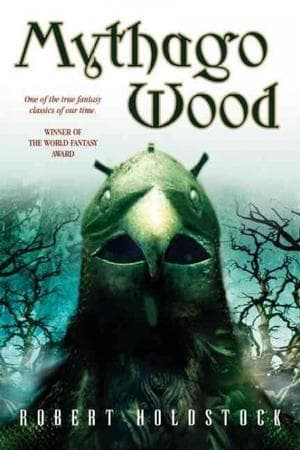
Robert Holdstock (1984)
Genre
Fantasy / Historical Fiction
Reading Time
7-9 hours
Key Themes
See below
Sign in to track this book
Deep within Ryhope Wood, primal myths awaken with flesh and blood, ensnaring two brothers in a haunting realm where ancient desires and terrors come vividly to life.
Steven Huxley, a young man marked by his World War II experiences, returns to his family estate, Oak Lodge, which borders Ryhope Wood. He finds his elder brother, Christian, deeply absorbed in their recently deceased father George Huxley's research into the Wood. George, a folklorist, dedicated his life to cataloging 'mythagos'—living, evolving archetypes of myth and legend that appear within the Wood. Christian, who once dismissed their father's 'madness,' has now fully embraced it, keeping detailed records and performing strange rituals. Steven notices Christian's intensity and the house's unsettling atmosphere, filled with his father's artifacts and research notes that hint at Ryhope Wood's magical nature.
Christian tells Steven about Ryhope Wood's true nature: it is a place where human myths and legends take physical form. He shows Steven some of their father's recordings and then, more dramatically, creates a 'mythago'—a primal warrior—inside the house. This warrior is a fleeting, unstable being, showing the Wood's raw, untamed power. Christian explains that these mythagos are not static but evolve, drawing on humanity's collective unconscious. He also reveals the dangers, as these beings are often violent and unpredictable, reflecting ancient fears and desires. Steven is both terrified and fascinated, beginning to understand his father's deep obsession and the perilous reality Christian now lives in.
During one of Christian's trips into Ryhope Wood, Steven goes with him and directly encounters a powerful mythago: a beautiful, wild woman named Guiwenneth. She is not a fleeting apparition but a more stable, recurring figure in the Huxley family's research, appearing in different forms over generations. Steven is immediately drawn to her, feeling an unexplained connection. Christian, however, warns him about the dangers of emotional attachment to mythagos, explaining that they are reflections of archetypes, not truly individual beings in a human sense. Despite the warning, Steven feels increasingly pulled to Guiwenneth, sensing a deep sadness and a compelling mystery in her. His rational mind struggles against the Wood's primal pull and its inhabitants.
Christian's interest in Guiwenneth becomes a possessive obsession. He finds a way to capture and 'stabilize' her using ancient runic magic and Oak Lodge's unique properties, which act as a nexus for the Wood's energies. He succeeds in trapping a version of Guiwenneth, planning to study and control her. Steven is horrified by his brother's actions, seeing it as cruel imprisonment rather than scientific inquiry. This act creates a deep divide between the brothers, as Steven feels a protective instinct towards Guiwenneth and believes Christian is violating the natural order of the Wood and its beings. Christian, driven by a desire for control and perhaps a twisted love, dismisses Steven's concerns as sentimental.
Unable to accept Christian's actions, Steven decides to go deep into Ryhope Wood to find and free Guiwenneth. He has minimal supplies and guidance only from his father's cryptic notes and Christian's recent, troubling discoveries. His journey into the Wood is a descent into a primal landscape where time and space are fluid, and human rules do not apply. He meets various mythagos, some helpful, some hostile, each embodying ancient archetypes. He learns about the 'Oak King,' a powerful, ancient mythago who protects Guiwenneth in her various forms, symbolizing the Wood's cycle of death and rebirth. Steven's quest becomes a dangerous journey of self-discovery, forcing him to face his own primal fears and desires.
As Steven goes deeper, the Wood starts to transform him. He loses track of time, his memories of the outside world become hazy, and his identity begins to fade. He sees visions and meets mythagos that reflect his own inner struggles and fears. He sheds his civilized self and embraces a more primal existence, learning to survive on instinct. This process is both terrifying and freeing, as he becomes more connected to the Wood's ancient rhythms and its deep magic. He realizes that to truly understand and navigate the Wood, he must become part of it, risking the loss of his humanity. His perception of reality is constantly challenged, blurring the lines between myth and truth.
Steven eventually finds Christian deep within the Wood, where his brother has become even more integrated into its primal reality. Christian, driven by his desire for Guiwenneth and his ambition to master the Wood's power, has become a formidable, almost mythago-like figure himself. Their reunion is not one of peace but of violent confrontation. Christian sees Steven as a rival and an obstacle to his plans. The brothers clash, their conflict mirroring the ancient, raw struggles of the mythagos around them. The confrontation is brutal, fueled by years of unspoken resentments and their shared, yet different, obsessions with Guiwenneth and the Wood's secrets. The outcome is uncertain, with both brothers pushing their limits.
Steven learns that Guiwenneth is not a single entity but a recurring archetype, a 'Heart Tree' or 'Mother of the Wood' figure, constantly reborn and reshaped by the Wood's energies and human belief. He discovers a sacred grove, a nexus of power where Guiwenneth is most strongly present. He understands that Christian's attempts to 'capture' her were futile, as she embodies the Wood itself, ever-changing and eternal. This revelation brings both deep understanding and sadness, as his human love for her can never be fully returned as he wishes. He witnesses the Wood's cycle of life and death and Guiwenneth's role within it.
In a key moment, Steven makes a profound sacrifice, offering himself to the Wood's ancient powers to ensure Guiwenneth's continued existence and to restore balance to the disrupted mythago ecosystem. This act involves a spiritual and physical transformation, where he merges with the Wood's essence, becoming part of its eternal cycle. His individual identity, as Steven Huxley, is largely shed, but his consciousness and love for Guiwenneth remain in a new, more integrated form. This sacrifice is not death but transformation, allowing him to truly become a guardian of the Wood and its myths, fulfilling a destiny hinted at by his father's research.
The story ends with Ryhope Wood's lasting mystery. While Steven's fate is tied to the Wood, the exact nature of his existence is left unclear. The Wood continues its ancient dance of creation and destruction, generating new mythagos and reshaping old ones. The Huxley family's legacy, their deep connection to this magical place, continues through generations, suggesting that Ryhope Wood will always draw in those who seek its secrets. The story shows that the Wood is not a place to be conquered or understood by human reason, but a primal force to be respected and experienced, forever shaping those who dare to enter its depths and blurring the lines between human and myth.
The Protagonist
From a skeptical outsider, Steven transforms into a protector and eventual part of Ryhope Wood, shedding his human identity to preserve its magic.
The Antagonist/Supporting
Christian descends into a destructive obsession, becoming a powerful, almost mythago-like figure himself, ultimately failing to master the Wood.
The Supporting/Mythago
Guiwenneth remains a constant, cyclical presence, embodying the Wood's eternal nature despite human attempts to capture or define her.
The Mentioned/Influential
His legacy continues to shape the narrative even after his death, guiding and haunting his sons.
The Supporting/Mythago
As an archetypal figure, he cycles through death and rebirth, perpetually guarding and embodying the Wood's ancient laws.
The Supporting/Mythago
As a primal fear-inducing mythago, its role is to embody and unleash terror within the Wood, a constant threat.
The novel explores how human myths, legends, and archetypes physically appear within Ryhope Wood. It suggests that these stories are not just fiction but powerful forces shaped by the collective human unconscious. The mythagos are living forms of these ancient narratives, constantly evolving and reflecting humanity's deepest fears, desires, and cultural memory. This theme is central to George Huxley's research and Christian's attempts to categorize them, as well as Steven's encounters, which force him to confront the primal sources of human storytelling. The Wood itself acts as a place where these stories become real.
““They're not just stories, Steven. They're living things, born of us, shaped by us, and they shape us in return.””
A main theme is Ryhope Wood's transformative power, especially on Steven. As he goes deeper into the Wood, he gradually loses his human identity, his memories of the outside world fading, and his rational mind giving way to primal instincts. This change is both terrifying and freeing, forcing him to shed his civilized self and become more connected to the forest's ancient rhythms. Christian also changes, becoming more mythago-like in his obsession and ruthlessness. The Wood is not just a setting but actively changes human consciousness and identity, blurring the lines between man and myth.
““The Wood takes you, Steven. Piece by piece, it takes you, and makes you part of itself.””
The conflict between Ryhope Wood's untamed, primal nature and human civilization's attempts (represented by the Huxley family) to understand, categorize, or control it, is a core theme. The Wood represents a wild, ancient force that defies rational explanation and scientific mastery. Christian's attempts to trap and manipulate mythagos show this arrogance, while Steven's journey ultimately leads him to embrace and merge with the Wood's wildness. The novel suggests that true understanding of such primal forces requires surrender, not conquest, and that civilization's attempts to impose order often lead to destruction or madness.
““The Wood was a place where human reason withered, and ancient forces held sway.””
The Huxley family is deeply affected by a hereditary obsession with Ryhope Wood. George Huxley dedicated his life to it, Christian descends into a dangerous, possessive madness trying to control it, and Steven himself becomes consumed by his love for Guiwenneth and his quest within the Wood. This theme explores the line between passionate pursuit and destructive obsession, especially when dealing with forces beyond human understanding. The Wood acts as a mirror, reflecting and amplifying the characters' inner turmoil and desires, driving them to extremes that defy conventional sanity.
““My father called it research. Christian called it a mission. I just called it madness.””
The sentient, myth-generating ancient forest.
Ryhope Wood is not merely a setting but a central character and plot device. It is a sentient, magical entity that actively generates and sustains mythagos, blurring the lines between reality and legend. Its shifting landscape, fluid time, and ability to alter human perception are crucial to the plot, driving the characters' transformations and encounters. The Wood's inherent mystery and resistance to rational understanding create constant tension and wonder, serving as the primary source of conflict and the ultimate destination for the protagonists. Its unique properties allow the fantastical elements of the story to manifest.
Living embodiments of human myths and archetypes.
Mythagos are the physical manifestations of ancient human myths, legends, and archetypes. They serve as the primary fantastical elements and sources of interaction within the Wood. Their diverse forms (warriors, animals, maidens), evolving nature, and often violent or enigmatic behavior drive much of the plot. They are not static monsters or heroes but fluid beings shaped by collective human belief and the Wood itself. The characters' understanding, interaction, and conflict with mythagos propel the narrative forward and reveal the deeper themes of the story.
The deceased father's extensive notes and recordings.
George Huxley's detailed, albeit cryptic, research notes, journals, and audio recordings serve as a crucial expositional and guiding plot device. They provide the initial framework for understanding Ryhope Wood and its mythagos, informing both Christian's scientific approach and Steven's more intuitive journey. These documents act as a treasure map and a warning, revealing the dangers and wonders of the Wood. They also establish the hereditary nature of the Huxley family's connection to the Wood, linking past obsessions to present conflicts and future destinies.
The ancestral home acting as a nexus point and base of operations.
Oak Lodge, the Huxley family home, functions as more than just a house; it is a nexus point where the energies of Ryhope Wood sometimes bleed into the human world. It serves as the initial base of operations for George and Christian's research, and a place where mythagos can be drawn or even briefly manifested. Its position on the edge of the Wood symbolizes the precarious balance between civilization and the wild. The house becomes a symbol of the family's inherited obsession and a place of both refuge and danger, its walls filled with the echoes of the Wood's magic.
“There are no monsters, only people. And people are the worst monsters of all.”
— Stephen Huxley reflecting on the true nature of fear and evil within the Wood.
“The Wood was a place where myth was not just believed, but lived, a place where the archetypes of human imagination walked as flesh and blood.”
— A description of the fundamental nature of Ryhope Wood and its mythagos.
“Every forest, every wood, has its own memory, its own spirit. Ryhope Wood has more than most.”
— Christian Huxley explaining the unique sentience and history of Ryhope Wood to his son.
“She was a mythago, a dream given form, and her beauty was not of flesh but of story.”
— Stephen's initial perception of Guiwenneth.
“To enter the Wood is to shed the skin of civilization, to become primal, to become myth.”
— A reflection on the transformative effect of entering Ryhope Wood.
“The past is not dead, it is not even past. It is alive and breathing in the heart of the Wood.”
— A musing on how ancient history and myths manifest within Ryhope Wood.
“Love, hate, fear, desire – these are the fuels of myth. And the Wood is a furnace.”
— Christian Huxley's understanding of the emotional energy that shapes mythagos.
“Every man has his own dark forest, his own mythago wood within him.”
— A broader philosophical statement about the internal landscape of human beings.
“The trees remember. They remember every footfall, every whispered word, every drop of blood.”
— A vivid description of the Wood's deep memory and sentience.
“You cannot kill a myth. You can only change it, or become it.”
— Christian Huxley explaining the enduring nature of myths and mythagos.
“The land itself felt ancient, a creature breathing slowly beneath a skin of moss and leaves.”
— Stephen's sensory experience of the primordial nature of Ryhope Wood.
“We are all merely echoes of what has been, and what will be.”
— A philosophical reflection on the cyclical nature of existence and identity within the Wood.
“The heart of the Wood is a place where time folds back on itself, where all ages are present at once.”
— A description of the temporal distortions and timelessness within the deeper parts of Ryhope Wood.
“A mythago is not a ghost or a spirit, but a living embodiment of an idea, a story.”
— Stephen's developing understanding of what mythagos truly are.
Ready to see how well you understood this book? Take our interactive quiz with 10 questions.
Biography coming soon.







