“Meat is the way to a man's heart. And to a woman's. And to a child's.”
— Early in the book, highlighting the show's premise and the cultural significance of meat.

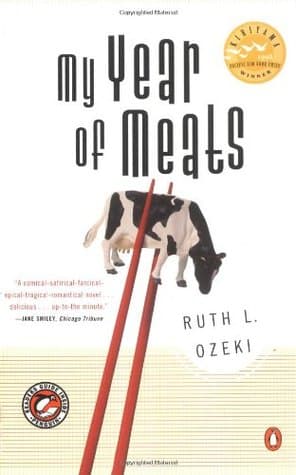
Ruth Ozeki (1998)
Genre
Literary Fiction
Reading Time
9-12 hours
Key Themes
See below
Sign in to track this book
A Japanese-American TV producer uncovers the dark truths of industrial agriculture and its impact on women's bodies while filming a meat-sponsored show, leading her to a connection with a struggling Japanese housewife.
Jane Takagi-Little, a Japanese-American filmmaker in New York, struggles to find meaningful work. She gets a job with a Japanese production company. The show, 'My American Wife!', is sponsored by BEEF-EX, an American meat-exporting company. Its goal is to promote American meat to Japanese housewives. Jane travels across America, filming segments with 'typical' American wives who cook meat dishes for their families. She approaches the project with cynicism and a desire to find authentic stories, despite the show's commercial agenda. Her initial experiences involve meeting diverse women, whose unique quirks and family dynamics often clash with the idealized image BEEF-EX wants to project.
Meanwhile, in Japan, Akiko Ueno, a young housewife, watches 'My American Wife!'. Akiko is trapped in a stifling marriage to John Ueno, a salaryman who controls her life, including her diet and access to the outside world. He insists she eat meat for fertility, the very product Jane promotes. Akiko is infertile, a source of shame and pressure in her marriage, leading to inadequacy and isolation. She finds solace watching the American wives on screen, even as her husband's erratic and abusive behavior escalates.
As Jane continues filming, she notices a pattern among some of the women she interviews: a history of infertility, miscarriages, or health issues. Her research, initially for the show, leads her to discover Diethylstilbestrol (DES), a synthetic estrogen hormone once used in livestock feed to promote growth, especially in beef. DES was later found to be a carcinogen and reproductive disruptor, linked to health problems in women exposed in utero, including cervical cancer and infertility. This discovery disturbs Jane, as it contradicts the wholesome image BEEF-EX wants to project and connects to the health struggles she observes.
With knowledge of DES, Jane subtly changes the show's intended message. While still delivering content that outwardly promotes American meat, she creatively edits segments to highlight the unspoken struggles of the American wives. She focuses on their resilience, hidden anxieties, and sometimes unhealthy aspects of their lives, rather than just their cooking. She uses visual cues, juxtaposition, and chosen soundbites to hint at the underlying issues of industrial agriculture and its impact on women's bodies. Her goal is to create a more authentic, subversive narrative that resonates with the real experiences of women, in America and Japan.
Watching Jane's nuanced episodes of 'My American Wife!', Akiko sees reflections of her own suppressed life and desires. Jane's subtle messages resonate with her. Akiko, once an art student, secretly starts drawing again, using the American wives as inspiration, but transforming them into powerful, often grotesque, figures that express her inner turmoil and rebellion. Her art becomes a form of release and a way to process her experiences. This creative outlet gives her strength to confront John, leading to a dramatic escalation in their marital conflict and her decision to seek freedom.
Jane's subtle changes do not go unnoticed. Network executives, especially from BEEF-EX, question the tone and content of certain episodes. They demand more straightforward, positive portrayals of American meat and family life. Jane faces pressure to conform to the original propaganda-driven agenda. This puts her in a difficult position, forcing her to choose between her journalistic integrity and her job security. She must decide how far she will go to expose the truth, even if it risks her career and the show itself. Her moral compass guides her to continue her resistance.
After a violent confrontation with John, Akiko finds the courage to leave her abusive marriage. She flees her home and seeks refuge, initially feeling lost and isolated. She eventually connects with a community of women who have also experienced abuse or societal marginalization. These women provide her with support, understanding, and a sense of belonging she has never known. Akiko begins to heal, finding her voice and rebuilding her life. Her artistic talents blossom in this supportive environment, as she continues to draw and process her past experiences, transforming them into expressions of resilience and liberation.
As Jane's investigation into DES deepens, she learns about a community of women called the 'Meat Mothers.' These are women directly exposed to DES, either through their mothers' prenatal use of the drug or through contaminated meat, who have suffered severe reproductive health issues, including infertility, miscarriages, and cancer. Jane seeks them out, recognizing their stories as crucial to her broader narrative. Interviewing the 'Meat Mothers' provides Jane with personal accounts that strengthen her resolve to expose the truth, giving a human face to the scientific data she has uncovered.
In a climactic act of defiance, Jane produces a final, unedited episode of 'My American Wife!' that directly addresses the dangers of DES, featuring testimonies from the 'Meat Mothers' and scientific evidence. This episode challenges BEEF-EX and the network's censorship. The broadcast causes a sensation, shocking viewers and creating a major public outcry. As a result, the show is immediately canceled, and Jane faces professional repercussions and legal threats. However, her actions also spark a wider conversation about corporate accountability, food safety, and women's health, fulfilling her deeper journalistic purpose.
Years later, Akiko is a successful artist, her drawings gaining recognition for their raw honesty and feminist themes. She exhibits her work, which often depicts the female body and challenges traditional notions of beauty and motherhood, earning her a new sense of identity and purpose. Jane, having faced the fallout from her final broadcast, continues independent documentary filmmaking, though with a more cautious approach. She reflects on the impact her work had, not just on public discourse, but also on individual lives, especially Akiko's. The two women, though never meeting, have influenced each other's journeys, united by a shared narrative of resilience and truth-telling.
The Protagonist
Jane evolves from a cynical but compliant producer into a courageous whistleblower, prioritizing truth over professional security.
The Co-protagonist
Akiko transforms from a repressed, abused wife into a self-possessed, celebrated artist, reclaiming her body and voice.
The Antagonist
John remains static in his abusive nature, serving as the oppressive force Akiko must overcome.
The Supporting
Their collective arc is one of finding voice and solidarity through sharing their stories and seeking accountability.
The Supporting
Lester remains a steadfast and supportive friend and colleague to Jane, evolving in his understanding of her mission.
The Antagonist
They remain static, representing the entrenched power of corporate interests.
The Supporting
While individual arcs are brief, collectively they serve to illustrate the widespread, often hidden, impact of societal pressures and environmental factors on women.
The Mentioned
Not applicable, as he is deceased.
The novel explores how food, especially meat, connects with power, gender, and health. The industrial meat complex, BEEF-EX, prioritizes profit over public health, using hormones like DES that harm women's reproductive systems. This theme appears in Jane's investigation into DES and the 'Meat Mothers,' exposing the dangerous consequences of unchecked corporate agriculture. Akiko's forced meat consumption by John to 'cure' her infertility further shows how food becomes a tool of control and a symbol of societal pressures on women's bodies.
“What does it mean to be a woman whose body is not her own?”
'My Year of Meats' is a feminist narrative. It shows women, American and Japanese, struggling against patriarchal control, societal expectations, and corporate exploitation. Jane's journey is one of professional and ethical empowerment, as she uses her craft to expose injustice. Akiko's transformation from a submissive, abused wife to a liberated artist is a central arc of female empowerment, showing women's strength to reclaim their bodies, voices, and creative spirits. The solidarity among the 'Meat Mothers' and Akiko's new community of women highlights the strength in collective female experience and resistance.
“She was making herself, making herself up again, from scratch.”
The novel examines media's role in shaping perception and spreading propaganda. 'My American Wife!' is initially a tool for corporate marketing, presenting an idealized, often false, image of American life and food. Jane struggles to subvert this corporate agenda and use the same medium to expose uncomfortable truths. Her subtle editing, and eventually her direct exposé, shows media's power to either hide or reveal. The novel questions who controls the narrative and how audiences, like Akiko, interpret and are affected by what they see on screen, highlighting media's potential for both manipulation and liberation.
“Truth, like beauty, is in the eye of the beholder. Or, in this case, the editor.”
The narrative explores cultural exchange between Japan and America. The Japanese show 'My American Wife!' tries to translate American culture for a Japanese audience, often leading to stereotypes and misunderstandings. Jane, as a Japanese-American, navigates this cultural divide, understanding both perspectives but also feeling alienated by both. The novel shows how cultural products can be both a bridge and a barrier, revealing shared human experiences while also exposing cultural differences, especially concerning gender roles, family dynamics, and societal pressures around fertility and consumption.
“It was a strange thing, this show, a mirror reflecting back what each culture wanted to see in the other.”
Motherhood, its expectations, and the pain of infertility are central to the novel. Akiko's inability to conceive causes shame and fuels her husband's abuse, reflecting intense societal pressure on women to bear children. The 'Meat Mothers' show how corporate negligence can take away the possibility of motherhood from women, or lead to tragic miscarriages. Jane's own background, raised by a single mother, adds another dimension to this theme. The novel challenges conventional notions of motherhood, suggesting that nurturing and creativity can take many forms beyond biological reproduction, as seen in Akiko's artistic 'births' and Jane's commitment to truth.
“To be a woman in Japan and not a mother was to be incomplete, a broken vessel.”
Two distinct storylines of Jane and Akiko unfolding simultaneously.
The novel employs a dual narrative structure, alternating between Jane Takagi-Little's experiences filming 'My American Wife!' in the U.S. and Akiko Ueno's life as a viewer of the show in Japan. These parallel stories, though initially separate, are intrinsically linked by the television program. Jane's actions and creative choices directly influence Akiko's perceptions and eventual liberation, creating a powerful sense of unseen connection and demonstrating the far-reaching impact of media and shared female experiences across cultures. This device allows for a comprehensive exploration of the novel's themes from both sides of the Pacific.
The fictional TV show 'My American Wife!' serves as a central element of the plot.
The television show 'My American Wife!' is not just a backdrop but an active character and plot device. It is the vehicle through which Jane conducts her investigation and subversion, and it is the catalyst for Akiko's awakening. The show itself evolves, reflecting Jane's growing ethical dilemma and her attempts to infuse truth into propaganda. This metafictional element allows the author to critique media's role in shaping reality, cultural stereotypes, and corporate influence, while also demonstrating how individuals can reclaim and subvert dominant narratives within a seemingly controlled environment.
A real-world hormone used in livestock, serving as a central symbol and plot driver.
Diethylstilbestrol (DES), a real-world synthetic estrogen used in animal feed, functions as a powerful symbol and a crucial plot driver. It represents the hidden dangers of industrial agriculture, corporate greed, and the devastating impact of unregulated chemicals on women's bodies. Jane's discovery of DES is the turning point in her narrative, propelling her investigation and transforming her role from producer to whistleblower. For Akiko and the 'Meat Mothers,' DES symbolizes the silent suffering and reproductive trauma inflicted upon women, linking their individual stories to a larger systemic problem and giving a concrete focus to the novel's themes of health, fertility, and exploitation.
Akiko's artistic creations serve as a non-verbal form of expression and rebellion.
Akiko's drawings, initially hidden and private, become a profound plot device for her character development and a powerful form of non-verbal communication. They symbolize her suppressed creativity, her inner turmoil, and her burgeoning rebellion against her husband and societal expectations. As she watches 'My American Wife!', her drawings evolve from mere copies into increasingly grotesque and expressive interpretations of the American wives, reflecting her own psychological journey and growing empowerment. Her art ultimately provides her with a means of escape, a new identity, and a platform for her voice, embodying the theme of artistic liberation.
“Meat is the way to a man's heart. And to a woman's. And to a child's.”
— Early in the book, highlighting the show's premise and the cultural significance of meat.
“Sometimes it's hard to tell the difference between the story and the truth.”
— Akiko reflects on the nature of reality and narrative while working on the show.
“The camera lies. It always lies. But it tells the truth too.”
— Jane reflecting on the power and deception inherent in television production.
“Being a woman is a political act.”
— A broader commentary on gender identity and societal expectations.
“What does it mean to be a good mother? Is it to protect your child from everything, or to teach them to protect themselves?”
— A recurring question for Akiko as she grapples with her role as a mother.
“Everyone has a secret, a story they don't want to tell.”
— Jane muses on the hidden lives of the people she encounters for her show.
“Food is love. Food is comfort. Food is culture. Food is everything.”
— Emphasizing the central role of food throughout the narrative.
“The world is full of stories, and sometimes they find you.”
— Jane's perspective on how narrative unfolds in her life and work.
“There are some things you can't unsee, some things that change you forever.”
— Reflecting on witnessing difficult or traumatic events.
“Silence can be a weapon, or it can be a shield.”
— Exploring the various ways people use silence in their interactions.
“We are all made of stories, and we tell them to ourselves and to each other to make sense of who we are.”
— A deeper philosophical reflection on identity and narrative.
“Sometimes the most radical thing you can do is just be yourself.”
— A theme of authenticity and self-acceptance in the face of societal pressures.
“The past is never really past; it just keeps circling back.”
— Characters dealing with unresolved issues and memories from their pasts.
“To truly see someone, you have to look beyond what they show you.”
— Jane's developing understanding of the people she films and interacts with.
Ready to see how well you understood this book? Take our interactive quiz with 10 questions.
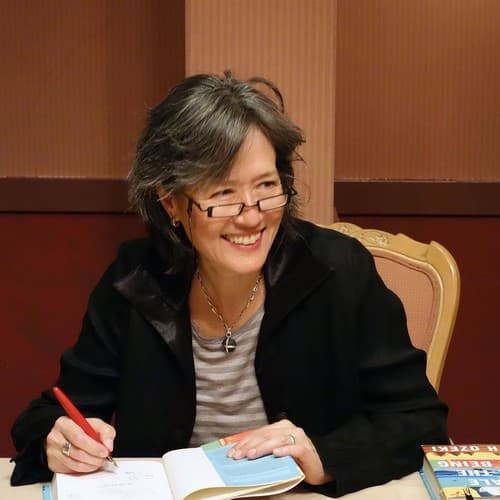
Biography coming soon.







