“There are far better things awaiting you than anything you have left behind.”
— A philosophical thought about moving on.

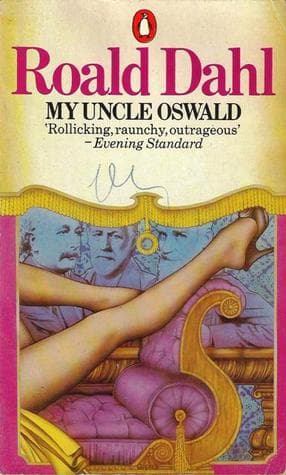
Roald Dahl (1979)
Genre
Children's
Reading Time
240 min
Key Themes
See below
Sign in to track this book
Uncle Oswald, an amoral rogue, uses a powerful aphrodisiac and a beautiful accomplice to collect sperm from history's most famous men for his own scandalous purposes.
The story begins with the narrator explaining how he got his eccentric Uncle Oswald's private diaries after Oswald died. Oswald, a famous socialite and adventurer, had carefully written down his most daring plan. The narrator, curious about the many secret journals, starts reading them and finds a world of scandalous adventures and bold plans. He quickly realizes these are not just travel logs but detailed accounts of a very unusual and morally questionable project Oswald undertook decades earlier, involving some of the most famous and influential men of the early 20th century.
Bored with regular business, Oswald meets Professor Woresley, a brilliant entomologist who studies the aphrodisiac qualities of insects. Woresley reveals the amazing power of the Sudanese Blister Beetle. Its secretions, when eaten, cause a very strong and lasting erection. This discovery gives Oswald a wild idea: to collect sperm from history's greatest men – artists, scientists, philosophers – and sell it to wealthy women who want to have a child of genius. He imagines a 'sperm bank' unlike any other, promising children of unmatched intellect and talent.
To carry out his bold plan, Oswald knows he needs an accomplice with great charm and appeal. He finds her in Yasmin Howcomely, a stunning young woman working in a hat shop. Yasmin, described as captivating and having an irresistible sexual magnetism, is at first unsure but quickly drawn in by the idea of adventure and a large share of the profits. Oswald tells her his plan, explaining the role of the Blister Beetle and the need to secretly collect samples from their unaware targets. Yasmin, practical and brave, agrees to be the main seducer for their 'enterprise'.
Their first target is the very lustful King Leopold II of Belgium. Oswald carefully plans the meeting, making sure Yasmin can meet the King in the right situation. Yasmin, using her considerable charm and a bit of Blister Beetle extract in the King's drink, easily seduces him. The King, overcome by an unmatched surge of desire, spends a passionate night with Yasmin. The next morning, Yasmin discreetly collects the 'sample' as Oswald instructed, marking a successful start to their controversial project. This early success encourages both Oswald and Yasmin, confirming their bold plan could work.
After their success with King Leopold, Oswald and Yasmin move to Paris, a center of artistic and intellectual genius. Their next target is the famous Impressionist painter, Pierre-Auguste Renoir. Oswald, pretending to be an art lover, arranges for Yasmin to model for Renoir. Yasmin, using her persuasive charm and the strong Blister Beetle extract, captivates the elderly artist. Renoir, despite his age and illness, feels a renewed energy and passion. Yasmin again successfully gets a sample, adding a famous artist to their growing collection.
The 'project' gains speed as Oswald and Yasmin continue their grand tour of Europe's intellectual elite. Yasmin successfully seduces the famous novelist Joseph Conrad, known for his adventurous spirit and important literary works. Later, they target the revolutionary composer Igor Stravinsky. Oswald carefully plans each meeting, giving Yasmin detailed information and opportunities. Yasmin's irresistible appeal, combined with the Blister Beetle's effects, ensures these operations succeed, further expanding their unique collection of 'genius' samples.
Oswald, always aiming for the highest human achievements, decides their next target must be the brilliant physicist Albert Einstein. This is a more difficult challenge, as Einstein is known for his intellect rather than his romantic life. Yasmin, using a different approach focused on intellectual talk and pretended admiration for his work, tries to engage Einstein. The Blister Beetle is still used, but the seduction relies more on Yasmin's ability to stimulate his mind before his body. This meeting shows how adaptable their methods are and Yasmin's growing skill as a seducer.
The daring duo then targets Sigmund Freud, the father of psychoanalysis. This meeting presents a unique psychological challenge, as Freud understands human desire and the subconscious. Oswald and Yasmin carefully plan their approach, knowing Freud might be more perceptive than their previous targets. Yasmin tries to use her charm, but the situation becomes interesting as Freud, always the analyst, might understand her intentions on a deeper level. The outcome of this particular seduction adds more intrigue to their scandalous project, testing their methods' limits.
As their collection grows, Oswald and Yasmin continue their global search for genius. They target the revolutionary artist Pablo Picasso, known for his many muses and lively personality. Yasmin easily charms Picasso, adding his artistic genius to their growing collection. Afterward, they target the reclusive novelist Marcel Proust, needing a more delicate and subtle approach. Each successful acquisition boosts Oswald's ambition and confirms Yasmin's unmatched skill in carrying out their extraordinary plan, cementing their status as very unusual 'entrepreneurs' of their time.
During their successes, an unexpected problem arises that threatens to expose their entire plan. The diaries initially give vague details of this problem, but it causes great alarm for both Oswald and Yasmin. It involves a possible leak, a suspicious person, or maybe an unforeseen side effect of the Blister Beetle itself. This event forces them to rethink their strategies and consider the real risks of their project, adding suspense to the otherwise lighthearted and adventurous tone of the earlier entries.
Despite the earlier problem, Oswald and Yasmin overcome the obstacle and complete their ambitious collection of 'genius' samples. The diaries carefully detail their final targets, ending with a truly impressive group of intellectual and artistic figures. With their mission done, Oswald then focuses on the most important phase: selling the collected samples to the eager, wealthy women who have been discreetly waiting. He sets up a high-stakes auction, ensuring maximum profit for their extraordinary and unprecedented venture, bringing their bold plan to its intended end.
The narrator finishes reading Oswald's diaries, thinking about the sheer audacity and success of his uncle's scheme. Oswald, with Yasmin's crucial help, made a fortune and left behind a truly unique legacy, though one hidden in secrecy and scandal. The narrator considers the ethical implications of Oswald's actions but ultimately marvels at his uncle's cleverness, charm, and sheer nerve. The story ends with the narrator left to ponder the deep and often funny implications of Oswald's life and his most extraordinary adventure, ensuring that Uncle Oswald's legend continues.
The Protagonist
Oswald's character remains largely consistent, showcasing his unwavering confidence and ingenuity from the conception to the execution of his grand scheme.
The Supporting
Yasmin evolves from a young woman seeking excitement to a highly skilled and confident operative, mastering the art of seduction for a specific purpose.
The Supporting
The narrator's understanding of his uncle deepens as he reads the diaries, shifting from a conventional view to one of awe and slight scandal.
The Supporting
Woresley's character remains static, serving as the scientific catalyst for the plot rather than undergoing significant personal change.
The Mentioned
As a historical figure used for a single plot point, King Leopold II does not have a character arc.
The Mentioned
As a historical figure used for a single plot point, Renoir does not have a character arc.
The Mentioned
As a historical figure used for a single plot point, Einstein does not have a character arc.
The Mentioned
As a historical figure used for a single plot point, Freud does not have a character arc.
A main theme is the bold exploitation of intellectual and artistic genius for personal gain. Oswald and Yasmin target the greatest minds of their time, not for their ideas, but for their biological essence. This theme explores making human potential a commodity and the ethical limits of such a project. Scenes like Yasmin's seduction of Renoir or Einstein show this, where individuals are seen only for their reproductive ability rather than for their contributions to humanity, all for Oswald's profit and amusement.
“What a colossal idea! To gather the seeds of genius from the greatest minds on earth and sell them for a fortune!”
This theme shows the extreme lengths Oswald goes to, driven by greed and an unmatched sense of daring. His plan is not just about making money, but about proving he can do the impossible, ignoring common morality and social rules. His bold plans, from first thinking of the 'sperm bank' to carefully carrying out each seduction, show a complete disregard for ethics in pursuit of his unusual goal. The whole story shows Oswald's unrestrained ambition and his readiness to challenge any limit.
“Morality, my dear boy, is merely a social construct for the dull-witted. Genius, however, is a commodity.”
The novel explores the great power of human charm and sexual appeal, especially through Yasmin Howcomely. Her captivating beauty and strategic use of the Blister Beetle's aphrodisiac allow her to manipulate even the most brilliant and powerful men. This theme looks into the psychology of desire and how it can be used and exploited. Each seduction scene, from King Leopold to Picasso, shows Yasmin's skill with this power, demonstrating how easily even great minds can be swayed by physical attraction and carefully created allure.
“Yasmin, with her remarkable gift, could make a eunuch sing the Marseillaise.”
While the main narrator is Oswald's nephew, the core of the story comes from Oswald's own diaries, making Oswald an unreliable narrator. His accounts are likely exaggerated, self-serving, and presented with a distinct, amoral style. This theme asks the reader to question the absolute truth of the events described, encouraging a critical view of Oswald's motives and the accuracy of his memories. The reader must figure out the line between fact and Oswald's self-important fiction, adding complexity to the story.
“One must never let the truth get in the way of a truly magnificent story.”
The story is presented as a posthumous discovery and reading of Oswald's personal journals.
This classic literary device frames the entire narrative. The unnamed narrator discovers and recounts the scandalous contents of Uncle Oswald's diaries. This allows for a retrospective telling of events, building suspense as the narrator (and reader) uncovers the details of Oswald's audacious scheme. It also lends an air of authenticity to the outrageous plot, as if the reader is privy to secret, forbidden knowledge. The diary format allows for Oswald's distinct voice and perspective to dominate the story, even through the secondary narrator.
A rare insect whose potent aphrodisiac properties are the catalyst for the entire plot.
The Sudanese Blister Beetle serves as the ultimate MacGuffin. Its existence and potent effects are the entire premise upon which Oswald's 'sperm bank' scheme is built. While its properties are crucial to the plot's mechanics (inducing irresistible desire), the beetle itself isn't a character or a complex plot element; it's simply the necessary tool that enables the outrageous events to unfold. It provides the convenient, albeit fantastical, solution to the problem of seducing numerous powerful men.
The events are recounted from the highly biased and self-serving perspective of Uncle Oswald.
Although the outermost narrator is Oswald's nephew, the bulk of the story comes directly from Oswald's diaries, making Oswald the primary 'narrator' of the events. Oswald's account is highly subjective, often exaggerated, and clearly designed to present himself in the most cunning and successful light. This unreliability adds to the humor and allows for a more outrageous narrative, as the reader implicitly understands that Oswald is embellishing for his own amusement and glorification. It also subtly questions the 'truth' of the events, leaving room for interpretation.
The novel uses exaggerated characters and situations to subtly mock societal norms and the veneration of genius.
Dahl employs satire to lampoon various aspects of society, particularly the reverence given to 'great men' and the often-hypocritical nature of morality. By having Oswald exploit the biological essence of these revered figures, the novel subtly questions what truly constitutes genius and whether it's inherently tied to virtue. The outrageous premise and the casual amorality of Oswald and Yasmin serve to highlight the absurdities of human ambition, desire, and the often-unexamined worship of intellect.
“There are far better things awaiting you than anything you have left behind.”
— A philosophical thought about moving on.
“What a lot of people don't realize is that the most powerful weapon a woman has is her own body.”
— Oswald reflecting on female power.
“I began to realize that if you want to get ahead in this world, you have to be prepared to break a few rules.”
— Oswald's early life lesson.
“The secret of success, I have always maintained, is to be able to make money out of other people's weaknesses.”
— Oswald's cynical view of business.
“There is no fun in life unless you have a little bit of danger.”
— Oswald's justification for his adventurous life.
“The truly great lover is not the one who can make a woman swoon, but the one who can make her laugh.”
— Oswald's definition of a great lover.
“Never underestimate the power of a good disguise.”
— Oswald's practical advice for his schemes.
“The world is full of people who are willing to pay for what they desire, no matter how outlandish.”
— Oswald's observation on human desires.
“One must always be prepared for the unexpected.”
— Oswald's approach to planning his elaborate schemes.
“Money, my dear, is merely a tool. It is what you do with it that matters.”
— Oswald explaining his philosophy on wealth.
“The greatest pleasure in life is doing what people say you cannot do.”
— Oswald's motivation for his daring ventures.
“A man who cannot keep a secret is like a sieve.”
— Oswald's thoughts on trustworthiness.
“Life is a game, and it's up to you to play it well.”
— Oswald's overarching view of existence.
“There's nothing quite so intoxicating as the thrill of the chase.”
— Oswald reflecting on his pursuit of rare specimens.
Ready to see how well you understood this book? Take our interactive quiz with 10 questions.
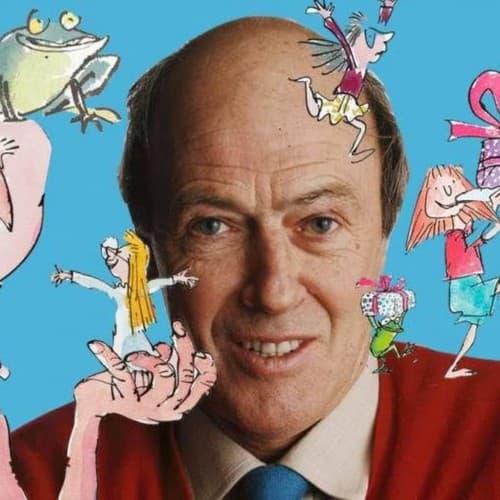
Roald Dahl was a British popular author of children's literature and short stories, a poet, and wartime fighter ace. His books have sold more than 300 million copies worldwide. Dahl has been called "one of the greatest storytellers for children of the 20th century".

Dan Gemeinhart
4.5
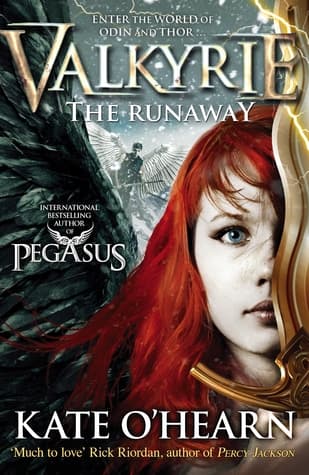
Kate O'Hearn
4.4

Jeanne Birdsall
4.4

Jen Wang
4.4
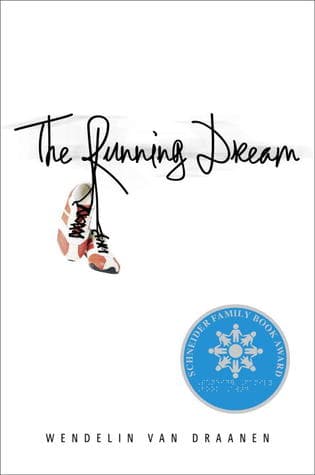
Wendelin Van Draanen
4.3

John Marsden
4.3

Chris Van Allsburg
4.3
Jennifer A. Nielsen
4.2