“The truth is, the universe is a lot bigger and stranger than most people ever imagine.”
— Susan Simmons reflects on her discovery about her teacher, Mr. Smith.

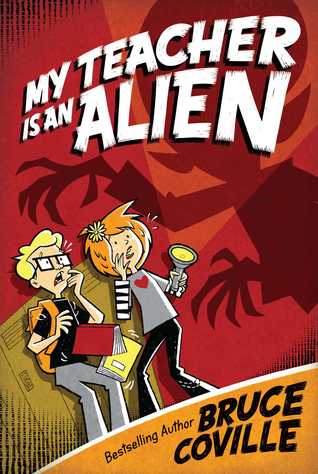
Bruce Coville (1989)
Genre
Fantasy / Children's / Science Fiction / Young Adult
Reading Time
160 min
Key Themes
See below
Sign in to track this book
When their new sixth-grade teacher starts peeling off his face, Susan and Peter must expose his extraterrestrial identity and save their classmates from a truly alien fate.
Susan Simmons, a sixth-grader at Meadowbrook Elementary, is not happy when her regular teacher, Mr. Hennessey, is replaced by a substitute named Mr. Smith. From the moment he arrives, Mr. Smith acts strangely: he is unusually tall, speaks in a monotone, and has a perfect appearance. He interacts with students in a peculiar way, observing them with an intense, scientific curiosity. Susan, known for her imagination, immediately senses that something is wrong with Mr. Smith. Her best friend, Duncan, dismisses her concerns, but Susan's intuition tells her that this new teacher is far from ordinary, starting her growing suspicions.
Susan's suspicions about Mr. Smith grow during class. When she is called to the principal's office, she accidentally takes a shortcut through a deserted hallway. Peeking into the empty classroom, she sees a horrifying sight: Mr. Smith is peeling off his own face, revealing a grotesque, green, and slimy alien head underneath. Terrified, Susan flees, now certain that her teacher is an alien. She tries to tell Duncan and her other friends, but they are all skeptical, thinking her story is from her imagination. Feeling alone, Susan realizes she needs to find someone who will believe her and help her uncover Mr. Smith's true intentions.
Desperate for someone to believe her, Susan turns to Peter Thompson, the class intellectual and science enthusiast. Peter, known for his logical mind, initially dismisses Susan's claims about Mr. Smith being an alien as fantasy. However, Susan's earnestness and the details of her story interest him. He agrees to observe Mr. Smith more closely. Peter's careful observations of Mr. Smith's unusual habits, such as his strange eating preferences and his inability to understand human idioms, begin to reduce his skepticism. He starts to consider the possibility that Susan might be telling the truth, a turning point in their effort.
Peter and Susan begin to investigate Mr. Smith. Peter uses his scientific knowledge to look for inconsistencies in Mr. Smith's behavior and physical presence. They notice that Mr. Smith never blinks, has a steady gaze, and seems to be constantly taking notes on the students. During a class trip to the natural history museum, Peter manages to swipe a small, metallic, and unusually warm device that Mr. Smith accidentally drops. This device, later confirmed by Peter to be unlike any earthly technology, provides proof of Mr. Smith's alien origin. This discovery solidifies Peter's belief and makes them act, understanding the seriousness of their situation.
Using the alien device and Peter's decoding skills, the duo accesses some of Mr. Smith's hidden files on his computer. To their horror, they discover Mr. Smith's true mission: he is an advance scout from the planet Froon, sent to Earth to collect human brains. The Froonians, a race of intelligent but emotionless beings, believe that by studying human brains, they can learn about emotions and creativity, which are lacking on their planet. The 'best' brains from the class are to be harvested and transported back to Froon. This revelation frightens Susan and Peter, realizing their classmates are in danger.
Mr. Smith begins selecting which students will have their brains harvested. He uses a subtle method, marking certain students with a small, glowing symbol visible only through the alien device. Susan and Peter observe him closely, terrified as they see their friends and even themselves being marked. The alien's selections are not based on academic prowess alone but seem to be related to specific emotional or creative traits. This makes their situation more urgent, as they realize they have limited time before Mr. Smith's plan starts. They must devise a way to stop him and protect their classmates.
Realizing they cannot go to adults who will not believe them, Susan and Peter decide they must take matters into their own hands. They devise a plan to expose Mr. Smith in front of the entire school, hoping to force him to reveal his true form and stop his mission. Their strategy involves using the alien device and a trap during the upcoming school assembly. Peter's scientific mind helps them anticipate Mr. Smith's reactions and movements, while Susan's creativity allows them to think of unconventional ways to disrupt his plans. They know the risks are high, but their classmates' fate depends on their success.
During the school assembly, Susan and Peter put their plan into action. They create a diversion and use the alien device to project Mr. Smith's true alien image onto the screen for all to see. Chaos erupts as students and teachers scream in terror. Mr. Smith, caught off guard, struggles to maintain his human disguise. His alien features begin to break through, confirming Susan's earlier claims. The situation is tense, with Mr. Smith attempting to regain control and the school staff trying to understand the pandemonium. The children's bravery is clear as they face the alien teacher.
Cornered and exposed, Mr. Smith reveals his true alien form to the horrified school. He explains his mission and the Froonian need for human brains, confirming everything Susan and Peter had discovered. However, he also reveals that he is just one of many Froonian scouts and that his failure will not stop his species from eventually returning. With his mission compromised and his identity revealed, Mr. Smith retreats, promising to report back to Froon about the 'unpredictable' nature of Earthlings. He vanishes, leaving behind a bewildered and traumatized school, and a warning about the future of interspecies relations.
Afterward, the school administration tries to cover up the incident, saying the chaos was a mass hallucination or a prank. However, many students and teachers are shaken, having witnessed Mr. Smith's transformation. Susan and Peter, though never officially recognized, are called heroes by their classmates who knew the secret. They are relieved but also burdened by the knowledge of what happened and the lingering threat of future alien encounters. The experience changes their perspective on the world, strengthening their bond and showing that even ordinary kids can face extraordinary challenges.
The Protagonist
Susan evolves from being an imaginative but often disbelieved child to a courageous and validated hero who saves her class.
The Supporting
Peter moves from pure skepticism and logic to accepting the extraordinary, using his intelligence to combat an alien threat.
The Antagonist
Mr. Smith begins as a seemingly perfect, unassuming substitute and is revealed as a calculating alien, ultimately failing his mission.
The Supporting
Duncan remains skeptical throughout much of the story, serving as a contrast to Susan's intuition, until the final reveal confirms her claims.
The Mentioned
N/A - His role is to initiate the plot by being replaced.
The Supporting
Principal Davis remains oblivious and in denial, representing the adult world's inability to grasp the extraordinary.
The Mentioned
N/A - They are a collective force, not individual characters, whose motivations drive the plot.
The Supporting
N/A - Her role is to react to the climax and represent the collective adult response.
This theme is central to the narrative, as Susan's initial belief in Mr. Smith's alien identity is met with skepticism from her friends and adults. Peter, the logical 'brain,' initially dismisses her claims, showing the human tendency to disbelieve the extraordinary without proof. The story explores the tension between intuition and evidence, eventually showing how Peter's scientific mind is swayed by Susan's persistence and their combined discoveries. The theme ends with the adults' denial even after Mr. Smith's exposure, showing the challenge of accepting uncomfortable truths.
“"No one would believe her. Not her best friend, Duncan. Not her parents. Not even Peter Thompson, the class brain, who usually believed anything if there was enough evidence to back it up."”
The book shows that children can perceive truths that adults often overlook or dismiss. Susan's intuition, initially dismissed as an overactive imagination, is accurate. She and Peter, despite being children, are the only ones capable of uncovering and stopping Mr. Smith's plan because adults are too preoccupied or unwilling to believe them. This theme empowers young readers, showing that even without adult authority or resources, children's intelligence, bravery, and teamwork can overcome threats. Their resourcefulness in planning and executing the alien's exposure shows this power.
“"It was up to them. They were the only ones who knew the truth, and they were the only ones who could do anything about it."”
This theme is explored through the contrast between humans and the Froonians. The Froonians, including Mr. Smith, are a species without emotions, creativity, and individuality, operating as a collective. They seek human brains to understand these 'missing' qualities. This highlights the value of human individuality, emotional range, and unique thought processes. The Froonians' desire to harvest brains to gain these traits shows their importance and positions human uniqueness as something precious worth protecting. The children's diverse personalities, especially Susan's imagination and Peter's logic, show this human individuality.
“"On Froon, there was no such thing as an individual. They were all part of the collective, and they were all exactly alike. They had no emotions, no creativity, no fun."”
The book examines different forms of intelligence. Peter represents logical, scientific intelligence, important for deciphering alien technology and planning. Susan embodies intuitive, creative intelligence, allowing her to sense danger and think unconventionally. The Froonians have a high level of technical and logical intelligence but lack emotional intelligence and creativity, which they seek to acquire from humans. This theme suggests that true intelligence includes a broader spectrum than mere academic or technological prowess, including emotional depth and imaginative thought, which humans inherently possess.
“"They were brilliant, in their own way. But they didn't have what we have: feelings. Ideas. Dreams."”
Mr. Smith's human appearance as a deceptive facade.
Mr. Smith's human guise is a key plot device, creating initial suspense and allowing him to infiltrate the school undetected. It visually represents the hidden danger and the deceptive nature of appearances. Susan's accidental discovery of him 'peeling off his face' is the inciting incident, immediately establishing the central conflict. The disguise also allows for subtle clues about his alien nature, such as his monotone voice and lack of blinking, which observant characters like Peter pick up on, gradually building tension and confirming Susan's initial suspicions.
A small, metallic object that serves as proof and a tool for investigation.
The small, metallic alien device that Peter retrieves from Mr. Smith is a crucial plot device. It serves multiple functions: it's concrete proof of Mr. Smith's extraterrestrial origin, solidifying Peter's belief; it allows Peter and Susan to access Mr. Smith's files and uncover his true mission; and it becomes instrumental in their plan to expose him during the assembly. This device acts as a tangible link to the alien world, providing the children with the means to combat a threat far beyond their normal capabilities, and advancing the plot through its various uses.
The setting for the climax and public exposure of the alien.
The school assembly functions as the climactic setting for the confrontation between the children and Mr. Smith. It provides a public forum where Mr. Smith can be exposed to a large audience, creating maximum impact and chaos. The assembly allows the children to use their evidence and planning to force Mr. Smith's hand, revealing his true form to the entire school. This public exposure ensures that, despite adult attempts at a cover-up, many people witness the truth, validating Susan and Peter's efforts and creating a memorable, dramatic conclusion to the central conflict.
“The truth is, the universe is a lot bigger and stranger than most people ever imagine.”
— Susan Simmons reflects on her discovery about her teacher, Mr. Smith.
“Sometimes the most important things are the ones you can't see.”
— Susan discusses the hidden nature of Mr. Smith's alien identity.
“Just because something looks different doesn't mean it's bad.”
— Susan tries to understand Mr. Smith's alien nature.
“Fear is a funny thing. It can make you do things you never thought you'd do.”
— Susan describes her initial reaction to learning Mr. Smith is an alien.
“Teachers are supposed to help you learn, not scare you to death.”
— Susan's frustration with Mr. Smith's intimidating behavior.
“The world is full of mysteries, and sometimes they're right in your own classroom.”
— Susan realizes the extraordinary situation she's in.
“Being different isn't a crime. It's just... different.”
— Susan defends Mr. Smith's alien identity to her friend.
“Sometimes you have to break the rules to find out what's really going on.”
— Susan justifies her investigation into Mr. Smith's secret.
“The scariest monsters are the ones that look just like us.”
— Susan reflects on how Mr. Smith appears human but is alien.
“Learning isn't just about books. It's about understanding the world around you.”
— Susan's realization through her experience with Mr. Smith.
“Friendship can be the strongest weapon against fear.”
— Susan and her friend Peter support each other in facing Mr. Smith.
“You never know what someone is really like until you walk in their shoes.”
— Susan tries to empathize with Mr. Smith's perspective.
“The universe is a big place, and we're all just trying to find our way in it.”
— Susan contemplates Mr. Smith's mission as an alien.
Ready to see how well you understood this book? Take our interactive quiz with 10 questions.

Bruce Coville is a prolific American author known for his engaging middle-grade fantasy and science fiction novels. He is celebrated for popular series like "The Unicorn Chronicles," featuring "Into the Land of the Unicorns," and "The "Aliens" series, including "My Teacher Is an Alien." His accessible writing style and imaginative storytelling have made him a beloved figure in children's literature.







