“My swordhand is singing. It is a song that tells of death and glory, and it is a song I know well.”
— Main character, Peter, reflecting on his innate skill and destiny with a sword.

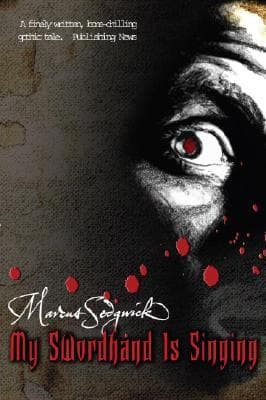
Marcus Sedgwick (2006)
Genre
Fantasy / Historical Fiction / Young Adult
Reading Time
180 min
Key Themes
See below
Sign in to track this book
In a village plagued by the walking dead, a young man uncovers his enigmatic father's vampiric past and the destiny he must embrace to protect their isolated island home.
Tomas, a quiet and skilled woodsman, arrives with his son, Peter, in the isolated village of Chust. They immediately build a hut in the forest, but Tomas's first priority is to dig a deep, fast-flowing channel around their dwelling, creating a small, defensible island. Peter, a curious and observant boy, is puzzled by his father's actions and the strange, long wooden box Tomas always keeps close, whose contents are a forbidden mystery. They live a solitary life; Tomas teaches Peter the ways of the forest and woodcutting, while the villagers remain wary and distant, sensing the unspoken secrets that shroud the father and son.
Life in Chust is disrupted by a series of unsettling events. Old Man Perta, a villager, dies suddenly, his body drained of blood. Soon after, other mysterious deaths occur, each victim bearing a similar, gruesome mark. The villagers, already superstitious, become increasingly fearful, whispering about ancient curses and evil spirits. Peter notices his father becoming more vigilant, his gaze constantly scanning the treeline and the faces of the villagers. The long wooden box seems to take on a new, ominous significance, and Tomas's already reserved demeanor grows even more shadowed with unspoken worry.
Driven by curiosity, Peter seizes an opportunity when Tomas is away. He manages to open the forbidden wooden box and is shocked by its contents: not tools, but a gleaming, finely crafted sword, accompanied by a smaller dagger. The sword is clearly ancient and of exceptional quality, hinting at a past far removed from a simple woodcutter's life. This discovery shatters Peter's perception of his father, revealing a hidden warrior beneath the unassuming exterior. He realizes his father's reclusiveness, the island home, and the constant vigilance are all connected to this weapon and the dangerous past it represents.
The horror intensifies when the deceased villagers, including Old Man Perta, begin to rise from their graves as grotesque, bloodthirsty creatures. These 'revenants' or 'undead' attack the living, spreading terror throughout Chust. The villagers are ill-equipped to fight such a supernatural threat, and their defenses crumble. Panic grips the community as their numbers dwindle. Peter watches in horror as the once-peaceful village transforms into a battleground, the sounds of screams and the shuffling of the undead filling the nights. It becomes clear that a powerful, evil force is at work.
With the village under siege by the undead, Tomas can no longer keep his secrets. He reveals to Peter that he is a 'Slayer,' a member of an ancient order dedicated to hunting and destroying vampires, the true masters of the undead. He explains that the creature plaguing Chust is a powerful vampire, an ancient enemy that he thought he had escaped. The sword in the box is his family's heirloom, passed down through generations of Slayers. He confesses that he came to Chust seeking refuge and a normal life for Peter, but his past has finally caught up to them, endangering everyone he sought to protect.
The vampire responsible for the terror in Chust is eventually identified as a formidable, ancient entity known as 'The Master.' It is revealed that The Master has been tracking Tomas for a long time, seeking revenge for past encounters or perhaps to eliminate the last of the Slayers. The vampire manipulates the villagers, preying on their fears and turning them against each other. Its presence is felt throughout the village, a chilling aura of dread and despair. The Master is not just a monster but a cunning, intelligent adversary, making the fight against it a perilous one for Tomas and Peter.
Recognizing that Peter must be prepared to defend himself and potentially carry on the fight, Tomas begins to train his son. He teaches Peter how to wield the sword and dagger, the specific weaknesses of the undead, and the lore surrounding vampires. The training is rigorous and intense, a stark contrast to Peter's previous life. Peter, initially overwhelmed, quickly shows an aptitude for combat, driven by the desire to protect his father and the remaining villagers. Their island home, once a sanctuary, now becomes a training ground for their impending battle against The Master and its minions.
The Master, growing impatient, orchestrates a mass assault on Tomas and Peter's island home. Hordes of undead, controlled by the vampire, attempt to cross the water channel, overwhelming their defenses. Tomas and Peter fight side-by-side, using their swords and knowledge to repel the creatures. The battle is fierce and desperate, testing their skills and courage. Despite their valiant efforts, the sheer numbers of the undead threaten to overwhelm them, forcing them to consider a more direct confrontation with The Master rather than a purely defensive strategy.
Realizing they cannot simply wait for the undead to destroy them, Tomas and Peter decide to take the fight to The Master. They track the vampire to its lair, deep within the forest or perhaps an abandoned part of the village. The final confrontation is a climactic and terrifying battle. Tomas, with all his experience, faces the powerful vampire, while Peter fights off its remaining undead servants. The Master proves to be an incredibly formidable opponent, possessing superhuman strength, speed, and cunning, pushing both father and son to their physical and emotional limits.
In the brutal climax of the battle, Tomas is gravely wounded while fighting The Master. Recognizing his impending death, he makes a heroic sacrifice, creating an opening for Peter to strike the killing blow against the vampire. Peter, fueled by grief and a newfound resolve, uses his training and the Slayer's sword to finally destroy The Master, ending its reign of terror. In the aftermath, Peter is left alone, but he has fully embraced his destiny as a Slayer. He understands the burden and responsibility that comes with his heritage, ready to carry on his father's legacy and protect humanity from such evils.
The Protagonist/Supporting
Tomas attempts to deny his identity as a Slayer but ultimately embraces it again to protect Peter and Chust, leading to his heroic sacrifice.
The Protagonist
Peter transforms from an innocent boy into a brave, capable Slayer, accepting his family's legacy after his father's sacrifice.
The Antagonist
The Master relentlessly pursues Tomas, re-establishing its reign of terror, only to be ultimately defeated by Peter.
The Mentioned/Supporting
Dies as a victim, then rises as one of the undead, prompting Tomas's revelation.
The Supporting
Initially wary, they descend into fear and chaos as the undead rise, becoming victims and demonstrating the need for a protector.
The novel explores how one's past and family heritage can shape an individual's future, often against their will. Tomas tries to escape his legacy as a Slayer, seeking a normal life for Peter, but ultimately fails. Peter, in turn, is thrust into this destiny, first reluctantly, then with a growing sense of responsibility. The ancestral sword is a powerful symbol of this inherited burden, representing both power and a life of constant vigilance and sacrifice. The story implies that some destinies are inescapable, and true strength lies in accepting and honoring them, as seen when Peter finally wields the sword with purpose after Tomas's death.
“'Some things, Peter, you cannot run from. No matter how far, no matter how fast.'”
Central to the narrative is the bond between Tomas and Peter. Tomas's every action, from building the island home to concealing his past, is driven by his desire to protect Peter from the horrors he has faced. This protective instinct evolves into mentorship as Tomas, realizing the inescapable danger, trains Peter to defend himself. Peter, initially confused by his father's secrets, eventually understands the depth of his love and the sacrifices made. Their journey together is one of mutual reliance, culminating in Peter's need to protect his father and ultimately avenge him, solidifying his own path.
“'I built this place for you, Peter. So you would be safe.'”
The novel shows how fear can grip a community and how superstition can both hinder and inform understanding. The villagers of Chust are initially driven by superstitious fears, misinterpreting the early signs of the vampire's presence. Their fear quickly escalates into panic and paranoia, making them vulnerable to The Master's influence. In contrast, Tomas and Peter's understanding of the supernatural is based on ancient knowledge and practical experience, allowing them to confront the true source of terror. The story highlights the difference between unfounded fear and the rational apprehension necessary to face a real, tangible evil.
“'They believe in old stories, Peter, not what truly walks in the dark.'”
Sacrifice is a recurring motif, particularly in the climax. Tomas's entire life is a form of sacrifice, constantly on the run and unable to live a 'normal' existence due to his duty. His ultimate act of heroism is his final, selfless sacrifice to create an opportunity for Peter to defeat The Master. This act highlights the idea that true heroism often involves putting others' lives before one's own, especially when facing overwhelming evil. Peter's subsequent acceptance of his role as a Slayer also represents a sacrifice of his innocence and a commitment to a dangerous, solitary path.
“'Go, Peter! Finish it! This is your fight now!'”
A long, wooden box concealing Tomas's true identity and weapon.
The mysterious box serves as a central symbol of Tomas's hidden past and the secrets he keeps from Peter. Its forbidden nature immediately piques Peter's curiosity and the reader's, creating suspense. When its contents are revealed to be a sword, it dramatically shifts Peter's perception of his father and foreshadows the impending conflict. The box represents the containment of a dangerous legacy that cannot remain hidden forever, and its eventual opening is a pivotal moment in the story's unraveling.
A secluded hut surrounded by a water channel, serving as a physical and symbolic sanctuary.
Tomas's construction of the island home is a physical manifestation of his desire for isolation and protection. The fast-flowing water channel acts as a literal barrier against the outside world and, later, against the undead. Symbolically, it represents Tomas's attempt to create a safe haven for Peter, a place where his dangerous past cannot reach them. However, its eventual invasion by The Master and its minions signifies the inescapable nature of their destiny and the futility of trying to outrun one's true calling.
An ancient, powerful sword passed down through generations of vampire hunters.
The sword is not just a weapon but a powerful symbol of the Slayer legacy and the family's destiny. Its discovery by Peter is a critical moment, revealing his father's true identity. The sword represents the knowledge, skill, and responsibility passed down through generations. It is the primary tool for combating the supernatural evil and ultimately serves as the instrument of The Master's defeat, signifying Peter's full acceptance of his role as the next Slayer in the lineage.
The reanimated corpses of villagers, serving as the vampire's thralls.
The rising dead are the primary manifestation of the supernatural threat in Chust, acting as the vampire's foot soldiers and a source of constant terror. They serve to escalate the horror, demonstrate the vampire's power, and force Tomas to reveal his true nature. Their gruesome appearance and relentless pursuit create a sense of urgency and danger, pushing the narrative forward and showcasing the Slayers' specific skills in combating them. They are a constant reminder of the pervasive evil spreading through the village.
“My swordhand is singing. It is a song that tells of death and glory, and it is a song I know well.”
— Main character, Peter, reflecting on his innate skill and destiny with a sword.
“Some stories are like that, though. They don't have happy endings. They just have endings.”
— Peter's somber reflection on the harsh realities he faces in the village of Chust.
“The past is never really past. It just waits for you to catch up.”
— Peter grappling with the history and secrets of his family and the village.
“Fear is a strange thing. It can make you run, or it can make you fight. Or it can just make you stand there, paralyzed.”
— Peter observing the villagers' reaction to the growing threat of the strigoi.
“There are some things you can't outrun, no matter how fast you are.”
— Peter realizing the inescapable nature of the danger he is in.
“A lie can travel halfway around the world while the truth is still putting on its shoes.”
— Peter's cynical observation about how easily misinformation spreads in the isolated community.
“Sometimes, the only way to save yourself is to stop trying.”
— A paradoxical thought Peter has during a moment of extreme despair.
“The night has teeth, and it bites.”
— A vivid description of the pervasive fear and danger that comes with nightfall in Chust.
“Blood. It's always about blood, in the end.”
— Peter reflecting on the violence, lineage, and the strigoi's nature.
“You can't fight a monster if you become one yourself.”
— A moral dilemma Peter faces as he confronts the darkness within and around him.
“The dead don't stay dead in places like this.”
— Peter's growing understanding of the supernatural forces at play in Chust.
“Love, hate, fear – they are all just different ways of being bound.”
— Peter's philosophical musing on the powerful emotions that drive human actions.
“There are things worse than death, and I have seen them.”
— Peter's grim realization after witnessing the horrors inflicted by the strigoi.
“Every secret has a price, and Chust was full of them.”
— Peter uncovering the many hidden truths of the village and their consequences.
Ready to see how well you understood this book? Take our interactive quiz with 10 questions.
Biography coming soon.







