“The past is a ghost that haunts the present, and sometimes, it demands to be heard.”
— Character reflecting on the cold case of his sister's disappearance.

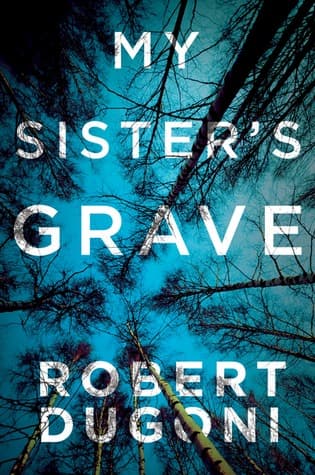
Robert Dugoni (2014)
Genre
Thriller / Mystery
Reading Time
8-10 hours
Key Themes
See below
Sign in to track this book
Twenty years after her sister's murder, a Seattle homicide detective reopens the cold case, uncovering dangerous small-town secrets that shatter her past and put her life at risk.
Twenty years after her disappearance, hikers find Sarah Crosswhite's remains in a remote area of the northern Cascade mountains, near Cedar Grove, Washington. Tracy Crosswhite, Sarah's younger sister and a Seattle homicide detective, is notified. The discovery breaks the fragile peace Tracy had built, renewing her belief that Edmund House, the man convicted of Sarah's murder, is innocent. Tracy, with her husband Dan O'Leary, travels to Cedar Grove, determined to ensure the new evidence is handled correctly and to finally find the truth about her sister's fate, a truth she believes was hidden by a flawed investigation years ago.
Tracy revisits the painful memories of the first investigation into Sarah's disappearance in 1983. Cedar Grove, pressured by local logging magnate George Crosswhite (Sarah and Tracy's father) and the community's desire for a quick answer, quickly focused on Edmund House, a known local rapist. Despite inconsistencies and no direct physical evidence connecting him to Sarah's body (which was not found then), House was convicted mainly on circumstantial evidence and his criminal history. Tracy remembers her father's aggressive pursuit of justice, believing House was guilty, and the deep impact Sarah's loss had on their family, especially her mother, who eventually died of a broken heart.
With Sarah's remains found, Tracy takes leave from the Seattle PD and returns to Cedar Grove. She asks her former mentor, Detective Wayne Nolasco, now retired but still sharp, for help. Together, they start going through the old case files, looking for inconsistencies and overlooked details. They quickly find that the original investigation, led by Sheriff Wiggins, was flawed, with important evidence either ignored or misunderstood. Tracy's presence and persistent questions immediately stir up the quiet town, making some residents uncomfortable, especially those involved in the original case or holding prominent positions in Cedar Grove.
Tracy and Nolasco carefully re-interview original witnesses and look into the lives of those connected to Sarah. They find inconsistencies in the testimony of Claire Porter, Sarah's best friend, and question the alibis of other possible suspects, including Billy House (Edmund's brother) and Roy Phillips, a classmate who liked Sarah. Tracy also re-examines the strained relationship between Sarah and her father, George Crosswhite, and the tensions within the Crosswhite family. The new investigation reveals that Sarah was not as innocent or simple as the town thought, hinting at hidden parts of her life before she disappeared.
Tracy confronts Claire Porter, who, after much urging, finally reveals a major secret: Sarah was having an affair with an older, married man named David Miller, a prominent lawyer in Cedar Grove. This revelation completely changes Tracy's view of her sister and sheds new light on Sarah's disappearance. Claire confesses that Sarah had told her about the affair and her plans to leave Cedar Grove, possibly with Miller. This new information suggests a motive for murder far more complex than the one first attributed to Edmund House, opening a new line of inquiry for Tracy and Nolasco.
With the information about David Miller, Tracy and Nolasco begin to investigate him. They discover that Miller, a seemingly respectable community leader, had a history of manipulating women and was known for his ruthless ambition. His wife, who had been ill, had recently died, raising Tracy's suspicions. Tracy learns that Miller had a strong motive to silence Sarah, especially if she was threatening to expose their affair, which could have ruined his career and reputation. The investigation into Miller also uncovers his connections to other powerful figures in Cedar Grove, suggesting a deeper conspiracy.
Tracy becomes increasingly suspicious of Sheriff Wiggins, who led the original investigation. His quick focus on Edmund House, his dismissive attitude toward other theories, and his apparent lack of thoroughness now seem less like incompetence and more like a deliberate attempt to steer the investigation away from certain individuals. Tracy and Nolasco investigate Wiggins's past and his relationship with powerful figures in Cedar Grove, including David Miller and George Crosswhite. They uncover evidence suggesting that Wiggins might have been coerced or bribed to close the case quickly, protecting someone influential in the town.
As Tracy and Nolasco get closer to the truth, they face increasing intimidation. Tracy's car is vandalized, and she receives anonymous threats, making it clear that someone powerful wants her to stop digging. These incidents only strengthen Tracy's resolve, confirming her belief that she is on the right track. The danger grows, forcing Tracy to use her detective skills and the support of her husband, Dan, who becomes increasingly worried for her safety. The threats suggest that the killer is still in Cedar Grove and will go to great lengths to keep the truth hidden.
Tracy and Nolasco finally find Billy House, Edmund's brother, who has been living a reclusive life. Billy, burdened by guilt and fear, reluctantly confesses that he witnessed a crucial part of the events on the night Sarah disappeared. He reveals that he saw Sarah arguing with David Miller near the logging roads. Billy also admits that Sheriff Wiggins pressured him to stay quiet and testify against his brother, Edmund, under threat of his own arrest. His testimony provides the missing link, directly connecting Miller to Sarah's last known whereabouts and exposing the cover-up.
With Billy House's confession and other supporting evidence, Tracy confronts David Miller. Under intense questioning and faced with undeniable proof, Miller finally breaks down and confesses to Sarah's murder. He admits that Sarah was pregnant with his child and threatened to expose their affair, which would have ruined his reputation and political ambitions. In a fit of rage, he killed her and, with Sheriff Wiggins's help, framed Edmund House to protect himself. The confession brings horrifying clarity to the twenty-year mystery, confirming Tracy's long-held suspicions about Edmund's innocence.
With Miller's confession, Edmund House is finally cleared and released from prison after twenty years of wrongful incarceration. Cedar Grove is shaken by the truth, forced to face the injustice they allowed. David Miller is arrested and charged with Sarah's murder, while Sheriff Wiggins is also arrested for obstruction of justice and other related crimes. Tracy, though emotionally drained, finally achieves the justice she sought for her sister and for Edmund House. The resolution brings closure, but the scars of the past remain, forever changing Tracy and Cedar Grove.
The Protagonist
Tracy transforms from a detective haunted by her past into a catalyst for justice, finding closure and vindication for her sister and the wrongfully accused.
The Central Figure (Deceased)
Though deceased, Sarah's character is revealed through flashbacks and new evidence, shifting from an idealized victim to a more complex, flawed individual.
The Victim of Injustice
Edmund House endures twenty years of wrongful imprisonment, eventually being exonerated and released, symbolizing the triumph of truth over injustice.
The Supporting
Nolasco transitions from retirement back into active detective work, helping Tracy solve the case and find renewed purpose.
The Antagonist
Miller maintains his respectable facade for twenty years, only to be exposed as a murderer and a manipulator by Tracy's relentless investigation.
The Antagonist/Supporting
Wiggins's twenty-year cover-up is exposed, leading to his arrest and the dismantling of the injustice he perpetuated.
The Supporting
Dan remains a constant source of support for Tracy, his concern growing as she faces increasing danger, but he ultimately stands by her.
The Supporting
Claire moves from a fearful keeper of secrets to a reluctant truth-teller, helping Tracy unravel the mystery.
The Supporting/Mentioned
Though deceased, his character's past actions and grief are re-evaluated through Tracy's investigation, revealing the complexities of his role in the original injustice.
The Supporting
Billy lives in fear and guilt for twenty years, eventually finding the courage to reveal the truth and aid in his brother's exoneration.
The main theme is Tracy's relentless search for the truth behind her sister's murder and her strong commitment to justice, not just for Sarah, but for the wrongfully convicted Edmund House. This theme shows in Tracy's careful re-examination of old evidence, her willingness to challenge accepted stories, and her personal sacrifices to uncover what happened. It highlights that true justice often means looking beyond easy answers and confronting uncomfortable truths, as seen when Tracy uncovers the cover-up by powerful figures in Cedar Grove.
“Justice isn't about what's easy, it's about what's right. And sometimes, what's right is buried under twenty years of lies.”
The novel explores how power and the desire to protect one's reputation can lead to corruption and injustice. David Miller, a prominent lawyer, uses his influence to cover up his crime and frame an innocent man. Sheriff Wiggins, driven by fear and complicity, enables this cover-up. Cedar Grove, wanting a quick resolution and perhaps intimidated by figures like Miller and George Crosswhite, allows the truth to be hidden. This theme shows how abusing power can distort the legal system and destroy lives, keeping dark secrets buried for decades.
“In a small town, a secret is a commodity. In the wrong hands, it can be a weapon.”
Grief and loss are strong themes throughout the story, especially in Tracy's character. Sarah's murder profoundly changed Tracy's life, driving her to become a detective and fueling her two-decade search for answers. The novel also touches on George Crosswhite's grief, who, in his desperation, contributed to the injustice, and the lingering pain felt by the entire Crosswhite family. This theme illustrates how unresolved grief can haunt individuals and families, motivating both destructive and constructive behaviors, and how finding the truth, even decades later, can finally offer a path to healing.
“Twenty years. That's how long a lie can live when grief blinds a town.”
Family and loyalty are important to the story. Tracy's unwavering loyalty to her sister Sarah, even after learning about her secrets, drives her investigation. The strained relationship between Tracy and her father, George, due to his initial belief in Edmund House's guilt, highlights the complexities of family bonds under stress. The book also examines the loyalty (or lack thereof) between the House brothers, and the betrayal of trust within friendships, such as Claire's initial silence. This theme explores how family ties can be a source of strength or conflict, and how loyalty can be tested or broken by fear and self-preservation.
“Family doesn't just mean blood. It means who you fight for, who you protect, even when the world tells you to let go.”
The reopening of a decades-old murder case.
The discovery of Sarah Crosswhite's remains twenty years after her disappearance serves as the primary plot device. This 'cold case' allows the author to build suspense by gradually revealing past events and secrets, forcing characters to confront long-buried truths. It highlights the challenges of such investigations, including faded memories, lost evidence, and the difficulty of convincing people to revisit painful pasts, while also demonstrating the enduring power of forensic science and determined detective work.
An innocent man imprisoned for the crime.
The wrongful conviction of Edmund House for Sarah's murder is a significant plot device. It immediately establishes a sense of injustice and provides Tracy with a dual motivation: to find her sister's killer and to clear an innocent man's name. This device adds a layer of moral urgency to the narrative, raising stakes beyond just solving a murder and allowing the story to explore themes of systemic failure, prejudice, and the ripple effects of a flawed justice system on individuals and a community.
Information given by characters proves to be incomplete or deliberately misleading.
Throughout the investigation, Tracy encounters witnesses whose original testimonies were either incomplete, biased, or deliberately misleading, such as Claire Porter's initial silence or Billy House's coerced statement. This device creates suspense and forces Tracy (and the reader) to question everything, peeling back layers of deception and hidden motives. It illustrates how personal fears, loyalties, and the desire to protect oneself or others can obscure the truth, making the process of uncovering it a complex and painstaking endeavor.
The hidden truths and dark underbelly of a seemingly idyllic community.
Cedar Grove, the setting for much of the story, embodies the 'small town secrets' trope. Beneath its tranquil surface lies a web of hidden affairs, corruption, and a collective complicity in covering up a murder. This device creates an atmosphere of distrust and claustrophobia, as Tracy realizes that many residents, including those in positions of power, have something to hide or protect. It emphasizes how the close-knit nature of a small community can foster both loyalty and a dangerous silence, making it difficult for outsiders (or returning natives) to uncover uncomfortable truths.
“The past is a ghost that haunts the present, and sometimes, it demands to be heard.”
— Character reflecting on the cold case of his sister's disappearance.
“Every lie we tell creates a debt, and eventually, that debt has to be paid.”
— Detective Tracy Crosswhite's internal monologue about secrets and their consequences.
“Some truths are buried so deep, they need to be excavated with great care, or they'll shatter.”
— Considering the fragile nature of long-held secrets and their impact.
“Hope is a dangerous thing, but it's also the only thing that keeps us going.”
— Tracy's enduring hope for answers in her sister's case despite years of silence.
“The most dangerous people are often the ones you least suspect.”
— A recurring theme in the investigation, highlighting the deceptive nature of appearances.
“Justice isn't always about punishment; sometimes it's about understanding what happened.”
— Tracy's motivation for reopening the case, seeking closure as much as conviction.
“A small town can keep big secrets, especially when everyone benefits from them staying buried.”
— Describing the complicity and silence within the community regarding Sarah's disappearance.
“Grief changes you. It leaves a permanent mark, a shadow that never quite fades.”
— Tracy's reflection on the lasting impact of her sister's death on her life.
“The truth has a way of rising to the surface, no matter how hard you try to hold it down.”
— A confident statement about the eventual triumph of truth in the investigation.
“Sometimes, the only way to move forward is to go back and confront what you left behind.”
— Tracy's decision to return to her hometown to investigate the cold case.
“Memory is a fickle thing. It can betray you, or it can be the key to everything.”
— Considering the unreliable nature of witness testimonies and the power of forgotten details.
“The silence was louder than any scream, a testament to the fear that still gripped the town.”
— Describing the lingering fear and unspoken truths in the community years later.
“To truly know someone, you have to understand their darkest moments, not just their brightest.”
— Tracy's deep dive into the lives of suspects and victims to uncover motives.
“Revenge is a cold dish, but sometimes, it's the only thing that satisfies.”
— A character's internal thought about the motivation behind certain actions.
Ready to see how well you understood this book? Take our interactive quiz with 10 questions.







