“I think I saw a Totoro!”
— Mei describes her first encounter with the creature to Satsuki and her father.

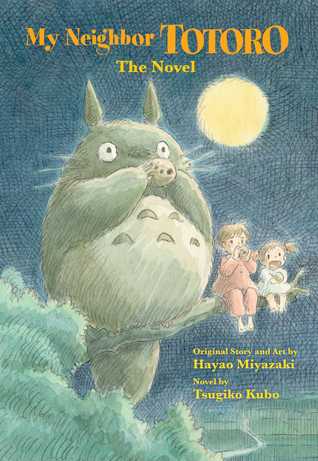
Tsugiko Kubo (2013)
Genre
Fantasy / Children's / Historical Fiction / Young Adult
Reading Time
240 min
Key Themes
See below
Sign in to track this book
In a whimsical 1950s Japanese countryside, two sisters discover a world of benevolent forest spirits, including the magnificent Totoro, who guides them through magical adventures and the challenges of their mother's illness.
Eleven-year-old Satsuki and her four-year-old sister Mei, along with their father, Professor Tatsuo Kusakabe, move into an old, somewhat run-down house in rural Japan. Their mother, Yasuko, is recovering from tuberculosis in a nearby hospital. The move is meant to shorten their father's commute to visit her and for the girls to be closer to her. The sisters immediately like the house, which they find is full of 'soot sprites' (dust bunnies or 'makkuro kurosuke'), tiny, shadowy creatures that scatter when disturbed. Their father encourages their imagination, saying the sprites are real. They explore the surrounding forest and rice paddies, enjoying their new, rustic environment with curiosity.
While Satsuki is at school and their father is working, Mei wanders into the garden and follows two small, white, rabbit-like creatures, which she calls 'Totoros.' They lead her through a tunnel of camphor trees to a giant, sleeping creature she identifies as a much larger 'Totoro.' This large, gray, furry being has a wide grin and a soft belly. Mei falls asleep on its stomach, only to wake up a short while later to find it gone. She tries to explain her magical encounter to Satsuki and her father, but they only find a small, undisturbed hollow in the trees. Despite no physical evidence, her father believes her story, reinforcing the magic of their new home.
One rainy evening, Satsuki and Mei wait at the bus stop for their father to return from work. Satsuki has Mei on her back, shielding her from the rain with a single umbrella. Suddenly, a giant Totoro appears next to them, holding a large leaf over its head to block the rain. Satsuki, at first surprised, offers Totoro her father's spare umbrella. Totoro likes the sound of raindrops on the umbrella and gives Satsuki a small bundle of seeds as a thank you before boarding a huge, multi-legged Catbus that glows and has glowing eyes for headlights. This shared experience confirms the sisters' belief in Totoro and their connection with the forest spirits.
Satsuki and Mei plant the seeds Totoro gave them, waiting for them to sprout. One night, they are woken by Totoro and two smaller Totoros dancing in their garden. The girls join them, doing a magical dance. As they dance, the seeds sprout and quickly grow into an enormous tree, reaching into the sky. The Totoros then invite Satsuki and Mei onto a magical spinning top, and they fly through the night sky, soaring over the countryside and seeing the world from above. The next morning, the giant tree is gone, but the seeds have indeed sprouted into small seedlings, confirming their dream-like adventure.
The sisters continue their daily routines, enjoying their new life in the countryside. They visit their mother, Yasuko, at the hospital, bringing her an ear of fresh corn they picked from a nearby field. Yasuko is happy to see them and is recovering well. The family shares a warm moment, showing their love and hope for Yasuko's return home. This visit provides a sense of normalcy and comfort amidst their magical encounters and worries about their mother's illness.
Satsuki receives a telegram from the hospital saying her mother's condition has worsened and her discharge is delayed. Overwhelmed with fear, Satsuki tries to be strong for Mei, but Mei, already upset and missing her mother, feels ignored. In her distress, Mei decides to walk to the hospital by herself to give her mother the ear of corn she believes will cure her. Satsuki finds Mei is missing and frantically searches for her, asking neighbors like Granny for help. The whole village helps find the lost girl.
As the search for Mei fails and night approaches, Satsuki becomes more desperate. She returns to the camphor tree where Mei first met Totoro and where they had their magical flight. Overwhelmed with worry, she tearfully asks Totoro for help. Totoro, understanding her situation, roars loudly, summoning the Catbus. The Catbus, a large, grinning, cat-shaped vehicle, arrives, its eyes glowing as headlights, ready to take Satsuki to find her sister.
Satsuki gratefully boards the Catbus, which speeds through the countryside, its glowing eyes looking at the surroundings. The Catbus quickly finds Mei, who is sitting alone and sad by the side of the road, holding the ear of corn. Satsuki hugs her sister, relieved to find her safe. The Catbus then takes both girls to their mother's hospital window. From a distance, they see their mother laughing with their father, seemingly well and recovering, easing their fears. They leave the ear of corn on the windowsill, a silent message of their love.
Soon after, Yasuko fully recovers and returns home, to the joy of Satsuki and Mei. The family is reunited, and life in the countryside continues happily. The soot sprites eventually leave their house, moving to another old building, showing the girls' growing comfort in their new home. The film ends with the family settled, surrounded by nature, with the subtle presence of the forest spirits, especially Totoro, watching over them from the forest. The girls have learned to trust each other and find magic in their everyday lives.
The Protagonist
Satsuki evolves from a somewhat burdened older sister to a resilient and hopeful child, fully embracing the magic around her while navigating real-world worries.
The Protagonist
Mei remains consistently open to wonder, her primary development being her emotional resilience strengthened by her sister's love and the comfort of the forest spirits.
The Supporting
Totoro does not have a character arc but serves as a constant, magical presence, representing nature's wonder and comfort.
The Supporting
Tatsuo remains a consistent source of stability and belief for his daughters throughout the story.
The Supporting
Yasuko's arc is one of recovery, symbolizing hope and the eventual return of family wholeness.
The Supporting
Granny consistently provides support and community spirit, acting as a stable, helpful figure.
The Supporting
Kanta's arc shows a subtle shift from shy teasing to quiet helpfulness and burgeoning friendship.
The Supporting
The Catbus serves as a magical catalyst, facilitating key plot points without a personal arc.
The Mentioned
The Soot Sprites are static magical elements, symbolizing the initial enchantment of the old house.
The film captures childhood imagination, where everyday life has magic. Satsuki and Mei's ability to see and interact with Totoro, the Soot Sprites, and the Catbus comes from their innocent and open minds. Their father encourages this wonder, believing their stories and creating an environment where magic can grow. The film suggests that the world has hidden marvels, available to those with a childlike sense of awe and belief, turning a stressful situation (moving, mother's illness) into an adventure.
“Maybe it's a dream, but you can never forget a dream.”
The natural world around the Kusakabe's new home is a powerful, kind force. The giant camphor tree where Totoro lives is a spiritual anchor, and the forest spirits are guardians of this nature. In moments of fear and distress, especially when Mei is lost, Satsuki instinctively turns to the forest and Totoro for help, finding comfort and aid there. Nature provides a safe place and a sense of wonder that helps the girls cope with their mother's illness, implying nature's ability to heal and support.
“Trees and people used to be good friends.”
The story is about the love and strength of the Kusakabe family. Despite their mother's illness and moving to a new place, the family remains strong, supported by the father's understanding and the sisters' bond. Satsuki's protective feelings for Mei, and Mei's deep desire for her mother, drive much of the plot. Their shared experiences, both ordinary and magical, strengthen their ties, showing how love and support help them navigate difficulties and keep hope.
“Don't worry, Mom will be fine. She'll be home soon.”
While not directly a theme of loss, the underlying worry of the mother's illness is always present, especially for Satsuki. The magical encounters with Totoro are a coping mechanism, offering escape and comfort during a difficult time. The film shows how children deal with fear and uncertainty, often through imagination and connection to the world around them. The reunion with their mother resolves this worry, but the journey shows how resilience comes from inner strength, family support, and a bit of magic.
“(After Mei goes missing) "Please, Totoro... help me find Mei!"”
Seamless integration of fantastical elements into an ordinary, grounded setting.
The film masterfully employs magical realism by presenting fantastical elements, such as Totoros, Soot Sprites, and the Catbus, as natural parts of the characters' world, particularly for the children. These magical beings are not questioned or explained away but accepted as real by Satsuki and Mei, and even their father. This device allows the audience to experience the wonder through the children's eyes, blurring the line between imagination and reality and making the magical encounters feel authentic and emotionally resonant within the mundane countryside setting.
Narrative filtered primarily through the experiences and perceptions of young children.
The entire story is presented largely from the perspective of Satsuki and Mei. Their innocence, curiosity, and boundless imagination shape how the audience perceives the world and its magical inhabitants. Adult concerns, like their mother's illness, are filtered through the children's understanding and emotional responses. This device allows for a sense of wonder and uncritical acceptance of the fantastical, making the magical elements more believable and emotionally impactful, as well as highlighting the unique ways children cope with challenging situations.
Totoro acts as a benevolent, non-verbal guide and source of comfort for the girls.
Totoro functions less as a character with a defined personality and more as a symbolic spirit guide or comfort figure. He doesn't offer advice or actively solve problems through dialogue, but his presence, the magical adventures he instigates (like the seed growth and the night flight), and his intervention with the Catbus provide the girls with emotional support, a sense of wonder, and ultimately, a means to overcome their anxieties. He is a silent guardian of the forest and of the children's spirits, offering solace and hope through his magical gifts.
The ancient camphor tree as a sacred, protective hub of nature and magic.
The giant camphor tree is a significant symbol in the film. It is the home of Totoro and the smaller Totoros, marking it as a sacred and ancient place. The tree represents the deep connection between the human world and the spiritual world of nature. It's a place of solace, power, and magic. The girls instinctively turn to it in times of need, understanding its importance. Its sheer size and age symbolize the enduring power and wisdom of nature, a silent guardian over the land and its inhabitants.
“I think I saw a Totoro!”
— Mei describes her first encounter with the creature to Satsuki and her father.
“When you're scared or sad, close your eyes and think of Totoro. He'll be there.”
— Satsuki comforts Mei during a difficult time, recalling a previous conversation.
“The wind is blowing, let's go meet it.”
— Satsuki says this to Mei as they are about to embark on an adventure.
“Trees and people used to be good friends.”
— The father explains to Satsuki and Mei the importance of the camphor tree.
“To be happy, you need to be a little bit crazy.”
— Granny shares a piece of wisdom with Satsuki.
“We're going to live here for a while and get used to the country.”
— The father explains their move to the new house to his daughters.
“What do you think, Totoro? Do you like our house?”
— Satsuki asks the large Totoro after their first group encounter.
“He's the keeper of the forest. He's very old.”
— The father explains who Totoro might be to his daughters.
“It's a little scary, but it's exciting!”
— Mei reacts to exploring the new, old house for the first time.
“I hope Mom gets better soon.”
— Satsuki expresses her wish for her sick mother.
“We'll go visit her every day.”
— The father reassures his daughters about their mother's stay in the hospital.
“Don't worry, your sister is fine. She's with Totoro.”
— Granny comforts Satsuki when Mei goes missing.
“Let's laugh a lot, then the scary things will go away.”
— The father encourages his daughters to be cheerful in their new, possibly haunted, home.
“Thank you, Catbus!”
— Satsuki and Mei thank the Catbus for helping them find their mother.
Ready to see how well you understood this book? Take our interactive quiz with 10 questions.







