“I was a writer, and I was not a writer. It was like a dream, and it was real.”
— Lucy reflecting on her early struggles and aspirations as a writer.

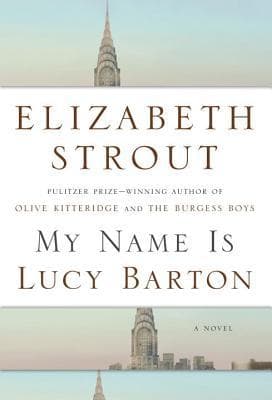
Elizabeth Strout (2016)
Genre
Literary Fiction
Reading Time
240 min
Key Themes
See below
Sign in to track this book
Confined to a hospital bed, Lucy Barton’s unexpected reunion with her estranged mother reveals a lifetime of buried longings, echoes of an impoverished past, and the complex love and hurt that defines their unbreakable bond.
In 1980s New York City, Lucy Barton, a writer in her early forties, stays in the hospital for nine weeks due to complications from an appendectomy. She gets an infection and stays in the hospital for a long time. During this time, her husband, William, visits regularly, bringing their two young daughters, but Lucy feels very lonely. Her mother, whom Lucy has not seen in many years and with whom she has a difficult relationship, arrives from Amgash, Illinois, to visit her. This visit is important, as Lucy thought her mother would never come. It immediately creates a feeling of both comfort and unresolved tension between them.
Lucy's mother stays for five days, sleeping on a cot in Lucy's hospital room. Their talks mix everyday observations about other patients, family gossip, and shared memories from Lucy's childhood in Amgash. They discuss neighbors, relatives, and simple events, carefully avoiding the painful facts of Lucy's poor and often traumatic childhood. Lucy's mother mentions a woman named Catherine, who gossiped about Lucy's family. They talk about the cold winters in Illinois and their past difficulties. Despite the surface nature of the talks, Lucy finds great comfort in her mother's presence, valuing the simple act of being together after so long.
As her mother tells stories and even after she leaves, Lucy's mind goes back to her childhood in Amgash, Illinois. She remembers her family's extreme poverty. They lived in a broken-down house with no running water or electricity for long periods. They were often hungry, wore old clothes, and other children at school made fun of them for how they looked and their lack of cleanliness. Lucy remembers being locked in a truck for hours as punishment and the general feeling of isolation and shame that filled her early life. Her parents, especially her father, were often distant and emotionally unavailable. This led to a childhood with neglect and unspoken hardships.
Despite her difficult home life, Lucy finds comfort and possibility through reading. She remembers spending hours in the school library, reading books and finding a world beyond Amgash. This love for reading later grows into a desire to become a writer. She remembers a time when a teacher encouraged her writing, planting a seed that would later shape her adult life. This early interest in ideas and the escape it offered were important in shaping Lucy's desire to break free from her family's cycle of poverty and emotional deprivation. It gave her a purpose and a dream for the future.
Lucy leaves Amgash, going to college on a scholarship. She works hard, wanting to build a new life for herself, away from her past. She moves to New York City, where she meets and marries William, a man from a different social background. Lucy's marriage to William is a source of stability and love, though it has its difficulties, especially in how her past affects their relationship. Her move to New York shows her physical and emotional escape, a clear break from the environment that defined her childhood. This allows her to pursue her writing dreams and raise her own family in a different setting.
During and after her mother's visit, Lucy thinks about the deep emotional distance that stayed in her family. She understands that her parents, especially her father, carried their own burdens and traumas, which affected their parenting style. She remembers an incident involving a man named 'Old Ricky,' and her mother's vague but unsettling answers to Lucy's questions about her father's past. Lucy senses unspoken horrors and secrets within her family, especially about her father's experiences during the war and his emotional withdrawal later. This helps Lucy begin to understand, though not fully forgive, the difficulties of her upbringing, recognizing the generational impact of trauma.
Lucy often returns to her identity as a writer. She describes the challenges of getting published, the rejections, and the constant inner drive to tell stories. She recounts her talks with a writing teacher, Sarah Payne, who becomes an important mentor. Sarah encourages Lucy to write honestly and use her own experiences, even the painful ones. Lucy learns to observe the world around her carefully, noticing small details and human interactions that inform her fiction. This dedication to her craft is a central idea, showing how writing helps her process her past and make sense of the world.
Lucy is a mother to two daughters, and her experiences with them are greatly shaped by her own childhood. She tries to give them a loving and stable environment, very different from her own upbringing. She thinks about the moments of joy and connection she shares with her daughters, such as teaching them to make snow angels, which she never experienced herself. However, shadows of her past sometimes appear, affecting her interactions. She is aware of the possibility of inherited trauma and works to break negative cycles, making sure her daughters feel loved and secure in a way she often did not.
As the story goes on, Lucy considers love and forgiveness, especially concerning her parents. She recognizes that despite the hardships, there was a form of love, perhaps imperfect, within her family. She acknowledges that her parents did their best with what they had and the limitations they faced. Lucy's thoughts are not about excusing her parents' mistakes, but about understanding their humanity and the circumstances that shaped them. This view allows her to find some peace and to move forward, understanding that her past, however painful, is a lasting part of who she is.
Years after her hospital stay, Lucy Barton becomes a published author. She continues to write, often using her life experiences, including her difficult childhood and her complex relationship with her mother. Her writing connects people, allowing her to express universal human experiences of pain, love, and strength. The end of the book suggests that Lucy's journey, from a silenced and poor child to a successful writer, shows the power of storytelling and the human spirit's ability to survive and change. Her voice, once suppressed, now connects with many.
The Protagonist
From a traumatized, silent child, Lucy evolves into a successful writer who uses her past to connect with universal human experiences, ultimately finding a nuanced understanding of her family.
The Supporting
Her character is largely static, serving as a catalyst for Lucy's reflections, but her visit shows a quiet act of maternal care despite years of estrangement.
The Supporting
William remains a consistent figure of support and love for Lucy throughout her reflections.
The Supporting
His character is primarily static in Lucy's memory, serving as a symbol of her past trauma and later, a figure for her to understand and contextualize.
The Supporting
Sarah Payne serves as a consistent source of inspiration and guidance for Lucy, helping her embrace her identity as a writer.
The Supporting
Their presence consistently reminds Lucy of her growth and her commitment to a better future.
The Mentioned
Her role is to highlight the social ostracism Lucy's family faced.
The Mentioned
His character serves to deepen the mystery and trauma surrounding Lucy's father.
The novel uses Lucy's fragmented memories, brought on by her mother's visit. These memories of her poor childhood in Amgash, her parents' emotional distance, and her escape to New York are not in order. They are a fluid look at how her past experiences have shaped her adult identity, her relationships, and her goals as a writer. Lucy often revisits these memories, trying to understand them and fit them into her understanding of herself.
“And this is the way it is with memory, at least for me. I re-create it, and in re-creation, I am changed.”
At its core, the book looks at the complex and often contradictory nature of the bond between Lucy and her mother. Despite years of not seeing each other and a childhood with neglect, Lucy finds great comfort in her mother's presence. Their talks, though often superficial, show a deep, unspoken connection and a shared history. Lucy deals with feelings of longing, resentment, and a deep, almost primal love for her mother, recognizing the sacrifices and limitations her mother faced. This theme shows how maternal relationships, even imperfect ones, leave a lasting mark.
“But the truth is, I was so happy my mother was there. I was so happy to see her.”
Lucy's childhood in Amgash is defined by extreme poverty, which brings strong feelings of shame and being left out socially. She talks about living without basic things, wearing worn-out clothes, and being made fun of by peers. This experience of class difference and the resulting humiliation greatly affect Lucy, driving her desire to escape and build a different life. The novel subtly explores how poverty can cause not just material hardship but also deep emotional wounds and a lasting feeling of being an outsider, even after becoming successful.
“We were poor. I knew that. It was a shame. I knew that too.”
Lucy's journey is connected to her growth as a writer. Writing helps her escape her painful past and also process and understand it. Her mentor, Sarah Payne, encourages her to write honestly and use her own life experiences. Through storytelling, Lucy finds her voice, turns her personal suffering into universal art, and finds healing and connection with others. The act of narration itself is shown as a strong tool for survival and self-discovery.
“That is the way of a writer, to be always observing. It is a terrible thing, really, but it is how we are.”
The novel often suggests deeper, unspoken traumas within Lucy's family, especially about her father's past and the general feeling of fear and emotional repression. Lucy's mother's avoidance about certain events, like 'Old Ricky,' suggests a history of violence or abuse that is never fully stated. This theme shows the lasting impact of unaddressed trauma across generations and how silence can continue pain. Lucy's story tries to bring these unspoken truths to light, even if they remain partly hidden, acknowledging their deep influence.
“And there were so many things that were never said.”
Lucy's reflections jump between past and present, creating a fluid mental landscape.
The novel employs a non-linear narrative, moving fluidly between Lucy's present hospital stay and her childhood memories in Amgash, her marriage, and her development as a writer. This stream-of-consciousness style mirrors the way memory works, with one thought or observation triggering another, regardless of chronological order. This device allows the reader to experience Lucy's internal world directly, emphasizing the interconnectedness of her past and present and how her early experiences continue to inform her adult life and perceptions.
Lucy tells her own story, looking back on her life with a writer's perspective.
The entire novel is narrated in the first person by Lucy Barton, who is not just recounting her life but doing so as a seasoned writer reflecting on her experiences. This retrospective voice allows for moments of wisdom, analysis, and emotional distance that an in-the-moment narration would lack. Lucy's writer's sensibility shapes how she observes and interprets events, giving the narrative a reflective, almost meditative quality, where events are filtered through the lens of her later understanding and the craft of storytelling.
The confined space of the hospital room becomes a catalyst for introspection.
The hospital room where Lucy spends nine weeks recovering acts as a literal and metaphorical enclosed space. Physically confined, Lucy's mind is free to wander through her past. The limited setting intensifies her internal reflections and makes her mother's visit a singular, pivotal event. It becomes a microcosm where the outside world is filtered, allowing Lucy to focus intensely on her inner life, her memories, and the complex relationship with her mother, making the visit feel intimate and profound.
Lucy's memory and interpretations are presented as inherently subjective.
While Lucy is largely truthful, her narration subtly hints at the subjective nature of memory and interpretation. She acknowledges that 'this is the way it is with memory, at least for me. I re-create it.' She sometimes recounts events with a child's understanding, or admits to not knowing the full truth, particularly regarding her parents' past. This device underscores that the story is Lucy's personal truth, shaped by her feelings and perspective, rather than an objective historical account, inviting the reader to consider the gaps and biases inherent in any personal narrative.
“I was a writer, and I was not a writer. It was like a dream, and it was real.”
— Lucy reflecting on her early struggles and aspirations as a writer.
“We are all of us more than the worst thing we have ever done.”
— Lucy contemplating human complexity and forgiveness, possibly in relation to her family.
“But what I wanted to say was that I loved my mother. And she loved me. Not in the way a mother should love a child, but in the way a person loves a person.”
— Lucy's nuanced understanding of her complicated relationship with her mother.
“There are people who can’t imagine the kind of poverty we lived in. And then there are people who can.”
— Lucy acknowledging the varying degrees of understanding about her difficult childhood.
“You can love what you lose, and you can lose what you love.”
— A poignant reflection on loss and enduring affection, a recurring theme.
“It is in the nature of things for us to be unaware of the effects of our actions.”
— Lucy musing on the unintentional consequences of human behavior.
“And this is the thing: sometimes you have to be away from people to love them.”
— Lucy's realization about the space needed for love and perspective.
“My mother never said, 'I love you.' Not once. Not ever. But she loved me. I know she did.”
— Further insight into the unspoken love within her family, similar to an earlier quote but more direct.
“And it was this, I think, that became the germ of my writing: the great and terrible knowledge that we are all alone.”
— Lucy connecting her sense of isolation to her artistic drive.
“What I have learned is this: that it is not the truth of a story that matters, but the emotion it evokes.”
— Lucy's understanding of the power of storytelling beyond factual accuracy.
“But the strangest thing was this: being in the hospital, I felt a kind of peace.”
— Lucy reflecting on the unexpected tranquility she found during a prolonged hospital stay.
“And there are people, I know, who would say I should have forgiven my mother. But what is forgiveness, really?”
— Lucy grappling with the concept of forgiveness and its complexities regarding her past.
“We are all just trying to do our best, aren’t we?”
— A moment of shared humanity and understanding, often in the face of flawed actions.
“It is a human need to tell stories. Not just to tell them, but to hear them.”
— Lucy emphasizing the fundamental human drive for narrative connection.
Ready to see how well you understood this book? Take our interactive quiz with 10 questions.

Biography coming soon.







