“I am an Asher Lev, in a world that does not want people like me.”
— Asher's internal struggle with his artistic calling conflicting with his religious community's expectations.

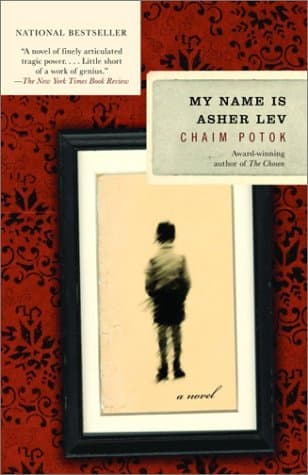
Chaim Potok (1972)
Genre
Historical Fiction / Spirituality / Creativity / Young Adult
Reading Time
7-8 hours
Key Themes
See below
Sign in to track this book
A young Hasidic artist faces a crisis: his sacred art, a divine calling, threatens to destroy his family and community with its beautiful blasphemy.
Asher Lev is born into a devout Ladover Hasidic family in Brooklyn, New York, soon after World War II. His father, Aryeh Lev, works for the Rebbe, traveling through Europe to rebuild Jewish communities and schools destroyed by the Holocaust. His mother, Rivkeh Lev, is gentle but often worried, dedicated to her husband's work and their community. From a young age, Asher shows an unusual and strong urge to draw everything he sees, often in ways that upset his parents. He draws on books, walls, and any surface he can find. This greatly troubles Aryeh, who sees it as pointless and possibly sacrilegious. Aryeh wants Asher to focus on Torah study and community work.
Aryeh Lev's frequent and long trips for the Rebbe put a strain on the family. Rivkeh becomes very depressed, especially after her brother, Yitzchok, dies in a car accident while on a mission for the Rebbe. Rivkeh's grief makes her withdrawn and distant. Asher, still a young boy, struggles to understand his mother's pain and his father's distant dedication to the Rebbe's work. He finds comfort and a way to express his feelings in drawing, though he hides many of his more 'upsetting' pieces from his parents. His art becomes both a comfort and a growing source of tension in the family.
As Asher grows into his teens, his artistic talent becomes clear, but it also causes more conflict with his father. Aryeh sees art as a gentile pursuit, a rejection of Jewish values. Rivkeh, however, starts to understand how deeply Asher needs to create, though she remains torn between her son and her husband. The Rebbe, the Ladover Hasidim's spiritual leader, steps in. He calls Asher and his parents, recognizing Asher's 'gift' as something from God. He arranges for Asher to study under Jacob Kahn, a well-known, non-religious Jewish artist. The Rebbe understands that Asher's drive cannot be stopped and needs proper guidance. This decision is groundbreaking for the closed community.
Asher begins his apprenticeship with Jacob Kahn, who immediately sees Asher's natural talent and strong dedication. Kahn, a gruff but very insightful mentor, pushes Asher to explore different art forms, techniques, and art history. He exposes Asher to secular art and ideas that are new and sometimes shocking to Asher. Kahn teaches Asher about perspective, composition, and the emotional power of art. He encourages Asher to draw from his own experiences and feelings, even the painful ones. This time marks a deep artistic and personal awakening for Asher. He grapples with the conflict between his strong Hasidic identity and the wider, often secular, art world.
After finishing his first studies with Kahn, Asher travels to Europe, especially Paris and Florence, to continue his art education. This time transforms him. He spends hours in great art museums, studying the masters and refining his own style. He is particularly drawn to the suffering shown in Christian art, seeing a universal expression of pain that connects with his own people's suffering and his family's. He finds beautiful landscapes and deeply moving human experiences, all of which fuel his art. During this time, his father, Aryeh, moves the family to Vienna for his work, creating more distance between Asher and his immediate family.
While in Europe, Asher starts planning a series of paintings that will become his most famous and controversial: the 'Brooklyn Crucifixions.' These works show his mother's pain and his own inner struggle, using the visual language of the crucifixion to express deep Jewish suffering. He chooses this imagery because, for him, it is the most powerful symbol of agony and sacrifice he has seen in art. He paints his mother, Rivkeh, with outstretched arms, nailed to a window in their Brooklyn apartment. This symbolizes her sacrifice for his father's work and his own artistic calling. These paintings are very personal, raw, and challenging, sure to cause a rift in his community.
Asher returns to New York for his first major gallery exhibition, which will feature his European works, including the 'Brooklyn Crucifixions.' He understands the great impact these paintings will have on his family and the Ladover community. His return is a mix of excitement for his art debut and fear of the inevitable confrontation with his father and the Rebbe. His mother, Rivkeh, has returned to Brooklyn from Vienna. She is excited to see his work, but also very worried, understanding the potential sacrilege in the eyes of their people. The exhibition is a critical success, but the community's reaction hangs heavy.
The exhibition opens to wide critical praise, establishing Asher Lev as an important new artist. However, the 'Brooklyn Crucifixions' spark outrage within the Ladover Hasidic community. His father, Aryeh, is deeply hurt and shocked, seeing the paintings as a desecration of Jewish identity and a blasphemous use of Christian imagery. The community views them as an insult to their faith and traditions. Rivkeh is torn; she sees herself and her pain in the paintings, but she also understands the huge gap they create between her son and their people. Asher is praised by the art world but condemned by his own.
After the uproar, Asher meets privately with the Rebbe. The Rebbe, a wise and caring leader, acknowledges Asher's talent and the 'gift' that drives him. He understands the deep artistic and emotional truth in the 'Brooklyn Crucifixions.' However, he also recognizes the great pain and confusion these paintings have caused in the Ladover community. In a painful but necessary decision, the Rebbe tells Asher he must leave Brooklyn and live elsewhere. There, his art can grow without causing further division and scandal among his people. It is an exile, a necessary separation for the community's good and for Asher's artistic freedom.
Asher accepts the Rebbe's decision. He understands that his path as an artist, especially one who must show the world as he sees it, even its pain and suffering, cannot fully exist with the rules of his Hasidic community. He leaves Brooklyn, knowing he will always be a Ladover Hasid by birth and spirit, but also an artist who must follow his own truth. He understands that his art bridges worlds, and his work, though painful for his community, is his unique way of serving the Master of the Universe. He carries the pain of his exile but also the deep satisfaction of fulfilling his artistic purpose.
The Protagonist
Asher transforms from a struggling, misunderstood child into a world-renowned artist who ultimately accepts his unique, isolated path, sacrificing communal belonging for artistic integrity.
The Supporting Character / Antagonist (in Asher's artistic journey)
Aryeh remains steadfast in his traditional values, never fully reconciling with Asher's artistic path, representing the traditional world Asher must leave behind.
The Supporting Character
Rivkeh moves from a state of deep depression and anxiety to a quiet acceptance and understanding of Asher's artistic path, even as it causes her great pain.
The Supporting Character
The Rebbe consistently acts as a wise, if ultimately strict, spiritual guide, maintaining his role as the protector of the community and the arbiter of individual destiny within it.
The Supporting Character
Jacob Kahn remains a steadfast and influential mentor, guiding Asher's artistic development and challenging his perception of art's role.
The Mentioned Character
Yitzchok's death is a static event that profoundly influences the emotional landscape of the Lev family and Asher's early artistic development.
The Supporting Character
Anna Schaeffer remains a supportive and professional figure, facilitating Asher's artistic career.
This is the novel's main theme, exploring the unsolvable tension between Asher's strong Hasidic faith and his powerful, God-given artistic talent. Asher is a religious Jew who believes his art is a gift from God. Yet, expressing this gift often leads him to create images (like the 'Brooklyn Crucifixions') that his community calls sacrilegious. The theme questions if true artistic expression can exist within strict religious rules and if one must choose between spiritual and creative fulfillment. This conflict appears in Asher's inner struggle and his outward clash with his father and the Rebbe.
“A man is not born to be an artist. He is born to be a Jew. And he is born to be a Hasid. And he is born to be a Ladover Hasid. And he is born to be a Lev. And he is born to be a son of Aryeh and Rivkeh Lev. And he is born to be a son of the Rebbe.”
The novel shows artistic talent as an almost mystic, unstoppable force that demands great personal sacrifice. Asher's talent is not a choice but a drive, a 'gift' that separates him and often causes him deep pain and loneliness. His talent requires him to see and show the world, including its suffering, with complete honesty, even if that honesty alienates him from those he loves. The theme explores how great art often comes at the cost of personal comfort, community belonging, and even family harmony. This ends with Asher's exile from his community for his art.
“My work is to create worlds. My work is to give voice to suffering. My work is to make others see.”
Asher's journey is a deep exploration of identity. It shows how one's personal calling can clash with inherited cultural and religious identities. He struggles with being a Ladover Hasid, a Lev, a son, and an an artist. His art, while deeply rooted in his Jewish experience, ultimately goes beyond his community's limits. This forces him to create a unique identity that includes both his heritage and his artistic truth. The novel highlights the tension between wanting to belong and needing to express oneself. It shows that sometimes, to fully become oneself, one must stand apart.
“I am a Ladover Hasid. I am a Lev. I am a painter. I am a Jew. I am all these things. And I am none of them. I am myself. And that is all I can be.”
Potok uses Asher's art to explore the deep role of suffering, especially Jewish suffering. It also shows how art can offer understanding or even redemption. Asher's 'Brooklyn Crucifixions' are controversial because they use a Christian symbol to show the pain of his mother and, by extension, the Jewish people. This act, while blasphemous to some, is Asher's attempt to give form to unspeakable pain, to make others see and feel it. Art, for Asher, is not just about beauty; it is a way to face, process, and perhaps rise above suffering, turning it into something meaningful.
“I had to do it. I had to put my mother's agony on canvas. I had to put it there for the world to see. It was the only way I could make it real. It was the only way I could make it mine.”
The relationship between Asher Lev and Jacob Kahn is key to Asher's artistic and personal growth. Kahn, a secular Jew, bridges Asher's closed religious world and the wider, often challenging, art world. He teaches Asher technique and encourages him to embrace his unique vision and draw from his deepest emotions, no matter how uncomfortable it might be. Kahn's mentorship shows the power of a wise guide who can see and nurture a student's potential, even when others cannot.
“You are a bridge, Asher Lev. You are a bridge between worlds. Do not forget that.”
Asher's controversial paintings depicting his mother's suffering using Christian iconography.
These paintings serve as the ultimate symbol of Asher's artistic and personal conflict. By depicting his mother's agony with the visual language of the crucifixion, Asher intentionally uses a potent, universally recognized symbol of suffering that is deeply offensive within his Hasidic community. This device forces the confrontation between his artistic truth and his religious tradition, making the thematic conflict explicit and undeniable. It is the catalyst for his ultimate exile, representing the point of no return in his journey as an artist.
The spiritual leader's decision to allow Asher to pursue art and later to exile him.
The Rebbe's role acts as a powerful plot device that both enables Asher's artistic journey and ultimately defines its limits within the community. His initial decision to allow Asher to study art, despite Aryeh's objections, demonstrates a nuanced understanding of divine gifts. His later decision to exile Asher, though painful, provides a clear and authoritative resolution to the central conflict, emphasizing the Rebbe's ultimate responsibility to the community over the individual, while acknowledging Asher's unique destiny. It's a compassionate but firm judgment that propels the final act of the story.
The uncontrollable, innate drive that defines Asher's artistic genius from childhood.
From a young age, Asher's inability to stop drawing, even on forbidden surfaces, highlights that his artistic talent is not a hobby but an intrinsic part of his being, an uncontrollable force. This compulsion establishes early on that his art is a 'gift' that cannot be denied or suppressed. It sets up the central conflict with his father, who sees it as an inappropriate distraction, and underscores the idea that Asher is driven by an internal, almost spiritual, imperative rather than a conscious choice, making his eventual path feel destined rather than chosen.
The emotional catalyst for much of Asher's early artistic expression of suffering.
Rivkeh's profound depression following her brother's death is a crucial emotional catalyst for Asher's art. It provides him with a deep, personal source of suffering to observe and internalize. Her silent anguish becomes a primary subject of his early drawings and, later, the emotional core of his 'Brooklyn Crucifixions.' This device allows Asher to explore themes of pain, sacrifice, and the hidden suffering of others, grounding his abstract artistic drive in concrete, familial experience and giving emotional weight to his later controversial works.
“I am an Asher Lev, in a world that does not want people like me.”
— Asher's internal struggle with his artistic calling conflicting with his religious community's expectations.
“The world is a very narrow bridge, and the important thing is not to be afraid.”
— A Hasidic saying often repeated to Asher, emphasizing faith and courage in the face of life's challenges.
“A Jew must never forget that he is a Jew.”
— Asher's father's constant reminder to him about his heritage and responsibilities.
“An artist is a person who has a special way of seeing things.”
— Jacob Kahn explaining the nature of an artist to young Asher.
“The price of being a person who creates is to be alone.”
— Jacob Kahn's somber observation about the isolation inherent in the creative process.
“The Rebbe saw with his soul, not with his eyes.”
— Asher reflecting on the Rebbe's profound insight and spiritual wisdom.
“A person must sometimes choose between God and his art.”
— Asher's internal dilemma, struggling to reconcile his religious devotion with his artistic compulsions.
“There are different kinds of truth.”
— Asher's growing understanding that not all truths are literal or easily reconcilable.
“I am an artist, and I must paint what I see.”
— Asher's unwavering commitment to his artistic vision, even when it causes pain.
“My father did not understand my need to paint. My mother did.”
— Asher contrasting his parents' reactions to his artistic talent and passion.
“Every artist is a kind of priest.”
— Jacob Kahn's view on the sacred nature of artistic creation.
“When you are an artist, you are a member of a different kind of tribe.”
— Jacob Kahn explaining to Asher that artists form their own community, distinct from others.
“A man's life is a journey, and he must walk it alone.”
— A reflection on the individual nature of one's path, especially for an artist.
“I had to do it. I had no choice.”
— Asher's justification for creating the 'Brooklyn Crucifixion' paintings, driven by artistic necessity.
Ready to see how well you understood this book? Take our interactive quiz with 10 questions.
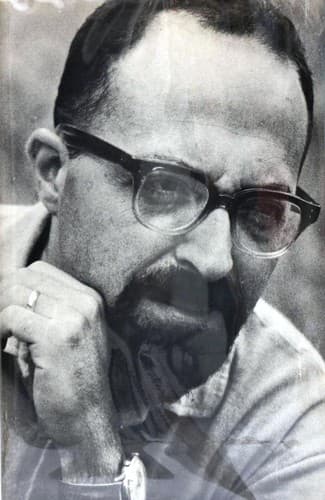
Chaim Potok was an American Jewish novelist and essayist, celebrated for his deeply resonant explorations of faith, tradition, and identity within the Hasidic and Orthodox Jewish communities. His most famous works, including 'The Chosen' and 'The Gift of Asher Lev,' delve into the complex relationships between religious observance and the modern world, often featuring protagonists grappling with artistic ambition and familial expectations. Potok's writing is characterized by its intellectual depth and empathetic portrayal of internal conflict.







