“I was not a little startled by this, as my experience of country-house hostesses has been that they are generally as keen on the chase as a cat on a mouse.”
— Bertie Wooster reflecting on Lady Malvern's lack of enthusiasm for hunting.

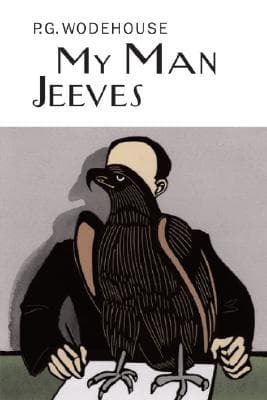
P.G. Wodehouse (2017)
Genre
Historical Fiction
Reading Time
256 min
Key Themes
See below
Sign in to track this book
Bertie Wooster, a bumbling aristocrat, constantly finds himself in social messes. His valet, Jeeves, always untangles them with wit and perfect timing.
Bertie Wooster is engaged to Florence Craye. Her father, Lord Worplesdon, demands Bertie stop his Uncle George, the Earl of Rowcester, from marrying an American chorus girl, Lillian Gish. Florence also wants Bertie to steal Uncle George's scandalous memoirs, which would embarrass her. Bertie tries to get the memoirs from a safe at Worplesdon's estate, but Jeeves subtly stops him. Jeeves then arranges for Florence's father to find the memoirs. This leads to an argument that ends with Florence breaking off the engagement with Bertie, to his secret relief. Jeeves's actions ensure Bertie avoids a marriage he does not want and also protects the family's name in a complicated way.
Bertie Wooster's Aunt Agatha visits and insists he host and reform a shy, artistic poet named Wilmot 'Motty' Pershore, her friend's son. Motty is an anarchist and vegetarian who quickly causes problems in Bertie's flat. He refuses to pay for anything and criticizes Bertie's life. Bertie tries to make Motty tougher by taking him to boxing matches and giving him hearty meals, but it fails. Motty, however, becomes interested in a maid named Agnes. Jeeves, seeing this, subtly encourages the infatuation. This leads to Motty eloping with Agnes. This unexpected event not only removes Motty from Bertie's care but also satisfies Aunt Agatha's wish for Motty to 'settle down,' though not as she imagined.
Bertie Wooster's friend, Bingo Little, loves a waitress named Mabel and wants to marry her. But Bingo's uncle, Lord Bittlesham, who controls his money, strongly opposes such a match, preferring Bingo to marry someone of his own social class. Bingo asks Bertie to help him get his uncle's approval. Bertie, in his usual clumsy way, tries to make Bingo's case, but only irritates Lord Bittlesham. Jeeves steps in, suggesting Lord Bittlesham meet Mabel in a different setting, highlighting her efficient nature. This plan, along with a misunderstanding about a stolen necklace and Mabel's quick thinking, impresses Lord Bittlesham. He reluctantly agrees to the marriage, making Bingo happy.
Freddie Bullivant, a friend of Bertie Wooster, loves Elizabeth Vickers, a rich American heiress. Elizabeth dislikes Freddie, finding him dull. Bertie, trying to help, suggests Freddie make her jealous by pretending to love another woman. Freddie chooses a chorus girl named Dora. But the plan fails when Elizabeth becomes even more annoyed, and Dora, thinking Freddie is serious, starts making demands. Jeeves, seeing the chaos, plans a more subtle approach. He arranges for Elizabeth to see Freddie perform an act of surprising kindness and bravery, though Jeeves completely fakes it. This staged heroism, with Jeeves's timely help, softens Elizabeth's heart, making her reconsider Freddie.
This story continues Freddie Bullivant and Elizabeth Vickers's saga. After the events of 'Absent Treatment,' Freddie still struggles to win Elizabeth's heart. Bertie Wooster, again trying to play matchmaker, suggests Freddie write poetry to express his feelings, believing Elizabeth, who loves literature, will be moved. Freddie, having no poetic talent, asks Bertie for help, who in turn relies heavily on Jeeves for ideas and actual verses. The poems, however, are too complex for Freddie's usual manner, and Elizabeth immediately suspects he is not the true author. Jeeves then plans a staged 'rescue' of Elizabeth from a potentially embarrassing situation. This makes Freddie appear heroic and clever, finally leading Elizabeth to accept Freddie's proposal.
Bertie Wooster's Uncle George, Lord Rowcester, the same one from 'Leave It to Jeeves,' has fallen in love with Maudie Sprott, a barmaid. The family, especially Aunt Agatha, strongly opposes the match, fearing a scandal. Bertie is sent to try and talk Uncle George out of it, but his efforts are clumsy and useless. Uncle George is firm in his love for Maudie. Jeeves, seeing that direct action is pointless, plans to show Maudie the realities of aristocratic life and, conversely, show Uncle George the less glamorous parts of Maudie's world. Through a series of carefully arranged events, Maudie realizes Uncle George's lifestyle is not for her. She breaks off the engagement, to the relief of the Wooster family and Uncle George himself, who finds himself quite relieved once his initial infatuation fades.
Bertie Wooster's Aunt Agatha tasks him with looking after her shy, artistic nephew, Clarence 'Chuffy' Chuffnell. Clarence loves a lively American actress named Cora but lacks the confidence to tell her. Aunt Agatha believes Clarence needs to be tougher and more assertive. Bertie tries to help Clarence by encouraging him to stand up for himself, but Clarence's attempts are comically bad. Jeeves, seeing the situation, subtly manipulates events. He arranges for Clarence to be in a situation where he must act decisively to protect Cora, though Jeeves himself created the situation. This staged heroism, combined with Cora's existing affection for Clarence, allows Clarence to finally express his love, and Cora accepts, to Aunt Agatha's surprised satisfaction.
Bertie Wooster's Aunt Agatha, always worried about his idleness, decides he needs a 'purpose' in life. She arranges for him to work as a secretary to a politician, Mr. Cuthbert Gudgeon. Bertie, of course, dreads the idea of actual work and its responsibilities. His attempts to avoid his duties are met with Aunt Agatha's disapproval. Jeeves, however, notices Bertie's discomfort and Aunt Agatha's constant pressure. He subtly sabotages Bertie's secretarial efforts, making Bertie seem completely incompetent and unfit for the job. Through a series of planned mishaps and misunderstandings, Jeeves ensures Bertie is quickly fired, to Bertie's great relief and Aunt Agatha's frustration, confirming Bertie's return to his preferred state of leisurely unemployment.
The Protagonist
Bertie remains largely static throughout the stories, consistently relying on Jeeves to extricate him from trouble while learning very little himself.
The Supporting
Jeeves remains consistently brilliant and unflappable, always finding a way to resolve the plot's complications.
The Supporting
Aunt Agatha's character remains consistent as a formidable force Bertie must contend with, though she is routinely outwitted by Jeeves.
The Supporting
Florence's primary arc involves her repeated engagements to and breakups with Bertie, always driven by her desire for a more 'suitable' partner.
The Supporting
Bingo's arc often involves his pursuit of a new love interest, encountering obstacles, and ultimately, with Jeeves's help, either succeeding or moving on to the next infatuation.
The Supporting
Lord Worplesdon remains a consistent, intimidating figure whose decisions are often swayed by Jeeves's unseen influence.
The Supporting
Uncle George's arc often involves his infatuation with an 'unsuitable' woman, leading to family intervention and eventually, with Jeeves's help, the dissolution of the engagement.
The Supporting
Freddie's arc centers on his prolonged struggle to win Elizabeth Vickers, eventually succeeding through Jeeves's elaborate schemes.
This theme is central to Bertie Wooster and Jeeves's relationship. Despite Bertie's rich background and Jeeves's role as a servant, Jeeves's intelligence, wit, and deep understanding of people always solve the problems. Bertie, representing the upper class, is charming but clumsy, while Jeeves, from a lower social class, is the real power behind the scenes. This overturns traditional class structures, showing that true ability comes from mental sharpness, not inherited status. For example, in 'Leave It to Jeeves,' Bertie's attempts to steal the memoirs are clumsy, while Jeeves arranges a subtle plan that achieves the goal without Bertie's direct involvement.
“One of the most remarkable things about Jeeves is his power of silent sympathy. It is a curiously soothing experience to explain to him a predicament, and to know that he is taking it all in and will shortly produce the perfect solution.”
Wodehouse often makes fun of the lives of the idle rich, showing them as self-absorbed, naive, and concerned with trivial things. Bertie Wooster and his friends—Bingo Little, Freddie Bullivant—are often driven by fleeting crushes, fear of strong aunts, or attempts to avoid responsibility. Their problems, though seemingly serious to them, are often minor and easily solved by a clear-thinking person like Jeeves. The constant change of fiancées, the fear of working, and the elaborate plans to avoid small social embarrassments highlight how superficial and detached their lives are. The whole idea of Bertie needing constant rescue from his own poor judgment shows this theme.
“I say, Jeeves, what about a spot of the old brain-food? Something to buck a fella up.”
The stories repeatedly explore different ways of helping. Bertie's attempts to 'help' his friends or uncle always lead to more complications, showing his well-meaning but harmful actions. In contrast, Jeeves's 'help' is always effective, though often manipulative and unseen. He never directly confronts problems but rather arranges events and influences people, leading them to solutions they think they found themselves. This shows that true help requires intelligence, foresight, and a deep understanding of human psychology, rather than brute force or simple good intentions. His actions are always for the greater good, even if they sometimes cause Bertie temporary discomfort, like ending an unwanted engagement.
“If I may say so, sir, a certain delicacy is essential when dealing with affairs of the heart.”
Bertie Wooster's main goal throughout the stories is to avoid responsibility, whether it's marriage, a career, or uncomfortable social duties. He actively tries to escape any situation that requires serious effort or commitment. This theme is clear in his constant attempts to break off engagements, his dread of Aunt Agatha's demands, and his relief when Jeeves arranges his dismissal from a secretarial job. The stories often revolve around Bertie's efforts to keep his comfortable, responsibility-free life, with Jeeves ultimately helping him achieve this, even if it means orchestrating complex deceptions. This theme fits the comedic element of a main character who prefers leisure over any productive activity.
“As a rule, I am not a man who enjoys responsibility. I am a man who enjoys peace and quiet and the occasional gin-and-tonic.”
Jeeves consistently provides an improbable and unexpected solution to Bertie's problems.
Jeeves functions as a perpetual deus ex machina. Whenever Bertie and his friends are embroiled in seemingly insurmountable difficulties, Jeeves, with his vast intellect and subtle machinations, always produces an ingenious, often unexpected, solution. This device drives the plot by creating a sense of inevitability that problems will be resolved, while simultaneously providing the comedic tension of how Jeeves will achieve this. His solutions often involve manipulating others into desired actions without their full awareness, such as orchestrating the 'theft' of Uncle George's memoirs or arranging for Freddie Bullivant to appear heroic. This device ensures a comedic resolution to every predicament.
Characters frequently misinterpret situations or are mistaken for others, leading to comedic chaos.
Mistaken identity and misunderstandings are frequent comedic engines in the stories. Characters often jump to incorrect conclusions based on partial information, leading to humorous complications. For instance, in 'Jeeves and the Hard-boiled Egg,' a misunderstanding about a stolen necklace contributes to the resolution. These misunderstandings are often exploited by Jeeves to his advantage, allowing him to subtly guide events without direct intervention. The humor arises from the characters' inability to grasp the full picture and their often-exaggerated reactions to these misinterpretations.
A formidable female relative who imposes her will and creates problems for the protagonist.
Aunt Agatha serves as a recurring 'meddling aunt' figure. This device introduces conflict and sets the plot in motion by imposing unwanted tasks, romantic prospects, or career paths upon Bertie. Her formidable personality and Bertie's inherent fear of her drive many of the initial problems in the stories. While she intends to 'improve' Bertie, her interventions almost invariably lead to a series of escalating complications that only Jeeves can resolve. This character type provides a consistent source of external pressure and an antagonist to Bertie's desired life of leisure.
Complex romantic entanglements where characters vie for affection, often ineptly.
Many of the stories revolve around intricate romantic entanglements, often involving multiple characters vying for the affection of one person, or a character like Bertie trying to escape an unwanted engagement. For example, Bingo Little's constant infatuations and Freddie Bullivant's pursuit of Elizabeth Vickers create a web of romantic complications. These 'love triangles' (or quadrilaterals) provide the primary motivation for many of the characters' actions and the predicaments Bertie finds himself in, needing Jeeves to untangle the emotional knots.
“I was not a little startled by this, as my experience of country-house hostesses has been that they are generally as keen on the chase as a cat on a mouse.”
— Bertie Wooster reflecting on Lady Malvern's lack of enthusiasm for hunting.
“It is a curious thing, but I have never known a man with a really strong, masterful personality who was not at the same time a bit of a bounder.”
— Bertie's general musings on male personalities.
“Jeeves, you are a marvel! You are a wizard! You are a genius! You are a — you are a good egg!”
— Bertie praising Jeeves for solving a problem.
“I remember once being told by an eminent psychologist that the human brain is like a highly sensitive photographic plate, on which every impression is permanently registered.”
— Bertie trying to recall details about a past event.
“The Right Hon. was one of those large, red-faced, important-looking johnnies, with a booming voice and an air of knowing all about everything.”
— Bertie describing a politician.
“There are moments, Jeeves, when one asks oneself, 'Do trousers matter?'”
— Bertie contemplating a sartorial dilemma.
“Jeeves is not a man to be trifled with. He has a mind like a steel trap, and a memory like an elephant.”
— Bertie reflecting on Jeeves's intellectual capabilities.
“The sun was shining, the birds were singing, and everything pointed to a day of peace and quiet, with no dashed unpleasantness of any kind.”
— Bertie enjoying a serene morning before trouble inevitably arises.
“It is a great thing to be able to look a man in the eye and tell him to go to the deuce.”
— Bertie considering standing up to someone.
“I have always held that the only way to get through life with any degree of comfort is to avoid responsibilities.”
— Bertie's philosophy on life.
“One of the most beastly things about being in love is that it makes you so dashed unselfish.”
— Bertie lamenting the effects of love.
“The great thing about Jeeves is that he can always be relied upon to produce the goods.”
— Bertie's confidence in Jeeves's problem-solving abilities.
“I may not be a man of genius, but I am at least a man of common sense.”
— Bertie modestly assessing his own intellectual capacity.
“There are moments when one feels that the world is too much with us, and that a quiet evening with a good book is the only thing.”
— Bertie seeking solace from social demands.
“As far as I'm concerned, the only good thing about a country house is that it's generally miles from anywhere.”
— Bertie expressing his preference for isolation over social obligations.
Ready to see how well you understood this book? Take our interactive quiz with 10 questions.

Sir Pelham Grenville Wodehouse, was an English writer and one of the most widely read humorists of the 20th century. His creations include the feather-brained Bertie Wooster and his sagacious valet, Jeeves; the immaculate and loquacious Psmith; Lord Emsworth and the Blandings Castle set; the Oldest Member, with stories about golf; and Mr Mulliner, with tall tales on subjects ranging from bibulous bishops to megalomaniac movie moguls.







