BookBrief
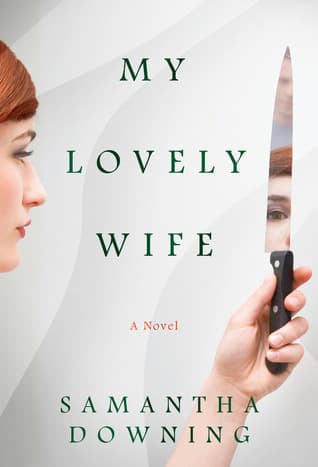
My Lovely Wife cover
Archivist's Choice

My Lovely Wife

Samantha Downing (2019)

Genre

Thriller / Mystery

Reading Time

7-8 hours

Key Themes

See below

Track Your Reading

Sign in to track this book

A suburban couple, bored with their fifteen-year marriage, finds a shared secret involving murder to be a twisted aphrodisiac.

Synopsis

A suburban couple, married for fifteen years, revitalizes their relationship through a dark secret: murder. The unnamed narrator, a tennis instructor, and his wife Millicent, a real estate agent, begin with a 'routine' where he picks up women at bars, and she makes them 'disappear.' Their first victim, Jessica, starts a chain of events, leading to an investigation the couple expertly avoids. As their grim hobby grows, they target a second victim. But when Millicent's former lover, Tobias, reappears and then vanishes, the narrator's unease grows, especially as their children show disturbing behaviors. He suspects Millicent's motives and her increasing control. He uncovers her manipulative past, realizing she has orchestrated events, including the murders, for longer than he imagined. The narrator finds himself trapped in a dangerous game, leading to a tense confrontation where Millicent's betrayal is revealed. He discovers he was a pawn in her elaborate plan, ending with his own fate sealed, leaving him imprisoned and facing the consequences of Millicent's schemes.
Reading time
7-8 hours
Difficulty
Medium
Pacing
Fast
Mood
Dark, Suspenseful, Unsettling, Twisted
✓ Read this if...
You enjoy dark, psychological thrillers with unreliable narrators and morally ambiguous characters.
✗ Skip this if...
You are sensitive to violence, find marital infidelity disturbing, or prefer protagonists with clear moral compasses.

Plot Summary

The Routine and the Proposal

The unnamed narrator, a suburban husband and father, describes his fifteen-year marriage to Millicent. They have two children, Jenna and Rory, and live a comfortable, if dull, life. He is a tennis instructor, and Millicent is a real estate agent. Beneath their normal facade, they are deeply bored with their routine and each other. One evening, Millicent suggests a shocking solution to their marital ennui: they should commit a murder. Not for money or revenge, but for the thrill, the shared secret, and the renewed excitement it would bring. The narrator, at first hesitant, is swayed by Millicent's arguments and his own unhappiness.

The First Victim: Jessica

Millicent carefully plans their first 'game,' choosing Jessica, a woman from her tennis club, as their target. The plan involves luring Jessica to a remote spot, killing her, and disposing of the body to make it seem like she vanished. The narrator, despite his internal struggle, follows Millicent's instructions. They drive Jessica to an isolated area, where Millicent, with chilling efficiency, strangles her. The narrator helps bury the body in a pre-dug grave in a secluded part of the woods. The act, while terrifying, initially brings a strange exhilaration and renewed intimacy to their marriage, just as Millicent predicted.

The Aftermath and the Investigation

Jessica's disappearance quickly makes local news, and Detective Reyes takes the case. The narrator and Millicent act calm, even helping with search efforts and expressing concern to neighbors. Millicent, especially, excels at playing the grieving friend. However, the investigation's pressure grows. Reyes interviews the couple, and while they remain composed, the narrator feels the weight of their secret. They discuss alibis and rehearse their stories, strengthening their bond through shared deceit. The thrill of the 'game' now mixes with the constant fear of exposure, adding intensity to their relationship.

Escalation and the Second Victim

Despite the initial rush, the thrill of Jessica's murder fades, and the couple returns to their usual marital boredom. Millicent, always the instigator, proposes another 'game,' arguing they need to raise the stakes to keep their excitement. This time, they target a prostitute named Clara, believing her disappearance would draw less attention. The narrator is increasingly disturbed by Millicent's coldness and her growing enjoyment of the 'game,' but he feels trapped. They lure Clara, kill her, and dispose of her body with similar, more practiced efficiency. The narrator's internal conflict deepens as he struggles with his actions and Millicent's escalating desires.

The Disappearance of Tobias

Their eccentric neighbor, Tobias, a reclusive man who often watches others, starts acting strangely, making cryptic comments to the narrator about knowing secrets. The narrator becomes increasingly paranoid Tobias might know about their crimes. Shortly after, Tobias disappears, further increasing tension and suspicion in the neighborhood. The narrator and Millicent pretend to be concerned, but the narrator secretly wonders if Tobias's disappearance is linked to their activities, or if Millicent acted without his knowledge. This new mystery adds complexity to their already unstable situation, making them consider who else might be watching.

The Children's Behavior

As the parents' dark activities continue, their children, Jenna and Rory, start showing concerning behaviors. Jenna, the older child, becomes withdrawn and secretive, spending unusual time on her computer. Rory, the younger, acts out, showing aggression and a fascination with morbid topics. The narrator notices both children seem aware of the underlying tension and secrets in the household, even if they do not fully understand the extent of their parents' crimes. These behaviors highlight the corrosive impact their secret life has on their family, adding to the narrator's guilt and anxiety.

The Narrator's Growing Unease

The initial exhilaration of the 'game' has long faded for the narrator, replaced by unease, fear, and a growing sense of moral decay. He is increasingly repulsed by Millicent's coldness and her insatiable desire for more 'games.' He questions their motives and the true nature of their relationship. Constant paranoia about being caught, the impact on his children, and the depravity of their actions weigh heavily on him. He considers ways to escape the situation, even thinking about exposing Millicent, but fears the consequences for himself and his family.

Millicent's Manipulation and Control

As the story progresses, Millicent's true nature as a calculating and manipulative person becomes clear. She easily controls the narrator, using emotional blackmail, gaslighting, and their shared secret to keep him compliant. Her manipulative tactics go beyond their marriage, influencing police investigations and public perception. The narrator realizes he is not an equal partner in these 'games' but a pawn in Millicent's twisted desires. Her cold logic and lack of remorse are terrifying, making him question everything he thought he knew about his wife and their marriage.

The Reveal of Millicent's Past

Driven by growing suspicion and fear, the narrator secretly investigates Millicent's past. He uncovers disturbing information: Millicent had a history of manipulative behavior and was involved in a childhood friend's disappearance. This revelation shatters his perception of his wife, showing a long-standing pattern of psychopathy rather than a sudden change. He realizes the 'games' were not a solution to marital boredom but a manifestation of Millicent's nature, and that he has been an unwitting participant in her lifelong pattern of control and violence. This discovery increases his desperation to escape her influence.

The Trap and the Confrontation

The narrator, now fully aware of Millicent's true nature, plans to expose her without implicating himself. He sets a trap, hoping to gather clear evidence. However, Millicent, ever perceptive, anticipates his moves. The confrontation is tense and chilling, as Millicent calmly reveals she knows about his attempts to betray her. She uses their shared past and the children as leverage, reminding him of his complicity and the impossibility of escaping without destroying everything. The narrator realizes the depth of his predicament and the extent of Millicent's control.

The Ultimate Betrayal

In a shocking twist, Millicent has manipulated the entire situation, including the narrator's attempts to expose her. She orchestrates a scenario where the narrator is framed for the murders. She has planned every detail, ensuring all evidence points to him, while she maintains her innocent facade. The narrator is devastated, realizing he has been a puppet in her elaborate, deadly game from the beginning. Millicent's cold, calculating genius is fully displayed as she successfully turns the tables on him, securing her freedom and his downfall.

The Narrator's Fate

The narrator is arrested and charged with the murders, while Millicent plays the grieving, bewildered wife. Despite his desperate attempts to explain the truth, the evidence against him is overwhelming, carefully constructed by Millicent. He faces a bleak future, likely imprisonment, as Millicent walks free, having achieved her goal: absolute control and the elimination of any threat to her carefully crafted life. The ending leaves the narrator contemplating his complicity, his family's destruction, and the terrifying reality of being married to a true psychopath, highlighting the chilling power of manipulation and the devastating consequences of their 'game.'

Principal Figures

The Narrator (Unnamed)

The Protagonist

He transforms from a bored, complicit husband to a guilt-ridden, desperate man trying to escape his wife's control, only to become her ultimate victim.

Millicent

The Antagonist

Her true nature as a calculating psychopath is gradually revealed, culminating in her ultimate betrayal and framing of her husband.

Jenna

The Supporting

Her character arc shows a progression from normal teenager to a withdrawn and potentially traumatized child, reflecting the deteriorating family environment.

Rory

The Supporting

He shows a disturbing development from a typical child to one exhibiting concerning, aggressive tendencies, reflecting the toxicity of his home life.

Detective Reyes

The Supporting

He remains a consistent force of justice, slowly unraveling the community's dark secrets and ultimately bringing the narrator to justice.

Jessica

The Mentioned

Her death is the catalyst for the entire plot, marking the point of no return for the couple's marriage and morality.

Clara

The Mentioned

Her death marks a significant escalation in the couple's 'game,' showing their increasing comfort with violence.

Tobias

The Supporting

His disappearance fuels the narrator's paranoia and deepens the mystery surrounding Millicent's capabilities.

Themes & Insights

The Corrosive Nature of Boredom

The central theme explores how deep marital boredom can lead to extreme and destructive behaviors. The narrator and Millicent's 'games' are first conceived as a way to excite their stagnant fifteen-year marriage. However, this pursuit of thrill quickly escalates to murder, showing how unchecked boredom can erode moral boundaries and lead to depravity. The book suggests that a lack of genuine connection and shared purpose in their marriage leaves a void that only extreme acts can temporarily fill, ultimately consuming them. The thrill is fleeting, always needing higher stakes, as seen in the progression from one victim to the next.

Our love story is simple. I met a gorgeous woman. We fell in love. We had kids. We moved to the suburbs. We told each other our biggest dreams, and our darkest secrets. And then we got bored.

The Narrator

The Facade of Suburban Perfection

The novel examines the hypocrisy and hidden darkness beneath suburban normalcy. The narrator and Millicent present themselves as an ideal couple, devoted parents, and friendly neighbors, embodying the 'perfect' suburban life. This facade allows them to operate undetected, as their community is unwilling or unable to see beyond the surface. The theme highlights how appearances can be deceptive, and how the pressure to maintain a flawless image can hide deep dysfunction and even depravity. The contrast between their public persona and private actions is a core element of the thriller.

We look like a normal couple. We're your neighbors, the parents of your kid's friend, the acquaintances you keep meaning to get dinner with.

The Narrator

Manipulation and Control

Manipulation is a theme, mainly shown through Millicent. She masterfully controls the narrator, using his love, fear, and shared guilt to ensure his involvement. Her manipulative tactics extend beyond their marriage, influencing police investigations and public perception. The theme explores the psychological power dynamics within a relationship, showing how one partner can exert absolute control over another, slowly eroding their will and moral compass. The narrator's gradual realization of his wife's manipulative genius and his entrapment forms a significant part of his character arc. The novel shows how a master manipulator can orchestrate complex events to their advantage.

Millicent was always one step ahead, always anticipating, always planning. I was just reacting.

The Narrator

The Nature of Evil and Psychopathy

The book explores the unsettling nature of psychopathy, personified by Millicent. It examines how a person can lack empathy or remorse, capable of horrific acts while appearing charming. Millicent's actions are not driven by passion or revenge, but by a cold, calculating desire for excitement and control, typical of a psychopathic personality. The theme questions whether evil is inherent or developed, and how it can remain hidden in plain sight. Her ability to keep her family life separate from her murderous 'games' is a chilling examination of this psychological condition.

Ours just happens to be getting away with murder.

The Narrator (reflecting Millicent's perspective)

Consequences of Complicity

The novel examines the severe psychological and practical consequences of complicity. The narrator, despite his growing unease, chooses to go along with Millicent's schemes, becoming an active participant in murder. His complicity leads to deep guilt, paranoia, and the gradual destruction of his moral framework. The theme illustrates how enabling another's darkness can ultimately lead to one's own downfall, even if one is not the primary instigator. His inability to break free from Millicent's influence, even when he wants to, highlights the binding nature of shared secrets and guilt. Ultimately, his complicity leads to his own undoing.

I was a part of it. Every step. Every lie. Every terrible thing.

The Narrator

Plot Devices & Literary Techniques

Unreliable Narrator

The story is told from the perspective of a narrator whose perceptions and motives are questionable.

The entire narrative is filtered through the unnamed husband's perspective, making him an unreliable narrator. Initially, he presents himself as a reluctant participant, swayed by his wife. However, his own complicity, self-deception, and attempts to shift blame make the reader question his true nature and the accuracy of his recollections. This device builds suspense and uncertainty, as the reader is forced to piece together the truth from a biased and self-serving viewpoint. It also enhances the final twist, making his ultimate downfall more impactful.

Red Herring

Misleading clues or characters designed to distract the reader from the true culprit or plot twist.

The character of Tobias, the nosy neighbor, serves as a significant red herring. His strange behavior, cryptic comments, and subsequent disappearance lead the narrator (and the reader) to suspect he might be a threat, either as a witness or even another victim. This diverts attention from Millicent's ultimate plan and deep manipulative capabilities, making the final revelation of her framing her husband more shocking. The focus on Tobias prevents the reader from fully anticipating Millicent's true intentions.

Twist Ending

A sudden, unexpected turn in the plot that drastically changes the reader's understanding of the story.

The novel employs a powerful twist ending where it's revealed that Millicent has orchestrated the narrator's downfall, meticulously framing him for the murders they committed together. This twist completely recontextualizes the entire narrative, revealing Millicent's long-term planning and the narrator's profound naivety and entrapment. It subverts expectations that the narrator might escape or expose Millicent, solidifying her as the ultimate villain and leaving the reader stunned by her calculating genius and his tragic fate.

Foreshadowing

Hints or clues about future events, often subtle, that build suspense and prepare the reader for later revelations.

The novel uses subtle foreshadowing throughout, particularly concerning Millicent's character. Her initial ease with violence, her meticulous planning, and her lack of emotional response to their crimes all hint at a deeper, more inherent darkness than simple boredom. The narrator's increasing fear of her, and his realization that he doesn't truly know her, subtly prepare the reader for the revelation of her psychopathic nature and her ultimate betrayal. These hints create a growing sense of dread and unease, making the ending feel both shocking and inevitable.

Critical analysis

Notable Quotes

The thing about marriage is that it’s like a really long game of chess. You have to anticipate your opponent’s moves, but you also have to be willing to sacrifice a pawn to win the queen.

Millicent reflecting on the nature of her marriage to her husband.

Every marriage has its secrets. Ours just happen to be a little more… permanent.

The husband's internal thought about the unique challenges in their relationship.

Some people collect stamps. Some people collect coins. We collect experiences. Unforgettable ones.

Millicent justifying their unusual activities and their shared thrill.

It’s not murder if you don’t get caught. It’s just… a very effective problem-solving technique.

The husband's twisted logic regarding their 'hobby'.

The trick to getting away with anything is to make sure no one ever looks for a reason to suspect you.

Millicent's advice on maintaining their facade and avoiding detection.

Love isn't always pretty. Sometimes it's messy. Sometimes it's bloody. But it's always ours.

A reflection on the dark and unconventional nature of their bond.

We weren't bad people. We were just… dedicated to our marriage.

The husband's attempt to rationalize their actions through the lens of marital commitment.

The hardest part isn’t doing it. It’s living with it afterward. And making sure your partner lives with it too.

Millicent considering the psychological toll and shared burden of their crimes.

You can never truly know what goes on behind closed doors, even in the most seemingly perfect homes.

A general observation that applies perfectly to their hidden life.

Sometimes, to keep a marriage alive, you have to kill a few things along the way.

A cynical and literal interpretation of 'keeping a marriage alive' as practiced by the couple.

The thrill wasn't just in the act, but in the knowing. The secret shared, the bond forged in blood.

The husband reflecting on the deeper psychological appeal of their shared 'hobby'.

We were a team. Always. For better or worse. And sometimes, for much, much worse.

A dark twist on traditional wedding vows, highlighting their extreme partnership.

People always underestimate the quiet ones. The ones who seem perfectly ordinary. That’s their biggest mistake.

Millicent's internal thought about how they exploit societal assumptions.

The perfect crime isn't about being clever. It's about being unremarkable.

The husband's insight into the true nature of their success in avoiding capture.

Quiz

Test Your Knowledge

Ready to see how well you understood this book? Take our interactive quiz with 10 questions.

10
Questions
~5
Minutes
?
Best Score

Key Questions (FAQ)

The book follows a suburban couple, married for fifteen years, who find their marriage has become boring. To inject excitement and maintain their connection, they begin committing murders together, meticulously planning and executing them while maintaining a veneer of normalcy to their children and neighbors.

About the author






