“The thing about being a phony is that eventually, the real you gets lost under all the layers of who you pretend to be.”
— Main character's internal reflection on her double life.

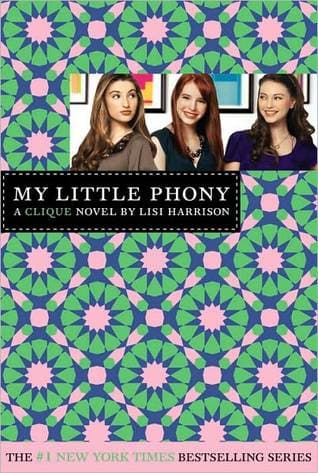
Lisi Harrison (2009)
Genre
Children's / Young Adult / Romance
Reading Time
120 min
Key Themes
See below
Sign in to track this book
As the holidays approach, Massie navigates a dreaded first kiss, a lice-infested revenge plot against her ex-BFF Claire, and the usual Pretty Committee drama where designer shopping sprees and social standing are always on the line.
The holiday season approaches, and Massie Block, the leader of the Pretty Committee, is secretly nervous about a potential kiss from her crush, Landon P. Rumeur. To distract herself, she plans revenge on Claire Lyons for leaving the group. Meanwhile, Alicia Rivera is under a shopping ban until Christmas, promised an all-expenses-paid trip to the Spanish Riviera if she complies. This is a challenge when she is tempted by designer items. Dylan Marvil faces a credit card crisis after overspending, leaving her with no shopping funds. Kristen Gregory, tired of being the only 'poor' one, hopes her friends will soon share her financial worries. Claire, having left the Pretty Committee, tries to make new friends in the drama club, unaware of Massie's impending schemes.
Massie, still angry at Claire for abandoning the Pretty Committee, plans to isolate her. She spreads a rumor that Claire has lice, even planting a fake louse on Claire's sweater during a drama club rehearsal. This scheme successfully scares away Claire's new drama friends, leaving Claire feeling ostracized and humiliated. The incident strengthens Claire's resolve to retaliate against Massie, realizing that Massie's bullying has gone too far and is now directly impacting her social life outside the Pretty Committee. Claire decides she will no longer passively accept Massie's cruelty.
Feeling betrayed and humiliated by Massie's fake lice scare, Claire decides to fight back. She overhears Massie's anxieties about kissing Landon and realizes this is Massie's weak point. Claire then plans her own revenge, inspired by the 'bug' theme Massie started. She starts leaving ladybug-themed items in Massie's locker and around her, escalating to a plan to expose Massie's secret fear of kissing Landon. Claire's actions are no longer just about getting back at Massie, but about proving that Massie cannot control her or her social life, which marks a change in their dynamic.
Alicia Rivera faces her biggest challenge yet: following her parents' strict no-shopping rule between Thanksgiving and Christmas. The reward, an all-expenses-paid trip to the Spanish Riviera, is a strong motivator, but her addiction to luxury brands is equally powerful. She sees irresistible Ralph Lauren sunglasses at the Westchester Mall, almost giving in to the temptation. Alicia tries various ways to avoid shopping, including window shopping with friends and trying on clothes without buying them, constantly battling her impulses to secure her dream vacation.
Dylan Marvil, known for her lavish spending, hits a major problem when her credit card is declined at the Westchester Mall. This unexpected financial crisis forces her to acknowledge how much she has overspent. She tries various tactics to get around the issue, including borrowing money from friends, but ultimately has to face the reality of her limited funds. This event is a harsh wake-up call for Dylan, making her reevaluate her shopping habits and the true cost of her extravagant lifestyle, leading to a period of financial restraint.
Kristen Gregory, who often feels like an outsider due to her family's modest income, watches her friends' financial struggles with a mix of sympathy and satisfaction. She is tired of being the only one who has to worry about money and secretly hopes that her friends' new financial restrictions will level the playing field. Kristen's observations highlight the class differences within the Pretty Committee and her own desire for a sense of belonging that is not defined by wealth or lack thereof. She finds a twisted comfort in seeing her friends experience similar limitations.
As the annual Kissmass party, a prime opportunity for romantic encounters, gets closer, Massie's anxiety about kissing Landon reaches a peak. Despite her outward confidence, she is internally panicking about the actual act of kissing, questioning her technique and what it might mean for their relationship. Claire's ladybug-themed pranks, especially the ones hinting at Massie's secret, further fuel her nervousness. Massie tries to project an image of cool indifference, but her internal thoughts reveal her deep insecurity about this significant step in her romantic life.
The Kissmass party arrives, filled with festive cheer and romantic expectations. Claire, having carefully planned her final act of revenge, puts her scheme in motion. She creates a situation where Massie's secret fear of kissing Landon is publicly revealed, potentially humiliating Massie in front of her crush and peers. This moment is the climax of Claire's 'raid,' designed to turn the tables on Massie and make her experience the same public discomfort Claire endured with the lice scare. The outcome of this reveal hangs in the balance, threatening Massie's carefully constructed image.
Following Claire's public revelation at the Kissmass party, Massie is forced to confront her anxieties about kissing Landon. The immediate aftermath is a mix of embarrassment and anger, but it also pushes her to consider the impact of her own actions on others. The incident forces Massie to re-evaluate her relationship with Landon and her overall approach to managing her public image and private fears. The Pretty Committee also grapples with the fallout, questioning their loyalty and the dynamics within their group, leading to a period of introspection and potential change.
After the dramatic events of the Kissmass party, Massie and Claire are forced to address their broken friendship. The public exposure of Massie's vulnerability, coupled with Claire's successful retaliation, leads to an uneasy truce. Through difficult conversations and shared experiences, they begin to understand each other's perspectives. The Pretty Committee, having seen the intensity of their conflict, also starts to find a new balance, realizing that their friendships are more complex than simple alpha dynamics. The girls learn lessons about empathy, forgiveness, and the true meaning of friendship, leading to a tentative reconciliation.
As the holidays conclude, the other members of the Pretty Committee receive their respective outcomes. Alicia successfully resists her shopping temptations and earns her trip to the Spanish Riviera, showing her newfound self-control. Dylan, having navigated her credit card crisis, learns to manage her finances more responsibly, though grudgingly. Kristen, while still acknowledging her family's financial situation, finds a renewed sense of solidarity with her friends, realizing that even the wealthiest among them face challenges. Each girl emerges from the holiday season with a deeper understanding of themselves and their values.
The Protagonist/Alpha
Massie learns that her manipulative tactics can backfire and that vulnerability can lead to genuine connections, forcing her to confront her own insecurities.
The Protagonist/Antagonist (to Massie)
Claire transforms from a bullied outsider to a confident individual who learns to fight back and assert her independence.
The Supporting
Alicia learns self-control and the value of delayed gratification, proving she can prioritize experiences over material possessions.
The Supporting
Dylan is forced to face the consequences of her overspending and begins to learn financial responsibility.
The Supporting
Kristen gains a deeper understanding of her friends' challenges, realizing that wealth doesn't exempt them from personal struggles.
The Mentioned
Landon's presence challenges Massie's emotional maturity, forcing her to confront her fears about intimacy.
The novel explores the intense pressure pre-teen and teenage girls face to maintain a perfect social image and high status within their peer group. Massie's entire existence revolves around controlling the Pretty Committee's reputation and her own, evident in her elaborate schemes to humiliate Claire and her anxiety over the 'perfect' first kiss with Landon. Alicia's struggle with her shopping ban and Dylan's credit card woes also show how deeply material possessions and perceived wealth contribute to their social standing. The characters constantly try to project an image of effortless perfection, even when struggling internally.
“The Clique…the only thing harder than getting in is staying in.”
Central to the story is the complex and often unstable nature of friendship among teenage girls. The bond within the Pretty Committee is constantly tested by power dynamics, jealousy, and perceived disloyalty. Massie's revenge on Claire for leaving the group highlights her rigid expectations of loyalty, while Claire's retaliation demonstrates the pain of betrayal. The girls' individual struggles (Alicia's ban, Dylan's debt) also show how their friendships are both a source of support and judgment, forcing them to re-evaluate what true loyalty means beyond superficial adherence to clique rules. The eventual, though uneasy, reconciliation between Massie and Claire suggests a nuanced understanding of friendship's resilience.
“Misery loves company, and maybe, just maybe, she won't be the only broke member of the Pretty Committee for long.”
The novel addresses the cycle of bullying and its consequences. Massie's calculated and cruel 'lice scare' against Claire is an example of psychological bullying, aimed at isolating and humiliating her. This act, however, has repercussions, as Claire, instead of giving in, decides to actively retaliate. Claire's 'raid' against Massie, especially the public revelation of Massie's kissing anxiety, mirrors Massie's own tactics, showing how victims can be pushed to become aggressors. This theme explores the emotional toll of bullying and the complex ethical questions surrounding revenge.
“The alpha may have exterminated Claire’s social life, but what goes around comes around. The raid is on, and it won’t be over until the fat ladybug sings.”
Despite their outward confidence and polished exteriors, the characters, particularly Massie, have significant insecurities. Massie's intense anxiety about kissing Landon, for example, reveals a vulnerability beneath her alpha facade. This fear is a major plot point, showing her as a typical teenager grappling with new experiences. Similarly, Alicia's struggle with her shopping addiction and Dylan's credit card troubles expose their vulnerabilities related to self-control and financial responsibility. The book suggests that even the most seemingly perfect individuals have hidden fears and struggles, making them more relatable.
“The only thing Massie doesn't want for Christmas is a lip-kiss from her ninth-grade crush, Landon. Not that she'd ever admit it, but she's nervous!”
A fake health crisis used to trigger conflict and revenge.
Massie's orchestrated fake lice scare against Claire serves as the primary inciting incident for the central conflict. It is a cruel, manipulative act designed to socially isolate Claire. However, instead of crushing Claire, it galvanizes her, transforming her from a passive victim into an active agent of revenge. This device not only drives the plot forward but also establishes the high stakes of social warfare within the clique and sets up the 'bug' motif for Claire's retaliation.
A festive social event that acts as the climactic setting for character confrontations.
The Kissmass party functions as the story's climax, bringing together all the character arcs and unresolved tensions. It's the designated setting for Massie's dreaded kiss with Landon, making her vulnerability palpable. More importantly, it provides the public stage for Claire's final act of revenge, where Massie's secret fear is exposed. This device effectively converges the individual plotlines and creates a dramatic, high-stakes environment for the ultimate showdown and resolution.
External limitations placed on characters to reveal their values and force growth.
The shopping ban for Alicia, the credit card denial for Dylan, and Kristen's perpetual financial awareness serve as external plot devices that force these characters to confront their values and habits. These restrictions highlight the class dynamics within the Pretty Committee and challenge the girls' materialistic tendencies. By facing these limitations, they are compelled to develop self-control, financial responsibility, or a deeper understanding of their own desires, contributing to their individual character arcs.
A symbolic recurring image used by Claire to signal her revenge.
Claire's use of ladybug-themed items (e.g., leaving ladybugs) as part of her retaliation against Massie is a symbolic plot device. It directly references Massie's 'bug' (lice) scare, turning Massie's weapon back on her. The ladybug, often associated with luck or even pest control, becomes Claire's signature, subtly signaling her presence and escalating her 'raid' without immediate direct confrontation. It adds a layer of cleverness and sustained tension to Claire's revenge plot.
“The thing about being a phony is that eventually, the real you gets lost under all the layers of who you pretend to be.”
— Main character's internal reflection on her double life.
“It's hard to tell who your real friends are when you're not even sure who the real you is.”
— Exploring the complexities of friendship while maintaining a false persona.
“Sometimes the biggest lies we tell are the ones we tell ourselves.”
— A moment of self-realization about personal denial.
“Being popular is a lot like being a celebrity. Everyone knows your name, but no one really knows you.”
— Commenting on the superficiality of popularity in high school.
“Maybe love isn't about finding the perfect person, but about seeing an imperfect person perfectly.”
— A romantic realization about accepting flaws.
“The hardest part about pretending to be someone else is remembering all the details.”
— Highlighting the mental strain of maintaining a fake identity.
“A secret shared is a secret no longer, but a burden halved.”
— Considering the relief that comes with confiding in someone.
“You can't really run away from your problems if your problems are inside your own head.”
— Realizing that internal conflicts require internal resolution.
“Every time you choose to be someone you're not, you're choosing to lose a piece of who you are.”
— A warning about the cost of inauthenticity.
“It's funny how the people who seem to have it all are often the ones struggling the most.”
— Observing the hidden struggles of seemingly perfect individuals.
“True courage isn't about not being afraid, it's about doing what's right even when you are.”
— Defining courage in the face of fear and difficult choices.
“Sometimes the most important apologies aren't to others, but to yourself.”
— Recognizing the need for self-forgiveness.
“Growing up means realizing that not every story has a happy ending, but every story has a new beginning.”
— A hopeful perspective on maturity and moving forward.
Ready to see how well you understood this book? Take our interactive quiz with 10 questions.

Biography coming soon.

Dan Gemeinhart
4.5

Kate O'Hearn
4.4

Jeanne Birdsall
4.4

Jen Wang
4.4
Wendelin Van Draanen
4.3

John Marsden
4.3

Chris Van Allsburg
4.3
Jennifer A. Nielsen
4.2