“I am not a pawn. I am a queen.”
— Jane asserts her agency and power in the face of political manipulation.

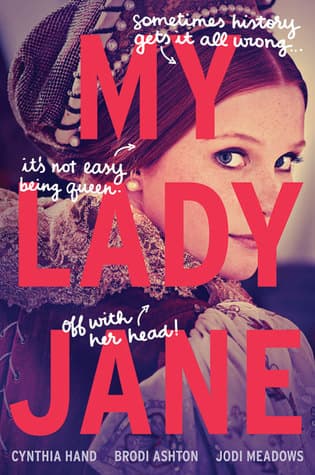
Cynthia Hand (2016)
Genre
Fantasy / Historical Fiction / Young Adult / Romance
Reading Time
10-12 hours
Key Themes
See below
Sign in to track this book
In an alternate Tudor England, a dying king, a bookish noblewoman, and a shape-shifting horse named G must conspire to save the kingdom from a fanatical plot, all while navigating unexpected romance and the looming threat of execution.
King Edward VI is gravely ill. Fearing his Catholic half-sister Mary will inherit the throne, he plots with his advisor, the Duke of Northumberland, to secure a Protestant succession. Their plan involves marrying Edward’s cousin, Lady Jane Grey, to Northumberland's son, Lord Gifford Dudley. Jane, who prefers books to social engagements, dislikes the idea of marriage, especially to a man she's never met. Meanwhile, Gifford, or G, is an Eðian, a person who transforms into an animal at dawn and back to human form at dusk. G transforms into a horse every day. He tries to keep this a secret from Jane, fearing her rejection. The kingdom is divided between Verities (humans) and Eðians. Eðians are often persecuted.
Despite Jane's reluctance and G's anxiety about his secret, the wedding happens. Their initial interactions are awkward. G tries to avoid Jane in the mornings, and Jane finds him peculiar. One morning, Jane, wanting to understand her new husband's strange habits, follows him to the stables. There, she sees G transform from a horse back into a man at dusk. This reveals his Eðian nature to her. Jane is shocked but accepts G. They begin to form a real connection, bonding over their shared experiences of being different and misunderstood.
King Edward, growing weaker, finalizes his will. He disinherits his sisters Mary and Elizabeth, and names Lady Jane Grey as his successor to the throne. He believes this is the only way to protect England's Protestant future. Edward confides in his trusted friend, Barnaby, an Eðian who can transform into a dog, about his fears and hopes for Jane's reign. Shortly after signing the will, Edward dies. The Duke of Northumberland immediately proclaims Jane as Queen, starting a dangerous power struggle for the English crown.
After Edward's death, the Duke of Northumberland and other Privy Council members tell Jane she is the new Queen of England. Jane is horrified and initially refuses. She is overwhelmed by the responsibility and wants a simple life of books. However, under pressure and convinced it's Edward's dying wish and her duty, she reluctantly accepts the crown. She moves into the Tower of London with G and her family. She finds royal life stifling and political schemes daunting. She struggles to assert her authority and navigate the treacherous court.
Princess Mary, hearing of Edward's death and Jane's proclamation, declares herself the rightful Queen. She gathers an army of Catholic supporters in Norfolk. She refuses to acknowledge Jane's legitimacy, viewing her as a usurper. The Duke of Northumberland, under pressure from the Privy Council and facing growing popular support for Mary, leads an army north to confront her. This leaves Jane, G, and the rest of the Dudley family vulnerable in the Tower of London. The city's loyalties are divided, and civil war looms.
While in the Tower, Jane overhears whispers of a plot by the Privy Council to depose her once Mary is defeated. They intend to install a more compliant ruler. Realizing the danger, Jane convinces G to escape the Tower. She believes he will be safer outside and can potentially rally support for her. G, with Barnaby, transforms into his horse form and slips past the guards. His escape is a desperate gamble, leaving Jane alone to face the increasingly hostile court and the approaching conflict.
The Duke of Northumberland's campaign against Mary fails. His troops desert him, and he is forced to retreat, ultimately being captured. With Northumberland's failure, support for Jane collapses. The Privy Council quickly switches allegiance to Mary, proclaiming her Queen. Jane, having reigned for only nine days, is arrested and imprisoned in the Queen's apartments within the Tower of London. She now awaits her fate at the hands of her cousin, Queen Mary I. Her dream of a quiet life with G seems irrevocably shattered.
G, in his horse form, travels with Barnaby, seeking other Eðians for help. He meets with the 'Council of Eðians,' a secret group, hoping to find a way to save Jane. During his quest, G learns a truth: King Edward was not just dying of consumption. He was slowly poisoned by a faction within the court, possibly those who now support Mary, to remove him and clear the path for a Catholic monarch. This revelation adds conspiracy to the already complex political situation. It motivates G even more to save Jane and expose the truth.
Queen Mary I makes her entry into London, welcomed by cheering crowds. She quickly consolidates her power, reversing Edward's Protestant reforms and reinstating Catholicism as the official religion. Jane, still imprisoned, faces charges of high treason for taking the throne. Despite Mary's initial reluctance to execute her young cousin, political pressure increases, especially after the Wyatt Rebellion, which tried to put Jane back on the throne. Jane and G are sentenced to death.
On the day of their scheduled execution, G, transformed into a horse, and accompanied by Barnaby and other Eðian allies, stages a daring rescue. They create a diversion, allowing Jane, her sister Katherine, and other key figures to escape. The chaos reveals the Eðian presence to the public, forcing a reckoning. Instead of a bloody execution, the events lead to a surprising resolution: Queen Mary, confronted by the truth of Edward's poisoning and the Eðian revelation, is persuaded to acknowledge Eðian rights and establish a more tolerant kingdom. Jane and G, now free, choose a life together, advocating for Eðian acceptance, and shaping a more peaceful and inclusive England.
The Protagonist
From a shy, book-loving girl, Jane transforms into a reluctant queen and then a courageous advocate for Eðian rights and a more tolerant society.
The Protagonist
G overcomes his insecurity about his Eðian form to become a confident and courageous hero, embracing his true self and fighting for a more tolerant world.
The Supporting
Edward's arc is cut short by his illness, but he uses his final days to try and secure a Protestant future for England, ultimately setting the stage for Jane's rise.
The Antagonist
Mary begins as a zealous antagonist determined to reclaim her birthright and restore Catholicism, but ultimately shows a capacity for growth and tolerance, leading to a more inclusive reign.
The Antagonist
Northumberland's ambition leads to his rise and ultimate downfall, as his manipulative schemes unravel and he loses everything.
The Supporting
Elizabeth maintains her cautious and observant nature, surviving the political upheaval and positioning herself for future power.
The Supporting
Barnaby remains a loyal and instrumental companion, using his unique abilities to aid his friends and the cause of Eðian acceptance.
The Supporting
Katherine learns to embrace her Eðian nature and supports her sister, finding her own place within the Eðian community.
The Supporting
The Duchess navigates the dangerous political landscape, attempting to protect her family amidst her husband's machinations.
Identity is central, especially for Eðian characters like G and Elizabeth. G first struggles with shame and secrecy about transforming into a horse daily. He fears rejection from Jane and society. His journey involves accepting his unique nature, which becomes a strength. Jane's identity also changes from a bookish scholar to a reluctant queen. This forces her to confront who she is and what she stands for beyond her personal desires. The book explores how external pressures and internal beliefs shape one's sense of self.
“Perhaps I was meant to be a horse. Perhaps that is my true self, and this human form is merely a temporary affliction.”
The novel addresses prejudice through the persecution of Eðians. Many Verities (humans) view them with suspicion, fear, and hatred. Eðians must live in secrecy, facing possible execution if discovered. The story shows the absurdity and cruelty of judging individuals based on a characteristic they cannot control. Jane and G's love story, built on acceptance despite G's Eðian nature, is a symbol of tolerance. The ultimate resolution, where Eðian rights are recognized, shows the importance of overcoming prejudice for a just society.
“Fear makes people do terrible things, Jane. But sometimes, it's just plain ignorance.”
This theme is clear in Lady Jane Grey's story. Jane wants a quiet life of scholarship, but she is made Queen because of Edward's will and the Duke of Northumberland's political schemes. She struggles with the burden of duty, sacrificing her personal desires for what she believes is good for England and Edward's legacy. Her internal conflict shows the tension between individual aspirations and the demands placed upon one by family, religion, or country. G also faces this, as his duty to Jane often conflicts with his desire for a simpler, less dangerous life.
“I never asked for this crown. I never wanted it. All I ever wanted was my books and a quiet life.”
Set in Tudor England, the novel is full of political maneuvering, conspiracies, and battles for power. King Edward, the Duke of Northumberland, and Queen Mary all struggle for the throne and England's religious future. The plot to place Jane on the throne, Mary's rebellion, and the hidden schemes within the Privy Council all show the dangerous nature of court politics. Characters are used as pawns, alliances shift, and betrayal is a constant threat. This demonstrates how power corrupts and influences decisions.
“The crown is a heavy burden, cousin. And many will seek to take it from you.”
At its heart, 'My Lady Jane' is a love story between Jane and G. It is built on mutual acceptance and understanding, not initial attraction or political convenience. Jane's immediate acceptance of G's Eðian nature, despite societal prejudice, forms their bond. Their relationship grows from awkwardness to deep affection as they navigate shared dangers and support each other. This theme goes beyond romantic love to self-acceptance and acceptance of others, regardless of differences. It shows the power of genuine connection in a divided world.
“It doesn't matter what you are, G. Only who you are.”
A magical ability where individuals transform into animals at specific times.
The Eðian transformations are the central magical element of the story. Characters like G (horse), Elizabeth (fox), Katherine (badger), and Barnaby (dog) daily transform into animals and back to human form. This device serves multiple purposes: it introduces the fantasy element, creates unique plot challenges (e.g., G's attempts to hide his horse form), and is the primary vehicle for exploring themes of identity, prejudice, and acceptance. It also provides practical advantages for the characters, such as spying or escaping unnoticed, driving key plot points like G's escape from the Tower.
Reimagining actual historical events with fantastical and comedic elements.
The novel takes the well-known historical events of Lady Jane Grey's nine-day reign and King Edward VI's death, but infuses them with fantasy, humor, and a significantly altered outcome. While retaining major historical figures and key plot points (Edward's death, Jane's marriage, Mary's ascension), the introduction of Eðians and a more benevolent resolution fundamentally changes the historical narrative. This device allows the authors to explore themes relevant to modern audiences while still engaging with the historical context, offering a 'what if' scenario that diverges from the tragic historical reality.
A narrative voice that knows everything and frequently comments directly to the reader.
The story is told by an omniscient narrator who not only knows the thoughts and feelings of all characters but also frequently breaks the fourth wall to address the reader directly. This device adds a strong comedic tone, providing witty commentary, historical asides, and foreshadowing, often with a sarcastic or self-aware voice. It helps to lighten the serious historical subject matter and provides a unique, engaging perspective on the events, making the reader feel like an accomplice or confidante in the unfolding drama. This narrative style is a hallmark of the book's humor.
A legal document that dictates the succession, sparking the central conflict.
King Edward VI's will, disinheriting his half-sisters Mary and Elizabeth and naming Lady Jane Grey as his successor, is the primary catalyst for the entire plot. This document, both a historical fact and a central plot device, sets in motion the succession crisis, Jane's reluctant ascension, Mary's rebellion, and the subsequent power struggles. It represents Edward's desperate attempt to control the future of England from beyond the grave, but also becomes a legal justification for the actions of characters like Northumberland and a symbol of the political maneuvering surrounding the crown.
“I am not a pawn. I am a queen.”
— Jane asserts her agency and power in the face of political manipulation.
“History is written by the survivors, but it's lived by the fools.”
— A reflection on the unpredictable and often absurd nature of historical events.
“Love is not a weakness. It is a strength that can change the world.”
— A character defends the power of love against cynical views.
“Sometimes the most dangerous thing you can do is tell the truth.”
— Acknowledging the risks of honesty in a treacherous court.
“I'd rather be a bird than a queen, if it means I can fly free.”
— Jane expresses her desire for freedom over royal constraints.
“Magic is not about power; it's about understanding.”
— A lesson on the true nature of magic in the book's fantasy world.
“In a world of wolves, be a fox.”
— Advice on using cunning and wit to navigate dangerous situations.
“The heart is a stubborn thing. It beats even when it's broken.”
— A poetic observation on resilience in love and life.
“We are all stories in the end. Make yours a good one.”
— Encouragement to live meaningfully and leave a positive legacy.
“Fear is a cage. Courage is the key.”
— A motivational statement about overcoming fear.
“A crown is heavy, but a conscience is heavier.”
— Reflecting on the burdens of leadership and moral responsibility.
“Sometimes the best way to win a war is to avoid it altogether.”
— A strategic insight on conflict resolution.
“You don't need magic to be extraordinary. You just need to be yourself.”
— A message of self-acceptance and inner strength.
“The past is a ghost. The future is a dream. All we have is now.”
— A philosophical take on living in the present moment.
Ready to see how well you understood this book? Take our interactive quiz with 10 questions.







