“Every child deserves a superhero. And if they don't have one, then they should be one.”
— Elsa's grandmother often tells her this, emphasizing the importance of self-reliance and imagination.

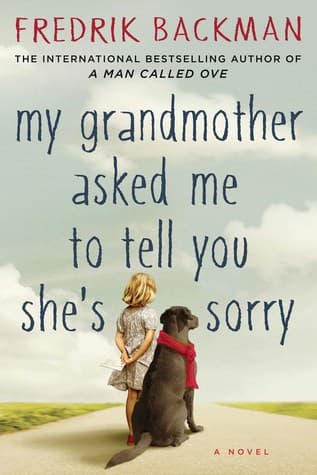
Fredrik Backman (2015)
Genre
Fantasy
Reading Time
620 min
Key Themes
See below
Sign in to track this book
A seven-year-old goes on a whimsical journey through her grandmother's apology letters, uncovering the magic and messy truths behind their shared, eccentric lives.
Elsa, a seven-year-old genius who loves Wikipedia and is an outcast at school, has a special bond with her seventy-seven-year-old grandmother. Her grandmother, a former surgeon and a wild, unconventional person, is Elsa's only friend. They spend their time speaking in their secret language, creating stories about the Land of Almost-Awake and the Kingdom of Miamas, where Elsa is a princess and her grandmother is a queen. However, the grandmother has terminal cancer. After a final, emotional conversation where she gives Elsa a vital mission, the grandmother dies. Her death leaves Elsa heartbroken and alone, but also with a purpose: to deliver a series of apology letters, a task that will reveal the truth behind her grandmother's fantastical tales.
Elsa begins her quest with the first letter for 'The Monster' in her apartment building. This delivery introduces her to the building's unique and often scary residents. She meets the seemingly fearsome 'Monster,' a large, scarred man who lives with a black attack dog named 'Wuff.' Despite his appearance, The Monster is surprisingly gentle with Elsa. Through this interaction, Elsa starts to question her initial ideas about people. The building itself is a character, filled with an eclectic mix of individuals, each with their own quirks and hidden stories, suggesting a complex web of relationships her grandmother was deeply involved in.
Continuing her deliveries, Elsa meets more of her grandmother's recipients. She meets 'The World's Worst Driver,' a constantly anxious man who lives with his tiny white dog named 'Woff.' This man is very different from The Monster, and Elsa notices his nervous habits and how he interacts with the world. Later, she delivers a letter to 'The Drunk,' an older woman who is often intoxicated. These interactions initially confuse Elsa, as the residents do not fit neatly into the heroic or villainous roles of her grandmother's stories. Each delivery, however, provides a small piece of the puzzle, revealing her grandmother's complicated past and the deep, often unspoken, connections she shared with her neighbors.
As Elsa continues her mission, the lines between her grandmother's fantastical stories and reality begin to blur. She starts to recognize the residents of her apartment building in the characters from the Kingdom of Miamas and the Land of Almost-Awake. The Monster, The Drunk, The World's Worst Driver, and even her own mother and father, all have counterparts in the tales. This realization is both exciting and disorienting for Elsa. She begins to understand that the stories were not just whimsical fantasies but complex allegories designed by her grandmother to help her understand the complicated, often messy, truths about people and life. The fantastical elements now help Elsa interpret the adult world.
Through a series of revelations and further letter deliveries, Elsa uncovers a key part of her grandmother's past. She learns that her grandmother was a brilliant surgeon during a war, not just any war, but one fought in a fictionalized version of her stories. Her grandmother, along with the others in the building, was part of a secret organization, a 'fellowship' dedicated to doing good and helping others, often under extreme pressure. This discovery explains many of the residents' quirks, their deep bonds, and their shared history of trauma and resilience. It transforms the apartment building from a collection of odd individuals into a sanctuary for a chosen family bound by shared experiences and a secret past.
One of the most significant revelations for Elsa concerns 'The Monster.' She discovers that he is Alf, her grandmother's closest friend and confidant, and a key figure in their wartime efforts. Alf was a soldier, and his scars show his bravery and sacrifices. He was deeply devoted to Elsa's grandmother, and their bond was one of deep love and respect, though not romantic. This revelation humanizes Alf for Elsa, changing him from a scary figure into a protector and a surrogate grandfather. She realizes that her grandmother's stories were not just about imagination, but about remembering the people she loved and the values she held dear, particularly bravery, loyalty, and helping others.
Throughout her journey, Elsa struggles with feeling 'different.' She is very intelligent and has trouble fitting in at school, often feeling isolated and misunderstood. Her grandmother's stories always emphasized that being different was a strength. As Elsa interacts with the residents, she sees that each of them is 'different' in their own way, often carrying invisible wounds or unique perspectives. She finds a sense of belonging among them, a community that accepts her quirks and appreciates her intelligence. This newfound acceptance helps her come to terms with her individuality and understand that the 'normal' she once sought is far less valuable than genuine connection and self-acceptance.
Elsa eventually delivers the final letter, completing her grandmother's mission. This last delivery often brings a deeper understanding of the entire narrative, tying together loose ends and revealing the full scope of her grandmother's wisdom and love. She realizes that the Kingdom of Miamas was not just a made-up place but a metaphor for their apartment building and the community within it, a place where people, despite their flaws and past traumas, found comfort and formed a unique, supportive family. Her grandmother's stories were a guide, a map for Elsa to navigate the complexities of life, grief, and human relationships, ensuring she would never truly be alone.
Delivering the apology letters not only reveals secrets but also helps reconcile the residents. Many of the recipients have held grudges or had misunderstandings for years, and the letters, along with Elsa's presence, prompt them to confront their pasts and forgive each other, and in some cases, themselves. Elsa sees firsthand the power of forgiveness and the healing it brings. She learns that her grandmother, despite her seemingly reckless behavior, was deeply compassionate and sought to mend fractured relationships even from beyond the grave, showing that true strength is in vulnerability and the willingness to admit mistakes.
By the end of her quest, Elsa has grown significantly. She is no longer just a lonely, misunderstood child but a more confident and empathetic individual. She has learned about love, loss, courage, and the complexities of human nature. She understands that her grandmother's stories were a deep gift, a way to prepare her for life's challenges and to connect her to a community that would always look out for her. Elsa begins to live by her grandmother's lessons, carrying forward the spirit of Miamas and the importance of imagination and kindness. She is ready to tell her own stories, ensuring her grandmother's legacy lives on.
The Protagonist
Elsa transforms from a lonely, misunderstood child into a more empathetic, confident, and integrated member of her community, learning to embrace her 'differentness.'
The Supporting/Deceased Protagonist
Though deceased, her character's 'arc' is revealed through Elsa's journey, showing her transition from a rebellious, independent spirit to a wise matriarch seeking to mend past wrongs and ensure her loved ones' future.
The Supporting
Alf's character arc involves being revealed as a kind and loyal man beneath his 'monstrous' exterior, finding a new sense of purpose in protecting Elsa.
The Supporting
Ulrika's arc involves coming to a deeper understanding and appreciation of her mother's life and legacy, and a better connection with her daughter, Elsa.
The Supporting
Britt-Marie's arc shows her softening and revealing her hidden kindness, particularly towards Elsa, as her past traumas and loyalties are uncovered.
The Supporting
The Drunk's arc involves her past being revealed, showing her as a tragic figure whose struggles are rooted in wartime trauma, garnering empathy and understanding.
The Supporting
His arc reveals him as a man of quiet courage and loyalty, despite his anxieties, and his role in the 'fellowship' is illuminated.
The Supporting
Kent's arc is subtle, revealing his quiet strength and enduring patience in his relationship with Britt-Marie and his role in the community.
The novel explores how storytelling shapes reality, provides comfort, and conveys truth. Elsa's grandmother uses elaborate fantasy worlds – the Land of Almost-Awake and the Kingdom of Miamas – as allegories to teach Elsa about life, death, courage, and the people around her. These stories initially offer Elsa an escape from her difficult reality, but as she delivers the apology letters, she discovers that the fantastical characters and events are direct representations of the real people and historical events in her grandmother's life. This shows storytelling as a tool for processing trauma, preserving history, and passing on wisdom, allowing complex truths to be understood through a child's eyes. The stories act as a bridge between generations and between fantasy and reality, ultimately helping Elsa understand her grandmother's legacy and her own place in the world.
“Because all good stories are about people, in the end. And people are always about people. And people change. So good stories should change too.”
The book examines family, contrasting biological ties with the strong bonds of a chosen family. Elsa's biological family, especially her mother, struggles to understand her, making her grandmother her only confidante. However, the apartment building residents form a unique, unconventional 'fellowship' – a chosen family forged through shared wartime experiences, trauma, and loyalty. This community, initially seen as a collection of eccentrics, becomes a sanctuary where individuals support each other, forgive past wrongs, and find belonging. The novel argues that true family extends beyond blood, encompassing those who stand by you, understand you, and offer unconditional love and acceptance, highlighting the strength and resilience found in these unconventional connections.
“All children need a monster to protect them from the monsters that children don’t believe in.”
Grief is a main theme, explored through Elsa's deep loss of her grandmother. The novel shows the raw pain of losing a loved one, especially for a child who has lost her only true friend. Elsa's journey to deliver the apology letters becomes her way of processing this grief, allowing her to keep her grandmother's memory alive and understand her legacy. The other residents also carry their own burdens of loss and trauma from their past, particularly from their wartime experiences. The book suggests that grief is a universal experience, but it can also lead to growth, understanding, and connection, as shared sorrow can bring people closer and highlight the lasting impact of those who are gone. The stories themselves are a way to cope with and give meaning to loss.
“Death is just a comma, not a full stop.”
The novel advocates for embracing 'differentness' and cultivating empathy. Elsa is a 'different' child, struggling to fit in at school due to her intelligence and unique perspective. Her grandmother constantly reinforces that being different is a strength. As Elsa meets the diverse residents of the apartment building, she learns that each person is 'different' in their own way, often dealing with hidden struggles, past traumas, or unconventional lives. Through delivering the letters, Elsa is forced to look beyond appearances and initial ideas, developing empathy for individuals she initially feared or disliked. The story celebrates individuality and encourages readers to find connection and understanding by accepting and appreciating the unique qualities in themselves and others.
“Only someone who is different can change the world.”
Forgiveness and redemption are central themes, driven by the grandmother's final act of sending apology letters. These letters force the recipients, and by extension Elsa, to confront past wrongs, misunderstandings, and long-held grudges. The grandmother, though deceased, seeks to mend fractured relationships and offer closure, showing a deep understanding of human fallibility and the importance of letting go. Elsa witnesses the transformative power of forgiveness as the residents slowly begin to reconcile with each other and, in some cases, with their own past actions. The theme highlights that redemption is possible, not just for the one seeking forgiveness, but also for those who grant it, leading to healing and renewed connections within the community.
“Everyone is entitled to be an idiot sometimes.”
A series of letters initiating Elsa's quest and revealing the past.
The apology letters are the primary catalyst for the entire plot. Left by Elsa's grandmother, they serve as a posthumous directive, guiding Elsa on a treasure hunt through the apartment building. Each letter is addressed to a specific resident, prompting Elsa to interact with them and uncover a piece of her grandmother's complex history and the true identities of the characters from her fantasy stories. The letters are not merely apologies; they are keys that unlock secrets, mend fractured relationships, and ultimately reveal the deep connections within the community. They propel Elsa's personal growth and her understanding of the adult world, grief, and forgiveness.
Elsa's grandmother's fantasy worlds as allegorical frameworks.
These fantastical realms are more than just bedtime stories; they are intricate allegories created by Elsa's grandmother to help Elsa understand complex real-world situations and people. The characters and events within Miamas and Almost-Awake mirror the residents of the apartment building and the grandmother's past as a wartime surgeon. This device allows the author to explore heavy themes like war, trauma, and loss through a child's imaginative lens. As Elsa delivers the letters, she gradually decodes these allegories, realizing that the 'monsters' and 'heroes' of the stories have real-life counterparts, thereby bridging the gap between fantasy and reality and making difficult truths accessible.
Animal companions reflecting and influencing their owners' personalities.
The dogs, Wuff (Alf's imposing black dog) and Woff (The World's Worst Driver's tiny white dog), serve as plot devices that reflect and sometimes temper their owners' personalities. Wuff, initially scary to Elsa, mirrors Alf's intimidating exterior but also his underlying loyalty and protective nature. Woff, small and anxious, reflects his owner's nervous disposition. These dogs provide comic relief, comfort, and sometimes act as silent observers or catalysts for interaction between characters. Their presence often softens the more gruff characters and provides an avenue for Elsa to connect with the adults, as animals often offer an unbiased, accepting presence in the narrative.
A microcosm of society and a symbolic sanctuary.
The apartment building itself functions as a significant plot device. It is a contained environment that acts as a microcosm of society, housing a diverse group of individuals with interconnected lives and shared histories. Its physical structure facilitates Elsa's journey, as each apartment holds a recipient of a letter and a piece of the puzzle. Symbolically, the building transforms from a collection of strange neighbors into a sanctuary for a chosen family – 'the fellowship' – united by their past and loyalty to the grandmother. It represents a safe haven where 'differentness' is accepted, and community bonds are forged through shared experience and mutual support.
“Every child deserves a superhero. And if they don't have one, then they should be one.”
— Elsa's grandmother often tells her this, emphasizing the importance of self-reliance and imagination.
“Only when you're an adult can you truly understand how much a child can miss something.”
— Elsa reflects on her grandmother's death and the profound sense of loss she feels.
“It’s not a good idea to think about what you want to do with your life by wondering how you’re going to get out of the city.”
— The grandmother's advice to Elsa, encouraging her to focus on positive aspirations rather than just escaping.
“We are not supposed to be afraid of things that are not real. But we are.”
— Elsa contemplates the nature of fear, particularly in relation to the fantastical stories her grandmother tells.
“Grown-ups don't know that it's okay for children to be sad.”
— Elsa's internal thought about how adults often try to shield children from sadness, rather than allowing them to process it.
“There are some things that you can only learn in a library.”
— A recurring theme, highlighting the importance of books and stories in understanding the world.
“Being different is a superpower.”
— Another piece of wisdom from Elsa's grandmother, encouraging Elsa to embrace her unique qualities.
“You have to fight for what you love. No matter how much it hurts.”
— The grandmother's philosophy on love and perseverance, reflecting her own life experiences.
“It’s easier to be brave if you don’t know what you’re fighting for.”
— Elsa's reflection on her grandmother's seemingly reckless bravery, realizing there was always a purpose.
“Every person has a secret world inside them. A world of stories and memories.”
— Elsa's journey through the fantasy world of Miamas, realizing it mirrors the inner lives of the people around her.
“If you don't know what you're looking for, you'll never find it.”
— A practical piece of advice from the grandmother, applicable to both treasure hunts and life goals.
“Sometimes you have to do things you don't want to do so that you can do the things you do want to do.”
— The grandmother's pragmatic approach to life, teaching Elsa about responsibility and sacrifice.
“It’s never too late to try to be a better person.”
— A message conveyed through the various characters Elsa meets, highlighting themes of redemption and change.
Ready to see how well you understood this book? Take our interactive quiz with 10 questions.

Biography coming soon.







