““I think it’s possible that sometimes people have to make choices that are not good, but they are the only choices they have.””
— Hanna reflects on difficult decisions during wartime.

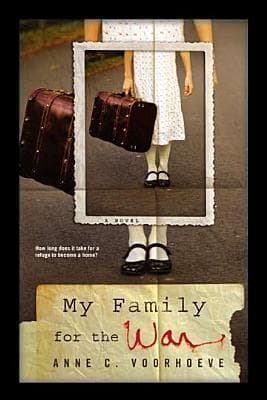
Anne C. Voorhoeve (2012)
Genre
Historical Fiction / Young Adult
Reading Time
500 min
Key Themes
See below
Sign in to track this book
Torn from her family by the Kindertransport, a young German girl navigates the Blitz and discovers a new identity and an unexpected family amidst the chaos of wartime London.
In 1939 Berlin, ten-year-old Franziska Mangold, a Jewish girl, learns from her parents, Herr and Frau Mangold, that she will be leaving Germany on the Kindertransport. Her parents make the difficult decision to send her to safety in England, fearing escalating Nazi persecution. Franziska, though confused and scared, understands the urgency and danger her family faces. She endures a tearful goodbye at the train station, clutching a small suitcase and a photo of her family. She boards the train with hundreds of other children, leaving behind her home, her language, and everything familiar, bound for an uncertain future in a foreign land.
Upon arrival in England, Franziska is renamed Frances by the English authorities, a change that symbolizes her new life and separation from her past. After a period of waiting, she is chosen by the Miller family, Quakers living in the peaceful village of Long Hanborough in Oxfordshire. Mrs. Miller, a kind and practical woman, and Mr. Miller, a quiet but compassionate man, welcome Frances into their simple home, which already includes their son, Patrick, who is slightly older than Frances. Despite the language barrier and cultural differences, Frances begins to adapt to her new surroundings, finding comfort in the Millers' warmth and the tranquility of the English countryside.
Frances initially struggles with the English language, finding it difficult to communicate. Mrs. Miller patiently teaches her, and Frances attends the local village school, where she learns alongside English children. She also grapples with cultural differences, particularly the simpler Quaker lifestyle compared to her more affluent upbringing in Berlin. Over time, with the Millers' unwavering support and Patrick's companionship, Frances gradually becomes more fluent in English and begins to feel a sense of belonging. She starts to view the Millers not just as guardians but as a new family, even as memories of her biological parents linger.
As World War II escalates and the threat of German invasion looms, life in Long Hanborough is disrupted. The Millers, committed to their Quaker principles of helping others, decide to move to London to assist with war efforts. This means Frances and Patrick also move to the bustling, and increasingly dangerous, capital. Frances experiences the stark contrast between the quiet countryside and the air-raid sirens and blackouts of wartime London. The move brings new challenges and anxieties, but also strengthens her bond with the Millers, as they navigate the perils of war together, becoming a resilient family unit amidst chaos.
In London, Frances, now a teenager, takes on more responsibilities. She works in a nursery caring for younger children, many of whom are also evacuees or orphans of the war. This experience shows her the impact of the conflict on vulnerable children. She lives through the terrifying nights of the Blitz, sheltering in air-raid shelters with the Millers and their neighbors, listening to the bombs fall. These experiences harden her but also create a deep sense of empathy and resilience. She becomes a capable and resourceful young woman, contributing to the war effort in her own way while trying to maintain some normalcy.
As Frances and Patrick grow older, their sibling-like bond evolves. Living through the war together, sharing fears and small joys, they become each other's closest confidants. Frances finds herself developing romantic feelings for Patrick, a confusing and exhilarating experience given their unique family dynamic. Patrick, too, shows signs of reciprocating these feelings. Their growing romance is a source of both comfort and tension, as they navigate their emotions amidst the backdrop of war, unsure of what the future holds for them individually or as a couple, and how their connection might impact the Millers.
Throughout her time in England, Frances constantly struggles with her identity. She is German by birth, Jewish by heritage, but now lives as an English girl named Frances. The war intensifies this internal conflict, as anti-German sentiment is prevalent. She tries to suppress her past, feeling guilt and shame about her origins, especially when confronted with the atrocities committed by the Nazis. Yet, she also feels deep loyalty to the Millers and her adopted country. This internal struggle shapes her character, forcing her to confront what 'family' and 'home' truly mean to her.
As the war finally draws to a close, new anxieties emerge for Frances. The possibility of finding her biological parents, if they survived the Holocaust, becomes a pressing concern. She must confront the reality that her German family might be vastly different from the one she remembered, or might not exist at all. Simultaneously, her relationship with Patrick reaches a critical point, and she must decide where her loyalties lie and what kind of future she wants to build for herself – whether it's with the Millers in England or searching for remnants of her past in Germany, or a combination of both.
With the war over, Frances makes the courageous decision to seek out information about her birth parents. This involves navigating bureaucratic hurdles and confronting the devastating news of the Holocaust's impact. She learns of the horrific fate of many Jewish families. The search is emotionally taxing, forcing her to relive the pain of separation and confront the potential loss of her biological family. Her journey shows her resilience and her need for closure, even as she holds onto the hope of finding some connection to her past.
Ultimately, Frances finds a way to integrate her German heritage with her English upbringing. While the full truth about her biological parents is a complex and often painful discovery, she understands that her experiences have shaped her. She makes peace with the fact that the Millers are her family, in every sense that matters. Her relationship with Patrick solidifies, representing a future built on love and shared history. Frances, now a strong and independent young woman, looks forward, embracing her unique identity and the family she has chosen and been chosen by, ready for the challenges and joys of peacetime.
The Protagonist
From a scared, displaced child, Frances grows into a self-possessed young woman who reconciles her past and present, defining her own sense of family and belonging.
The Supporting
Remains a steadfast source of love and guidance, demonstrating the power of chosen family.
The Supporting
Transforms from a supportive brother figure into a loving partner for Frances, embodying her chosen family.
The Mentioned
Their fate remains largely unknown, representing the tragic human cost of the Holocaust and Frances's lost past.
The Supporting
Serves as a consistent, grounding figure, embodying quiet strength and moral conviction.
The Supporting
Represents the initial shared experience of the Kindertransport, a brief but significant connection.
Frances's journey is about constructing her identity. Torn from her German-Jewish heritage and thrust into English culture, she constantly grapples with who she is. She adopts a new name, Frances, and learns a new language, but her past never truly leaves her. The conflict between her German origins and her English upbringing, intensified by wartime anti-German sentiment, forces her to define what 'home' and 'family' truly mean to her. This is evident as she struggles to pronounce German words later in life and feels a pang of guilt, or when she considers her future in England versus a potential return to a shattered Germany.
“She was Frances now, not Franziska. But was she English? Or still German? She didn't know where one ended and the other began.”
The novel explores the nature of family – biological, adoptive, and chosen. Frances is separated from her birth parents, Herr and Frau Mangold, and finds a new, loving family in the Millers. The narrative questions whether blood ties are more significant than the bonds formed through shared experiences, love, and care. The Millers provide Frances with an unwavering sense of security and belonging, demonstrating that family is built on love and commitment rather than just genetic connection. This theme is particularly strong in Frances's evolving relationship with Patrick, solidifying the idea of a chosen family.
“They weren't her real parents, not by blood. But in every way that mattered, they were her family.”
Frances shows incredible resilience in the face of adversity. From the trauma of being separated from her family and country to adapting to a new language and culture, and then surviving the Blitz in London, she continuously endures and thrives. Her capacity for adaptation is shown in her rapid acquisition of English, her willingness to take on responsibilities in wartime London, and her emotional strength in confronting the potential loss of her biological family. Her journey shows the human spirit's ability to cope with profound change and trauma.
“She had learned to live in the cracks of the world, to find light even in the darkest corners.”
Loss is a pervasive theme in Frances's story. She loses her home, her family, her language, and her childhood innocence. The novel explores how individuals cope with such losses, particularly in the context of war and the Holocaust. Memory plays a crucial role, as Frances frequently revisits fragments of her past in Berlin, trying to keep her biological parents' images alive. The search for her birth family after the war is driven by a need to reconcile with these losses and to understand the full extent of what was taken from her and so many others.
“Sometimes, the past was like a ghost, always there, whispering just out of reach.”
The historical event of children's evacuation from Nazi territories.
The Kindertransport serves as the inciting incident and central historical backdrop for Frances's journey. It is the mechanism by which she is separated from her family and sent to England, setting the entire plot in motion. This real-life event provides the story with its historical authenticity and highlights the humanitarian efforts, as well as the profound personal sacrifices, made during World War II. It underscores the themes of displacement, loss, and the resilience of children forced to grow up too quickly.
The story is told from Frances's subjective viewpoint.
The novel is narrated in the first person by Frances (Franziska). This narrative choice allows readers intimate access to her thoughts, fears, and evolving understanding of the world around her. It enhances the emotional impact of her experiences, particularly her struggles with identity, language, and the trauma of war. By experiencing events through her eyes, readers gain a deep empathy for her character and a personal connection to the historical events she lives through, making her journey feel immediate and authentic.
The change from 'Franziska' to 'Frances'.
The change of Frances's name from 'Franziska Mangold' to 'Frances' upon her arrival in England is a potent symbol of her forced assimilation and the severing of her ties to her past. It represents the shedding of her German identity and the adoption of an English one. This name change underscores her struggle with identity and belonging throughout the novel, as she grapples with which name, and by extension, which identity, truly belongs to her. It marks a clear dividing line between her 'before' and 'after' life.
Tangible links to Frances's past and biological family.
Letters (or the lack thereof) and a photograph of her biological family serve as crucial plot devices. The initial photograph is a tangible link to her lost family, a physical reminder of her origins and a source of comfort. The delayed and eventually ceased correspondence with her parents heightens the suspense and her anxiety about their fate. These objects symbolize her persistent connection to her past and fuel her desire to seek answers after the war, representing both hope and the painful reality of separation.
““I think it’s possible that sometimes people have to make choices that are not good, but they are the only choices they have.””
— Hanna reflects on difficult decisions during wartime.
““The war was like a huge, dark cloud that hung over everything, even the smallest things.””
— Hanna describes the pervasive impact of the war on daily life.
““It was strange how quickly you could get used to things, even terrible things.””
— Hanna observes human adaptability to harsh circumstances.
““Sometimes I felt like I was living two lives: the one everyone saw, and the one I kept hidden inside.””
— Hanna grapples with her identity and secrets.
““The silence of the countryside was a different kind of silence than the silence in the city. It was a living silence.””
— Hanna notices the distinct qualities of rural quiet.
““You can’t choose your family, but you can choose what you do for them.””
— A character reflects on familial duty and agency.
““Fear was a cold thing, but it could also make you do things you never thought you would.””
— Hanna considers the powerful influence of fear.
““In a war, everyone loses something, even the ones who win.””
— A somber reflection on the universal cost of conflict.
““Hope was a fragile thing, easily broken, but impossible to live without.””
— Hanna contemplates the necessity and vulnerability of hope.
““It was hard to remember what normal felt like, before the war changed everything.””
— Hanna struggles to recall pre-war normalcy.
““Sometimes the bravest thing you can do is just keep going, even when you want to stop.””
— A character offers a perspective on quiet courage.
““The truth was a complicated thing, especially when it could hurt the people you loved.””
— Hanna grapples with the complexities of honesty.
““Kindness, even a small act of it, could make a big difference in a world full of cruelty.””
— Hanna observes the power of empathy amidst hardship.
““We were all just trying to survive, each in our own way.””
— A character reflects on the universal struggle for survival.
Ready to see how well you understood this book? Take our interactive quiz with 10 questions.







