“All of us, in some way, are victims of the lies we tell ourselves.”
— Reflecting on the self-deception that shapes lives and relationships.

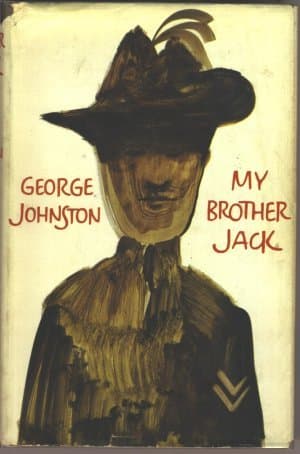
George Johnston (1964)
Genre
Literary Fiction / Historical Fiction / Young Adult
Reading Time
580 min
Key Themes
See below
Sign in to track this book
Two brothers from suburban Melbourne navigate success and integrity in a changing Australia, each representing a different idea of the Australian male.
David Meredith, the narrator, looks back on his childhood in Essendon, Melbourne, during the 1920s and early 1930s. He describes the difference between himself, a sensitive and artistic boy, and his older brother Jack, who is strong, athletic, and very loyal. Their father, a WWI veteran, teaches them patriotism and duty, while their mother tries to balance their different personalities. David often feels overshadowed by Jack's physical abilities and charm, though he admires his brother's strength and straightforwardness. Their early years include typical boyhood adventures, school, and their father's war experiences, which shape their understanding of masculinity and national identity in a rapidly changing Australia.
As David and Jack become teenagers, their different personalities lead them to different paths. Jack leaves school early and works various working-class jobs, including in the merchant navy and as a tram conductor. He is a tough, honest, and unpretentious 'Aussie battler,' finding purpose in physical labor and male camaraderie. David, however, continues his education, showing a talent for writing and art. He is more thoughtful and ambitious, drawn to intellectual and cultural pursuits. Their diverging interests create a subtle tension. Jack often shows a tolerant amusement for David's artistic endeavors, while David secretly longs for Jack's simple strength and sense of belonging in the 'real' world.
The Great Depression affects the Meredith family deeply. Their father struggles to keep his job, and the family faces financial hardship. Jack, with his practical skills and resilience, finds ways to contribute, often taking on difficult, low-paying jobs. He confronts the harsh realities of unemployment and social injustice, solidifying his working-class identity. David, still pursuing his artistic dreams, finds the economic downturn a source of inner conflict, feeling guilty about his less 'useful' pursuits while his family struggles. The Depression years highlight the brothers' different approaches to life: Jack's practical endurance versus David's intellectual and emotional struggle with the world's difficulties.
David, driven by ambition and a desire to escape the perceived limits of suburban Melbourne, gets a cadetship at a major newspaper. This is a turning point, allowing him to enter the world of words and ideas he wants. His new career contrasts sharply with Jack's manual labor, further separating them. David quickly adapts to the fast-paced, cynical newsroom, developing his writing skills and a more worldly perspective. This period marks his gradual separation from the simple, honest values Jack and their childhood home represent, as he begins to accept the complexities and compromises of a professional life.
Jack, always practical, marries Nancy, a sensible, kind woman who shares his down-to-earth values. He settles into a conventional suburban life, working steadily and focusing on building a family and home. Their life together is quiet and domestic, with a strong sense of community. Jack embodies the Australian ideal of the 'battler' who finds satisfaction in hard work, loyalty, and simple pleasures. While David seeks fame and fortune, Jack finds fulfillment in the tangible realities of family and a stable, if unglamorous, life. This period shows Jack's steady commitment to his upbringing, contrasting with David's growing worldly ambitions.
World War II begins. Jack tries to enlist, but poor eyesight keeps him from serving on the front lines, which is a quiet disappointment for him. David, however, uses his journalistic skills to become a war correspondent. This assignment takes him away from Australia, exposing him to the horrors and complexities of the global conflict, but also advancing his career. He travels widely, reporting from various battlefronts, and gains a reputation for his vivid and insightful reports. The war becomes a test for David's ambition, giving him a chance to make a name for himself internationally, further separating him from his brother's more grounded existence.
After the war, David Meredith's career thrives. He becomes a celebrated author and journalist, living a glamorous, cosmopolitan life in Europe, mainly London and later Hydra, Greece. He marries Cressida Morley, a beautiful and sophisticated woman, and they move in influential circles. Despite his success and wealth, David feels an inner emptiness and moral decay. He feels increasingly disconnected from his true self, burdened by the compromises he has made and the superficiality of his new life. The pursuit of success, which once seemed so important, now feels hollow, leading to disappointment and a longing for the simpler values he left behind.
Back in Australia, Jack continues his life, steady in his working-class values. He maintains his integrity, honesty, and loyalty, staying deeply connected to his family and community. While David navigates international fame and moral ambiguity, Jack shows the enduring spirit of the 'Aussie battler' – unpretentious, dependable, and content with a life built on solid foundations. He never seeks wealth or fame, finding fulfillment in honest work, his family, and his country. Jack's steady character is an unspoken contrast to David's increasingly complex and morally compromised existence, representing the path David chose to abandon.
After many years abroad, David returns to Australia, partly driven by a need to reconnect with his past and his brother. The reunion with Jack is moving, showing the vast distance that has grown between them. Jack, though older, is still the same honest, straightforward man, rooted in his Australian identity. David, however, is changed by his experiences, marked by success, but also by disillusionment and a sense of alienation. While affection remains, their shared understanding and easy camaraderie are gone, replaced by a polite distance. David struggles to explain his complex inner world to Jack, who largely does not understand his brother's sophisticated anxieties.
Jack becomes gravely ill with a debilitating disease that slowly takes his life. During this time, David spends time with his dying brother, observing Jack's quiet dignity and resilience in the face of suffering. Jack's illness and eventual death force David to confront the profound impact his brother had on his life and identity. He realizes that Jack, despite his lack of worldly success, had a moral strength and an authentic self that David feels he has lost. Jack's death prompts David's final, melancholic thoughts on their different paths, the meaning of success, and the lasting power of family and national identity, bringing the narrative to a powerful and somber close.
The Protagonist
David transforms from a sensitive boy into a successful but ultimately disillusioned man, losing his connection to his roots and inner peace in the pursuit of worldly ambition.
The Supporting/Titular Character
Jack remains true to his honest, working-class values throughout his life, becoming a symbol of unwavering integrity and authenticity.
The Supporting
Cressida remains a constant figure in David's successful but hollow life abroad, embodying the allure and the spiritual cost of his choices.
The Supporting
She remains a steadfast and loving presence, embodying the enduring warmth and stability of the family home.
The Supporting
He remains a figure embodying traditional Australian masculinity and the lasting impact of war on a generation.
The Supporting
She remains a steadfast and loving partner to Jack, embodying the simple virtues of domestic life.
The Mentioned
Barney serves as a window into David's early professional life and the cynical world of journalism.
The Mentioned
A minor character who contributes to the nostalgic backdrop of the brothers' childhood.
This theme explores how pursuing worldly success and ambition can lead to a loss of integrity, authenticity, and inner peace. David Meredith's journey from a sensitive boy to an internationally acclaimed author shows this. As he gains fame and fortune, he feels increasingly alienated and morally compromised, believing he has sacrificed his true self and his connection to his roots. His glamorous life with Cressida, full of superficiality and emotional emptiness, contrasts sharply with the honest simplicity of Jack's life. The novel suggests that while success brings external rewards, it often comes at a significant spiritual cost, leaving individuals with deep disappointment.
“And it came to me then, with a force that almost made me cry out, that I had lost something, that I had traded something of the real me for the illusion of success.”
The novel examines the evolving idea of Australian identity through Jack and David. Jack embodies the 'Aussie battler' myth – a tough, honest, loyal, and unpretentious working-class man who finds dignity in hard work and community. He is rooted in Australia's practical realities. David represents a more modern, globalized Australian identity, seeking intellectual and artistic fulfillment internationally. The novel questions whether this pursuit of international recognition leads to a loss of essential Australian virtues or a more complex national character. The narrative often contrasts the perceived authenticity of Jack's life with the perceived artificiality of David's.
“Jack was the real Australia, the essential, honest core of it, and I was... what was I? A reflection, a shadow, a compromise.”
The relationship between David and Jack is central to the novel, forming its emotional and thematic core. It explores the complexities of brotherhood, including deep affection, unspoken understanding, and an underlying tension from their very different personalities and life choices. David constantly compares himself to Jack, admiring his brother's strength and authenticity while striving for a different kind of success. The rivalry is more internal for David, who struggles with feelings of inadequacy and a longing for Jack's simple sense of belonging. Their bond acts as a moral guide for David, with Jack representing the path not taken and the values David feels he abandoned.
“He was my brother, and I loved him, but he was also the measure of everything I was not, everything I had lost.”
The narrative is filled with nostalgia, as David Meredith reflects on his childhood and early life in Australia. He longs for simpler times, clear moral certainties, and the authentic connections of his youth, especially those with Jack and their suburban home. However, this nostalgia is always tinged with the understanding that the past cannot be fully regained. David's journey away from Australia and his experiences have changed him forever, making a true return impossible. The novel suggests that while memory offers comfort, it also highlights the painful reality of lost innocence and the inevitable passage of time, emphasizing that one can never truly go home again.
“The past, I learned, was not a place to return to, but a place to carry within you, a ghost that walked beside you always.”
The entire story is told from David Meredith's perspective, looking back on his life.
The novel is narrated in the first person by David Meredith, who recounts his life story and his relationship with his brother Jack from a future, more disillusioned vantage point. This retrospective viewpoint allows for deep introspection and philosophical reflection on the events and choices that shaped his life. It enables David to offer mature insights into the consequences of ambition, the nature of Australian identity, and the complexities of brotherhood. The 'telling' itself becomes part of David's attempt to understand and reconcile with his past, lending a melancholic and reflective tone to the entire narrative.
Jack and David serve as direct contrasts to highlight each other's qualities.
Jack and David function as classic foil characters, their contrasting personalities and life paths serving to illuminate each other's strengths and weaknesses. Jack embodies the 'Aussie battler' myth – honest, strong, and unpretentious – while David represents the ambitious, intellectual, and ultimately disillusioned individual. Jack's grounded authenticity highlights David's moral compromises and spiritual emptiness, while David's sophisticated introspection offers a critical lens through which to view the simpler, sometimes unexamined, values Jack represents. This device is crucial for exploring the novel's central themes of identity, success, and the divergent paths available in post-war Australia.
Australia represents authenticity and roots, while Europe symbolizes ambition and disillusionment.
The geographical settings in the novel carry significant symbolic weight. Australia, particularly suburban Melbourne, represents David's roots, innocence, authentic self, and the enduring values embodied by Jack. It is a place of honest labor, family, and clear moral lines. Europe (London, Hydra) symbolizes the world of ambition, intellectualism, sophistication, and worldly success, but also moral compromise, superficiality, and alienation. David's journey between these two continents mirrors his internal journey from innocence to experience, and from connection to disillusionment. His eventual return to Australia signifies a yearning for lost authenticity, even as he recognizes it's a past he can no longer fully reclaim.
The idea of losing one's authentic self in the pursuit of external success.
Throughout the narrative, there is a recurring motif, often explicitly stated by David, of having 'lost something' or 'lost his soul' in his pursuit of success. This refers to the gradual erosion of his integrity, his connection to his authentic self, and the simple, honest values he grew up with. This motif is powerfully contrasted with Jack, who never loses his essential self. It manifests in David's feelings of emptiness, his disillusionment despite outward achievements, and his yearning for the unblemished character he perceives in his brother. It underscores the novel's central critique of materialistic ambition.
“All of us, in some way, are victims of the lies we tell ourselves.”
— Reflecting on the self-deception that shapes lives and relationships.
“And it was then that I began to understand how much of life is a matter of waiting.”
— The narrator's realization about the passive nature of much of existence.
“The past is never dead. It's not even past.”
— A meditation on the enduring influence of history and personal experience.
“We were all young once, and we all believed in something that was never quite true.”
— A nostalgic look back at youthful idealism and its eventual disillusionment.
“He was a man who lived by his own rules, even if they were sometimes disastrous ones.”
— Describing the independent and often reckless character of Jack.
“There’s a kind of terrible beauty in things that are broken beyond repair.”
— Observing the remnants of shattered dreams and lives.
“Sometimes the greatest courage is simply to keep going, even when you don't know why.”
— Reflecting on resilience in the face of uncertainty and despair.
“The war changed everything, and nothing. It just amplified what was already there.”
— Pondering the impact of World War I on individuals and society.
“Love, I learned, was a complicated, often painful business, full of compromise and misunderstanding.”
— The narrator's maturing perspective on romantic relationships.
“We build our lives on such fragile foundations, hoping they'll hold.”
— A comment on the inherent precariousness of human existence and aspirations.
“He carried the weight of the world, or at least his world, on his shoulders.”
— Illustrating Jack's sense of responsibility and burden.
“The silence between us was sometimes more eloquent than any words.”
— Describing unspoken understanding or tension in a relationship.
“To be truly free, you have to accept the consequences of that freedom.”
— A reflection on the often overlooked trade-offs of personal liberty.
“Memory is a tricky thing; it can betray you as easily as it can comfort you.”
— Exploring the unreliable and dual nature of recollection.
Ready to see how well you understood this book? Take our interactive quiz with 10 questions.
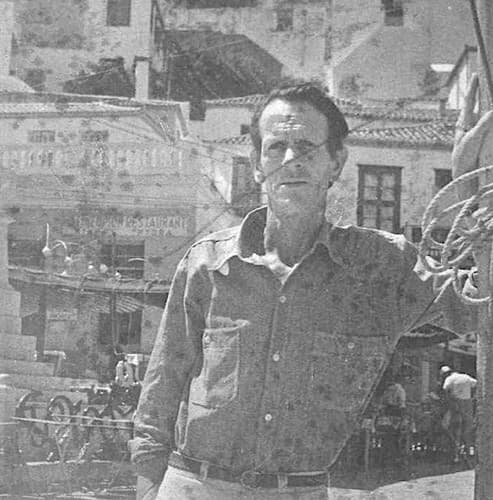
Biography coming soon.







