“The past is a country we can never truly leave, no matter how far we travel.”
— Reflecting on the enduring impact of past trauma and displacement.

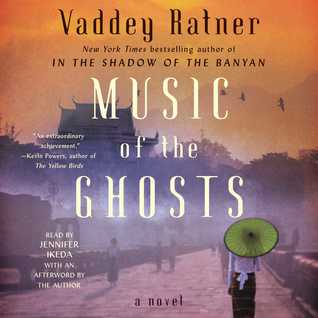
Vaddey Ratner (2017)
Genre
Literary Fiction / Historical Fiction / Mystery
Reading Time
540 min
Key Themes
See below
Sign in to track this book
A young Cambodian American woman returns to her homeland, guided by a mysterious letter, to find out what happened to her father in a Khmer Rouge prison and face a nation trying to heal.
Teera, living in America after escaping Cambodia as a child, receives a letter from an anonymous sender calling himself 'the Old Musician.' The letter claims to know about her father, who disappeared during the Khmer Rouge regime twenty-five years ago and was presumed dead in prison. This letter makes Teera want answers, forcing her to face her traumatic past and the country she fled. Despite her fears, the chance to understand her father's fate outweighs her apprehension, sending her back home.
Teera arrives in Phnom Penh, experiencing many sights and sounds and fragmented memories. The city is busy with modern life but still shows the scars of the Khmer Rouge era. She sees a society where former perpetrators and survivors live together, trying to rebuild their lives. Teera feels the collective trauma in the country, connecting her personal search to the broader national healing process. Her first days are marked by disorientation and a careful reacquaintance with the culture she left.
Teera finds the Old Musician, an elderly man who plays ceremonial music at a temple. Their first meeting is cautious, full of unspoken worries. The Musician, whose real name is Serey, is slow to tell the whole truth, instead offering glimpses into her parents' lives before and during the Khmer Rouge's rise. He speaks of their idealism and their initial, mistaken belief in the regime's promises for a new society, hinting at the complex loyalties and betrayals of that time.
While in Phnom Penh, Teera meets Dr. Rithy, a kind young doctor. Their first meetings are professional, but a deeper connection forms. Dr. Rithy represents a new generation of Cambodians, committed to healing and rebuilding, and his presence offers Teera stability and understanding during her emotional turmoil. He helps her navigate modern Cambodian society and provides emotional support as she looks into her family's past. Their relationship contrasts with the heavy historical narrative.
Serey gradually tells Teera about his close bond with her parents, explaining how they were all young intellectuals who believed in the Khmer Rouge's promise of a perfect society. He describes their shared love for art, music, and social change, and how they first saw the revolution as a way to a better Cambodia. This makes Teera's understanding of her parents more complex, forcing her to reconcile the loving figures from her memory with their youthful political beliefs. Serey's memories paint a picture of a time before the darkness.
Serey recounts the shift from revolutionary ideals to the brutal reality of the Khmer Rouge regime. He describes forced evacuations, harsh labor camps, starvation, and constant fear of execution. He details the destruction of Cambodian society, the persecution of intellectuals, and the loss of human dignity. Through his painful memories, Teera begins to understand the suffering her parents endured and the impossible choices people had to make to survive or protect loved ones.
The story reaches its emotional peak as Serey finally reveals details of Teera's father's imprisonment. He describes the prison, the conditions, and the events leading to his disappearance. Serey confesses his own role and presence during that time, dealing with guilt and his secrets. He explains the complex loyalties, betrayals, and self-preservation that defined life in the camps, giving Teera the painful, long-awaited truth about her father's last days and his death.
With the full truth, Teera is overwhelmed by grief, anger, sorrow, and a deep sense of loss. She revisits her own buried childhood memories, which resurface clearly, helping her connect the fragmented pieces of her past. The revelations force her to rethink her understanding of her parents, her country, and herself. This is a turning point, as Teera begins the process of understanding the traumatic history that shaped her life.
Through her talks with Serey and her growing understanding of the Khmer Rouge era, Teera begins to see the nuances of survival and the impossible choices people faced. She learns about the deep fear and psychological manipulation that led good people to commit or allow terrible acts. This understanding, though painful, opens a path towards empathy and the possibility of forgiveness — not for the regime's perpetrators, but for the complex human actions within it, and for herself in dealing with this legacy. She starts to forgive her parents for their youthful idealism, and Serey for his delayed confession.
With the truth of her father's fate known, Teera finds some peace. The burden of the unknown is lifted, allowing her to begin healing. Her relationship with Dr. Rithy deepens, symbolizing a connection to Cambodia's present and future. She recognizes that while the past can never be erased, understanding it allows for a more complete and hopeful future. Teera decides to stay in Cambodia for a time, embracing her heritage and helping with the country's recovery, finding love and belonging among the past's ghosts.
The Protagonist
Teera moves from a state of unresolved grief and fragmented memories to a place of understanding, acceptance, and a renewed connection to her heritage and a hopeful future.
The Supporting
Serey moves from silence and the burden of guilt to confession and a measure of redemption through sharing the truth.
The Supporting
Dr. Rithy remains a stable and supportive figure, helping Teera navigate her emotional journey and offering her a future connection to Cambodia.
The Mentioned
His story is revealed retrospectively, detailing his descent from idealism to tragic victimhood.
The Mentioned
Her arc is largely in the past, one of survival and silent endurance, shaping Teera's present.
The novel explores how historical trauma, specifically the Cambodian genocide, continues to shape the lives of survivors and their descendants. Teera's journey is driven by her childhood memories and unresolved grief for her father, showing how the past, even when suppressed, affects the present. Cambodia's collective memory, still dealing with its violent history, mirrors Teera's personal struggle to piece together her traumatic past. Serey's reluctance to share his story highlights the lasting pain and difficulty of facing horrific memories, while his confession shows that remembrance is necessary for healing. The novel shows that memory is not just facts, but a deeply emotional and transformative process.
““The past is not dead. It is not even past.””
Teera's journey is a quest for truth about her father's fate, driven by a need for closure. The elusive nature of this truth, hidden for decades, reflects the broader Cambodian experience where many families still do not know what happened to their loved ones. The story emphasizes that truth, even when painful, is essential for healing and moving forward. Serey's role as the bearer of this truth highlights the moral need to bear witness and the courage required to face uncomfortable realities. The novel suggests that while complete closure might be impossible, understanding and acceptance can come from pursuing truth.
““The truth, like a river, always finds its way to the sea, no matter how many dams are built to hold it back.””
A central theme is the complex and often painful process of forgiveness, both personal and national. Teera must grapple with forgiving her parents for their youthful idealism that led them to support the Khmer Rouge, and Serey for his delayed confession and his own role as a survivor making impossible choices. The novel explores the idea that forgiveness is not excusing atrocities, but releasing oneself from anger and bitterness. It extends this to the national level, where Cambodia struggles with reconciliation between victims and perpetrators, trying to move forward without forgetting the past. It suggests that true reconciliation requires empathy and understanding of the human condition under duress.
““Forgiveness is not about forgetting. It is about remembering without anger.””
Music and art are symbols of resilience, memory, and healing throughout the novel. Serey, the 'Old Musician,' uses his music not only to survive but also to connect with the past and express unspoken emotions. The ceremonial music he plays at the temple embodies the enduring spirit of Cambodian culture, a link to tradition that survived the regime's attempts to destroy it. Music becomes a language beyond words, able to express grief, hope, and the continuity of life. It helps characters access and process their deepest feelings when words fail.
““Music carries the ghosts of our past, the echoes of our joys and sorrows, and the whispers of what is yet to come.””
A letter from 'the Old Musician' that initiates Teera's journey.
The mysterious letter serves as the inciting incident, a classic narrative hook that propels Teera, and thus the reader, into the story. Its anonymity and vague promise of information about her father create immediate suspense and a sense of destiny. It functions as a call to adventure, forcing Teera to confront her past and embark on a physical and emotional journey back to Cambodia. Without this catalyst, Teera's quest for truth would likely remain dormant, making the letter crucial for the plot's initiation and the unveiling of the central mystery.
Serey's recollections of the past, often triggered by Teera's questions.
The novel heavily relies on Serey's detailed recollections and fragmented flashbacks to reveal the history of Teera's parents and the atrocities of the Khmer Rouge. This device allows the author to gradually unveil the complex political and personal history, building suspense and providing context for Teera's present-day emotional struggle. The retrospective nature emphasizes the enduring power of memory and the difficulty of confronting a traumatic past, mirroring the way survivors often process their experiences in layers over time. It creates a dialogue between past and present, showing how historical events continue to shape contemporary lives.
Music as a metaphor for memory, culture, and healing.
Music, particularly the ceremonial and traditional Cambodian forms, is a pervasive symbol. It represents the enduring spirit of Cambodian culture that survived the genocide, a vessel for memory, and a means of emotional expression beyond words. Serey, the 'Old Musician,' embodies this, using his craft to connect with the past and process his own trauma. The music acts as a bridge between the present and the painful past, allowing characters to access deep emotions and find a path towards healing and cultural continuity. It is a testament to the resilience of the human spirit and artistic expression.
Teera's physical return to Cambodia.
Teera's physical journey back to Cambodia is a powerful metaphorical device. It symbolizes her internal journey to confront her past, her heritage, and her identity. The act of returning to the place of her trauma forces her to face buried memories and the collective suffering of her homeland. This 'journey home' is not just about a geographical location, but about finding a sense of belonging, understanding her roots, and ultimately, finding peace within herself by reconciling with her personal and national history. It represents a pilgrimage towards truth and self-discovery.
“The past is a country we can never truly leave, no matter how far we travel.”
— Reflecting on the enduring impact of past trauma and displacement.
“Sometimes, silence speaks louder than any scream.”
— Describing the unspoken suffering and hidden histories of characters.
“Grief is a ghost that lingers, a shadow that follows, even when you try to outrun it.”
— A character's internal struggle with the loss of loved ones.
“Truth is often a mosaic, broken pieces that only reveal the full picture when carefully reassembled.”
— The protagonist's journey to uncover the truth about her family's past.
“The heart remembers what the mind tries to forget.”
— Referring to the emotional residue of past events.
“There are some wounds that time can never truly heal, only scar over.”
— Discussing the lasting effects of war and genocide.
“Music, like memory, has a way of transporting you back to places you thought you'd left behind.”
— The role of music in evoking memories and connecting to the past.
“To forgive is not to forget, but to release the prisoner of the past.”
— A contemplation on the nature of forgiveness in the face of immense suffering.
“Every family has its ghosts, whispers of what was and what could have been.”
— Exploring the hidden histories and secrets within families.
“The most dangerous lies are the ones we tell ourselves.”
— A character's self-deception regarding their past actions or beliefs.
“Hope is a fragile melody, easily lost but desperately sought.”
— The search for hope amidst despair and trauma.
“We carry the stories of our ancestors, whether we know them or not, in the very marrow of our bones.”
— The intergenerational impact of historical events.
“Sometimes, the greatest courage is simply to keep breathing, to keep living, despite everything.”
— Reflecting on the resilience of survivors in the face of unimaginable hardship.
“The weight of unspoken words can be heavier than any physical burden.”
— The impact of silence and unshared truths on individuals.
Ready to see how well you understood this book? Take our interactive quiz with 10 questions.







