“Goldie did not like rules. She did not like them at all.”
— Introducing Goldie's rebellious nature early in the story.

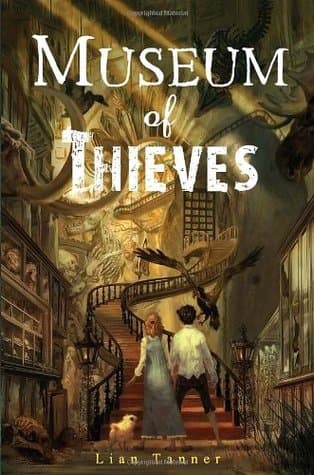
Lian Tanner (2010)
Genre
Fantasy / Children's / Mystery / Young Adult
Reading Time
312 min
Key Themes
See below
Sign in to track this book
In the oppressive city of Jewel, a bold and impatient girl named Goldie flees her fate, only to discover a talent for thievery within the shifting walls of the mysterious Museum of Dunt, where she must outwit a tyrannical guardian to save those she loves.
Goldie Roth, a twelve-year-old girl in the regulated city of Jewel, looks forward to her Separation Day, when she will be unchained from her family and allowed individual freedom. Jewel is a city where impatience and boldness are crimes, enforced by Blessed Guardians who wear black cloaks and carry whips. Children are chained to their parents or guardians until Separation Day. To Goldie's dismay, the High Minister announces the cancellation of all future Separation Days, citing a new 'Protection Law.' This news devastates Goldie, who secretly has a bold and impatient nature, qualities forbidden in Jewel. Feeling trapped and defiant, Goldie decides to run away, a choice full of danger in their restrictive society.
Driven by her rebellious spirit, Goldie escapes her home and the watchful eyes of the Blessed Guardians. She navigates Jewel's labyrinthine streets, a place she has only ever seen while chained, and makes her way to the city's outskirts. Her journey is dangerous, as she fears being caught and returned to her family, who would face severe punishment. Eventually, she finds the fabled Museum of Dunt, a colossal and ancient building rumored to be haunted. Intrigued and desperate for shelter, Goldie goes inside, unknowingly stepping into a world more complex and dangerous than the one she left behind.
Upon entering the Museum of Dunt, Goldie discovers it is not abandoned. She first meets a young boy named Toadspit, who is agile and secretive, and seems to know the museum's shifting layout well. He is wary at first but eventually leads her deeper into the museum. Goldie then meets the elderly Curator, a kind but eccentric man who oversees the museum's vast and often unpredictable collection. She also meets the Curator's granddaughter, also named Goldie, a quiet and timid girl who contrasts with our protagonist's bold personality. This small, unconventional community reveals that the museum itself is alive and constantly changing.
Goldie quickly learns that the Museum of Dunt is no ordinary building. Its rooms, corridors, and even entire wings shift and rearrange, making navigation a constant challenge. The Curator explains that the museum 'thinks' and 'moves' and that its layout is never static. Goldie, with her innate boldness and keen observation skills, discovers an aptitude for understanding the museum's logic, a talent that even the Curator and Toadspit sometimes struggle with. She begins to learn the tricks of 'thieving' through the museum, not by stealing objects, but by understanding its pathways and 'stealing' knowledge of its movements. This discovery suggests a deeper connection between Goldie and the museum.
While Goldie adapts to life in the Museum, the external threat from Jewel grows. The Blessed Guardians, commanded by the manipulative High Minister, are actively searching for Goldie. More ominously, the High Minister reveals his true intentions: he seeks to control the Museum of Dunt, believing it holds immense power that he can exploit to solidify his tyrannical rule over Jewel. His interest is not in preserving its history or understanding its magic, but in subjugating it. The Guardians are seen patrolling closer to the museum, and their presence threatens the safety of Goldie, the Curator, Toadspit, and the museum itself.
Through her interactions with Toadspit, Goldie learns more about his history. He was also a runaway from Jewel, abandoned or orphaned and finding refuge in the museum. He is fiercely protective of the Curator and the museum, viewing it as his only home. The Curator reveals that the Museum of Dunt is not just a collection of artifacts; it is a living entity designed to protect dangerous and forgotten knowledge, stories, and feelings that the city of Jewel has suppressed. It stores the very things the Blessed Guardians seek to eradicate, making it a symbol of defiance against their oppressive regime.
The High Minister's patience runs out, and he orchestrates a full-scale invasion of the Museum of Dunt. Armed with special devices to track and control the museum's movements, the Blessed Guardians breach its defenses. The Curator, Toadspit, and Goldie try to use the museum's shifting nature to confuse and trap the invaders, but the Guardians' numbers and technology are formidable. The High Minister, with his cold determination, systematically takes control of various sections of the museum, intending to strip it of its power and transform it into a tool for his own purposes. The museum's existence, and the freedom it represents, is in danger.
With the Museum under siege, Goldie realizes that her unique ability to understand and anticipate the museum's movements is their only hope. She, Toadspit, and the Curator's granddaughter, the other Goldie, must navigate the chaotic, shifting rooms, avoiding the Guardians and trying to understand the High Minister's plan. Goldie's 'thieving' skills, honed by her innate boldness and observation, allow her to predict the museum's shifts, find hidden passages, and even manipulate its layout. She devises a daring plan to outmaneuver the High Minister, relying on her quick thinking and her deep connection to the museum's living architecture.
Goldie's plan leads to a direct confrontation with the High Minister. She leads him and his elite Guardians into a trap within the museum's most unpredictable sections. Using her knowledge of the museum's 'feelings' and movements, she orchestrates a series of shifts that confuse and disorient the invaders. During the confrontation, Goldie exposes the High Minister's true motivations: his desire to suppress all independent thought and emotion, and his fear of the museum's power to awaken such things. She shows that his control is based on fear and ignorance, while the museum thrives on chaos and freedom. Her boldness directly challenges his authority.
Goldie defeats the High Minister, either by trapping him within the museum's shifting walls or by discrediting him in front of his own Guardians. With the High Minister's power broken, the Museum of Dunt is safe from external control. The Curator, Toadspit, and Goldie begin restoring the museum to its natural, chaotic state. More importantly, the events at the museum affect Jewel. The suppression of feelings and individuality, enforced for so long, begins to unravel. The museum's magic, now unimpeded, starts to subtly influence the city, hinting at a future where the citizens of Jewel might reclaim their own emotions and freedoms. Goldie, having saved the museum, finds her true place within its walls.
The Protagonist
Goldie transforms from a constrained, rebellious child into a confident and capable leader, embracing her unique 'thieving' abilities to save the Museum and challenge tyranny.
The Supporting
Toadspit learns to trust others more deeply through his friendship with Goldie, becoming a more open and courageous protector of the museum.
The Supporting
The Curator continues his lifelong mission, finding renewed hope and a powerful ally in Goldie, ensuring the museum's future.
The Antagonist
The High Minister's ambition and control are ultimately shattered by Goldie and the Museum's inherent power.
The Supporting
The Guardians remain largely static, serving as the oppressive force, though their authority is challenged by Goldie's actions.
The Supporting
The Curator's granddaughter, while remaining true to her gentle nature, finds courage through her experiences with the protagonist Goldie.
The Mentioned
Her character remains largely static, serving to illustrate the oppressive nature of Jewel and the fears it instills.
This is the central conflict of the story. Jewel represents extreme control, where individuality, emotion, and free will are suppressed by the High Minister and the Blessed Guardians. Children are chained, and 'impatience' and 'boldness' are crimes. The Museum of Dunt, in contrast, embodies freedom, chaos, and the preservation of dangerous, unapproved knowledge and feelings. Goldie's journey is a quest for personal freedom and the liberation of the museum from the High Minister's control. Her act of running away is the ultimate rejection of this oppressive system, and her fight for the museum is a fight for the freedom of all.
“In Jewel, impatience was a sin and boldness a crime. Goldie Roth was guilty of both.”
The Museum of Dunt is not just a building; it is a living repository of stories, memories, and forgotten histories that Jewel actively tries to erase. The Curator explains that the museum protects 'dangerous knowledge' and 'feelings.' The High Minister seeks to control the museum precisely because he understands the power that history and narrative hold in shaping identity and fostering dissent. Goldie's ability to 'read' the museum's shifting layout is like understanding a complex narrative, and by protecting the museum, she safeguards collective memory and the potential for a richer, more authentic future for Jewel.
“The Museum of Dunt was a place where things were kept, not just objects, but stories and feelings too.”
Goldie's journey is one of self-discovery. In Jewel, her 'boldness' and 'impatience' were flaws. In the Museum, these traits become her greatest strengths, allowing her to understand and navigate its chaotic nature. She discovers her unique talent for 'thieving' the museum, which is not about stealing objects, but about intuitively understanding complex systems and finding hidden pathways. This theme shows that true strength comes from embracing one's unique qualities, even if society deems them undesirable. Her arc demonstrates that one must break free from societal constraints to find and fulfill their true potential.
“She had always been both impatient and bold, and now, finally, those things were not a crime.”
The concept of 'home' changes for Goldie throughout the story. Initially, home is her oppressive, chained existence in Jewel. When she runs away, she searches for a place where she can truly belong and be free. The Museum of Dunt, with its chaotic yet welcoming nature, becomes her true home. It is a place where she is accepted for who she is, where her unique talents are valued, and where she finds a new family in Toadspit and the Curator. This theme explores the idea that home is not necessarily a physical structure but a place of belonging, acceptance, and freedom.
“The museum was a place where everything was in its right place, even if that place changed every day.”
A literal chain symbolizing the oppression and lack of freedom in Jewel.
The silver guardchain is a potent symbol of the tyrannical control exerted by the Blessed Guardians in Jewel. Every child wears one, physically linking them to their parents or guardians until 'Separation Day.' This device vividly illustrates the lack of individual freedom and the constant surveillance under which the citizens live. Goldie's desperate act of running away and breaking free from her chain is a powerful moment of rebellion and a clear rejection of Jewel's oppressive system. Its cancellation signals an even tighter grip of the state.
A living, dynamic building that constantly changes its layout, reflecting chaos and freedom.
The Museum of Dunt is not a static building; its rooms, corridors, and entire sections constantly shift and rearrange themselves. This dynamic architecture serves multiple functions: it creates a constant sense of mystery and challenge, acts as a natural defense mechanism against intruders (especially the linear-thinking Guardians), and symbolizes the chaotic, unpredictable nature of freedom and individuality that Jewel actively suppresses. Goldie's unique ability to 'read' these shifts is key to navigating and ultimately saving the museum.
An intuitive ability to understand and navigate complex, shifting systems, rather than stealing objects.
Goldie's 'thieving' talent is a unique plot device that defines her character and her role in the story. It's not about stealing physical objects, but about her innate ability to anticipate patterns, understand the logic of complex, shifting environments (like the museum), and find hidden pathways. This skill is a direct manifestation of her 'bold' and 'impatient' nature, which were considered vices in Jewel. It highlights the idea that what society deems a flaw can, in another context, be a profound strength and the key to solving complex problems.
The forbidden feelings and information that Jewel seeks to erase, but which the Museum protects.
The narrative establishes that Jewel suppresses not just actions but also emotions and knowledge deemed 'dangerous.' The Museum of Dunt acts as a sanctuary for these very things – forgotten stories, dangerous ideas, and even suppressed feelings. This device underscores the High Minister's fear of anything that fosters independent thought or feeling, as it could undermine his control. The museum's role in preserving these 'treasures' makes it a symbol of hope and a vital counterpoint to Jewel's oppressive regime, highlighting the importance of emotional and intellectual freedom.
“Goldie did not like rules. She did not like them at all.”
— Introducing Goldie's rebellious nature early in the story.
“The city of Jewel was a city of rules. Thousands of them. Millions.”
— Describing the oppressive nature of Jewel and its bureaucracy.
“Stealing was not a crime in the Museum. It was a skill.”
— Explaining the unique morality and practices within the Museum.
“Sometimes you have to break the rules to do what's right.”
— A key theme of the book, often exemplified by Goldie's actions.
“A good thief knows not just what to take, but what to leave behind.”
— One of the lessons taught about the art of thievery in the Museum.
“Fear was a useful thing. It kept you alive. But too much fear could kill you just as surely as a sharp knife.”
— Goldie reflecting on the balance of fear and courage.
“The Museum had a way of keeping its secrets. And its inhabitants.”
— Highlighting the mysterious and protective nature of the Museum.
“There were whispers, of course. There were always whispers in Jewel.”
— Indicating the prevalence of rumor and unspoken dissent in the city.
“You can't steal what isn't yours. But everything in the Museum belongs to everyone, in a way.”
— The paradoxical ownership and philosophy of the Museum.
“Sometimes, the biggest treasures aren't shiny and gold. Sometimes they're just a way out.”
— Goldie realizing the true value of freedom and escape.
“The Grand Curator had a smile that didn't quite reach his eyes.”
— Describing the unsettling and deceptive nature of the Grand Curator.
“A rule isn't a rule if you don't know it's there.”
— Goldie's pragmatic approach to navigating the myriad of rules.
“The past isn't just something you look at in a museum. It's something you live.”
— A deeper reflection on history and its living impact.
“Even a thief can have a conscience. Sometimes, especially a thief.”
— Exploring the moral complexities of the characters within the Museum.
Ready to see how well you understood this book? Take our interactive quiz with 10 questions.

Biography coming soon.







