“The only way to be absolutely safe in this world is to be dead.”
— Lord Peter contemplates the dangers of life and the detective profession.

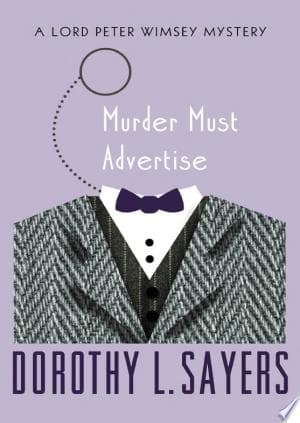
Dorothy L. Sayers (2012)
Genre
Historical Fiction / Mystery
Reading Time
9-10 hours
Key Themes
See below
Sign in to track this book
Undercover as a copywriter, Lord Peter Wimsey enters the 1930s London advertising world, facing catapults, cocaine, and cricket to find the killer who pushed a colleague down a staircase.
Victor Dean, a copywriter at Pym's Publicity, is found dead at the bottom of the agency's iron spiral staircase. The official cause is accidental death, but the police, especially Superintendent Kirk of Scotland Yard, are suspicious. Dean had recently been fired and was known to gamble heavily. His death happened shortly after a party, and there are rumors of a drug ring connection. The agency's founder, Mr. Pym, wants to protect the firm's reputation. The staff, including the ambitious Mr. Tallboy and the mysterious Miss Meteyard, react to the death with varying levels of shock and indifference, showing the competitive nature of their work.
To investigate Victor Dean's death, Lord Peter Wimsey, a famous amateur detective, pretends to be Death Bredon, a seemingly naive and awkward copywriter. Bredon is hired to replace Dean at Pym's Publicity. Peter carefully creates his new identity, with specific clothes and mannerisms, to fit into the agency. He starts observing the staff, noting their interactions, rivalries, and possible motives. His initial clumsy act helps him gather information without raising too much suspicion, though his sharp mind occasionally surprises his new colleagues.
As Death Bredon, Lord Peter Wimsey quickly learns about the advertising world, which he finds both interesting and morally unclear. He attends brainstorming sessions, writes copy for products, and handles office politics, including competition between departments and pressure to create effective campaigns. He sees the superficiality and focus on image, which often hides deeper truths. His work on campaigns for 'Whifflets' cigarettes and 'Nutrax' nerve tonic gives him insight into the agency's work and the personalities of his colleagues, such as the efficient Mr. Smayle and the artistic Mr. Copley.
Pym's Publicity holds its annual cricket match against another agency, a social event Lord Peter uses. As Death Bredon, he plays in the match, watching his colleagues in a more relaxed setting. During the game, he notices a strange interaction involving Mr. Tallboy and a mysterious package. More importantly, he finds a small, folded piece of paper in Victor Dean's old desk with a cryptic message. This discovery confirms his belief that Dean's death was not an accident and suggests a hidden network or conspiracy within or around the agency, possibly involving the drug trade.
Lord Peter's investigation shows that Victor Dean was involved with a dangerous drug ring, using his job at Pym's as a cover. Dean was not only a gambler but also a dealer and user. Peter learns that Dean was involved with Dian de Momerie, a high-society woman with a cocaine addiction. The drug ring operates through a network of seemingly respectable people, using coded messages and discreet drop-offs. Peter realizes Dean's death was likely a result of his involvement in this illegal trade, perhaps as punishment or an attempt to silence him.
A strange incident happens during a social gathering when a small catapult launches a note at a guest. This seemingly minor event is a coded message, revealing a blackmail scheme against Dian de Momerie, who is threatened by the drug ring. Lord Peter, using his dual identity, understands the importance of the catapult and the message. He connects this to Dean's past actions and the wider group of people involved in the drug trade and blackmail. The incident shows the manipulative tactics of the criminals and the vulnerability of their victims, especially those from wealthy backgrounds.
Lord Peter's investigation leads him to two women named Diana who are important to the case. One is Dian de Momerie, the wealthy cocaine addict and blackmail victim. The other is Diana Dorsett, a seemingly innocent employee at Pym's Publicity. Peter realizes that the criminals are using the confusion between the two women, using Diana Dorsett as a pawn or a distraction in their plans. This discovery complicates the investigation, forcing Peter to carefully tell the difference between the two and understand their roles in the drama.
Through careful questioning and observation, Lord Peter identifies a key suspect, who, under pressure, admits their part in the drug ring and blackmail scheme, but not Dean's murder. This confession gives important details about the operation and the identities of other members. With this information, Peter, working with Superintendent Kirk, plans a trap to catch the true mastermind behind Victor Dean's death and the entire criminal group. The plan involves a staged event to make the murderer reveal themselves.
The trap is set, and the true identity of Victor Dean's murderer and the leader of the drug ring is revealed to be Mr. Tallboy, the ambitious and seemingly respectable advertising executive. Tallboy, motivated by greed and a desire to remove anyone who threatened his illegal operations, had pushed Dean down the stairs. He had carefully built his public image to avoid suspicion, using his position at Pym's as a perfect cover. His unmasking shocks the agency, exposing the dark side of a world that values image and perception.
Mr. Tallboy is arrested and faces justice for his crimes. The drug ring is broken up, and those involved are held accountable. Lord Peter Wimsey stops being Death Bredon and returns to his true identity, though his time at Pym's affects him. He thinks about how advertising shapes perceptions and hides reality, noting the irony that a business built on selling illusions also provided a perfect cover for a murderer. The case ends, but the themes of identity, truth, and deceptive appearances remain.
The Protagonist
From a detached observer, he becomes deeply immersed in the world of advertising, grappling with its ethical ambiguities while maintaining his commitment to truth.
The Antagonist
Initially presented as a competent executive, his true nature as a cunning and ruthless criminal is slowly exposed, leading to his downfall.
The Supporting
He moves from initial skepticism to full collaboration and trust in Lord Peter's methods.
The Mentioned
His life and death serve as the catalyst for the entire plot, revealing the dark underbelly of society.
The Supporting
She moves from being a manipulated victim to a more aware, though still vulnerable, individual after the drug ring is exposed.
The Supporting
She remains largely unchanged, but her role in the mistaken identity plot is crucial to the investigation.
The Supporting
He maintains his focus on the agency's image, largely unaffected by the deeper criminal revelations.
The Supporting
She remains a keen observer, her perspective highlighting the intricacies of the agency's social fabric.
This theme is central to the novel, appearing through Lord Peter's undercover role as Death Bredon and the advertising industry itself. The novel constantly compares outward appearances with hidden truths. Pym's Publicity, which sells images and illusions, becomes the perfect cover for a criminal operation. Characters like Mr. Tallboy appear respectable but secretly lead double lives as drug lords. The confusion between Dian de Momerie and Diana Dorsett further shows how similar looks can hide very different truths, making Peter look beyond the surface to find the truth about Victor Dean's death.
“What is an advertisement? It is a lie, an illusion, a suggestion. Truth has nothing to do with it.”
The novel explores identity, especially through Lord Peter becoming Death Bredon. He carefully builds his new identity, including mannerisms, speech, and a 'history,' showing that identity can be a performance. This theme is reflected in advertising, where brands create artificial identities for products to attract consumers. The characters at Pym's also play roles – the ambitious executive, the artistic copywriter, the efficient secretary – often hiding their true selves or intentions. The effort to maintain a fake identity, and eventually shedding it, is a key part of Peter's journey.
“It was difficult to remember sometimes that he was not really Death Bredon, but Lord Peter Wimsey.”
Dorothy L. Sayers, a former advertising copywriter, uses the novel to criticize the ethical issues of the advertising industry. The constant pursuit of sales, the manipulation of consumer desires, and the creation of artificial needs are all examined. Characters debate the morality of their work, with some accepting its deceptive nature and others expressing doubt. The irony is clear: a business built on 'selling' illusions provides the perfect place for a murderer, as both advertising and crime involve convincing people of something untrue. The novel suggests a parallel between advertising's persuasive tactics and criminals' deceptive practices.
“Advertising is the only profession that can lie with impunity.”
The novel subtly explores the strict class structures of 1930s England. Lord Peter Wimsey's aristocratic background contrasts sharply with the middle-class world of Pym's Publicity, yet he moves between both skillfully. Dian de Momerie shows how even the upper classes are vulnerable to social pressures and hidden problems like drug addiction. The confusion between her and the working-class Diana Dorsett highlights social differences and the dangers of unclear boundaries. The criminal underworld crosses class lines, involving people from different social levels, showing that wrongdoing and deception are not limited to one group.
“The great thing about advertising was that it didn't care who you were, only what you could sell.”
The presence of a drug ring and subsequent blackmail scheme highlights the harmful effect of vice on individuals and society. Victor Dean's involvement in gambling and drug dealing directly leads to his death. Dian de Momerie's addiction makes her a tool in the criminal's game, ruining her life and reputation. The drug trade is shown as a dark current beneath respectable society, attracting people from all walks of life, including the seemingly upright Mr. Tallboy. The novel demonstrates how vice can break moral boundaries and lead to violence and exploitation, exposing human vulnerability to temptation.
“The drug traffic, like advertising, was a business built on human weakness.”
Lord Peter Wimsey assumes a false identity to infiltrate the crime scene.
The entire mystery hinges on Lord Peter Wimsey going undercover as Death Bredon. This device allows the protagonist to gain an insider's perspective, observe suspects in their natural environment, and gather information without revealing his true intentions. It creates dramatic tension as Peter must constantly maintain his facade, and it allows for a deeper exploration of the setting – the advertising agency – and its unique culture. The 'Death Bredon' persona also serves as a foil, highlighting Wimsey's true intelligence when it occasionally breaks through.
The confusion between two characters with similar names complicates the investigation.
The confusion between Dian de Momerie and Diana Dorsett is a key plot device. This similarity in names is intentionally exploited by the criminals to obscure their activities and confuse investigators. It forces Lord Peter to meticulously untangle who is who and what role each 'Diana' plays, adding layers of complexity to the mystery. This device not only creates suspense but also reinforces the theme of deceptive appearances, as a simple name can lead to profound misunderstandings and misdirection.
Cryptic notes and unusual objects serve as hidden communications for the criminals.
The use of coded messages, such as the note found in Victor Dean's desk and the catapult incident, is a crucial plot device. These cryptic communications are designed to be understood only by those 'in the know,' allowing the drug ring to operate secretly. Lord Peter's ability to decipher these codes and understand their significance is pivotal to cracking the case. This device adds an intellectual challenge to the mystery and highlights the cunning of the criminals, who use seemingly innocent objects or phrases to convey illicit information.
The physical setting of the crime, a dangerous and symbolic structure.
The iron spiral staircase at Pym's Publicity is more than just the site of Victor Dean's death; it functions as a symbolic plot device. Its inherent danger and 'deathtrap' nature make an accidental fall plausible, initially obscuring the murder. Symbolically, it represents the treacherous and cutthroat environment of the advertising agency itself, where one wrong step can lead to a downfall. It is a constant reminder of the crime and the underlying dangers within the seemingly ordinary office setting, creating an atmospheric and foreboding presence throughout the narrative.
“The only way to be absolutely safe in this world is to be dead.”
— Lord Peter contemplates the dangers of life and the detective profession.
“Advertising is the modern substitute for argument; its function is to make the worse appear the better reason.”
— Lord Peter, disguised as Death Bredon, reflects on the nature of advertising.
“People who are always talking about their honesty are like women who are always talking about their virtue.”
— Peter observes the hypocrisy of certain characters.
“It's a mistake to think you can solve any major problems just with one easy solution.”
— Peter discusses the complexity of crime and its resolution.
“The whole point of a detective story is that it should be a game. And a game should be fair.”
— Lord Peter on the conventions and expectations of the mystery genre.
“One does not have to be mad to work in advertising, but it helps.”
— A wry observation about the advertising industry.
“The greatest enemy of truth is very often not the lie—deliberate, contrived and dishonest—but the myth—persistent, persuasive and unrealistic.”
— Peter considers the insidious nature of advertising's influence.
“There are some things which are not done, even in advertising.”
— A character expresses a boundary, even within a morally flexible industry.
“The human mind, like the human body, is a thing to be kept in training.”
— Lord Peter, ever the intellectual, values mental exercise.
“It's amazing how much more you notice when you're not looking for anything in particular.”
— An observation on the serendipitous nature of discovery.
“The only really satisfactory way to murder somebody is to make it look like an accident.”
— A cynical remark on the ideal crime from a criminal perspective.
“One cannot be too careful with facts. They are so apt to get distorted in the telling.”
— Peter reflects on the unreliability of testimony and information.
“Most people, when they come to think of it, don't know what they want until they are told.”
— A profound insight into consumer psychology and the power of advertising.
“The world is full of obvious things which nobody by any chance ever observes.”
— Lord Peter's musings on human perception and oversight.
Ready to see how well you understood this book? Take our interactive quiz with 10 questions.
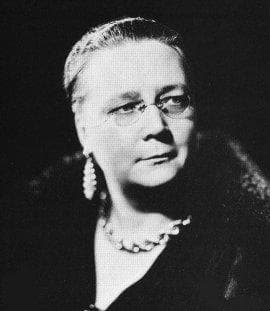
Dorothy Leigh Sayers was an English crime writer and poet. She was also a student of classical and modern languages.







