“The young man looked at her, and it was quite clear that he thought her the most charming and delightful old lady he had ever met.”
— Luke Fitzwilliam's first impression of Miss Pinkerton.

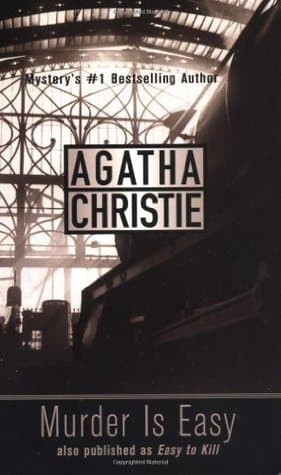
Agatha Christie (1853)
Genre
Thriller / Mystery
Reading Time
288 min
Key Themes
See below
Sign in to track this book
When a seemingly eccentric old woman on a train warns of a serial killer in her quaint village before dying herself, ex-policeman Luke Fitzwilliam is drawn into a web of 'accidental' deaths, only to discover that in Wychwood, murder is terrifyingly easy to disguise.
Luke Fitzwilliam, a retired police officer from India, is on a train to London. He meets an elderly woman, Miss Lavinia Pinkerton. She tells him she thinks a serial killer is at work in her quiet village of Wychwood-under-Ashe. She describes several recent deaths, including Major Horton, Tommy Pearce, and Mrs. Cooper, all ruled accidents or natural causes. Miss Pinkerton believes these are murders and even names Dr. Humbleby, the local doctor, as the next target. Fitzwilliam is skeptical, but her conviction bothers him. He dismisses her claims as an old woman's ramblings, but her sincerity leaves an impression.
Soon after their train journey, Luke Fitzwilliam reads in the newspaper that Miss Lavinia Pinkerton has died in London, hit by a car in a hit-and-run. Though it seems accidental, the timing worries Fitzwilliam. He then sees another report: Dr. Humbleby, the man Miss Pinkerton named as the next victim, has died in Wychwood-under-Ashe from blood poisoning after a minor operation. These two deaths, exactly as Miss Pinkerton predicted, make Fitzwilliam take her claims seriously. He decides to investigate himself, believing that if Miss Pinkerton was right, a dangerous killer is still in Wychwood.
Determined to find the truth, Luke Fitzwilliam travels to Wychwood-under-Ashe. He pretends to be a man collecting folklore for a book. He uses this as an excuse to interview villagers and subtly gather information about the deceased and their relationships. He stays at The Bell Inn, the local pub, and starts watching the community. He quickly finds that the village has much gossip and hidden tensions under its calm surface. Fitzwilliam begins to piece together the events around the earlier deaths, looking for connections and inconsistencies that might point to a murderer.
During his investigation, Luke Fitzwilliam meets Bridget Conway, a young woman engaged to the wealthy, older Lord Easterfield. Bridget is lively and quickly becomes Luke's helper and confidante. He also meets other key villagers, including Canon Pennefather, a seemingly forgetful scholar; Mrs. Horton, the widow of the first victim; and Rivers, Lord Easterfield's suspicious butler. Luke initially considers several villagers as possible suspects, including the unusual Miss Waynflete and the village lawyer, Mr. Ellsworthy. He observes the complex social interactions and hidden resentments in Wychwood-under-Ashe, realizing that almost anyone could have a reason for murder.
As Luke Fitzwilliam continues his secret investigation, the supposed 'accidents' do not stop. Mrs. Horton, Major Horton's widow, dies after accidentally drinking hat dye, mistaking it for cough medicine. Her death is quickly blamed on her known forgetfulness, but Luke sees it as another carefully planned murder. Then, a local cat is found dead, poisoned, which is dismissed as a random event. These increasing events strengthen Luke's belief that a clever and ruthless killer is systematically removing those who might know or suspect something about previous crimes, or simply those who are inconvenient.
Luke and Bridget Conway start working more closely, discussing the people and events in Wychwood. Their suspicions fall on several individuals. They consider if the killer targets people who knew something specific about the past, or whose deaths benefit someone in particular. They look at Miss Waynflete, who seems to know a lot about everyone, and Mr. Ellsworthy, the lawyer, who handles many villagers' affairs. The unusual behavior of some villagers, and the seemingly unimportant details of their lives, become possible clues as they try to understand the killer's pattern and reason.
Bridget Conway has a close call when a car almost hits her. Luke believes this was an attempt on her life, further proving the killer's desperation. This event energizes their investigation. Later, Luke and Bridget find an important detail: the murderer seems to target people who, in some way, remind them of a past bad event or injustice, or who might reveal a dark secret. The killer's pattern is not random; it is driven by a twisted sense of justice or a need for control. This helps them focus on psychological motivation rather than just opportunity.
Through careful thought and observation, Luke Fitzwilliam and Bridget Conway finally identify the killer: Honoria Waynflete. Miss Waynflete, who first appears as an unusual but harmless single woman, is revealed to be a careful and cold-blooded murderer. Her reason is not greed or strong emotion, but a twisted sense of order and a desire to 'clean up' the world by removing those she considers undesirable, inconvenient, or 'untidy'. She carefully arranges each death to look accidental. Her seemingly harmless presence in the village helps her gather information and carry out her plans without suspicion. Her intelligence and lack of emotion make her very dangerous.
Luke Fitzwilliam confronts Honoria Waynflete, showing her the evidence he has collected. She does not deny her actions. Instead, she calmly confesses, explaining her twisted ideas. She believes she is helping by removing 'unnecessary' or 'troublesome' people from society, seeing them as flaws in her ideal world. She describes how she planned each 'accident,' from Major Horton's death to Mrs. Horton's poisoning, and even her attempt on Bridget's life. Her confession is unsettlingly rational and shows no regret, revealing her deep mental issues and careful planning.
After her confession, Honoria Waynflete is arrested, ending the fear in Wychwood-under-Ashe. The village, initially slow to believe in a serial killer, is shocked by the news of Miss Waynflete's guilt. With the immediate danger gone, Luke Fitzwilliam's work is finished. He and Bridget Conway, having worked so closely and formed a strong bond, realize their feelings for each other. Bridget breaks off her engagement to Lord Easterfield, choosing a future with Luke. They decide to leave Wychwood-under-Ashe, looking forward to a life together, leaving the quiet village to slowly recover from the horrors it has faced.
The Protagonist
From a skeptical outsider, Luke evolves into a dedicated detective who risks his life to expose a killer, ultimately finding love and a new purpose.
The Supporting
She serves as the initial prophet of danger, whose tragic death validates her warnings and sets the plot in motion.
The Supporting
She breaks free from a restrictive engagement, finding her voice and true love while actively participating in solving the murders.
The Antagonist
Her true nature as a cold, calculating serial killer is gradually revealed, culminating in her calm confession.
The Supporting
He remains largely static, representing the societal complacency that allows the murders to continue, ultimately losing Bridget.
The Mentioned
His death confirms Miss Pinkerton's chilling prediction, propelling Luke's investigation.
The Mentioned
His death is the initial event in the series of murders, establishing the killer's modus operandi.
The Supporting
Her death, disguised as an accident due to her absent-mindedness, further solidifies Luke's belief in a serial killer.
The Supporting
He remains a static character, representing academic detachment and the unobservant innocence of some villagers.
The Supporting
He serves as a red herring, diverting initial suspicion before the true killer is revealed.
The novel shows how evil can hide under a surface of respectability and calm. Wychwood-under-Ashe looks like a peaceful English village, but it has many murders. The killer, Honoria Waynflete, exemplifies this theme. She appears to be a harmless, respected single woman while carefully planning and committing murders. Luke Fitzwilliam's initial dismissal of Miss Pinkerton's warnings shows how easily appearances can trick, highlighting the danger of judging by first impressions.
“'Murder is easy,' said Miss Pinkerton, 'when no one believes it's murder.'”
A main theme is seeking justice when a system fails to recognize and prosecute a clever killer. The official rulings of 'accident' or 'natural causes' for the first deaths show a great injustice. Luke Fitzwilliam, a former police officer, feels he must act when official justice fails. The killer, Honoria Waynflete, also acts under her own twisted idea of 'justice,' believing she is 'cleaning up' the world by removing those she considers unwanted. This contrast between societal justice, individual moral duty, and a killer's warped beliefs drives the story.
“'These things that look like accidents, they are not accidents. They are deliberate. They are murder.'”
The story contrasts Miss Pinkerton's sharp intuition, and later Bridget Conway's, with Luke Fitzwilliam's initial doubt and logical, evidence-based approach. Miss Pinkerton's gut feeling about the murders is dismissed by others, including Luke, until her own death proves her 'unfounded' suspicions. Luke then has to combine his professional investigative skills with the more subtle, intuitive insights gained from observing village life and personality quirks. This theme suggests that sometimes, a gut feeling can be a more accurate measure of danger than purely logical reasoning, especially with a very deceptive criminal.
“'You see, I know people. And I know when things are not right.'”
The theme of the ordinary nature of evil is shown through Honoria Waynflete. She is not a monstrous figure in appearance or behavior. She is a seemingly ordinary, even respected, member of the community. Her reason for murder is not strong emotion or greed, but a cold, almost bureaucratic desire for 'tidiness' and control. She commits her crimes with careful planning and no remorse, making her actions more unsettling because they come from such an 'ordinary' person. This shows how deep evil can exist in the most unexpected and unassuming forms.
“'Oh, I merely tidy things up, you know. There are so many untidy people in the world.'”
The novel quietly explores how social class and hierarchy work in the English village. Lord Easterfield, with his wealth and influence, represents the upper levels, while characters like Rivers the butler or Tommy Pearce are at different levels. These social structures often decide who is believed, whose life is valued, and how crimes are seen. The killer uses these social dynamics to her advantage, knowing that certain deaths will be more easily dismissed as accidents due to the victim's perceived status or habits. Luke Fitzwilliam, as an outsider, can see these dynamics with a fresh view.
“'You'd be surprised how much people don't notice, especially when they don't want to.'”
A series of murders disguised as everyday accidents or natural causes.
This is the central plot device. The killer meticulously orchestrates each murder to appear as an unfortunate accident (falling down stairs, hat dye poisoning, blood poisoning from a minor operation). This device not only makes the killer incredibly difficult to identify but also creates a pervasive sense of unease and doubt. It challenges the conventional understanding of crime, forcing Luke to look beyond the obvious and question every seemingly innocuous event, transforming the village into a landscape of potential danger where nothing can be trusted at face value.
The village's collective interpretation of events as 'accidents' creates a false narrative.
While the novel doesn't have a single unreliable character narrator in the traditional sense, the collective narrative of the villagers and authorities, who consistently label the deaths as 'accidents,' functions as an unreliable account of events. This widespread misinterpretation is a crucial plot device, allowing the killer to operate undetected. Luke Fitzwilliam's role is to dismantle this unreliable narrative and expose the truth, highlighting how easily a community can be deceived by its own desire for order and peace, even in the face of mounting evidence.
Luke Fitzwilliam, a former colonial police officer, investigates a local English village.
Luke Fitzwilliam's status as an outsider, recently returned from India, is a key plot device. He lacks the ingrained biases and social connections of the villagers, allowing him to observe the community with fresh eyes and question assumptions that locals would take for granted. His external perspective enables him to see the pattern in the 'accidents' that the villagers, accustomed to their quiet lives, overlook. This device is common in Christie's work, allowing for a detached yet incisive analysis of closed communities.
Miss Pinkerton's initial, dismissed warning that proves tragically accurate.
Miss Pinkerton's encounter with Luke Fitzwilliam on the train serves as a vital plot device. Her detailed, yet initially unverified, predictions about the serial killer and the next victim are crucial. Her subsequent death, mirroring the 'accidents' she described, elevates her warning from mere 'ramblings of an old woman' to undeniable truth. This device not only hooks the reader and the protagonist but also establishes the immediate credibility of the seemingly outlandish premise, propelling Luke into action and giving the investigation a personal urgency.
Numerous characters are introduced with plausible motives or suspicious behaviors.
Christie masterfully employs a gallery of red herrings. Characters like Mr. Ellsworthy (the solicitor with access to wills), Miss Waynflete (initially presented as an eccentric but harmless figure), and various villagers with hidden resentments are all given just enough suspicious detail to divert Luke's and the reader's attention. This device keeps the audience guessing and adds complexity to the investigation, making the eventual revelation of the true, often unexpected, killer more impactful and surprising, while also showcasing the intricate social web of the village.
“The young man looked at her, and it was quite clear that he thought her the most charming and delightful old lady he had ever met.”
— Luke Fitzwilliam's first impression of Miss Pinkerton.
“Murder is easy, you see, when no one believes you.”
— Miss Pinkerton's chilling observation to Luke.
“It's always the quiet ones, isn't it? The ones you'd least suspect.”
— A common sentiment expressed by characters when discussing the killer.
“People are very good at deceiving themselves about what they want to believe.”
— Luke reflecting on human nature and self-deception.
“One can always find a reason for anything, if one looks hard enough.”
— Luke pondering the justifications people create.
“There are some people who are better out of the world than in it.”
— A dark thought expressed by a character, hinting at the killer's mindset.
“She had a way of looking at you, as if she knew all your secrets.”
— A description of Mrs. Humbleby's unsettling gaze.
“The truth is often the most unlikely thing.”
— A classic detective trope, as Luke struggles to uncover the killer.
“It’s amazing what people will do for money, or love, or even just for spite.”
— Luke contemplating various motives for murder.
“He had the feeling that he was walking into a spider's web.”
— Luke's growing apprehension as he investigates in Wychwood.
“The most dangerous people are those who appear to be harmless.”
— A key theme of the novel, as the killer hides in plain sight.
“There are certain things one just knows, without being able to prove them.”
— Luke's intuitive understanding about certain characters.
“It was a very nice, ordinary, English village. And that was precisely what was so terrifying about it.”
— Luke's realization about the deceptive normalcy of Wychwood.
“The greatest weapon against crime is common sense.”
— A practical observation about solving mysteries.
Ready to see how well you understood this book? Take our interactive quiz with 10 questions.
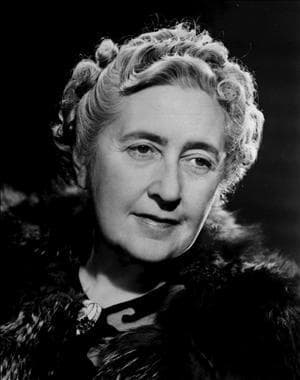
Dame Agatha Mary Clarissa Christie, Lady Mallowan, was an English writer known for her 66 detective novels and 14 short story collections, particularly those revolving around fictional detectives Hercule Poirot and Miss Marple. She also wrote the world's longest-running play, the murder mystery The Mousetrap, which has been performed in the West End since 1952. A writer during the "Golden Age of Detective Fiction", Christie has been called the "Queen of Crime". She also wrote six novels under the pseudonym Mary Westmacott. In 1971, she was made a Dame (DBE) by Queen Elizabeth II for her contributions to literature. Guinness World Records lists Christie as the best-selling fiction writer of all time, her novels having sold more than two billion copies.







