“The human heart is an abyss.”
— Spoken by Dr. Leidner, reflecting on human nature and the capacity for evil.

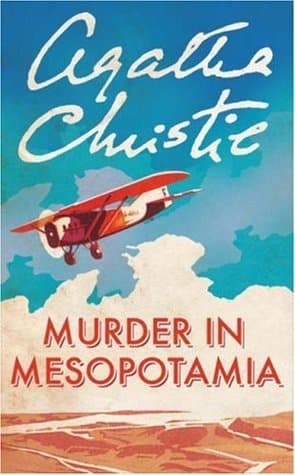
Agatha Christie (1936)
Genre
Thriller / Mystery
Reading Time
260 min
Key Themes
See below
Sign in to track this book
At a Mesopotamian archaeological dig, a nurse becomes involved in a series of murders, leading Hercule Poirot to find the killer before more people die.
Nurse Amy Leatheran, an English nurse, is hired by Dr. Eric Leidner, an American archaeologist, to care for his wife, Louise, at an excavation site near Hassanieh, Iraq. Dr. Leidner explains that Louise has nervous attacks and vivid visions, believing someone is trying to harm her. At Tell Yarimjah, Nurse Leatheran meets the diverse group of archaeologists and assistants: Richard Carey, Father Lavigny, Mr. Mercado, Captain Maitland, Miss Johnson, Miss Reilly, and the Coleman couple. Louise Leidner, beautiful and manipulative, is a complex patient. Nurse Leatheran sees the strained relationships in the compound, especially Louise's effect on the men, and feels an underlying tension and fear, confirming Dr. Leidner's warning about his wife's mental state and her belief she is in danger.
Louise Leidner tells Nurse Leatheran the real reason for her fear. She says her first husband, Frederick Bosner, was violent and possessive and that she thought he died in a train wreck in America. However, after marrying Dr. Leidner, she started getting anonymous letters threatening her life, signed 'Frederick.' Louise believes Bosner is alive and seeking revenge. She describes a recent event where a heavy stone mortar almost hit her head, strengthening her belief that someone at the dig is trying to kill her. Nurse Leatheran at first thinks these claims are part of Louise's nervous condition but starts to take them seriously as Louise tells vivid details of the threats and her past, including a scary story about a face at her window.
One afternoon, after a rest, Louise Leidner is found dead in her room, hit by a heavy stone mortar. The room was locked from the inside, and the window was also secured by an iron grille. Dr. Leidner, Nurse Leatheran, and the others are shocked. The local police, led by Captain Maitland, are called, but the murder circumstances are confusing. There seems to be no way an intruder could have entered or left the room. Nurse Leatheran, despite her initial doubt about Louise's 'visions,' now understands the seriousness of the threats Louise described. The murder makes the archaeological camp fearful and suspicious, with everyone a potential suspect in the dig house.
Hercule Poirot, the Belgian detective, is traveling through Iraq and is asked by Captain Maitland to help with the case. Poirot arrives at Tell Yarimjah and starts his careful investigation, interviewing each expedition member. He pays close attention to Nurse Leatheran's accounts of Louise's fears and confessions. Poirot inspects the murder scene, the locked room, and the compound, looking for any missed detail that might explain the impossible crime. His presence changes the tense atmosphere, as everyone faces his sharp observations and questions, bringing out hidden resentments and secrets among the group.
Poirot looks into Louise Leidner's past, especially her first marriage to Frederick Bosner. His inquiries show that Bosner was not just violent but a criminal involved in spying, and that his death in the train wreck was real, confirmed by records. This makes Louise's story about 'Frederick' sending threats more complicated. Poirot concludes that someone else must have pretended to be Bosner or used his name to scare Louise. He considers that the 'threats' were a psychological plan to make Louise paranoid, making her murder seem like the end of long persecution, rather than a sudden act.
As Poirot's investigation continues, a second tragedy happens. Father Lavigny, the French scholar who was working on ancient tablets and seemed close to a major discovery, is found dead. His death is at first called a heart attack, but Poirot suspects murder, given the timing and suspicious details around his work. It seems Lavigny might have found something that pointed to the murder or the 'Frederick' letters. This second death confirms Poirot's belief that a dangerous killer is in the camp, willing to kill anyone who gets close to the truth, and puts everyone on high alert.
The violence continues with the poisoning of Miss Johnson, Dr. Leidner's long-time secretary and assistant. She gets sick after drinking water and dies soon after. Poirot concludes that Miss Johnson, a quiet but observant woman, must have been close to finding the murderer, or perhaps had already made an important connection. Her careful nature and loyalty to Dr. Leidner made her a threat to the killer. This third death confirms a pattern of killing witnesses or those who pose a risk, showing the killer's desperation and the complex deception at the isolated archaeological compound, making Poirot work harder to find the killer before more lives are lost.
After gathering all information and carefully analyzing the alibis, motives, and psychological profiles of each suspect, Poirot gathers the remaining expedition members. He systematically explains the impossible nature of Louise Leidner's locked-room murder, showing how the window grille helped create the illusion. Poirot reveals that the 'Frederick' letters were a trick, not from a resurrected husband, but from someone in the camp. He then exposes the murderer, a person whose reason was a deep desire to eliminate Louise and start a new life, having planned a long and detailed deception.
Hercule Poirot reveals that the murderer of Louise Leidner, Father Lavigny, and Miss Johnson is Dr. Eric Leidner himself. Poirot explains that Dr. Leidner was Louise's *first* husband, Frederick Bosner, who faked his death in a train wreck years ago to escape a criminal past. He then remarried Louise under a new identity, only to find her still manipulative and destructive. When Louise recognized him, or was close to doing so, and threatened his new life, he planned her murder. He sent the 'Frederick' letters to himself and Louise to create the illusion of an outside threat, deflecting suspicion from himself. His reason was to silence Louise and start a new life, while keeping his respected archaeological career.
Poirot explains Dr. Leidner's clever method for the locked-room murder. Dr. Leidner, as Frederick Bosner, knew Louise's psychological weaknesses. He sent the threatening letters himself, making her paranoid. On the day of the murder, he put the heavy stone mortar on the window sill outside Louise's room. He called to her from outside the window, bringing her close. When she came near, he hit her through the iron grille with the mortar, then quickly pulled it back, making it seem like the blow came from inside. The 'locked room' illusion continued because Louise herself locked the door from the inside, and the window grille, though it looked secure, allowed the fatal blow from outside by a person who was supposedly not Bosner, but was Bosner disguised as Leidner.
Poirot clarifies why the later murders happened. Father Lavigny was killed because he had found old letters or documents that showed Dr. Leidner's real identity as Frederick Bosner, perhaps through his work with ancient texts or by recognizing handwriting. Miss Johnson, an observant and loyal assistant, was killed because she started to notice inconsistencies or something wrong with Dr. Leidner's behavior or alibis, possibly realizing the truth about the 'Frederick' letters or the threats. Dr. Leidner killed both to protect his secret and stop his plan from falling apart, showing his cold and calculating nature and his willingness to kill anyone who threatened his new identity.
The Protagonist
Poirot's arc is less about personal development and more about the application of his established genius, culminating in his triumphant exposure of a cunning killer.
The Supporting/Narrator
She transitions from a skeptical observer to a central witness, her initial disbelief giving way to a deeper understanding of human malevolence.
The Antagonist
Initially appearing as a sympathetic figure, his true identity and murderous intent are gradually revealed by Poirot, exposing him as the villain.
The Victim
Her arc is primarily as a catalyst; her life and past actions lead directly to her murder, which drives the entire plot.
The Supporting
He remains a suspect due to his past, but is ultimately cleared, highlighting the red herrings in the investigation.
The Victim
Her arc is one of unwitting proximity to the truth, leading to her tragic death as she begins to piece together the puzzle.
The Victim
His arc is brief but crucial, as his accidental discovery of a key piece of information leads to his murder, deepening the mystery.
The Supporting
He serves as the initial authority figure who recognizes his limitations and wisely defers to Poirot's superior abilities.
The Supporting
He is presented as a suspicious character, but ultimately proves to be innocent of the murders, serving as a red herring.
The Supporting
She remains a background figure, her primary role being to support her husband and add to the ensemble of potential suspects.
The Supporting
They remain minor characters, their primary role being to fill out the cast of potential suspects and provide general reactions to the events.
The novel uses deception, most notably the reveal that Dr. Eric Leidner is Frederick Bosner, Louise Leidner's first husband who faked his death. This theme shows how people can create new lives to escape their pasts. Louise herself is manipulative, using her beauty and charm to control others. The 'Frederick' letters, at first seeming like outside threats, are part of Dr. Leidner's deception, meant to scare Louise and mislead suspicion. Poirot's investigation is about removing these layers of lies to find the true identities and reasons.
“'It is the psychology, the human factor, that interests me most.'”
Love, or a twisted version of it, and obsession drive the main villain. Dr. Leidner's initial love for Louise led him to marry her, but her manipulative nature turned that love into a desperate need for freedom, ending in murder. His obsession with keeping his new identity and escaping his past makes him ruthless. Louise is a character who inspires both strong adoration and strong hatred, her beauty causing destructive emotions in those around her, including Richard Carey's lingering resentment. The novel shows how deep emotional ties, when twisted, can lead to violence and death.
“'She was one of those women who draw men like magnets, but who also seem to have a strange power of wrecking their lives.'”
The remote archaeological dig site at Tell Yarimjah acts as a small version of human society, cut off from the outside world. This isolation increases the psychological tension and suspicion among the small group. Once the murders start, everyone is trapped together, facing the possibility that one of them is a killer. The lack of outside influences means the investigation must focus entirely on the group's internal dynamics and secrets. This isolation increases paranoia, making every look, conversation, and personal history a potential clue or source of fear. Nurse Leatheran often mentions the confined atmosphere.
“'In a small community like ours, every word, every glance, every gesture is noticed and commented upon.'”
The novel questions what is real and what is perceived. Louise Leidner's 'visions' and fears are at first dismissed as nervous attacks, only to be tragically proven true by her murder. The 'Frederick' letters are presented as threats from a ghost, but are actually a carefully made deception by the killer. Poirot's skill is his ability to look past the surface, challenge assumptions, and tell the difference between carefully built illusions and the real truth. The story, told through Nurse Leatheran's view, shows how easily people can be fooled by appearances and how hard it is to find the truth when dealing with a clever deceiver.
“'The truth, however ugly in itself, is always beautiful in its simplicity.'”
The seemingly impossible murder of Louise Leidner in a securely locked and barred room.
The murder of Louise Leidner presents as a classic locked-room mystery. She is found bludgeoned to death in her room, which was locked from the inside, and the window was secured by a heavy iron grille. This impossibility is the central puzzle that Poirot must solve. The device creates immediate intrigue and challenges the reader to consider how such a crime could be committed. Poirot meticulously examines the physical layout of the room and the compound, eventually revealing an ingenious, yet simple, method that exploited the limitations of perception and the victim's own vulnerabilities, rather than supernatural means or complex mechanisms.
Nurse Leatheran's limited perspective and initial skepticism influence the early understanding of events.
While not overtly unreliable, Nurse Amy Leatheran's narration subtly shapes the reader's perception. She is a practical, no-nonsense woman who initially dismisses Louise Leidner's fears as 'nervous imaginings.' This initial skepticism, combined with her limited knowledge of the archaeological world and the complex pasts of the characters, leads the reader to also doubt Louise's claims. Her perspective, though detailed, is subjective and incomplete, allowing Poirot to later reveal layers of truth that were invisible to her, and thus to the reader. Her 'ordinariness' makes the extraordinary events seem even more shocking when the truth is revealed.
Multiple characters with plausible motives and suspicious behaviors designed to mislead the investigation.
Christie masterfully employs numerous red herrings to deflect suspicion from the true killer. Richard Carey, with his past affair and volatile temper, is a strong initial suspect. Mr. Mercado's suspected illicit dealings in antiquities and his illness also raise questions. The general atmosphere of resentment and unease surrounding Louise Leidner ensures that almost everyone at the dig has a plausible, albeit minor, motive. These characters and their suspicious behaviors serve to complicate the investigation, providing alternative explanations and diverting Poirot's, and the reader's, attention away from the actual murderer until the very end.
The killer's use of 'Frederick' letters and implied threats to terrorize Louise Leidner.
A key plot device is the psychological manipulation employed by the killer against Louise Leidner. The anonymous letters, purportedly from her first husband, Frederick Bosner, are designed to systematically terrorize Louise and drive her to a state of extreme paranoia. This campaign of psychological warfare serves multiple purposes: it makes her appear mentally unstable, thus diminishing the credibility of her claims; it provides a ready-made explanation for her eventual death (that Bosner finally caught up with her); and it deflects suspicion from the actual killer, who is ostensibly trying to protect her. This device highlights the killer's cunning and their deep understanding of Louise's vulnerabilities.
“The human heart is an abyss.”
— Spoken by Dr. Leidner, reflecting on human nature and the capacity for evil.
“It is so easy to be clever when one knows the answer.”
— Hercule Poirot's observation on the ease of solving a crime once the perpetrator is known.
“One does not have to be a murderer to understand murder.”
— Poirot explaining his ability to empathize with the criminal mind.
“Always distrust the obvious.”
— A key piece of advice from Poirot regarding the initial appearance of facts in a case.
“People with a secret are always more interesting.”
— Nurse Leatheran's reflection on the intriguing nature of the people she encounters.
“It is the little things, Mademoiselle, that are by far the most important.”
— Poirot emphasizing the significance of small details in his investigations.
“One never knows what goes on in other people's minds.”
— A general observation on the unknowable nature of others' thoughts and motives.
“Truth, however ugly in itself, is always beautiful in effect.”
— Poirot's philosophical take on the ultimate value of discovering the truth.
“Everyone is a potential murderer.”
— A dark thought expressed by one of the characters, highlighting the latent capacity for violence in humanity.
“The past is never dead. It's not even past.”
— Reflecting on how past events and relationships continue to influence the present.
“A man who is afraid of nothing is a man to be afraid of.”
— A shrewd observation about the dangerous nature of someone utterly without fear.
“It is not the spectacular that is important, but the commonplace.”
— Poirot again stressing the importance of everyday observations over dramatic events.
“The greatest crimes are not committed for money, but for love.”
— A cynical yet often true statement about the powerful motivations behind severe crimes.
“There are times when one must act without knowing everything.”
— A pragmatic view on the necessity of making decisions in the face of incomplete information.
Ready to see how well you understood this book? Take our interactive quiz with 10 questions.
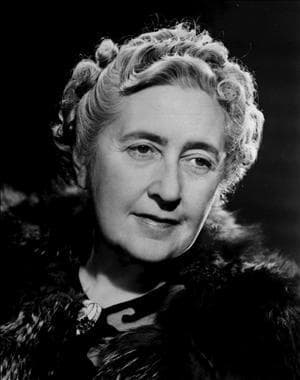
Dame Agatha Mary Clarissa Christie, Lady Mallowan, was an English writer known for her 66 detective novels and 14 short story collections, particularly those revolving around fictional detectives Hercule Poirot and Miss Marple. She also wrote the world's longest-running play, the murder mystery The Mousetrap, which has been performed in the West End since 1952. A writer during the "Golden Age of Detective Fiction", Christie has been called the "Queen of Crime". She also wrote six novels under the pseudonym Mary Westmacott. In 1971, she was made a Dame (DBE) by Queen Elizabeth II for her contributions to literature. Guinness World Records lists Christie as the best-selling fiction writer of all time, her novels having sold more than two billion copies.







