“I am not a beggar. I am a person who needs help.”
— Shauzia asserts her dignity while living on the streets of Peshawar.

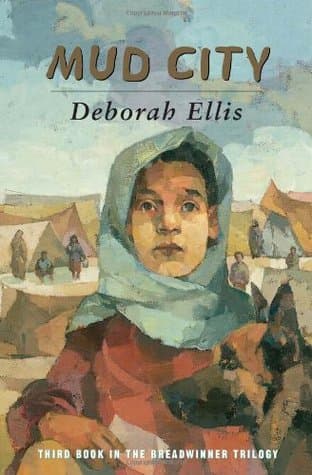
Deborah Ellis (2003)
Genre
Children's / Historical Fiction / Young Adult
Reading Time
150 min
Key Themes
See below
Sign in to track this book
Determined to escape a Pakistani refugee camp, fourteen-year-old Shauzia navigates Peshawar's streets, finding brief safety and hope before returning to her past.
Fourteen-year-old Shauzia, who escaped war-torn Kabul by dressing as a boy to earn money, now lives in a large refugee camp outside Peshawar, Pakistan. She dreams of a different life, far from the dust, hunger, and hopelessness of the camp. She works small jobs, like carrying water and helping in a shop, but these efforts barely provide enough to live. The camp is crowded and lacks basic services. The future seems grim, constantly reminding Shauzia of her displacement and the ongoing war in Afghanistan. She feels trapped and wants freedom and a chance to build a new life.
Wanting independence and a better future, Shauzia decides to leave the refugee camp and try her luck in Peshawar. She becomes a street beggar, a hard and often dangerous life. She meets a young boy named Hassan, also a street child, and they form a partnership, sharing what little they earn and looking out for each other. Shauzia saves every coin, dreaming of buying passage on a ship to France, a place she imagines as safe and prosperous. Her days are a constant fight against hunger, tiredness, and the threat of harm, but her dream keeps her going.
While begging, Shauzia meets a man who seems kind and offers her money for a small job. She trusts him and follows him, only to be accused of stealing by the man himself, who had set a trap. Local police arrest her and put her in a crowded, dirty jail cell. This experience terrifies Shauzia, who has never been imprisoned. She spends a night filled with fear, despair, and the realization of how vulnerable she is on the streets. Her dreams of France seem to fall apart under the weight of her situation, and she feels completely alone.
The next morning, as Shauzia's hope fades, she is rescued. A kind American woman named Mrs. Henderson, whom Shauzia had met while begging, arrives at the jail with her husband. They had seen Shauzia on the streets and felt sympathy for her. They pay for her release and take her from the prison. Shauzia is overwhelmed with relief and confusion, unsure what this sudden kindness means for her future. She is careful about trusting but grateful for her new freedom.
The Hendersons take Shauzia to their comfortable home in a residential part of Peshawar. For the first time in a while, Shauzia experiences a normal life. She receives clean clothes, regular meals, a warm bed, and even toys, things she has not had since before the war in Kabul. She interacts with the Hendersons' children, who are kind and welcoming. Shauzia enjoys the safety and comfort, a sharp contrast to her previous life in the camp and on the streets. She begins to imagine a future where she might stay with this family, feeling a sense of belonging she has not known in years.
Just as Shauzia begins to settle in and hope the Hendersons might adopt her, disaster happens. The Hendersons receive news that they must leave Pakistan sooner than expected. Their plans change suddenly, and they tell Shauzia they cannot take her with them. Shauzia is heartbroken; her brief taste of security and a loving home is gone. The Hendersons arrange for her return to the refugee camp, leaving Shauzia feeling abandoned. The dream of a stable life with them vanishes, replaced by the harsh reality of her displacement once more.
Shauzia returns to the refugee camp, a place she had tried hard to escape. The camp, with its dust, poverty, and endless tents, now feels even more oppressive after her brief comfort. She struggles to adjust, finding it harder to endure the hardships she once faced with fierce resolve. The familiar faces and routines of the camp offer little comfort, as her dreams of France and a new life seem more distant than ever. She feels a deep sense of loss and disappointment, making her old choices and ways of coping feel insufficient.
Despite the problems, Shauzia's strong spirit slowly returns. She realizes that while her dream of France is still there, she needs a more practical and immediate plan. She begins to consider other ways to earn money and secure her future, perhaps focusing on education or a more stable job in the camp or nearby. She starts to observe her surroundings more carefully, looking for chances. Her experiences have made her tougher but also given her a clearer understanding of the world and her own abilities, strengthening her desire to control her destiny.
As Shauzia adjusts to her return to the camp, she starts to notice the struggles of the younger children around her. She offers help and advice to those who are lost or hungry, sharing what little she has and some of her street knowledge. This act of kindness, initially unexpected even by herself, brings her a surprising sense of purpose and connection. She begins to build relationships with other children and some adults, realizing that while she still wants to escape, she is not entirely alone. This new community provides a different kind of strength.
The book ends with Shauzia still in the refugee camp, but with a changed outlook. Her dreams of France remain, but they are now balanced with a deeper understanding of reality and the importance of strength and self-reliance. She knows her path out of the camp will be long and hard, but she is determined to make it happen. Her experiences have taught her valuable lessons about trust, survival, and how quickly comfort can disappear. Shauzia is no longer just a girl running from her past; she is a young woman shaping her future, one step at a time, even if the destination is uncertain.
The Protagonist
Shauzia transforms from a fiercely independent, somewhat isolated dreamer into a more grounded and empathetic individual who still holds onto her dreams but understands the value of community and practical steps.
The Supporting
Hassan remains largely static, serving as a reflection of the street children's plight and a temporary companion for Shauzia.
The Supporting
Mrs. Henderson's arc is brief, serving as a catalyst for Shauzia's temporary experience of comfort and subsequent disappointment.
The Supporting
Mr. Henderson's arc is limited to his role in facilitating Shauzia's temporary stay with his family.
The Antagonist
The dishonest man's role is purely functional, serving as a catalyst for Shauzia's arrest and subsequent rescue.
The Mentioned
The jail guard has no personal arc, serving only to facilitate a plot point.
The Supporting
The camp residents serve as a constant reminder of Shauzia's origins and the broader refugee crisis, not undergoing individual arcs.
A main theme of the book is Shauzia's strength when facing constant difficulty. From escaping Kabul to surviving in a refugee camp and on Peshawar's streets, she always adapts and finds ways to get by. Her determination to save money for passage to France, even after being imprisoned and disappointed, shows her strong will to survive and build a better life. This theme is clear in her ability to recover after every problem, always finding a new plan or renewed purpose.
“She was like a tiny weed, pushing through concrete, determined to find the sun.”
Shauzia's journey is a constant struggle between her dreams of a peaceful life in France and the realities of being a refugee. The book shows how her dreams give her purpose and hope, but also how they are challenged and broken by difficult events, like her arrest and the Hendersons' sudden departure. This theme shows how hard it is to escape one's past and how aspirations are often out of reach for those in desperate situations, forcing Shauzia to continually change her expectations.
“France, she thought. France was freedom, and clean streets, and beautiful clothes, and food, and no bombs.”
Shauzia is an orphan, displaced from her home, always looking for a place where she feels safe, accepted, and belongs. The refugee camp offers a temporary, shared home, but she wants more. Her short stay with the Hendersons gives her a taste of a loving, stable home, only for it to be taken away, making her feel even more rootless. This theme highlights the human need for connection and a stable environment, and the emotional cost of displacement for children who have lost everything.
“She wanted a place where she could just be Shauzia, not a refugee, not a beggar, not a girl dressed as a boy.”
The book clearly shows how vulnerable street children and refugees, especially girls, are to harm. Shauzia's encounter with the dishonest man who frames her, leading to her imprisonment, is a clear example. Her constant fear of being robbed, abused, or arrested shows how uncertain her life is. This theme reveals the lack of protection and justice for children who are marginalized and the constant threats they face daily.
“The streets of Peshawar were a hungry beast, always ready to snatch a child who wasn't careful.”
The Hendersons' actions represent the theme of outside help and individual kindness. Their help is important in rescuing Shauzia and offering her a temporary safe place, but their inability to provide a permanent solution shows the limits and often temporary nature of such aid. The book suggests that while kindness can offer relief, it often cannot completely solve the larger problems refugees face, leaving them to rely on their own strength. This theme explores the complexities of humanitarian efforts and personal charity.
“Kindness was like a small fire on a cold night. It kept you warm for a while, but it didn't last forever.”
Narrative perspective focused solely on Shauzia's thoughts and experiences.
The story is told from a third-person limited perspective, closely following Shauzia's internal thoughts, feelings, and observations. This narrative choice immerses the reader directly into Shauzia's experience, allowing for a deep understanding of her struggles, fears, and hopes. By restricting the narrative to her viewpoint, the author emphasizes the subjective reality of a refugee child, making her journey more personal and impactful. This enhances empathy and highlights the isolation Shauzia often feels.
France represents an idealized future, freedom, and escape.
Throughout the book, France serves as a powerful symbol for Shauzia. It represents not just a geographical location, but an idealized future free from war, poverty, and the constant struggle for survival. It embodies freedom, peace, and the chance for a new, normal life. Her dream of reaching France drives many of her actions, from begging on the streets to saving every coin. The symbol highlights her yearning for an escape from her current reality and the hope she clings to, even when it seems impossible.
Highlighting the distinct challenges and opportunities of two different environments.
The narrative frequently contrasts Shauzia's experiences in the refugee camp with her time on the streets of Peshawar and, briefly, in the Hendersons' home. The camp represents communal hardship, stagnation, and a certain kind of safety in numbers, while the city streets offer potential for earnings but also extreme danger and isolation. The Hendersons' home provides a stark contrast of comfort and security. This device effectively illustrates the different facets of a refugee's struggle for survival and the varying degrees of hope and despair found in each setting.
Shauzia's journey begins and ends in the refugee camp, but with altered perspective.
The plot features a subtle circular structure, as Shauzia begins in the refugee camp, leaves to seek her fortune, experiences a brief period of comfort, and ultimately returns to the camp. However, her return is not a return to the starting point; her experiences have changed her. This device emphasizes that while external circumstances may remain similar, internal growth and a shift in perspective can fundamentally alter one's relationship to those circumstances. It highlights her resilience and the enduring nature of her struggle, but also her newfound maturity.
“I am not a beggar. I am a person who needs help.”
— Shauzia asserts her dignity while living on the streets of Peshawar.
“The world is full of people who don't see you unless you make them see you.”
— Shauzia reflects on her invisibility as a homeless child.
“Hope is a dangerous thing. It makes you think you can change things.”
— Shauzia contemplates her struggles and dreams.
“Sometimes the only way to stay alive is to pretend you're already dead.”
— Shauzia describes her coping mechanism for harsh street life.
“A home isn't a place. It's a feeling of being safe.”
— Shauzia muses on the concept of home after losing hers.
“War doesn't end when the fighting stops. It lives inside you.”
— Shauzia reflects on the lasting impact of conflict.
“You can't eat pride, but sometimes it's all you have left.”
— Shauzia defends her self-respect in desperate circumstances.
“Every story has an end, but not every end is the one you want.”
— Shauzia contemplates her uncertain future.
“The sky doesn't care if you're rich or poor. It's the same for everyone.”
— Shauzia finds solace in nature's impartiality.
“Courage isn't about not being afraid. It's about being afraid and doing it anyway.”
— Shauzia pushes herself to keep going despite fear.
“A friend is someone who sees the storm in your eyes and doesn't look away.”
— Shauzia values genuine connection amid hardship.
“The hardest battles are the ones you fight with yourself.”
— Shauzia struggles with inner conflicts and decisions.
“Sometimes the smallest kindness can feel like a revolution.”
— Shauzia experiences a rare act of generosity.
“You don't need a map to find your way. You need a reason to keep moving.”
— Shauzia motivates herself to continue her journey.
Ready to see how well you understood this book? Take our interactive quiz with 10 questions.

Deborah Ellis is a Canadian author known for her young adult fiction, particularly her "Breadwinner" series. Her works, including "Bifocal" and "Mud City," often explore themes of social justice, war, and the resilience of young people in difficult circumstances. Ellis has received numerous awards for her impactful storytelling.

Dan Gemeinhart
4.5

Kate O'Hearn
4.4

Jeanne Birdsall
4.4

Jen Wang
4.4

Wendelin Van Draanen
4.3

John Marsden
4.3

Chris Van Allsburg
4.3

Jennifer A. Nielsen
4.2