“We can, you know. We can live without stealing. We have learned. We can grow our own food, and make our own tools, and read, and write, and think, and plan.”
— Nicodemus explaining the rats' new philosophy and capabilities to Mrs. Frisby.

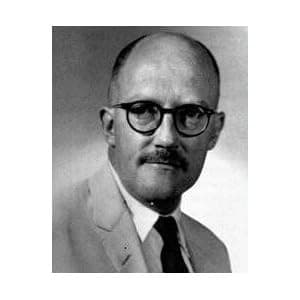
Robert C. O'Brien (1970)
Genre
Fantasy / Children's / Science Fiction / Young Adult
Reading Time
240 min
Key Themes
See below
Sign in to track this book
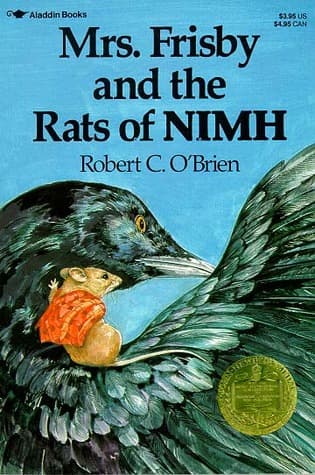
A widowed mouse with a sick child discovers a secret society of intelligent, escapee lab rats who might just save her family from the farmer's plow.
Mrs. Frisby, a widowed field mouse, lives with her four children – Timothy, Martin, Cynthia, and Teresa – in a cinder block in Farmer Fitzgibbon's garden. As winter ends, they need to move to their summer quarters by the stone, a safer spot from the farmer's plow. However, her youngest son, Timothy, is ill with pneumonia and cannot be moved without risk. Mrs. Frisby asks Mr. Ages, an old, wise, and somewhat grumpy mouse, for medicine. He warns that Timothy must stay still. This creates a problem: Farmer Fitzgibbon will plow soon, and their home, with Timothy in it, will be destroyed if they don't move.
While looking for food, Mrs. Frisby finds Jeremy, a young crow caught in a thorny rose bush. She bites through the thorns, freeing him. Grateful, Jeremy offers to help her. When Mrs. Frisby explains her problem about Timothy and the plow, Jeremy suggests she visit the Great Owl, a wise creature who lives in the forest. Mrs. Frisby is afraid of owls, but desperate for a solution, she agrees to let Jeremy fly her to the Owl's tree, holding tight to his back for the journey.
Mrs. Frisby arrives at the Great Owl's tree, feeling much fear. She carefully explains her situation, not expecting help. However, when she mentions her late husband, Jonathan Frisby, the Owl's manner changes. He knows Jonathan as a brave mouse known to the rats living under the rose bush. The Owl says these rats are not ordinary; they are intelligent and organized, capable of unusual things. He tells Mrs. Frisby to ask them for help, thinking they might have a solution, but warns her to be careful.
Following the Owl's advice, Mrs. Frisby finds the rats' home under the rose bush. She discovers a hidden entrance and, after a tense meeting with a guard rat named Justin, is led through brightly lit tunnels and rooms. She is amazed by their setup, which includes electricity and an elevator. She meets Nicodemus, the leader of the colony, a large rat with an eyepatch. Nicodemus greets her with respect, having known Jonathan Frisby, and asks her to explain her problem about Timothy and the coming plow.
Nicodemus, Mr. Ages, and other rats like Isabella, tell Mrs. Frisby the rats' history. They were once ordinary rats caught by scientists at the National Institute of Mental Health (NIMH) for experiments. There, they received a special serum that made them much more intelligent and live longer. They also learned to read and use tools. They planned and carried out an escape from NIMH, taking Mr. Ages with them. Now, living by taking from humans, they are unhappy. They are working on 'The Plan': to move to a secluded valley called Thorn Valley and build a self-sufficient society without electricity. They agree to help Mrs. Frisby by moving her cinder block home.
The rats make a plan to move Mrs. Frisby's cinder block house with Timothy inside. They will use ropes and pulleys to lift and drag the heavy block to a safe spot. But there is a problem: Farmer Fitzgibbon's cat, Dragon, who patrols the garden and poses a constant danger to small creatures. Dragon is dangerous and killed Jonathan Frisby. To let the rats work safely, they need Dragon to be asleep or busy for a time.
To stop Dragon, the rats propose a plan: Mrs. Frisby, being small and quick, must sneak into the Fitzgibbon's house and put a sleeping powder into Dragon's food bowl. This is very dangerous, but Mrs. Frisby, driven by love for her son and thanks to the rats, agrees. She gets into the house, goes through the kitchen, and puts the powder into Dragon's bowl without being seen. She barely escapes the sleeping cat as she leaves.
With Dragon asleep, the rats start their plan. Using their knowledge of machines and their strength, they lift and move Mrs. Frisby's cinder block house to its new, safe place under the rose bush, just in time. The next morning, Farmer Fitzgibbon plows the field, destroying the old location. But a new danger appears: the farmer's son, Billy, finds the rats' tunnels and reports it. This brings men from outside, including scientists, who realize the rats are intelligent.
Mrs. Frisby hears the Fitzgibbons talking about the discovery and rushes to warn the rats. The rats, having expected this, start their backup plan. They quickly move their colony, supplies, and younger members through a hidden exit. The men from NIMH arrive, setting traps and gassing the tunnels, but the rats have already left. They begin their journey to Thorn Valley, their chosen place for a new, self-sufficient civilization, leaving their old home and the dangers of human interference.
Mrs. Frisby and her children settle into their new home, safely under the rose bush, away from the plow. Timothy, now in a secure place, recovers from his pneumonia. The family looks forward to summer, grateful for the help of the intelligent rats. The rats continue their journey to Thorn Valley, hoping to create a truly independent and peaceful society, leaving behind the parasitic life they disliked. Mrs. Frisby thinks about the events and her bond with the rats of NIMH.
The Protagonist
From a fearful widow, she transforms into a brave and decisive leader for her family, overcoming her inherent timidity for their survival.
The Supporting
Starts as a frail, sick child, and recovers fully by the end, symbolizing hope and new beginnings.
The Supporting
Remains a steadfast leader, guiding his colony towards a more ethical and independent future.
The Supporting
Maintains his role as a wise, if curmudgeonly, elder and healer, his intelligence a product of NIMH.
The Supporting
Starts as a clumsy bird needing rescue and becomes a reliable, grateful friend to Mrs. Frisby.
The Supporting
Remains a wise, unchanging figure, a source of profound knowledge in the natural world.
The Mentioned
His past actions continue to influence the present, even after his death, shaping the narrative.
The Antagonist
Remains a static threat, representing the ever-present danger in the natural world.
The Supporting
A consistently brave and loyal member of the rat colony, dedicated to the collective's goals.
The book looks at the difference between natural animal instinct and increased intelligence. The rats of NIMH, through experiments, have human-level intellect. This lets them build societies, use technology, and develop ideas. This contrasts with the instinctive, survival-focused lives of animals like Mrs. Frisby and Jeremy. The rats deal with the moral sides of their intelligence, especially their reliance on humans. This leads them to 'The Plan' for a self-sufficient, ethical society. Mrs. Frisby, while smart for a mouse, uses her natural courage and motherly instincts to handle dangers.
“We were not just intelligent. We were educated. We could read. We could understand the principles of mechanics and electricity. We could use tools.”
A main theme is the power of community and cooperation in solving problems. Mrs. Frisby's struggle for her son's life becomes a team effort involving her family, Jeremy the crow, and the rat colony. The rats show this theme, having escaped NIMH through careful collective planning and now working together on 'The Plan' to build a new society. Their success depends on each member sharing skills and intelligence. This shows that even big challenges can be met with unity and mutual help.
“It was no good. We could not escape alone. We must do it together, or not at all.”
The rats' story asks questions about the ethics of technological and intellectual growth, especially when it causes dependence. Their increased intelligence lets them live a comfortable life, but it also makes them parasitic, relying on human electricity and resources. This dependence creates a moral problem for them, as they feel bad for stealing. 'The Plan' to move to Thorn Valley and build a society without human technology is their way to get true independence and live ethically. This shows a desire for progress that is sustainable and morally sound, not exploitative.
“We are living like parasites, and we are not ashamed to admit it. But we don't like it. That is why we are going to Thorn Valley.”
Mrs. Frisby's strong motherly love for her children, especially Timothy, drives the whole story. Her willingness to face dangers – the Great Owl, Dragon, and the unknown world of the rats – comes from her wish to protect her son. Her courage in drugging Dragon shows the sacrifices a mother makes for her children. This theme shows the strong bond between a parent and child, and how it can inspire bravery and strength in hard situations.
“She was a mouse, and very small, but she was also a mother. And mothers, it is well known, are more courageous than a great many other creatures.”
The story subtly critiques human involvement in the natural world. The rats' intelligence comes directly from human experiments at NIMH, showing how humans change other species for scientific curiosity. The farmer's son finding the rats' home leads to human action with traps and gas, threatening the rats. This shows how human actions, whether scientific or accidental, can have big and often harmful effects on animal populations, forcing them to adapt or leave.
“They were men from the NIMH. They knew about us. They were coming to catch us.”
Giving human characteristics, emotions, and intelligence to animal characters.
The entire narrative relies heavily on anthropomorphism, especially with the rats of NIMH. While all the animal characters exhibit human-like thought processes and communication, the rats are explicitly granted human-level intelligence, language, and the ability to organize, use tools, and develop complex societal plans. This device allows the author to explore complex themes like ethics, community, and the nature of intelligence through the perspective of animals, making them relatable and their struggles profound. Mrs. Frisby, though less overtly 'human-like' than the rats, still displays complex emotions and reasoning.
The rats' origin story at NIMH, revealed through Nicodemus's narration.
The entire history of the rats of NIMH, their scientific experimentation, and their daring escape is presented as a lengthy flashback or backstory, primarily narrated by Nicodemus. This device is crucial for explaining the rats' extraordinary intelligence, their unique culture, and their motivations for 'The Plan.' It provides context for their advanced capabilities and their philosophical outlook, transforming them from mere animals into complex characters with a rich, tragic, and inspiring past. It also establishes the connection between Mrs. Frisby's late husband, Jonathan, and the rats.
A plot device that drives the main character's actions and the narrative forward.
Timothy's pneumonia acts as the primary MacGuffin in the story. It is the urgent, seemingly insurmountable problem that forces Mrs. Frisby to seek help beyond her immediate mouse community. Without Timothy's illness preventing the family from moving, Mrs. Frisby would not have encountered Jeremy, sought the Great Owl, or discovered the rats of NIMH. While Timothy's recovery is a desired outcome, the illness itself serves primarily as the catalyst that propels Mrs. Frisby on her extraordinary journey and sets the entire plot in motion, leading to the revelation of the rats' secret history and future plans.
Mrs. Frisby's journey to find help for her son, involving challenges and allies.
The story follows a classic quest narrative structure, with Mrs. Frisby embarking on a perilous journey to find a solution for Timothy's illness. Her quest involves facing various challenges (Dragon, the Great Owl's fear, entering the rats' home) and encountering a series of helpers and mentors (Jeremy, the Great Owl, Mr. Ages, Nicodemus). Each stage of her journey brings her closer to her goal and reveals more about the hidden world around her. This structure provides a clear progression of events and builds suspense as Mrs. Frisby overcomes obstacles to achieve her objective.
“We can, you know. We can live without stealing. We have learned. We can grow our own food, and make our own tools, and read, and write, and think, and plan.”
— Nicodemus explaining the rats' new philosophy and capabilities to Mrs. Frisby.
“The rats of NIMH had been given something rare: the gift of intelligence. And with it came the burden of choice.”
— Narrator reflecting on the consequences of the rats' enhanced abilities.
“It is not enough to be intelligent. One must also be wise.”
— Nicodemus discussing the difference between knowledge and wisdom.
“We are not like other rats. We have a past, and we have a future.”
— Nicodemus emphasizing the rats' unique identity and aspirations.
“The plan is to move the house. It's the only way to save your family.”
— The rats devising a plan to move Mrs. Frisby's cinder block house before the plow comes.
“Courage is not the absence of fear, but the strength to face it.”
— Mrs. Frisby reflecting on her own bravery in seeking help for her family.
“We have been given a great gift, and with it comes a great responsibility.”
— Nicodemus on the ethical implications of the rats' enhanced intelligence.
“The world is full of obvious things which nobody by any chance ever observes.”
— A reflection on how the rats' intelligence allows them to see solutions others miss.
“To be free, one must first be brave enough to think for oneself.”
— Nicodemus discussing the importance of independent thought for true freedom.
“We do not take what is not ours. We build what we need.”
— The rats' motto, emphasizing their commitment to self-reliance over theft.
“Sometimes the smallest creatures can make the biggest difference.”
— Narrator highlighting Mrs. Frisby's impact despite her size.
“Knowledge is power, but only if you know how to use it.”
— A lesson the rats learn from their experiences at NIMH.
“The future belongs to those who prepare for it today.”
— Nicodemus planning for the rats' new society at Thorn Valley.
“We are not just rats; we are the rats of NIMH, and we will not go back.”
— A declaration of the rats' determination to maintain their advanced way of life.
Ready to see how well you understood this book? Take our interactive quiz with 10 questions.
Biography coming soon.







