“Sometimes I think high school is just one long exercise in learning how to pretend you're not bored and lonely.”
— Vivian's reflection on the isolating nature of high school life.

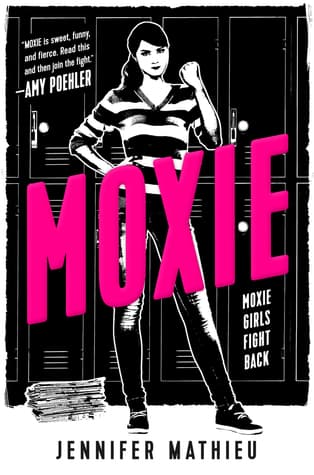
Jennifer Mathieu (2017)
Genre
Young Adult / Romance
Reading Time
330 min
Key Themes
See below
Sign in to track this book
When a fed-up Texas high schooler anonymously publishes a feminist zine exposing her school's rampant sexism, she accidentally ignites a powerful, rule-breaking revolution among her female classmates.
Vivian Carter, called Viv, lives in East Rockport, Texas, a small town obsessed with football. She attends East Rockport High where the football team, especially its star quarterback Mitchell Wilson, gets special treatment, often at the expense of the girls. Viv sees and experiences many instances of sexism, from objectifying comments in the hallways to unfair dress code enforcement that targets girls. Her best friend, Claudia, often tells Viv to ignore the issues. Despite her anger, Viv stays quiet, afraid to cause trouble. After a particularly bad incident where Mitchell harasses a new student, Lucy, Viv feels a surge of anger she can no longer suppress. She finds inspiration in her mother's Riot Grrrl past, an era of punk feminist activism, leading her to a new idea.
Driven by her growing frustration, Viv goes to her room and, using old magazines, markers, and a photocopier, creates her first anonymous zine, 'Moxie.' The zine has articles, drawings, and a list of demands, directly calling out the sexism at East Rockport High and the double standards for boys and girls. She includes phrases like 'Moxie means guts' and encourages girls to fight back. Viv secretly distributes the zine in the girls' bathrooms, hoping it will reach at least a few students. She feels both fear and excitement, knowing she is breaking her quiet persona. The first reactions vary; some girls are interested, others dismissive, but the zine quickly becomes a topic of whispered conversation throughout the school, which secretly pleases Viv.
The 'Moxie' zine begins to spread widely, passed from girl to girl, sparking discussions and an awakening among some students. Viv watches the growing impact of her anonymous creation. After a particularly strict enforcement of the dress code that targets girls for showing too much shoulder, Viv's second zine issue calls for a 'tank top day' to protest the unfair rules. To her surprise, many girls, including those from different cliques, show up to school wearing tank tops in a clear act of solidarity. This collective defiance, though met with initial confusion from teachers and administrators, is a turning point. Viv feels a strong connection and purpose, realizing that her anonymous efforts are creating a real movement among the girls, giving them a voice they lacked.
As Moxie grows, Viv starts to notice the girls who truly embrace its message. She forms a friendship with Lucy, the new girl Mitchell harassed, and Kaitlin, a quiet but strong-willed student. These girls become early allies, offering support and ideas for future actions. The next issue of Moxie encourages girls to write 'Moxie' on their hands as a visible sign of their unity and resistance. This simple act spreads quickly through the school, becoming a silent but strong symbol of the growing feminist movement. Principal Davies and the school administration become concerned about the anonymous zine and its influence, threatening disciplinary action against anyone involved. Viv, though happy with the impact, feels the pressure of staying anonymous.
Amidst the growing Moxie movement, Viv finds an unexpected ally and romantic interest in Seth Acosta, a kind and understanding boy. Seth is one of the few boys who sees the injustice and genuinely supports the girls' cause. Their romance grows, giving Viv emotional support and someone to confide in, though she doesn't reveal her identity as Moxie. However, Viv's best friend, Claudia, becomes uneasy with the escalating protests. Claudia, who values fitting in and avoiding trouble, sees Moxie as a dangerous and unnecessary disruption. Her disapproval creates a rift between the two friends, as Viv struggles to balance her commitment to the cause with her long-standing friendship, showing the personal cost of her activism.
Inspired by the success of previous actions, Viv and her growing network of Moxie girls plan their most ambitious protest: a school-wide walkout. The goal is to make Principal Davies and the school board address the widespread sexual harassment and the special treatment of the football team. The walkout day arrives, and to Viv's pride and relief, many girls, and some supportive boys, leave their classes and gather outside the school. The protest draws media attention, bringing East Rockport High's issues into the public eye. However, the administration's reaction is swift and severe. Principal Davies threatens suspension and other disciplinary actions against all participants, increasing the pressure on the students and creating an atmosphere of fear and division within the school.
The aftermath of the walkout affects Viv deeply. Her mother, while initially proud of Viv's activism, worries about the potential consequences for her daughter's future. The tension between Viv and Claudia increases, ending in an argument where Claudia reveals her resentment over Viv's secrecy and how Moxie has changed their friendship. Claudia feels left out and hurt, unable to understand Viv's drive to disrupt their lives. This confrontation leaves Viv feeling isolated and guilty, questioning the cost of her leadership. The school also begins to crack down harder, with teachers pressured to identify Moxie's leader, and the general atmosphere becomes more hostile towards the girls involved in the movement.
As the school's investigation into Moxie intensifies, Principal Davies and Coach Leslie question several girls, including Lucy, trying to find the zine's creator. The pressure becomes unbearable, and Viv realizes she can no longer hide. During a tense meeting with Principal Davies, Viv bravely confesses that she is Moxie. This revelation surprises the school community. However, instead of isolating her, Viv's confession energizes the other Moxie girls. Inspired by her courage, many of them come forward, claiming to be 'Moxie' themselves, creating a strong collective front against the administration. This act of solidarity shows the true strength of the movement Viv started, turning her individual act of rebellion into a unified force.
With Viv's identity revealed and the girls united, the Moxie movement gains new legitimacy and power. They organize a meeting with the school board, demanding concrete changes to address the sexist culture and hold individuals like Mitchell Wilson accountable. During this meeting, various girls share their personal experiences of harassment and discrimination, speaking out against the issues. Mitchell Wilson finally faces consequences for his actions, though not as severe as some girls hoped. The school board, pressured by public attention and the organized student body, agrees to implement new policies and sensitivity training. While not a complete victory, it is a significant step forward, showing that the girls' voices can effect change and challenging the long-standing power structures within East Rockport High.
Afterward, Viv begins to navigate her new role as an openly recognized leader. She reconciles with Claudia, who, though still cautious, begins to understand and appreciate Viv's courage. Her relationship with Seth remains strong, built on mutual respect and shared values. Viv realizes that the fight for equality is ongoing and that Moxie is not just a zine, but a mindset and a community. The girls continue to meet, strategize, and support each other, ensuring that the changes implemented by the school board are upheld and that the spirit of Moxie continues. The book ends with Viv looking towards the future, empowered by the knowledge that she, and the girls of East Rockport, have found their collective voice and the strength to continue fighting for a more fair world.
The Protagonist
Viv transforms from a quiet, rule-following girl into a courageous, outspoken feminist leader who inspires a movement and finds her own power.
The Supporting
Claudia moves from a place of fear and dismissal of activism to a position of understanding and cautious support for Viv and the Moxie movement.
The Supporting
Seth remains a consistently supportive and understanding partner, providing a positive male presence throughout Viv's journey.
The Supporting
Lucy finds her voice and power through Moxie, transforming from a victim of harassment into a strong and vocal advocate for change.
The Supporting
Lisa rediscovers her own activist spirit through Viv, moving from a nostalgic past to a present-day supporter of her daughter's movement.
The Antagonist
Mitchell remains largely unrepentant but is eventually forced to face some consequences for his behavior due to the Moxie movement's pressure.
The Supporting
Kaitlin evolves from a silent observer to an active and committed participant in the Moxie movement, finding her courage in collective action.
The Supporting
Principal Davies is forced to confront and grudgingly acknowledge the issues of sexism at his school due to the persistent pressure from the Moxie movement.
The Supporting
Brittany transforms from a dismissive, popular girl to an active and vocal participant in the Moxie movement, bridging social divides.
The main theme is about high school girls awakening to feminism and becoming activists. Viv's creation of the 'Moxie' zine starts this process, inspiring girls to see and challenge the sexism in their school and community. The book shows different types of activism, from anonymous zine distribution to collective protests like the tank top day and the school walkout. It demonstrates how young people can organize and demand change. It also highlights the importance of intergenerational feminism, with Viv drawing inspiration from her mother's Riot Grrrl past, connecting the struggles of different eras.
“'Moxie means guts. It means standing up when all you want to do is sit down. It means speaking up when all you want to do is shut up.'”
This theme explores how girls find and use their collective voice to empower themselves against a system that tries to silence them. Initially, many girls, including Viv, feel powerless and invisible when facing harassment and unfair rules. The 'Moxie' zine provides an anonymous platform for their frustrations, which then becomes visible acts of solidarity like writing 'Moxie' on their hands and staging a walkout. The story shows that true empowerment comes not just from individual defiance, but from collective action and the realization that their shared experiences give them strength. By speaking out, the girls reclaim their power and challenge old norms.
“'It wasn't just my anger anymore. It was all of ours. And it was big enough to start a revolution.'”
The novel shows how sisterhood forms and the strength found in solidarity among girls from different cliques and backgrounds. As Moxie spreads, girls like Lucy, Kaitlin, and eventually Brittany, who might not have interacted before, unite for a common cause. This new unity breaks down social barriers and creates a sense of mutual support and understanding. The collective decision to claim 'I am Moxie' when Viv's identity is revealed is a key moment, showing the power of solidarity in protecting one another and amplifying their message. The theme shows that when girls support each other, they become a strong force.
“'We were girls. And we were going to change the world.'”
A significant theme is the tension between following societal expectations and rebelling against injustice. Characters like Claudia represent the pressure to conform, avoid trouble, and maintain social harmony, even if it means compromising personal integrity. In contrast, Viv and the Moxie girls choose rebellion, daring to challenge the established order and face potential consequences. The story explores the personal and social costs of both choices, showing how conformity can lead to being complicit, while rebellion, though risky, can lead to real change and self-discovery. It highlights the internal and external struggles of choosing to be a disruptor.
“'That was the thing about Moxie. It made you brave, even when you didn't think you were.'”
The book explores how past generations influence current activism. Viv's discovery of her mother's Riot Grrrl past directly inspires her to create Moxie. Through her mother's old zines and stories, Viv learns about a history of feminist resistance, realizing that the struggles she faces are not new and that there is a legacy of women fighting back. This theme shows how historical movements can provide blueprints and encouragement for contemporary activism, bridging the gap between generations of feminists and highlighting the ongoing nature of gender inequality and the fight for liberation.
“'My mom had been a Riot Grrrl. And now, maybe, I was too.'”
A handmade feminist publication that serves as the central catalyst and symbol of the girls' rebellion.
The anonymous 'Moxie' zine is the primary plot device, acting as the spark that ignites the feminist movement at East Rockport High. It's a tangible manifestation of Viv's frustration and a powerful tool for communication and mobilization. The zine allows Viv to express her anger and ideas anonymously, providing a safe space for other girls to connect with the message without immediately exposing themselves. Its physical distribution in bathrooms ensures it reaches its target audience, and its DIY nature reflects the punk rock, grassroots spirit of the movement. The zine's content drives the plot forward, proposing actions like 'tank top day' and the walkout.
A historical feminist punk rock movement from the 1990s that inspires Viv's activism.
The Riot Grrrl movement from the 1990s serves as a crucial historical and thematic plot device. Viv's discovery of her mother's past involvement in this movement, through old zines and music, provides her with the inspiration, ideology, and practical blueprint for creating 'Moxie.' This device connects the present-day struggles of the high school girls to a legacy of feminist activism, demonstrating that the fight for gender equality is an ongoing, intergenerational battle. It also provides a stylistic and philosophical framework for Viv's rebellion, emphasizing DIY culture, female empowerment, and challenging patriarchal norms through creative expression.
Vivian's initial anonymity as the creator of 'Moxie' to protect herself and encourage broader participation.
Vivian's anonymous authorship of the 'Moxie' zine is a significant plot device that drives much of the early tension and suspense. It allows Viv to take risks and challenge authority without immediate personal repercussions, which is crucial for her initial, hesitant steps into activism. This anonymity also encourages other girls to participate without fear of being singled out, fostering a sense of collective ownership and daring. The eventual revelation of Viv's identity, forced by escalating pressure, becomes a pivotal moment, transforming the movement from a mysterious underground operation to an open, collective force, demonstrating the power of stepping out of the shadows.
A symbol of unchecked male privilege and the patriarchal power structure within the school.
The East Rockport High football team, particularly its star players like Mitchell Wilson, functions as a powerful symbol and a key antagonistic force. The team's elevated status, the preferential treatment they receive from the school administration, and their unchecked sexist behavior embody the patriarchal power structure that the Moxie girls are fighting against. Their actions, such as harassment and objectification of female students, are direct catalysts for Viv's outrage and the subsequent protests. The team's immunity from consequences highlights the systemic nature of the problem, making their eventual accountability (or lack thereof) a central measure of the Moxie movement's success.
“Sometimes I think high school is just one long exercise in learning how to pretend you're not bored and lonely.”
— Vivian's reflection on the isolating nature of high school life.
“I'm tired of the way things are. And I'm going to do something about it.”
— Vivian's declaration after being inspired by her mother's feminist past.
“Girls supporting girls. It's a radical concept.”
— A line from the Moxie zine, encouraging solidarity among female students.
“Why do we let them treat us like we're nothing?”
— Vivian questioning the school administration's tolerance of sexism.
“It's not about being perfect. It's about being brave.”
— Vivian encouraging others to join the Moxie movement despite fears.
“Sometimes the quietest people have the loudest minds.”
— Vivian's observation about underestimated students, like herself.
“We're not asking for special treatment. We're asking for equal treatment.”
— A rallying cry from the Moxie movement at a school protest.
“Change doesn't happen because people wait around for it.”
— Vivian's realization about the need for proactive efforts.
“It's amazing what can happen when you stop being afraid.”
— Vivian reflecting on her personal growth through activism.
“My mom was a rebel once. I guess it runs in the family.”
— Vivian connecting her activism to her mother's Riot Grrrl past.
“They think we're just kids. But we're the ones who have to live in this world.”
— Vivian arguing for the validity of youth voices in activism.
“Love shouldn't make you feel small.”
— Vivian's thought about healthy relationships, influenced by her experiences.
“A little anger can be a good thing. It means you care.”
— Vivian justifying the passion behind the Moxie movement.
“We're not just fighting for ourselves. We're fighting for everyone who comes after us.”
— Vivian explaining the broader impact of their activism.
Ready to see how well you understood this book? Take our interactive quiz with 10 questions.

Biography coming soon.