“It was a good life and a hard life, and there was no way to separate the two.”
— Patsy reflects on her life, encompassing both its joys and struggles.

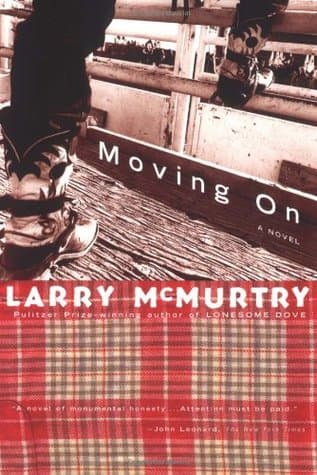
Larry McMurtry (1970)
Genre
Literary Fiction / Historical Fiction
Reading Time
1600 min
Key Themes
See below
Sign in to track this book
In 1960s Texas, the sharp-tongued Patsy Carpenter drifts through a world of rodeo clowns, academics, and suburban boredom, always chasing a sense of belonging and love.
The novel opens with Patsy Carpenter marrying Jim, a former rodeo cowboy, in a somewhat quick ceremony. Patsy, from a more privileged background, is immediately drawn into Jim's world of rodeos and nomadic living. Their early married life involves constant movement across the American West, following the rodeo circuit. Patsy, despite her initial excitement, soon feels restless, a theme that will define her journey. She observes the colorful, often difficult lives of the rodeo community, including characters like Pete the rodeo clown, and starts to question her own existence with Jim, who, while charming, is also aimless and unfaithful.
As Patsy and Jim travel, Jim's casual infidelities become clear, further distancing Patsy. Feeling neglected and unfulfilled, Patsy begins her first major affair with Pete, the kind-hearted and thoughtful rodeo clown. This relationship, while brief and physically intense, offers Patsy a temporary escape from her unhappy marriage and a glimpse into a different kind of companionship. The affair with Pete shows Patsy's growing desire for emotional connection and intellectual stimulation, which she finds missing with Jim. She begins to realize that her marriage, despite its initial romantic appeal, does not give her the depth she wants.
Eventually, Patsy and Jim settle in Houston, Texas, a contrast to their previous nomadic life. Patsy decides to enroll in graduate school, seeking intellectual fulfillment and purpose. This period marks a significant change in her life, as she begins to form an identity separate from Jim and the rodeo world. She becomes involved with a group of academics, including Hank, a graduate student who becomes her next important lover. Her studies expose her to new ideas and perspectives, broadening her understanding of herself and the world, and increasing her dissatisfaction with her aimless marriage.
Patsy's affair with Hank is characterized by intellectual engagement and passionate discussions, a contrast to her relationship with Jim. Hank introduces her to literature, philosophy, and a world of ideas, which Patsy eagerly embraces. However, despite the intellectual connection, Patsy eventually finds this relationship also lacks emotional depth and true commitment. Hank, while intelligent, is also somewhat detached and unable to fully return the emotional intimacy Patsy seeks. This affair, while enriching her mind, ultimately leaves her feeling emotionally unfulfilled, showing her continuous search for a complete and meaningful connection.
Throughout her journey, Patsy maintains a deep, often unspoken, connection to the Texas landscape and her family roots, despite her rebellious spirit. Her family, especially her mother, represents a more conventional life that Patsy always resists. Visits home highlight the tension between her desire for freedom and the societal expectations placed upon her. The vast, unchanging Texas landscape is a backdrop to her internal turmoil, a silent witness to her restless wanderings and her ongoing search for belonging. This connection to her origins highlights the internal conflict between her independent spirit and the pull of tradition.
Patsy's journey brings her into contact with a diverse cast of characters, from rodeo cowboys and queens to academics and bohemian artists. Each encounter, no matter how brief, adds to her evolving understanding of life, love, and human nature. She learns about resilience from the rodeo community, intellectualism from her university peers, and various forms of desire and disappointment from her lovers. These interactions, rather than providing definitive answers, add layers of complexity to her worldview, pushing her to re-evaluate her choices and desires. The diverse personalities she meets reflect the vastness and variety of the American West itself.
After a period of separation and various affairs, Patsy and Jim try to reconcile. They attempt to make their marriage work, perhaps out of habit or a lingering affection. However, their basic incompatibility and Jim's unchanging, shiftless nature quickly resurface. Patsy realizes that a true end to her restlessness cannot be found by returning to old patterns. This brief attempt at reconciliation strengthens her understanding that her path lies elsewhere, away from the life she initially built with Jim. The experience reinforces her belief that she must continue her search for a more fulfilling existence.
As the novel progresses, Patsy's quest changes from a search for a perfect lover to a deeper exploration of her own identity and purpose. Her numerous affairs, while providing temporary comfort or excitement, ultimately leave her feeling unfulfilled, prompting her to look inward. She begins to understand that the 'life around the next bend' might not be a person or a place, but an internal state. This shift in focus marks a maturation in her character, as she moves from external validation to a deeper journey of self-discovery, acknowledging her own role in shaping her future.
Patsy occasionally revisits the rodeo world, observing its subtle decline and the weariness of its participants. This fading glamour mirrors her own disappointment with certain aspects of her past and her continuous search for something more substantial. The rodeo, once a symbol of freedom and excitement, now appears more as a struggle, reflecting the passage of time and the inevitable changes in life. These observations add to her evolving worldview, reinforcing her understanding that nothing remains static and that growth often means moving beyond familiar, though fading, landscapes and relationships.
By the novel's end, Patsy has not found a static resolution to her restlessness. Instead, she has accepted the idea of perpetual movement and change as part of her identity. She has learned valuable lessons from her experiences and relationships, understanding that true contentment may not lie in a fixed destination but in the journey itself. While her future remains open-ended, there is a sense of quiet acceptance and a mature understanding of her own desires. She continues to move, physically and emotionally, embodying the spirit of the American West and the endless possibilities of self-reinvention, always in search of the next bend.
The Protagonist
Patsy evolves from a naive, romantically driven newlywed into a more mature, self-aware woman who understands that her true journey is internal, embracing her inherent restlessness rather than trying to quell it.
The Supporting
Jim remains largely static, representing the kind of aimless freedom that initially attracted Patsy but ultimately proves insufficient for her growth.
The Supporting
Pete serves as an important catalyst for Patsy's self-discovery, helping her realize her marital dissatisfaction, then fading as she moves on.
The Supporting
Hank helps Patsy intellectualize her desires and dissatisfaction, but his emotional limitations push her further into understanding her own needs for a more holistic connection.
The Supporting
Patsy's mother remains a constant, unchanging force, representing the traditional world Patsy is constantly 'moving on' from.
The Mentioned
Sonny's role is primarily to establish the setting and atmosphere of the rodeo world.
The Mentioned
These characters provide a social backdrop and contrast to Patsy's evolving identity.
The central theme of the novel is Patsy's deep and lasting restlessness. She is always moving, both geographically and emotionally, in search of a life that feels authentic and fulfilling. This appears in her many affairs, her pursuit of education, and her inability to settle in one place or with one person. From the nomadic rodeo life to the intellectual circles of Houston, Patsy is always looking for 'the life that seems ever receding around the next bend,' showing a universal human desire for meaning that often feels just out of reach. Her journey is an example of the idea that fulfillment is not a destination but an ongoing process of discovery.
“She was always moving on, always in search of the life that seemed ever receding around the next bend.”
The novel deeply explores the complexities and limits of various forms of love and relationships. Patsy's experiences with Jim, Pete, and Hank show different aspects of connection: the initial passion and eventual disappointment of her marriage, the temporary comfort of physical and emotional intimacy with Pete, and the intellectual companionship with Hank that ultimately lacks deeper commitment. McMurtry suggests that no single relationship can fully satisfy all of Patsy's needs, and that love itself is often transient and imperfect. The theme challenges romantic ideals, portraying relationships as steps in a larger journey of self-discovery.
“Love was not a thing to be found, but a thing to be made, and sometimes, even then, it would not hold.”
Patsy's journey is fundamentally one of self-discovery, set against the vast and changing American West. Her movement across different environments – from the raw, transient world of the rodeo to the more settled, intellectual sphere of Houston – mirrors her internal evolution. She sheds old identities and constantly reinvents herself, dealing with the expectations placed upon women in the 1960s and forging her own path. The West, with its ideas of freedom and endless horizons, is a powerful metaphor for Patsy's internal quest for an authentic self, unburdened by convention.
“The West was a place for starting over, or for never quite finishing.”
The novel examines the mixed blessing of freedom. The initial appeal of Jim's nomadic rodeo life promises liberation from conventionality, but Patsy soon discovers that this freedom also brings rootlessness, infidelity, and a lack of deeper meaning. Her subsequent pursuit of intellectual freedom in academia also proves less fulfilling than anticipated, showing that true freedom must include both external liberty and internal contentment. McMurtry suggests that unchecked freedom can lead to a different kind of confinement—that of always searching without finding solid ground.
“She had wanted freedom, and she had it, but it was a freedom that often felt like emptiness.”
A literal and metaphorical journey across the American West.
Patsy's constant movement across the American West, following rodeo circuits and later relocating to Houston, serves as a primary plot device. This literal journey mirrors her internal, metaphorical journey of self-discovery and her relentless search for meaning and fulfillment. Each new location and stop along the road brings new experiences and relationships that shape her evolving understanding of herself and the world. The vast, open landscape underscores the sense of endless possibility and the protagonist's enduring restlessness.
The rodeo world as a symbolic representation of life's transient and often dangerous nature.
The rodeo circuit, with its colorful characters, fleeting excitements, and inherent dangers, functions as a microcosm of life itself. It provides a backdrop for Patsy's early married life and introduces her to a world of raw emotions, physical challenges, and transient connections. The rodeo's cyclical nature of arrival and departure, triumph and injury, reflects the ups and downs of Patsy's own relationships and her continuous search for stability amidst constant change. It also highlights the performative aspects of identity.
Patsy's series of romantic relationships as catalysts for her emotional and intellectual growth.
Patsy's sequential romantic relationships with Jim, Pete, Hank, and others are not merely episodic; they are crucial plot devices that drive her character development. Each affair exposes her to different facets of love, companionship, and disappointment, pushing her to analyze her own desires and what she truly seeks in a partner and in life. These relationships act as stepping stones, each one revealing what she lacks or what she needs to move beyond, ultimately guiding her towards a deeper understanding of herself rather than finding a definitive partner.
The vast and unchanging Texas environment as a silent witness and symbolic backdrop.
The expansive and often desolate Texas landscape is more than just a setting; it acts as a silent, enduring character in the novel. Its vastness symbolizes the immense possibilities and the loneliness of Patsy's journey, while its unchanging nature contrasts with her constant internal and external shifts. The landscape reflects both the freedom Patsy seeks and the isolation she sometimes experiences, serving as a powerful visual and emotional anchor for her wanderings and her connection to her roots, even as she tries to move beyond them.
“It was a good life and a hard life, and there was no way to separate the two.”
— Patsy reflects on her life, encompassing both its joys and struggles.
“The past was like a long, dusty road, and sometimes you just had to keep walking.”
— Patsy contemplates her past and the necessity of moving forward.
“Love was a thing that came and went, like the seasons, and you just had to make the most of it when it was there.”
— Patsy's pragmatic view on the transient nature of love.
“There was a kind of freedom in knowing you had nothing left to lose.”
— Patsy experiences a sense of liberation after significant life changes.
“People were always trying to make sense of things, but sometimes there wasn't any sense to be made.”
— Patsy's observation on the futility of over-analyzing life's complexities.
“The older you got, the more you realized that most of what you worried about never happened.”
— Patsy's wisdom on the nature of worry and anxiety.
“A man could run from his troubles, but he couldn't outrun himself.”
— A character's realization about the inescapable nature of one's own character and problems.
“The future was just more of the past, only different.”
— A character's cynical yet insightful view on the progression of time.
“It took a long time to learn how to live, and even longer to learn how to let go.”
— Patsy reflects on the lifelong process of personal growth and acceptance.
“The wind never asked where you were going, it just blew.”
— A metaphorical statement about the indifferent forces of nature and life.
“Some things, once broken, could never really be mended, just lived with.”
— Patsy's acceptance of irreparable losses and the necessity of adaptation.
“Every day was a chance to start over, if you were brave enough to take it.”
— Patsy's hopeful perspective on the possibility of new beginnings.
“The best stories were the ones you lived, not the ones you read.”
— A character's emphasis on the value of lived experience over vicarious ones.
“It wasn't the knowing that hurt, it was the remembering.”
— A character's reflection on the pain of memory.
Ready to see how well you understood this book? Take our interactive quiz with 10 questions.
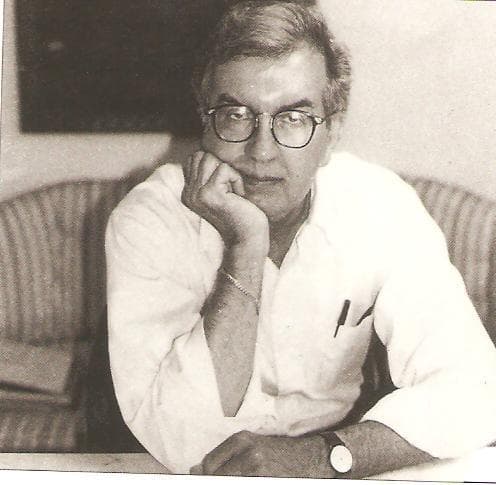
Larry Jeff McMurtry was an American novelist, essayist, prominent book collector, bookseller and screenwriter whose work was predominantly set in either the Old West or contemporary Texas. His novels included Horseman, Pass By (1962), The Last Picture Show (1966), and Terms of Endearment (1975), which were adapted into films. Films adapted from McMurtry's works earned 34 Oscar nominations.







