“I am not looking for a reason to have a child. I am looking for a reason not to.”
— The narrator's central dilemma about motherhood.

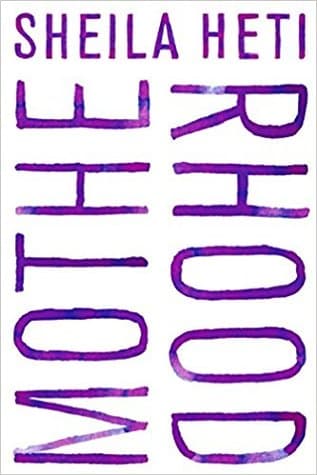
Sheila Heti (2018)
Genre
Literary Fiction / Relationships
Reading Time
360 min
Key Themes
See below
Sign in to track this book
A woman in her late thirties considers whether to become a mother, looking to philosophy, mysticism, and her own body for an answer.
The unnamed narrator, a writer nearing forty, thinks more and more about whether to have children. Her friends are having babies, and her partner, Miles, is open to the idea, but she feels conflicted. She sees a basic conflict between the needs of creative work and the consuming nature of motherhood. This internal struggle grows with her biological clock and the feeling that she is not fulfilling a societal or ancestral duty. She starts to see her uterus as a separate thing, a demanding presence that controls her thoughts and worries about her future.
Overwhelmed by her indecision, the narrator decides to consult the I Ching, an ancient Chinese text, to help her. She asks direct questions about whether she should have a child, interpreting the hexagrams and their texts with an intense focus. The answers she gets are often unclear, sometimes contradictory, and often need more interpretation, reflecting her own confusion. Miles takes part in these readings, offering his thoughts, but the narrator mostly interprets them, seeking confirmation or direction for her personal question.
The narrator and Miles often discuss having children. Miles says he wants a child but supports whatever decision the narrator makes, knowing the physical and emotional burden would mostly be hers. Their talks show deep affection and mutual respect, but also the narrator's repeated worries about losing herself, her creative time, and her freedom. She questions if her love for Miles is enough reason to have a child, and if she would be a 'good enough' mother, often comparing herself to an ideal image of motherhood.
The narrator’s relationship with her deceased mother is important in her thoughts about motherhood. She often remembers her mother's words, advice, and sacrifices, feeling a strong connection and a sense of responsibility to her ancestors. She considers continuing her family line versus making her own path. Her mother’s experience as a woman and a parent influences the narrator's fears and desires, making her question if she can truly escape past generations' patterns, even as she tries to define her own womanhood outside of traditional roles.
The narrator experiences the decision of whether to have a child as a huge burden, a choice that feels both personal and universally important. She feels the weight of societal expectations, the biological clock, and pressure from friends and family. This pressure is made worse by her own desire to live a meaningful life, which she struggles to fit with the traditional path of motherhood. The act of choosing becomes a philosophical and moral problem, a test of her values and priorities, making her question her identity and purpose as a woman and an artist.
A main part of the narrator's struggle is the conflict between her feminist ideas and traditional ideas of motherhood. She questions if a woman can truly be free and pursue her artistic goals while also raising a child. She worries that motherhood might lessen her creative work or force her to change her identity as a writer. She tries to understand if these seemingly opposite forces can be combined, or if one must be given up for the other, thinking about the past struggles of women artists.
The narrator often tries to listen to her body, believing it might hold a deeper truth about her desire for motherhood. She pays close attention to her menstrual cycle, her physical feelings, and her intuition. However, her body's signals are rarely clear or constant. Sometimes she feels a longing, other times a strong dislike. This internal inconsistency frustrates her, as she seeks a definite physical confirmation or rejection of motherhood, but finds only more uncertainty. Her body, like the I Ching, reflects her own conflicted inner state rather than giving a simple answer.
Throughout her thoughts, the narrator often considers what makes a 'good' mother and questions if she has those qualities. She fears she might be a 'bad' mother, not from meanness, but because of her nature, her need for alone time, and her dedication to her writing. She worries about passing her own worries or unresolved issues to a child. This internal judgment creates a significant barrier, as she considers the moral implications of bringing a new life into the world without being completely sure of her ability to raise it perfectly, showing her strong sense of responsibility.
The narrator feels a strong, almost spiritual connection to her female ancestors. She imagines them watching her, expecting her to continue the family line, to fulfill the biological role that has defined women for generations. This sense of ancestral duty adds another layer of pressure to her decision. She questions if her choice is only hers, or if it is influenced by the unspoken expectations of those who came before her, and if going against them would be a betrayal of her heritage. This spiritual element highlights the deep nature of her personal problem.
After years of thinking, consulting the I Ching, and talking with Miles, the narrator decides not to have children. This decision is not shown as a victory or a loss, but as a personal and hard-won understanding of herself and her path. She acknowledges the sadness for a life not lived, but also accepts the freedom and clarity that comes with solving her long-standing problem. The ending is less about right or wrong, and more about being true to herself and accepting herself, allowing her to fully commit to her identity as a writer.
The Protagonist
She begins in profound ambivalence and ends with a clear, albeit difficult, decision to not have children, finding peace and self-acceptance in her chosen path.
The Supporting
Miles remains consistently supportive of the narrator's journey, his role primarily to facilitate her self-discovery rather than undergo a significant personal transformation himself.
The Mentioned
Her influence remains constant, acting as a historical and emotional anchor for the narrator's internal debate.
The Mentioned
Its 'demands' gradually recede as the narrator makes her final decision, symbolizing her coming to terms with her biological reality.
A main theme is the idea that a woman's artistic life and the demands of motherhood cannot exist together. The narrator, a writer, constantly worries that having a child would reduce her creative output, her intellectual freedom, and her sense of self. She sees motherhood as a possible sacrifice of her artistic identity, a choice between two important but seemingly opposite paths. This is clearly shown in her thoughts about time, energy, and the all-consuming nature of raising a child versus the solitude and dedication needed for writing.
“What if I can only be one thing? A mother or a writer?”
The novel explores a woman's right to choose her own path, especially regarding reproduction, despite societal and biological pressures. The narrator's struggle shows the complexities of female independence today. She questions if her desire not to have children is selfish or a valid expression of self-determination. Her long thoughts and use of the I Ching show her attempt to make an independent, 'wise and moral' choice, rather than simply giving in to outside expectations or biological urges. This theme emphasizes the ongoing feminist discussion about women's roles and choices.
“Is it wrong to want to be free of the obligation to reproduce?”
The story itself shows the theme of choice and the often-paralyzing nature of indecision when faced with a life-altering decision. The narrator's years-long consideration, her consultations with oracles, and her endless questioning show how hard it is to make a choice that feels both true and morally right. The book suggests that some decisions are not easily solved by logic or outside advice, but require deep, often painful, self-exploration. The I Ching's unclear answers further highlight that the final responsibility for choice lies with the individual, showing the burden and freedom of personal agency.
“To not choose is still a choice, but a cowardly one.”
The narrator feels a strong connection to her female ancestors and considers continuing her family line versus making her own path. Her deceased mother's experiences and the expectations of generations of women weigh heavily on her. This theme explores how personal choices are connected to a larger historical and family context. The narrator questions if she is betraying her heritage by not having children, or if her choice is a continuation of a different kind of legacy—one of self-definition and creative pursuit. It looks at the spiritual and emotional weight of ancestral ties.
“I felt the pull of all the women who came before me, their expectation that I would carry on the line.”
The narrator's extensive use of the I Ching, her philosophical questions, and her attempts to listen to her body all show a deep search for truth and guidance in a personal problem. She seeks outside confirmation and clarity, believing that a definite answer exists outside of herself. However, the story ultimately suggests that true guidance comes from within, through careful self-examination and honest confrontation with one's desires and fears. The I Ching acts as a mirror, reflecting her own subconscious rather than giving absolute directions, emphasizing that personal truth is self-made.
“I hoped the I Ching would tell me what I already knew, but was too afraid to admit.”
An ancient Chinese divination text used by the narrator to seek answers about motherhood.
The I Ching is a central plot device, serving as an externalized conscience and a mirror for the narrator's internal conflict. By posing direct questions to the oracle, the narrator attempts to find definitive answers to her dilemma about having children. However, the I Ching's often ambiguous and poetic responses force her into deeper introspection and interpretation, highlighting that the answers ultimately lie within herself. It externalizes the internal debate, making her thought process tangible and allowing for philosophical exploration of fate, choice, and self-knowledge.
The narrative is largely composed of the narrator's unfiltered thoughts, questions, and philosophical reflections.
The novel is primarily driven by the narrator's internal monologue, presented in a stream-of-consciousness style. This allows the reader direct access to her anxieties, intellectual debates, and emotional fluctuations regarding motherhood. The fragmented, questioning nature of her thoughts mirrors her indecision and the complexity of the subject matter. This device creates an intimate and immediate experience, drawing the reader into her subjective reality and philosophical journey, making the book feel intensely personal and reflective of modern consciousness.
The narrator occasionally personifies and directly addresses her uterus as a separate entity.
The narrator's direct address to her uterus serves as a unique plot device that personifies her biological imperative. By treating her uterus as a separate character with its own desires and demands, she externalizes the physical and biological pressures she feels to reproduce. This device allows her to explore the visceral aspects of motherhood, distinct from her intellectual and emotional considerations. It highlights the tension between mind and body, and the often-unspoken demands of female biology in the decision-making process.
The narrator frequently repeats core questions and anxieties throughout the narrative.
The constant repetition of key questions, such as 'Should I have a child?' or 'What would I lose?', emphasizes the cyclical and obsessive nature of the narrator's dilemma. This device reflects the protracted struggle she faces and the difficulty of reaching a definitive answer. It also underscores the universality of these questions for many women, creating a sense of shared experience. The repetition highlights how deeply ingrained and unresolved these anxieties are, making her eventual decision feel hard-won and significant.
“I am not looking for a reason to have a child. I am looking for a reason not to.”
— The narrator's central dilemma about motherhood.
“If I want to be an artist, I have to be a mother. If I want to be a mother, I have to be an artist.”
— Reflecting on the perceived conflict between creative work and raising children.
“The feeling of not knowing what to do with your life is a very common feeling among women.”
— Considering societal pressures and expectations on women.
“Perhaps all the choices we make are just ways of saying yes to one thing and no to another.”
— A philosophical musing on the nature of choice and its implications.
“The greatest freedom is not to be free from anything, but to be free to choose what you want to be free from.”
— Exploring the concept of freedom in the context of life choices.
“A woman's greatest fear is not that she will not have children, but that she will have them and regret it.”
— Delving into the anxieties surrounding the decision to become a mother.
“I want to feel like a complete human being, not just a woman who has or hasn't had children.”
— Desiring a sense of wholeness beyond reproductive roles.
“What if the greatest act of creation is to not create another human being, but to create oneself?”
— Challenging traditional notions of creation and legacy.
“To be a woman is to be always on the verge of some great transformation.”
— Reflecting on the dynamic and evolving nature of female experience.
“The hardest thing is to know what you truly want, not what you think you should want.”
— Struggling with internal and external pressures on personal desires.
“Maybe the purpose of life is not to find the answer, but to live the question.”
— Embracing uncertainty and the ongoing process of inquiry.
“Every time I make a decision, I feel like I'm killing off a thousand other possible lives.”
— The weight of choice and the roads not taken.
“Is it possible to be both a mother and an artist without sacrificing one or the other completely?”
— A core question the narrator grapples with throughout the book.
“My body feels like a house I have to decide whether or not to fill with another person.”
— A vivid metaphor for the internal debate about pregnancy.
“The decision not to have children is also a decision to have a certain kind of life.”
— Recognizing that every choice, including abstaining, shapes one's future.
Ready to see how well you understood this book? Take our interactive quiz with 10 questions.
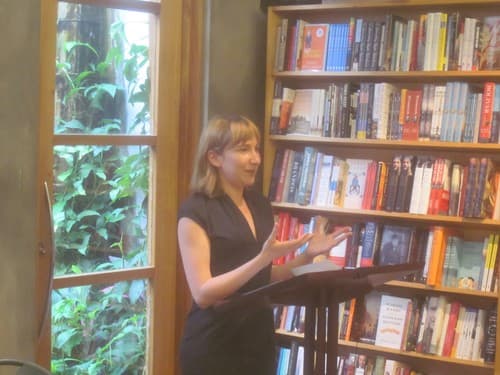
Sheila Heti is a Canadian writer.







