BookBrief
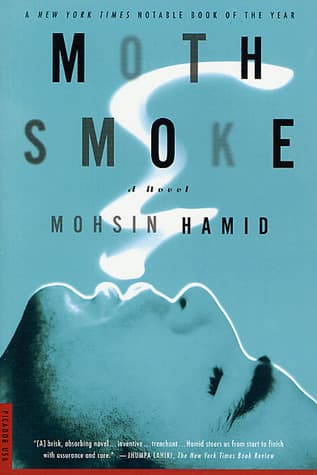
Moth Smoke cover
Archivist's Choice

Moth Smoke

Mohsin Hamid (2000)

Genre

Literary Fiction / Mystery

Reading Time

250 min

Key Themes

See below

Track Your Reading

Sign in to track this book

Fired from his banking job, a privileged Lahori spirals into drug addiction, an illicit affair, and a life of crime, ultimately facing a murder trial that mirrors the volatile corruption of modern Pakistan.

Synopsis

Daru Shezad, a former banker in Lahore, Pakistan, loses his job and descends into poverty, drug addiction, and petty crime. He reconnects with his wealthy childhood friend, Ozi, but soon begins an affair with Ozi's beautiful and restless wife, Mumtaz. As Daru's life spins out of control, he partners with the charismatic rickshaw driver Murad Badshah for a planned heist. The heist goes wrong, leading to an accident and a death, and Daru finds himself on trial for murder. His fate reflects a modernizing Pakistan dealing with corruption and moral decay. The story examines class, ambition, betrayal, and a society on the edge.
Reading time
250 min
Difficulty
Medium
Pacing
Variable
Mood
Dark, Atmospheric, Suspenseful, Morally complex
✓ Read this if...
You enjoy character-driven literary fiction with a strong sense of place, exploring themes of social decay, moral ambiguity, and the dark side of ambition in a non-Western setting.
✗ Skip this if...
You prefer clear-cut heroes and villains, a straightforward plot without much moral ambiguity, or lighthearted stories.

Plot Summary

Daru's Downfall Begins

Daru Shezad, a young banker in Lahore, is fired from his job at the multinational American Standard bank. This sudden unemployment causes a rapid decline in his financial stability and social standing. He cannot pay his bills, including rent and credit card debts, and quickly uses up his savings. His once comfortable life, with cell phones and social gatherings, begins to fall apart. He spends his days idling, smoking hashish, and watching the lives of others, especially the wealthy who still go to the same social circles he once did. This initial shock sets the stage for his growing unhappiness with Lahore's elite society and his place in it.

Reunion with Ozi and Mumtaz

Daru's childhood friend, Aurangzeb 'Ozi' Shah, returns to Lahore from America with his beautiful and mysterious wife, Mumtaz. Ozi is now a wealthy and successful businessman, representing the success Daru has recently lost. Daru's reunion with Ozi has hints of envy and nostalgia, but his immediate and strong attraction to Mumtaz becomes a main focus. Mumtaz, intelligent and restless, seems equally drawn to Daru's intensity and his outsider status. Their initial interactions are full of unspoken desire, setting the stage for a dangerous love triangle that will further complicate Daru's already difficult life.

The Affair Begins

Daru and Mumtaz give in to their mutual attraction and begin a secret affair. They often meet at Daru's run-down apartment, a stark contrast to Ozi's luxurious home. The affair is intense and passionate, giving Daru a fleeting sense of purpose and escape from his deteriorating reality. Mumtaz also finds a release in Daru from the stifling expectations of her marriage and society. Their illicit relationship is a dangerous game, constantly at risk of discovery by Ozi, which would have severe consequences for everyone involved in Lahore's conservative society.

Descent into Drugs and Petty Crime

As Daru remains unemployed, his financial situation becomes desperate. He uses more hashish, which dulls the pain of his failures but further isolates him. He forms an unlikely friendship with Murad Badshah, a charismatic and cynical rickshaw driver who operates on the edges of Lahore society. Murad introduces Daru to the city's underworld and suggests ways to make quick money through petty crime. Daru, increasingly desperate and unhappy, sees Murad as a potential ally and a source of income, blurring his moral compass and pushing him further from his former life.

The Heist

Driven by an urgent need for money, Daru agrees to participate in a larger criminal act with Murad: robbing a foreign couple's house. Murad carefully plans the heist, using his knowledge of the city's hidden networks. The robbery itself is full of tension and danger, and while they escape with valuables, the experience leaves Daru shaken and more deeply involved in the criminal underworld. This act marks a turning point, solidifying his transition from a fallen banker to an active participant in illegal activities, with increasing risks.

The Heat Intensifies

After the robbery, the police investigation intensifies, adding fear and paranoia to Daru's life. He and Murad must navigate Lahore's treacherous law enforcement, constantly looking over their shoulders. The stolen goods become a liability, and the thrill of the crime is replaced by the constant worry of capture. This period highlights the stark contrast between Daru's former privileged life and his current precarious life on the run, showing how quickly one can fall from grace in a society filled with corruption and class divides.

Mumtaz's Growing Discontent

While Daru's life spirals downwards, Mumtaz also experiences growing inner conflict. The affair with Daru, initially exciting, becomes complicated by his deepening involvement in crime and his general instability. She begins to question her choices and the future of their relationship. Meanwhile, Ozi, though initially unaware, starts to notice subtle changes in Mumtaz's behavior and the dynamic between her and Daru. His suspicions slowly grow, creating an unbearable tension that threatens to expose the affair and shatter their fragile world.

A Tragic Accident

In a tragic event, a young boy is killed in a hit-and-run accident. Daru's car, which he often lends out, is involved in the incident. The circumstances surrounding the accident are unclear, leaving open the question of who was driving and if Daru was directly responsible. This event dramatically raises the stakes, changing Daru's situation from financial ruin and an illicit affair to a potential murder charge. The ambiguity surrounding the driver's identity becomes a central mystery, fueling the subsequent legal and moral dilemmas.

Daru on Trial

Daru is arrested and charged with the murder of the young boy. The novel then shifts to a courtroom drama, with Daru telling his story to an unseen narrator, often identified as a judge or a higher authority. The trial becomes a place for Daru to reflect on his life, his choices, and the societal forces that led him to this point. The evidence is circumstantial, and the truth of who was driving remains unknown. The story explores justice, class, and culpability within the corrupt Pakistani legal system, leaving the reader to question Daru's guilt or innocence.

The Verdict and Aftermath

The novel ends with the trial's verdict, which, like many parts of Daru's story, is somewhat ambiguous. The ending reflects the broader uncertainty of Pakistan itself, a nation dealing with corruption, social inequality, and its identity on the global stage. Daru's fate, whether he is convicted or acquitted, remains a metaphor for the larger societal questions posed throughout the book. The narrative leaves the reader considering justice, the impact of individual choices, and the pervasive 'moth smoke' that clouds truth and morality in Lahore.

Principal Figures

Daru Shezad

The Protagonist

Daru transforms from a somewhat naive, upwardly mobile professional into a cynical, drug-addled criminal, ultimately facing a murder trial that forces him to confront his life choices.

Mumtaz

The Supporting

Mumtaz moves from suppressed dissatisfaction to passionate rebellion, eventually confronting the consequences of her choices and grappling with her own desires for freedom versus security.

Aurangzeb 'Ozi' Shah

The Supporting

Ozi remains largely unchanged, serving as a stable, albeit somewhat naive, anchor against Daru's rapid decline, eventually becoming a victim of Daru's betrayal.

Murad Badshah

The Supporting

Murad remains a constant, cynical force, influencing Daru's descent into crime without undergoing significant personal change.

The Narrator/Judge

The Mentioned

Not applicable, as this is a narrative device rather than a developed character.

Julie

The Supporting

Julie exits the narrative early, serving as a catalyst for Daru's initial sense of abandonment and further isolation.

Themes & Insights

Class and Corruption in Pakistan

The novel shows the stark class divisions and pervasive corruption within Lahore society. Daru's fall from the 'cell-phone-toting elite' shows how fragile social standing can be and the harsh realities faced by those without wealth or connections. The legal system is easily manipulated by the powerful, as seen in Daru's trial where truth matters less than influence. The 'moth smoke' itself is a metaphor for the moral opacity and ethical decay that affects all levels of society, from wealthy bankers to street criminals like Murad. Pakistan's nuclear ambitions are set against its internal decay.

In Lahore, you can get away with anything if you have enough money. Or if you know the right people. Or if you just don't get caught.

Murad Badshah

Disillusionment and Moral Decay

Daru's journey is one of deep disillusionment, not just with his personal circumstances but with his society's values. His initial idealism gives way to cynicism, leading him to drugs, an illicit affair, and crime. The 'moth smoke' imagery captures this theme, symbolizing the seductive but destructive allure of vice and the blurring of moral lines. Characters like Mumtaz also experience disillusionment with their privileged but unfulfilling lives. The novel suggests that moral decay is widespread, affecting both the rich and the poor, and that the pursuit of pleasure or survival often outweighs ethical considerations.

I was a moth. Drawn to the flame of what I shouldn't have, what I couldn't have. And I burned.

Daru Shezad

Identity and Belonging

Daru's loss of his job strips him of his professional identity and his place within Lahore's elite. He struggles to define himself outside of his former status, moving between resentful outsider and desperate criminal. His affair with Mumtaz is partly a search for a new identity, one based on passion and rebellion rather than societal expectations. The novel explores the pressures of societal expectations and the desire for real connection in a world where superficiality often rules. Daru's ambiguous fate at the end reflects his unresolved search for self.

Who was I? A banker? A lover? A criminal? A nobody? The smoke made it all indistinct.

Daru Shezad

Love, Betrayal, and Desire

The passionate and illicit affair between Daru and Mumtaz is the emotional core of the novel. It is driven by raw desire, a longing for escape, and a rebellion against societal norms. However, their love is intertwined with betrayal — of Ozi, of their respective lives, and ultimately of themselves. The relationship is destructive, speeding up Daru's downfall and causing Mumtaz deep inner conflict. The novel explores the complex interplay of love, lust, and the moral compromises made in their pursuit, highlighting the devastating consequences of forbidden desires in a conservative society.

Our love was a secret, a crime, a beautiful, dangerous thing that could only exist in the shadows.

Daru Shezad

Justice and Truth

The entire novel is framed by Daru's trial for murder, raising basic questions about justice and the elusive nature of truth. The ambiguity surrounding the hit-and-run incident and Daru's culpability forces the reader to consider that truth can be subjective, manipulated, or simply unknown. The corrupt legal system further complicates the pursuit of justice, suggesting that outcomes are often determined by power and influence rather than facts. The novel ultimately leaves the reader to ponder whether true justice is ever achieved in such an environment.

In this city, the truth is just another story, told by the one with the loudest voice or the deepest pockets.

Murad Badshah

Plot Devices & Literary Techniques

Unreliable Narrator

Daru's first-person account is filtered through his biased and drug-addled perspective.

Daru Shezad serves as the primary narrator, recounting his story during his murder trial. His perspective is deeply subjective, influenced by his personal failures, drug use, and emotional turmoil. This makes him an unreliable narrator, as his interpretations of events, motivations of others, and even his own actions are open to question. The ambiguity surrounding the hit-and-run incident, in particular, highlights this device, forcing the reader to critically evaluate Daru's version of events and consider alternative possibilities, thereby enhancing the novel's mystery and moral complexity.

Frame Narrative

The entire story is presented as Daru's testimony during his murder trial.

The novel employs a frame narrative, with Daru's entire story presented as a confession or testimony delivered to an unseen judge or authority figure during his murder trial. This structure provides a sense of urgency and impending judgment, as Daru recounts the events leading up to his arrest. The frame allows for retrospective reflection and self-analysis, giving Daru the opportunity to explain, justify, or lament his choices. It also heightens the dramatic tension, as the reader is constantly aware of the trial's ultimate verdict hanging over Daru's narrative.

Symbolism of 'Moth Smoke'

The title itself is a powerful metaphor for destructive allure and moral ambiguity.

The 'moth smoke' of the title is a central symbolic device. It refers to the haze created by fumigating moths, but metaphorically it represents the intoxicating and destructive allure of forbidden desires, drugs, and illicit activities. It also symbolizes the moral ambiguity and blurred lines that permeate Lahore society, where truth is obscured, and corruption is rampant. The smoke suggests a suffocating atmosphere, a lack of clarity, and the fatal attraction to things that ultimately lead to destruction, much like moths drawn to a flame.

Foil Characters

Ozi and Murad serve as contrasting figures to highlight Daru's choices and character.

Ozi Shah and Murad Badshah act as foil characters to Daru. Ozi, Daru's childhood friend, represents the successful, privileged, and outwardly conventional path Daru could have taken but ultimately rejects or fails at. Murad, the cynical rickshaw driver, represents the street-smart, anti-establishment, and criminal path Daru embraces. By juxtaposing Daru's actions and philosophies against these two contrasting figures, the novel highlights the different facets of Lahore society and the divergent paths available to its inhabitants, emphasizing Daru's unique and often self-destructive trajectory.

Critical analysis

Notable Quotes

In a city like Lahore, you learn to live with the impossible. You learn to live with the fact that sometimes the best way to get something is to pretend you don't want it.

Darashikoh's observations about life in Lahore and the art of manipulation.

Sometimes you have to break the rules to do what's right. Sometimes you have to break the rules to do what's wrong.

Darashikoh grappling with moral ambiguities and his choices.

The past is a foreign country; they do things differently there.

A reflection on how past actions and relationships diverge from the present, a common literary allusion.

Money is the only true god. Everything else is just a prayer.

A cynical view on the pervasive influence of wealth in Pakistani society.

We are all moths drawn to the flame, some of us burning, some of us just getting singed.

The central metaphor of the novel, describing human attraction to dangerous desires.

Love is a dangerous thing, especially when you can't afford it.

Darashikoh reflecting on the impracticality and risks of love in his financial situation.

Justice, in this country, is a word for what rich people buy.

A scathing critique of the corruption and class inequality in the legal system.

Every man has his price, you just have to find it.

A belief held by characters about the inherent venality of people.

The truth is a luxury that not everyone can afford.

Exploring the idea that honesty can be a hindrance in a corrupt world.

Sometimes the only way to move forward is to leave everything behind.

Darashikoh contemplating drastic changes and abandonment.

We are all guilty of something, even if we don't know what it is.

A sense of pervasive guilt and moral compromise experienced by the characters.

Friendship is a fragile thing, easily broken by ambition or desire.

The deterioration of Darashikoh's friendship with Ozi due to conflicting desires and class differences.

The city has a way of swallowing you whole, if you let it.

The overwhelming and consuming nature of Lahore for its inhabitants.

To be poor in a rich man's world is to be invisible, or worse, to be a ghost.

Darashikoh's experience of social marginalization and the feeling of being overlooked.

Quiz

Test Your Knowledge

Ready to see how well you understood this book? Take our interactive quiz with 10 questions.

10
Questions
~5
Minutes
?
Best Score

Key Questions (FAQ)

Daru Shezad's central conflict stems from his sudden unemployment as a banker in Lahore, which precipitates a rapid social and economic decline. This loss of status among Pakistan's elite fuels his desperation, leading him into drug use, a dangerous affair with Mumtaz, and ultimately, a life of crime in a desperate attempt to regain his former standing.

About the author