“Man is a beautiful animal. He is a dangerous animal. He is a lonely animal.”
— Darrow reflecting on humanity and its nature.

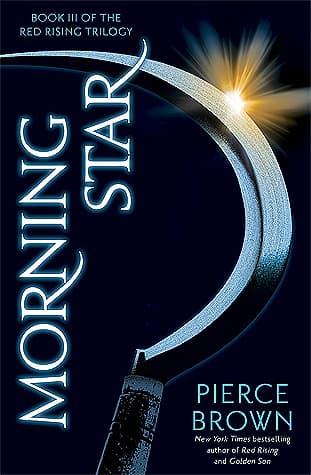
Pierce Brown (2016)
Genre
Fantasy / Science Fiction / Young Adult
Reading Time
12-15 hours
Key Themes
See below
Sign in to track this book
In the final book, a changed Red miner starts a brutal, galaxy-wide revolution against the tyrannical Golds, making him fight former friends and inspiring the oppressed to break free and create a new future.
After the battle on Luna, Darrow is captured by the Society and tortured by the ArchGovernor, Lysander au Lune, and the Sovereign, Octavia au Lune. Imprisoned in a high-security facility, Darrow faces isolation, starvation, and psychological torment meant to break him and reveal Sons of Ares secrets. He is kept in a small, dark cell, often drugged, and constantly reminded of his failures and dead comrades. His only comfort comes from brief hopes and his resolve to avenge Eo and free his people, even as his body and mind are pushed to their limits.
Against great odds, Sevro au Barca, the Howlers, and a small group of Sons of Ares carry out a dangerous rescue mission to free Darrow. Infiltrating the heavily guarded prison, they face strong resistance from Gold forces. Sevro, driven by loyalty to Darrow and a desire for revenge, leads the charge with his usual recklessness and skill. The rescue involves close calls and heavy losses, but their determination wins. Darrow, thin and weak, is surprised and relieved to see his friends, a new spark of hope lighting in him as he is pulled from his captors, marking the true start of the revolution.
After his escape, Darrow is taken to a hidden rebel base, where he begins to recover physically and mentally. He reunites with his closest allies, including Sevro, Mustang (Virginia au Augustus), and Cassius au Bellona, who seems to have joined the rebels. The first reunion is tense, especially with Mustang, who resents Darrow's deception and the chaos he caused. However, their shared goal and deep affection eventually bring them back together. Darrow, though still bearing scars from his imprisonment, starts to plan with his command staff, assessing the rebellion's state and forming a plan to attack the Society, starting with securing the Rim.
Darrow, now recovered and leading a united rebel fleet of Sons of Ares, Obsidian raiders, and disillusioned lowColors, launches a large attack against the Society's base in the Rim. The goal is to secure resources and strategic positions, cutting off the Society's supply lines and gaining an advantage. The battle is a brutal, large-scale space fight, with Darrow showing his tactical genius. He uses unusual maneuvers and the combined strengths of his diverse forces to outsmart the Society's superior fleet. Despite heavy losses on both sides, Darrow's forces win, securing a crucial foothold and proving the rebellion's strength to a doubtful galaxy.
With the Rim secured, Darrow must navigate the difficult politics of the rebellion, uniting different groups and gaining the loyalty of powerful, often self-serving, warlords. He forms a difficult alliance with the Ash Lord, Romulus au Raa, a strong Gold who dislikes Octavia's rule but is wary of Darrow's revolutionary ideas. During this time of consolidation, Darrow uncovers a betrayal: Cassius au Bellona, who seemed to have returned to Darrow's side, reveals his loyalty to the Sovereign, Octavia. This news is a deep blow, both strategically and personally, as Darrow deals with the pain of a shattered friendship and the realization of how much he misjudged his former friend's loyalty.
Darrow targets Mars, the Society's heart, starting a full invasion to overthrow Octavia au Lune. The siege is a huge effort, involving ground forces, orbital attacks, and complex city fighting. Darrow, leading from the front, inspires his troops with his courage and skill. The battle for Mars involves intense fighting, heavy losses, and moral dilemmas, as Darrow's forces clash with strong Gold legions and their lowColor servants. This is not just a military campaign, but a psychological one, as Darrow seeks to break the Society's hold on its people and start a widespread uprising among the lower Colors, turning their own capital against them.
Deep inside Mars, Darrow confronts the Sovereign, Octavia au Lune, in a tense and brutal fight. Octavia, a cunning and ruthless leader, tries to manipulate Darrow, appealing to his honor and warning him of the chaos his revolution will bring. However, Darrow, having endured years of her tyranny and the loss of countless lives, remains firm. The confrontation ends in a fierce battle, not just of wills but of physical skill, as Darrow, with his allies' support, defeats Octavia. Her death marks a symbolic victory for the rebellion, removing the leader of the oppressive Society and signaling a dramatic shift in power.
Right after Octavia's defeat, the victory celebration is short. The Ash Lord, Romulus au Raa, whose alliance with Darrow was always shaky, reveals his true, self-serving ambitions. Instead of supporting a new, fairer society, he tries to seize power for himself, aiming to establish a new Gold-dominated order under his rule. This shocking betrayal threatens the newly won peace, forcing Darrow and his exhausted forces to prepare for battle again. The Ash Lord's move highlights how fragile alliances are and the deep corruption within the Gold hierarchy, even among those who first claimed to oppose Octavia.
Darrow, Mustang, Sevro, and their remaining loyal forces launch a desperate final campaign against the Ash Lord's new power. The conflict is intensely personal, as Darrow fights not just for victory but for the revolution's soul — to prevent a new tyranny from replacing the old. This final confrontation tests Darrow's leadership, tactical skill, and ability to inspire hope against great odds. The battle is fierce, pushing every character to their limits, with significant sacrifices made. Ultimately, through skill, courage, and the collective will of the diverse rebel forces, the Ash Lord is defeated, clearing the way for a truly free Society.
With the Ash Lord defeated and the Society's rule ended, Darrow, Mustang, Sevro, and their surviving allies begin the hard task of rebuilding. The war has taken a huge toll, leaving scars, but a fragile peace has been achieved. Darrow, having kept his promise to Eo and freed his people, steps back from immediate command, knowing that the future needs different skills than those of a warlord. He and Mustang, now in love and expecting a child, look towards a future where equality and justice can grow, setting the stage for a new, fairer world, though challenges of governance and lasting peace are just beginning.
The Protagonist
Darrow transforms from a vengeful warrior to a statesman, learning that true victory requires not just destruction but also construction and compromise, ultimately embracing a future beyond war.
The Supporting
Mustang evolves from a conflicted Gold noble to a pivotal leader of a new society, balancing her love for Darrow with her commitment to a just future.
The Supporting
Sevro remains steadfast in his loyalty and role as Darrow's enforcer, but also grows to understand the need for a future beyond constant warfare.
The Supporting
Cassius's arc is one of constant internal conflict and eventual redemption, moving from a position of betrayal to one of critical self-sacrifice for a greater cause.
The Antagonist
Octavia's arc is one of unwavering tyranny, ultimately ending in her downfall and the dismantling of her oppressive regime.
The Supporting
Lysander solidifies his commitment to the Gold order, beginning his transformation into a future antagonist, driven by a desire to restore what he believes is the rightful hierarchy.
The Supporting
Victra remains a steadfast and crucial warrior throughout the war, her loyalty and combat prowess proving indispensable to the rebel cause.
The Antagonist
The Ash Lord's arc is one of calculated ambition and ultimate defeat, revealing the deep-seated corruption within even those who oppose the reigning power.
Morning Star shows the great human cost of revolution. Darrow constantly deals with the moral compromises, the unavoidable deaths, and the psychological impact of war. Scenes of brutal combat, like the siege of Mars, show the devastation, while Darrow's internal struggles and despair in prison highlight the personal sacrifices. The theme questions if the promised freedom is worth the blood spilled and the innocence lost, making Darrow and his allies face the ethics of their violent path to a better world, and the difficulty of building peace from war's destruction.
“Freedom is a burden, not a gift.”
The novel explores the changing and complex nature of identity. Darrow, a Red changed into a Gold, constantly navigates his dual nature, questioning his true self. His journey is one of continuous change, not just physically but in his beliefs, as he goes from a vengeful husband to a leader of a galaxy-wide revolution. Other characters, like Cassius, also struggle with their identities, torn between their inherited status and their personal beliefs. The theme explores how circumstances, choices, and suffering shape a person, and whether one can truly escape the past or the color they were born into, even when fighting to change the system.
“I am Darrow, but I am also the Reaper. One cannot exist without the other.”
Morning Star is a story woven with strong loyalty and devastating betrayal. The deep bonds between Darrow, Sevro, and Mustang are tested repeatedly, proving strong even through conflict and misunderstanding. Conversely, Cassius's betrayal deeply hurts Darrow, showing how fragile trust is in a war-torn galaxy. The shifting alliances, especially with figures like the Ash Lord, constantly remind characters and readers that true allegiance is rare and valuable, often hidden by personal ambition or prejudice. This theme highlights the emotional stakes of the war, where trust can be a weapon or a shield.
“Trust is a blade that cuts both ways.”
The book carefully examines different forms of power and leadership. Octavia au Lune represents the tyrannical power of the old regime, kept through fear and strict hierarchy. Darrow, in contrast, shows a more democratic, inspiring form of leadership, earning loyalty through courage and a shared vision. The challenges Darrow faces in uniting different groups and managing the ambitions of allies like the Ash Lord show the complexities of governance and the constant fight against corruption. The theme questions what makes a just leader, the responsibilities of those with power, and the dangers of unchecked authority, even when pursuing good goals.
“A leader is not one who commands, but one who serves.”
An unexpected intervention that saves the protagonist from an impossible situation.
Darrow's rescue from his torturous imprisonment by Sevro and the Sons of Ares serves as a crucial *deus ex machina*. At the lowest point of his captivity, with Darrow on the brink of breaking, this sudden and highly improbable liberation provides the necessary catalyst for the story to continue. While not entirely without setup (Sevro's loyalty is established), the timing and success of such a daring infiltration against the Society's most secure facility, after months of Darrow's suffering, feels almost miraculously timed to reignite the rebellion and Darrow's spirit, preventing the narrative from sinking into prolonged despair.
A character who feigns allegiance to one side while secretly working for another.
Cassius au Bellona's apparent defection to Darrow's side, only to reveal himself as a double agent working for Octavia, is a significant plot device. This betrayal not only creates a massive emotional blow for Darrow and Mustang but also serves as a strategic misdirection for the reader and the rebels. His actions provide Octavia with crucial intelligence and allow her to anticipate rebel moves. Later, his re-defection and ultimate sacrifice for the rebellion complicate this device, showing the shifting loyalties and the 'fog of war' where enemies become allies, and vice versa, keeping the audience constantly on edge about who to trust.
An object or goal that drives the plot forward, often without intrinsic importance.
While not a single object, the strategic objective of securing the Rim and its vital resources acts as a significant MacGuffin early in the novel. The need to control these territories and their associated supplies (mines, shipyards, etc.) provides a concrete military goal that mobilizes the rebel fleet and drives a major battle sequence. Its inherent importance is to provide a staging ground and logistical support for the larger war, but for the immediate narrative, it serves as the primary, tangible objective that Darrow must achieve to demonstrate the rebellion's strength and set the stage for the assault on Mars.
Hints or clues about future events, often subtle.
Subtle hints regarding Mustang's pregnancy serve as a key piece of foreshadowing throughout the latter half of the novel. Her occasional nausea, Darrow's observations of her fatigue, and their discussions about a future beyond war subtly prepare the reader for the eventual reveal. This device adds emotional weight to the ongoing conflict, as the prospect of a child creates a tangible stake for the future Darrow is fighting for. It transforms the abstract goal of 'peace' into a very personal and immediate hope, emphasizing the generational impact of the revolution and providing a powerful, hopeful conclusion to the trilogy.
“Man is a beautiful animal. He is a dangerous animal. He is a lonely animal.”
— Darrow reflecting on humanity and its nature.
“I would have lived in peace. But my enemies brought me war.”
— Darrow's internal justification for his actions and the rebellion.
“Break the chains. Live forever.”
— A rallying cry and core theme of the rebellion.
“You do not follow me because I am the strongest. Pax is the strongest. You do not follow me because I am the smartest. Sevro is the smartest. You follow me because I am the leader. And I will lead you to freedom.”
— Darrow addressing his Howlers, defining his leadership.
“The only thing worse than a monster is a monster who thinks he's a god.”
— Darrow's assessment of the Golds' arrogance and cruelty.
“Hope is not a thing you are given. It is a thing you have to make.”
— Darrow's realization about the active nature of hope during dark times.
“I am not a hero. I am a weapon. And weapons do not weep.”
— Darrow's internal struggle with his identity and the sacrifices he's made.
“Love is not a dream. Love is a war.”
— Mustang's pragmatic view on the nature of love in their world.
“Sometimes the best way to save someone is to let them go.”
— Darrow's difficult decision regarding certain allies or loved ones.
“The greatest trick the devil ever pulled was convincing the world he didn't exist. The greatest trick the Golds ever pulled was convincing the world they were gods.”
— Darrow drawing a parallel between the Golds' propaganda and a famous quote.
“It's not about what you can take. It's about what you can give.”
— A lesson learned about true strength and leadership.
“We are not just fighting for our lives. We are fighting for our souls.”
— Darrow emphasizing the moral and existential stakes of the rebellion.
“A man who cannot forgive is a man who cannot live.”
— Darrow contemplating the importance of forgiveness, even for his enemies.
“To govern is to choose.”
— Mustang's concise definition of the burden of leadership and decision-making.
Ready to see how well you understood this book? Take our interactive quiz with 10 questions.

Biography coming soon.







