“He took a bite of the liver. It tasted like liver, but as he chewed, it felt like it was growing larger in his mouth.”
— From 'The Dead Man's Brains,' a story about a man who eats a peculiar meal.

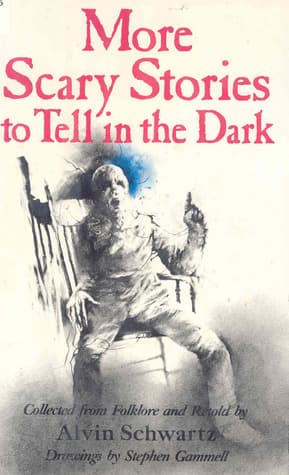
Alvin Schwartz (1605)
Genre
Fantasy / Children's / Young Adult
Reading Time
90 min
Key Themes
See below
Sign in to track this book
This chilling collection blurs the line between life and death, turning practical jokes gruesome, and bringing classic scares to life with Stephen Gammell's unsettling illustrations.
A young boy digging for vegetables finds a severed human toe. He ignores his mother's advice to rebury it and takes it inside. Later that night, as the family eats, a monstrous voice from outside chants, 'Who's got my big toe?' The voice gets closer and louder, moving from the garden, to the porch, and then into the house. The terrified boy confesses he has the toe. The voice then demands, 'You've got it, now give it to me!' The story typically ends with the teller lunging at the audience for a jump scare.
A man murders his wife and buries her in the cellar. He tells neighbors she left him to avoid suspicion. A small black dog, which belonged to his wife, keeps digging at the burial spot. The man tries to get rid of the dog by drowning it, then by hanging it, but each time the dog reappears. Each time it returns, it is dirtier and more persistent, always digging at the same spot. Eventually, the man's frantic attempts to get rid of the dog, along with its uncanny returns, lead neighbors to investigate. They uncover the wife's body and the man's crime.
A woman working in her garden sees what she believes is a venomous viper. Panicked, she calls to her husband inside the house. Before he can reach her, she faints, convinced she has been bitten. Her husband rushes out and finds her unconscious. He quickly kills the snake, then, believing his wife is dying, tries to suck venom from her supposed wound. He then realizes she was not bitten at all, and the snake was harmless. However, the shock and her husband's misguided attempt to save her cause her actual death.
This is a rhyming song, not a story. It describes in graphic detail the process of decomposition after death and burial. The lyrics paint gruesome images of worms, falling eyes, peeling skin, and the body slowly turning to goo. It emphasizes the inevitability and unpleasantness of bodily decay, serving as a chilling reminder of mortality. The song is often used to set a morbid atmosphere, highlighting the physical end awaiting everyone.
A group of medical students dares a classmate to spend a night in the dissection room, where a cadaver lies. Another student hides in the room as a prank, intending to scare the dare-taker. In the middle of the night, the student hears a noise and sees a shadowy figure. Believing it to be a ghost, he throws a preserved human brain at it. The hidden student, startled and injured, screams. The first student, thinking he hit a real ghost, dies of fright. The prankster is left with the horrific realization that his joke caused his friend's death.
Two terminally ill men share a hospital room. One man, Mr. Jones, is propped by a window. The other, Mr. Smith, is confined to his bed on the opposite side. Mr. Jones regularly describes the beautiful world outside his window: children playing, boats sailing, a bustling park. Mr. Smith, unable to see it, becomes envious and resentful of Mr. Jones's ability to witness such beauty. One night, Mr. Jones has a coughing fit. Mr. Smith, instead of calling for help, lets him die. The next morning, Mr. Smith eagerly asks to be moved to the window. When he is, he discovers the window looks out onto a blank brick wall.
During a wedding, the bride suggests a game of hide-and-seek. She hides in an old chest in the attic, thinking it a clever spot. The chest has a spring lock, and once she climbs inside, the lid snaps shut, trapping her. Her husband and guests search for her for hours, then days, but she is not found. The wedding becomes a tragic mystery. Years later, a servant discovers the old chest in the attic. Opening it, they find a skeleton in a decaying wedding dress, revealing the bride's horrifying fate.
A teenage girl is babysitting two young children in a large, unfamiliar house. She receives unsettling phone calls from a man who repeatedly asks, 'Have you checked the children?' Initially, she dismisses them as a prank or wrong number. Growing unnerved, she calls the police. The police trace the call and tell her to leave the house immediately, revealing that the calls are coming from an extension *inside* the house. The implication is that the caller is already inside, or has been, and the children are in danger.
A teenage couple, Bill and Mary, are parked in a secluded spot. The radio plays in the background, interrupted by a news bulletin about an escaped mental patient, a man with a hook for a hand, who targets young couples. Mary becomes frightened and urges Bill to leave. Bill, annoyed by her fear, tries to reassure her, but Mary insists. As they argue, Mary hears a scraping sound outside the car. Bill finally gives in and speeds away. When they arrive back at Mary's house, they find a bloody hook hanging from the car's door handle, proving the killer was right outside their car.
A greedy man, passing a graveyard late at night, notices a newly dug grave. He sees a hand sticking out of the ground, clutching a bag of money. Overcoming his fear, he pries the money from the dead hand and takes it. As he walks away, he hears a voice behind him whisper, 'Give me my money!' He tries to run, but the voice follows, getting closer and closer, repeating the demand. No matter how fast he runs or where he hides, the chilling voice and dragging footsteps pursue him, suggesting the spectral owner will never let him rest until his stolen goods are returned.
A poor young girl desperately wants a drum for Christmas, but her family cannot afford one. On Christmas Eve, she sees a ghostly figure, a woman in white, appear in her room. The ghostly woman asks the girl what she wants for Christmas. The girl, unafraid, says she wants a drum. The next morning, the girl wakes up to find a new drum beside her bed. She plays it joyfully, but her parents are disturbed, as they did not buy it and do not know where it came from. The story often ends with the implication that the ghost was benevolent, but its origin remains mysterious and slightly eerie.
A group of teenagers dares a brave girl to go into a graveyard at midnight and stick a knife into a particular grave to prove she was there. The girl agrees. She walks alone to the graveyard. When she reaches the designated grave, she kneels and plunges the knife into the ground. As she tries to stand, she feels a tug and cannot move. Convinced a ghost has grabbed her, she screams in terror and collapses. The next morning, her friends find her dead on the grave. They discover that in her panic, she had accidentally stabbed the knife through her own skirt, pinning herself to the ground.
A family moves into an old house. The children find a peculiar room at the top of the stairs. The room is always locked, and the parents forbid them from entering. One day, the children pick the lock and sneak inside. The room is empty except for a large, dusty mirror. As they look into the mirror, they see not their own reflections, but shadowy figures moving behind them. The children flee in terror. When they tell their parents, the parents become agitated, hinting at a past tragedy associated with the room, leaving the true horror to the imagination.
The Implicit Protagonist/Storyteller
Not applicable, as they are a meta-character.
The Protagonist
Starts curious and defiant, ends utterly terrified and regretful.
The Antagonist
Starts as a confident murderer, devolves into a desperate, paranoid man whose guilt is exposed.
The Protagonist/Victim
Begins as an ordinary gardener, ends as a victim of her own terror and a tragic accident.
The Antagonist/Protagonist
Starts envious and self-pitying, becomes selfishly indifferent, and ends disillusioned and alone.
The Protagonist/Victim
Begins joyful and playful, ends as a tragic, forgotten victim.
The Protagonist
Starts as a typical, somewhat naive teen, becomes increasingly fearful and desperate for safety.
The Protagonist/Antagonist
Starts greedy and daring, becomes terrified and relentlessly pursued.
Many stories show that violating norms, whether social, moral, or supernatural, leads to bad outcomes. Characters who steal from the dead ('The Thing'), murder ('The Little Black Dog'), or ignore warnings ('The Big Toe') face terrifying retribution. This theme reinforces a sense of justice, even if delivered by uncanny forces, suggesting that certain boundaries should never be crossed. The horror often comes directly from the character's initial misdeed.
“'You've got it, now give it to me!'”
Several tales explore how fear itself can be as dangerous, or more dangerous, than the actual threat. In 'The Viper,' a woman dies purely from believing she has been bitten, not from an actual snakebite. Similarly, in 'The Girl Who Stood On A Grave,' the girl dies of fright, convinced a ghost has pinned her, when it was her own skirt. This theme highlights the psychological aspect of horror, showing how the mind can create its own terrifying realities and fatal outcomes.
“She was dead, not from the snake, but from fear.”
A core theme is the intrusion of the supernatural into everyday life, often without clear explanation. Ghosts, reanimated body parts, and relentlessly pursuing entities defy natural laws, creating unease and dread. The horror is not always about gore, but about the inexplicable and unsettling. Stories like 'The Little Black Dog' and 'The Thing' feature entities that cannot be reasoned with or destroyed, emphasizing human powerlessness against such forces and the idea that the dead do not always stay buried.
“No matter what he did, the dog always came back.”
Beyond supernatural threats, many stories explore the darkness within people, such as greed, envy, and malice. The murderer in 'The Little Black Dog' and the envious Mr. Smith in 'The Window' are driven by selfish and harmful impulses. Even pranks, as seen in 'The Dead Man's Brains,' can have gruesome, unintended consequences. This theme suggests that humans themselves can be sources of horror, sometimes leading to outcomes as terrifying as any ghost or monster.
“He just let him choke. He didn't call for the nurse.”
A sudden, intense moment designed to startle the audience.
This device is frequently employed, especially in stories like 'The Big Toe' and 'The Hook,' where the ending involves a sudden reveal or a physical lunge from the storyteller. It relies on building tension and then releasing it with an unexpected, loud, or visually shocking element. The jump scare is effective for its immediate impact, eliciting a visceral reaction of fright from the audience, making the stories particularly memorable for oral telling.
Events or entities that defy logical explanation, leaving a lingering sense of dread.
Many stories feature elements that have no rational basis, such as a dog that cannot be killed and constantly reappears ('The Little Black Dog') or a voice that follows a thief from a grave ('The Thing'). This device is crucial for creating an atmosphere of uncanny horror, as the lack of explanation makes the threat feel more pervasive and uncontrollable. It forces the audience to confront the limits of their understanding, making the unknown inherently terrifying.
Situations where a character's actions or desires lead to an unexpected, often tragic, outcome.
This device is prominent in tales like 'The Bride,' where her playful hiding leads to her death, or 'The Window,' where Mr. Smith's envy for a view turns out to be for nothing. In 'The Girl Who Stood On A Grave,' the girl's bravado leads her to accidentally pin herself, dying of fright. Irony of fate highlights the unpredictability of life and the often cruel twists of destiny, making the horror more poignant as characters often become victims of their own choices or desires.
Subtle hints or explicit advice that portend future danger or consequences.
In 'The Big Toe,' the mother's warning to rebury the toe foreshadows the terrifying visitation. In 'The Hook,' the radio report about the escaped killer explicitly sets up the impending danger. This device builds suspense by letting the audience know that something bad is likely to happen, increasing their anticipation and dread. It also makes the eventual horror feel earned and inevitable, rather than random, reinforcing the idea of cause and effect in the scary narratives.
“He took a bite of the liver. It tasted like liver, but as he chewed, it felt like it was growing larger in his mouth.”
— From 'The Dead Man's Brains,' a story about a man who eats a peculiar meal.
“She opened the door. There on the porch stood a tall, skinny woman dressed in black. Her face was pale, and her eyes were like two burning coals.”
— From 'The Girl Who Cried Wolf,' where a girl encounters a mysterious stranger.
“He kept hearing it, over and over again: 'Somebody's on the roof! Somebody's on the roof!'”
— From 'Somebody's on the Roof,' a tale of an unsettling sound.
“The wind howled. The house groaned. And then the door slowly, slowly opened.”
— From 'The Wind,' setting a classic spooky scene.
“She looked down at her feet. They were not her feet. They were the feet of a pig.”
— From 'The Pigman,' a bizarre transformation story.
“And then he saw them. Two eyes, glowing red in the darkness, staring at him from under the bed.”
— From 'The Red Eyes,' a classic monster-under-the-bed scenario.
“He reached out and touched it. It was cold. Colder than anything he had ever felt.”
— From 'The Cold Hand,' describing a chilling encounter.
“The coffin was empty. But then they heard a scratching sound coming from inside the wall.”
— From 'The Wall,' a story about a missing body and an eerie sound.
“She saw a hand waving at her from the window. But there was no one there.”
— From 'The Waving Hand,' a spectral apparition.
“He looked in the mirror. His reflection was smiling. But he wasn't.”
— From 'The Reflection,' a creepy doppelganger tale.
“The ground began to shake. And then a giant, hairy arm burst out of the earth.”
— From 'The Hairy Arm,' a story of a monstrous emergence.
“She heard a whisper, right next to her ear: 'I'm coming to get you.'”
— From 'The Whisper,' a terrifying, intimate threat.
“And then, in the darkness, he saw them. Hundreds of them. Crawling. Crawling everywhere.”
— From 'The Crawlers,' evoking a primal fear of insects or unseen creatures.
Ready to see how well you understood this book? Take our interactive quiz with 10 questions.
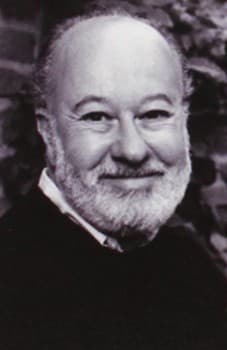
Alvin Schwartz was a renowned American author celebrated for his collections of folklore and urban legends, most notably the "Scary Stories to Tell in the Dark" series. These books, filled with chilling tales and accompanied by memorable illustrations, became a staple for young readers seeking spooky adventures. Schwartz's work tapped into traditional storytelling, making him a significant figure in children's literature.







