“The thing about being dead is that it doesn't give a damn what you think about it.”
— Kane's cynical view on mortality and the finality of death.

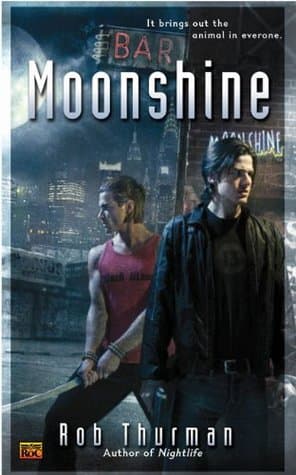
Rob Thurman (2007)
Genre
Fantasy / Mystery
Reading Time
360 min
Key Themes
See below
Sign in to track this book
In a New York City filled with the preternatural, half-human Cal Leandros and his brother Niko enter the dangerous underworld of the werewolf mafia, only to learn they are the real targets in a deadlier game.
Cal Leandros and his half-brother Niko have made a life for themselves in New York City, trying to live normally after their past adventures. They run a detective and bodyguard agency, handling cases for the city's many preternatural residents. Their newest client is Sal, a low-level werewolf boss who thinks a rival, Donato, is trying to frame him. Sal wants Cal and Niko to go undercover at Moonshine, an exclusive gambling club for non-humans, to get information. Cal, always confident, believes it will be an easy job, despite Niko's caution. They prepare to enter the dangerous world of the Kin, the werewolf mafia, unaware of the deeper plot.
Cal and Niko get into Moonshine, a high-stakes gambling club for various preternatural beings. Cal uses his charm, and Niko uses his poker skills, to quickly fit in. Their goal is to watch and listen for any information about Donato's plot against Sal. But the club is full of tension and suspicion. Cal, who always finds trouble, soon joins a high-stakes poker game, where he meets other powerful and mysterious preternatural players. The brothers realize Moonshine is more than a gambling den; it is a center of power and intrigue in the non-human underworld, making their 'simple' observation job much harder and more dangerous.
As Cal and Niko continue their investigation at Moonshine, they find troubling inconsistencies. They realize Sal's information does not add up, and the atmosphere suggests a deeper plot than just a rivalry between werewolf bosses. Cal's instincts, usually reliable in a fight, tell him they are not just investigating a setup, but are themselves being set up. They find evidence that Sal might be more involved than he said, or that someone else controls things from the shadows. The brothers are now in a difficult spot, caught between rival Kin factions and an unknown, more powerful entity that seems to be manipulating events. The 'simple in-and-out job' has become a deadly trap.
The true threat appears when Cal and Niko meet a new creature: the Harvesters. These beings are very powerful, seem immune to normal attacks, and can drain life force. Their presence at Moonshine, and their link to the plot, confirms the situation is far worse than a werewolf power struggle. The Harvesters are not just a new enemy; they represent a major change in the types of threats Cal and Niko usually face. They are ruthless and driven by an unknown, terrifying goal. The brothers realize they face something ancient and extremely dangerous, far beyond their usual preternatural enemies.
Facing the Harvesters' immense power, Cal and Niko realize they cannot win alone. They must form uneasy alliances with people and groups they would normally see as enemies. This includes some morally questionable Moonshine regulars and even some Kin members who also feel threatened by the Harvesters. These alliances form out of necessity, marked by suspicion but also a shared understanding of the danger. Cal's ability to charm and annoy, combined with Niko's strategic mind, helps unite these different groups against a common, terrifying enemy. The lines between friend and foe blur as survival becomes the main concern.
Through their investigations and fights, Cal and Niko eventually discover the true leader behind the Harvesters and the plot at Moonshine. It is an ancient, very powerful entity that has been manipulating events for its own dark purposes, using the Kin's rivalries as a cover. This entity does not just seek power or territory; its goals are far more apocalyptic, involving the systematic harvesting of souls and life force. The reveal of this entity's identity and its plan chills Cal and Niko, as they realize they face a threat that could destroy the entire preternatural world, and possibly beyond. The stakes become unimaginably high.
With the true threat known, Cal and Niko, with their uneasy allies, must create a desperate plan to stop the Harvesters and their ancient master. The plan is dangerous, requiring them to confront the entity directly in its hidden stronghold beneath Moonshine. They must fight not only the Harvesters' power but also the entity's vast magic and its ability to warp reality. The strategy uses brute force, clever tricks, and exploiting any weaknesses in the entity's old defenses. Cal's demonic heritage and Niko's strong combat skills will be pushed to their limits in this final fight.
The story's climax shows Cal, Niko, and their allies in a brutal, all-out battle against the ancient entity and its Harvester servants in its hidden lair beneath Moonshine. The entity proves to be a strong foe, unleashing devastating attacks and trying to break its opponents' wills. Cal, using his demonic heritage, fights with savage intensity, while Niko, though human, shows incredible bravery and fighting skill. Many allies die, showing the enemy's immense power. The brothers must work perfectly together, using their combined strengths and unique abilities to strike at the entity's core, even as it tries to consume their souls. It is a battle for the fate of New York City's preternatural world.
With strategic brilliance, raw power, and significant sacrifices from their allies, Cal and Niko defeat the ancient entity. The victory is hard-won and leaves them both physically and emotionally exhausted. The entity's destruction causes a massive magical backlash, showing its power. While the immediate threat is gone, the cost is clear in the lives lost and the damage done. The brothers reflect on the experience, knowing that even after winning, the world remains dangerous, and new threats will always appear. They renew their promise to protect the innocent, even if it means risking their lives against increasingly powerful enemies.
After the battle, Cal and Niko tend to their wounds and start to rebuild their lives. The events at Moonshine leave a lasting mark, making them rethink their understanding of the preternatural world and the scale of threats they might face. While the immediate danger is gone, the experience leaves questions about the Harvesters' origins, the ancient entity's true influence, and if similar threats exist elsewhere. The brothers know their work is never truly done, and that the city's hidden dangers constantly change. They prepare for their next case, knowing their lives will always be tied to the supernatural, and that 'normal' is forever out of reach for them.
The Protagonist
Cal grapples with the escalating scale of supernatural threats, forcing him to rely more on strategic thinking and less on brute force, and to acknowledge the limits of his own power.
The Protagonist
Niko's resolve is tested as he faces enemies far beyond human capability, solidifying his role as Cal's indispensable partner and equal.
The Supporting
Sal transitions from a client with questionable motives to a reluctant ally, forced to cooperate against a greater threat, highlighting the fragility of his own power.
The Mentioned/Supporting
Donato serves as an initial red herring, his rivalry with Sal diverting attention from the true antagonist, and is eventually revealed to be a lesser player in the grand scheme.
The Antagonist
The entity is revealed as the ultimate orchestrator, its ancient power and sinister agenda driving the conflict, until its eventual defeat by Cal and Niko.
The Supporting Antagonist
The Harvesters emerge as a new, terrifying threat, showcasing the escalating power of the antagonists, before being systematically defeated alongside their master.
The novel looks at the blurred lines between good and evil, especially in the preternatural world. Cal, a demon-human hybrid, constantly deals with his own darkness while trying to do good. Characters like Sal and other Moonshine residents live in morally gray areas, forced to make hard choices to survive. The main villain, the Ancient Entity, represents pure evil, contrasting with the complex morality of the heroes and their uneasy allies. The story questions the idea of clear heroes and villains, highlighting the choices people make regardless of their nature, as seen when Cal chooses to protect innocents despite his demonic side.
“"Being good isn't about what you are, it's about what you do."”
The bond between Cal and Niko is the story's emotional heart. Despite their very different natures—one human, one demon-hybrid—their loyalty to each other is strong. Niko acts as Cal's conscience and support, while Cal's protective instincts for Niko are fierce. This theme extends to chosen family and alliances formed under pressure. Even among the ruthless Kin, loyalty within their ranks, or to a difficult truce, is a key part. The story shows that true family goes beyond blood, built on trust and shared purpose, especially clear in how Cal and Niko face huge challenges together, relying only on each other.
“"He was my brother, and for him, I'd burn the world down."”
Cal's struggle with his demonic heritage and his place in the world is a main theme. He constantly deals with the 'monster' within and how others see him. The preternatural community in New York City, including Moonshine's patrons, all try to find their place and identity in a world that often fears or misunderstands them. The story explores accepting one's true self, flaws and all, and finding belonging despite being an outcast. Cal's journey is one of self-acceptance, realizing that his power, though dangerous, can be used for good, and that his identity is more than just his demonic lineage.
“"Sometimes, the monsters are the only ones who understand."”
The novel consistently shows that power, whether supernatural or political, comes with significant costs. The Kin's internal power struggles lead to betrayal and violence. The Ancient Entity's huge power directly links to its destructive, soul-draining plan. Cal's own demonic abilities, while important for fighting evil, also carry a heavy burden and risk of losing control. The story illustrates that wielding great power often requires great sacrifice, and that unchecked power leads to corruption and destruction. The sacrifices made by allies to defeat the Ancient Entity emphasize this theme, showing that victory often demands a high price.
“"Power doesn't make you strong, it just makes you dangerous."”
A classic mystery device used to introduce the protagonists into the conflict.
Cal and Niko going undercover at Moonshine serves as the initial catalyst for the plot. It allows them to infiltrate a closed society, observe its dynamics, and gather information organically. This device is crucial for building suspense and gradually revealing the true nature of the threat, as the brothers initially believe they are on a simple case before uncovering the deeper conspiracy. It also highlights their skills as detectives and their ability to blend into various preternatural subcultures, while simultaneously placing them in direct danger from the outset.
Misleading clues or characters designed to divert attention from the true antagonist.
The initial conflict between Sal and Donato, and the supposed framing plot, acts as a significant red herring. This device misdirects both the characters and the reader, creating a sense of a conventional preternatural mob mystery before the true, more ancient and powerful threat of the Harvesters and the Ancient Entity is revealed. This misdirection amplifies the shock and danger when the real antagonist emerges, making the initial problems seem trivial by comparison and underscoring the cunning of the true mastermind.
Forced cooperation between characters who would normally be adversaries.
As the threat of the Harvesters and the Ancient Entity escalates, Cal and Niko are forced to forge uneasy alliances with various preternatural beings, including members of the Kin and other morally ambiguous figures from Moonshine. This device highlights the existential nature of the threat, as old rivalries are set aside for mutual survival. It also allows for character development, showcasing how even antagonists can be brought together by a greater evil, and demonstrates the resourcefulness and persuasive abilities of the protagonists in uniting disparate factions.
A secret, often ancient, location where the antagonist's power resides.
The discovery of the Ancient Entity's hidden lair beneath Moonshine serves as a classic plot device, providing a physical manifestation of the antagonist's power and a clear destination for the final confrontation. This secret location is typically imbued with the antagonist's essence and magic, making it a dangerous and challenging environment for the protagonists. It allows for a dramatic climax where all the plot threads converge, and the true extent of the entity's malevolence and power is fully unleashed in a confined, intense setting.
“The thing about being dead is that it doesn't give a damn what you think about it.”
— Kane's cynical view on mortality and the finality of death.
“Sometimes the best way to hide something is to put it right out in the open, where no one expects to find it.”
— Kane reflecting on human perception and misdirection during an investigation.
“Monsters aren't born, they're made. And sometimes, the making isn't even their fault.”
— A philosophical observation about the origins of evil and the impact of circumstances.
“Trust is a luxury I can't afford. Not anymore.”
— Kane's jaded perspective on relationships after past betrayals.
“There's a fine line between crazy and genius. I've been told I straddle it like a rodeo clown.”
— Kane's self-deprecating humor about his own unconventional methods.
“The past is a hungry ghost. It never stops looking for a meal.”
— A metaphorical statement about how past events continue to influence the present.
“Every lie we tell casts a shadow. And eventually, those shadows merge into an unbreakable darkness.”
— Reflecting on the cumulative effect of lies and deceit.
“Some secrets are better left buried. Others, well, they just rot and stink up the whole damn world.”
— Kane discussing the nature of secrets and their potential for harm.
“You can't outrun your demons. Eventually, they catch up. And they're always hungrier than you remember.”
— A grim reminder about facing one's inner struggles.
“Justice is a pretty word, but it doesn't always wash the blood off your hands.”
— Kane's pragmatic and often brutal view on the practicalities of justice.
“Fear is a funny thing. It can make you run, or it can make you fight. Depends on how tired you are of running.”
— An observation on the dual nature of fear as a motivator.
“The world isn't black and white. It's a thousand shades of gray, most of them ugly.”
— Kane's realistic and cynical outlook on the complexities of the world.
“Even the strongest chains can be broken, if you know where to find the weak link.”
— A metaphor for overcoming obstacles or uncovering vulnerabilities.
“You learn more from your mistakes than your triumphs. Or at least, you should.”
— A reflection on the importance of learning from failure.
Ready to see how well you understood this book? Take our interactive quiz with 10 questions.

Biography coming soon.







