
Biography coming soon.

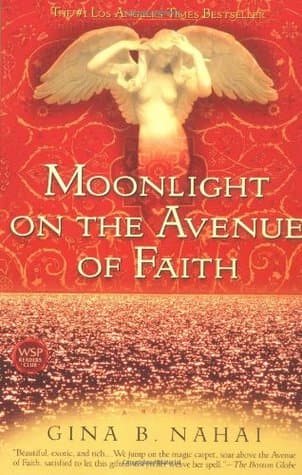
Gina B. Nahai (1999)
Genre
Fantasy / Historical Fiction
Reading Time
12 Minutes
Key Themes
See below
Sign in to track this book
A young girl's lifelong search to understand her mother's mysterious disappearance reveals a generations-spanning story of resilience, magic, and the quest for belonging across Tehran, Turkey, and Los Angeles.
The story begins with five-year-old Lili describing the day her mother, Roxanna, known as 'Roxanna the Angel,' seemingly jumped from their grand house's balcony on Tehran's Avenue of Faith. Yet, there is no body, no sign of a fall, and no trace of an escape. The family is in chaos, their lives changed by this unexplained event. Lili is the only witness, and her memory of it is both clear and confusing. The authorities are puzzled, and the family's extensive search finds nothing. This moment sends Lili on a thirteen-year search to learn what happened to her mother, haunted by the thought she might be alive and the mystery of her leaving.
The story shifts to Roxanna's past, showing her birth as a 'bad-luck child' in Tehran's poor Jewish ghetto. Her mother, Miriam, already struggling with poverty, sees Roxanna's birth as another bad sign. From a young age, Roxanna seems different, with unusual beauty and a sense of destiny that sets her apart. Her early life is marked by hardship and the weight of her family's hopes, especially from her grandmother, a strong woman who tries to guide Roxanna's fate despite superstitions. This time builds Roxanna's strength and her wish for a life beyond the ghetto.
Wanting to escape the ghetto and her family's poverty, Roxanna uses her striking beauty and sharp mind to move through Tehran's social classes. She catches the eye of a rich Iranian aristocrat, gaining entry into a world of wealth and privilege that contrasts with her humble beginnings. This change is difficult, as Roxanna must learn the new society's complex rules. She experiences both the charm and the superficiality of this elite world, always aware of her past and the instability of her new position.
Roxanna marries into the aristocratic family, securing her place. She gives birth to Lili, and for a time, it seems she has the life she wanted. However, under the surface of this perfect existence, Roxanna feels a growing unease. Despite the comforts, she feels an emptiness and a disconnect from her true self. Her past continues to trouble her, and her new life's strict expectations suppress her spirit. The reasons for her eventual departure begin here, as Roxanna struggles with her identity and the compromises she has made.
After Roxanna vanishes, Lili's childhood is marked by an intense search for answers. She carefully re-examines the balcony, questions family members, and looks through photos, always seeking a clue. Her family, while grieving, tries to move on, but Lili cannot. She often feels a strange connection to her mother, sensing her presence or getting cryptic 'messages' only she can understand. As she grows, Lili's childish wonder becomes a more determined investigation, fueled by a growing suspicion that her mother's disappearance was not a simple suicide, but something far more complex and perhaps intentional.
The story shows Roxanna's life after her 'disappearance' from the balcony. Instead of death, she finds herself in Turkey's dark underworld, specifically in its brothels. This is a harsh contrast to her former life of luxury. Stripped of her identity and forced to endure great hardships, Roxanna must again rely on her strength and wit to survive. This time changes her, forcing her to face human nature's rawest aspects and her own capacity for endurance. She forms unexpected bonds with other women in similar situations, finding a different kind of strength.
Driven by a strong desire for freedom and a new life, Roxanna eventually escapes the Turkish brothels. Her journey takes her across continents, eventually to Los Angeles, California—a city known as a 'city of exiles' for its diverse immigrant population. Here, Roxanna hopes to leave her past behind and create a new identity, free from the limits that defined her life in Iran and the trauma she suffered in Turkey. She meets a community of Iranian exiles, each with their own stories of loss and hope, and begins to build a new life, always with Lili in her heart.
Thirteen years after her mother's disappearance, Lili is a teenager, but her resolve to find Roxanna has not weakened. Despite others' doubt, Lili believes her mother is alive. She continues to search for clues, now with a more mature understanding of the world and a deeper sense of urgency. Her quest shapes her identity, making her an independent and determined young woman. Lili's hope guides her through adolescence and the lingering mystery that shadows her family.
Through separate, difficult paths, both Lili and Roxanna eventually find themselves in Los Angeles. Lili, following intuitions and clues, travels to America, convinced her mother is there. Roxanna, having built a new, modest life in the city, lives with the constant pain of her past and the daughter she left behind. Los Angeles, a mix of cultures and new beginnings, becomes the setting for their eventual reunion, a place where their individual journeys, marked by loss, strength, and hope, are meant to meet.
The long-awaited reunion between Lili and Roxanna finally happens in Los Angeles. It is a moment filled with emotion, relief, and the weight of years of separation and unanswered questions. Roxanna, now able to speak freely, begins to tell the complex and often painful truth behind her disappearance from the Avenue of Faith. She shares her full journey—from the rich life in Iran to the harsh realities of Turkish brothels, and finally, her struggle to build a new life in America. Lili, at last, understands the reasons that led her mother to make such a difficult choice, bringing closure to her lifelong search.
In Los Angeles, Roxanna finds a new sense of belonging among a group of strong women, many of whom are also exiles from Iran. These women, each with their own stories of hardship and new beginnings, form a powerful support system. They share experiences, offer comfort, and help each other adapt to a new country and culture while dealing with their pasts. This sisterhood becomes a vital source of strength for Roxanna, helping her heal and face the emotional scars of her journey. It shows the strength of women facing difficulty.
With the truth revealed and the reunion complete, Roxanna and Lili, along with the other women in their circle, begin to reshape their lives in America. The story explores identity, assimilation, and the pursuit of happiness in a new land. America, presented as a 'land of chances and choices,' offers them the opportunity to redefine themselves, heal from past traumas, and build futures free from their former lives' constraints. The story ends with hope and the promise of new beginnings, showing the lasting strength of the human spirit and the power of love and family.
The Protagonist
Lili transforms from a bewildered child into a resolute young woman, driven by love and an insatiable need for truth, culminating in her reunion with her mother and a deeper understanding of her past.
The Protagonist
Roxanna evolves from a naive girl seeking escape to a hardened survivor, ultimately finding peace and reconciliation in America while revealing the complex truths behind her actions.
The Supporting
Miriam remains largely static, representing the entrenched traditions and fears that Roxanna strives to escape.
The Supporting
The Grandmother's influence on Roxanna diminishes as Roxanna leaves the ghetto, symbolizing the breaking of traditional bonds.
The Supporting
His role is primarily to provide the setting for Roxanna's aristocratic life and to highlight the gilded cage she inhabits, ultimately leading to her departure.
The Supporting
Their collective arc shows how shared suffering can forge powerful bonds, enabling survival and eventual escape for some.
The Supporting
This community provides a safe and supportive environment for Roxanna and Lili to heal and rebuild their lives, representing hope and new beginnings.
The novel explores how people, especially women, create new identities when facing hardship and changing situations. Roxanna's journey from a 'bad-luck child' in the ghetto to an aristocrat, then a brothel worker, and finally an exile in America, shows a constant shedding and creation of self. Lili also defines herself through her search for her mother. The characters deal with how their pasts define them versus how they choose to define themselves in new places, especially in America, the 'land of chances and choices.'
“Every time she slipped out of one skin, another, stronger one, grew beneath it, ready to face the world she had chosen.”
At the story's center is the deep bond between Lili and Roxanna. Despite Roxanna's disappearance and years apart, Lili's love and determination to find her mother drive the story. For Roxanna, Lili's memory is a constant source of strength throughout her difficult journey. The theme explores this relationship's complexities, including the pain of abandonment, the power of memory, and the eventual triumph of love that connects years of silence and mystery. It highlights the lasting impact mothers and daughters have on each other's lives.
“A mother’s absence is a shadow that never quite leaves, but a daughter’s love can pierce through the darkest veil.”
The novel shows the great strength of the human spirit, especially that of women facing extreme hardships. Roxanna's survival through poverty, societal limits, exploitation, and the challenges of exile shows her incredible strength and will to live. Lili's thirteen-year search for her mother, against all odds, also shows strong determination. The characters, especially the 'courageous circle of women,' constantly adapt, endure, and find ways to rebuild their lives, highlighting their ability to overcome trauma and find hope in new beginnings.
“Survival was not merely breathing; it was the defiant act of choosing to live, to hope, even when hope seemed a distant star.”
Characters in the novel constantly move between their pasts and their future possibilities. Roxanna's past in the ghetto and her aristocratic life, along with her journey's trauma, greatly affect her present choices. The Iranian exile community in Los Angeles also deals with memories of their homeland while trying to build new lives. The 'Avenue of Faith' itself symbolizes a past that haunts but also inspires. The story explores how one comes to terms with the past—its pains, traditions, secrets—while embracing the opportunities and uncertainties of a new beginning, especially in a land like America.
“The past was a river that flowed through their veins, but the future, in this new land, was an ocean waiting to be charted.”
Alternating perspectives between Lili's search and Roxanna's journey.
The story employs a dual narrative structure, primarily alternating between Lili's first-person account of her search for her mother and Roxanna's third-person perspective detailing her life after the disappearance. This device creates suspense and allows the reader to experience both the agony of the search and the harrowing details of Roxanna's survival. It enriches the emotional depth by showing the profound impact of Roxanna's choices on Lili, while also providing insight into Roxanna's complex motivations and experiences, gradually revealing the full picture of the mystery.
Subtle supernatural elements interwoven with the realistic narrative.
The novel subtly incorporates elements of magical realism, particularly surrounding Roxanna's 'disappearance' and Lili's intuitive connection to her mother. The lack of a body and the mysterious nature of Roxanna's vanishing hint at something beyond conventional explanation. Lili often experiences vivid dreams, premonitions, or a strong, almost psychic, sense of her mother's presence. These elements are not overtly fantastical but rather blend seamlessly with the realistic historical and emotional narrative, adding a layer of wonder and mystery that underscores the extraordinary nature of the events and the characters' experiences.
The physical and metaphorical setting of the initial disappearance.
The Avenue of Faith is more than just a street; it serves as a powerful symbol throughout the novel. Initially, it represents the grand, albeit ultimately unfulfilling, life Roxanna had in Tehran and the site of her mysterious vanishing. Metaphorically, it embodies the lost faith, the shattered illusions, and the profound questions left in the wake of her departure. For Lili, it is the starting point of her quest, a sacred place of memory and unanswered prayers. The name itself suggests a journey of belief, both in the literal search for Roxanna and the spiritual hope for understanding and reunion.
Ready to see how well you understood this book? Take our interactive quiz with 10 questions.
Biography coming soon.







