“Money doesn't make you happy, but it quiets the nerves.”
— John Self reflecting on his financial situation and general anxiety.

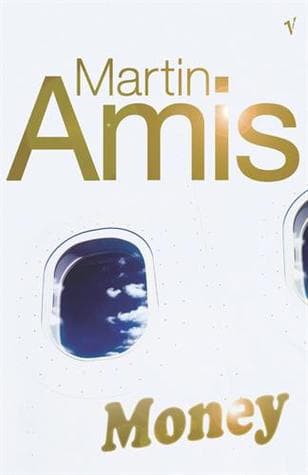
Martin Amis (1984)
Genre
Thriller / Mystery
Reading Time
12-15 hours
Key Themes
See below
Sign in to track this book
John Self's debauched journey into 1980s excess shows how a hunger for money leads to addiction and self-destruction.
John Self, a self-described 'fuck-up' and successful British commercial director, flies to New York to discuss a film project with the American producer, Fielding Goodney. From the moment he lands, John lives a hedonistic life, funded by large sums of borrowed money. He consumes excessive amounts of alcohol, fast food, and pornography, and has casual sex with women, including the prostitute, Doris. His first meetings with Goodney are vague and unsettling. Goodney hints at a huge budget and famous actors but gives little specific information. John's internal thoughts reveal a chaotic mind, obsessed with money, sex, and a sense of anxiety and impending doom.
While in New York, John often calls his girlfriend, Martina Twain, in London, keeping up the appearance of a committed relationship despite his many infidelities. Martina, a journalist, is grounded and intelligent, often providing a moral contrast to John's excesses. The film John is to direct is 'Good Money,' and he is supposed to work with screenwriter Butch Beausoleil. However, John finds the script confusing and poorly written, and his attempts to work on it are constantly interrupted by his addictions and New York's distractions. He spends more time in bars and strip clubs than in pre-production meetings, falling further into debt and disarray.
John meets Selina Street, a beautiful woman who works in the film industry, through Fielding Goodney. Selina quickly becomes another of John's obsessions. Their relationship involves power struggles, manipulation, and a strange, almost theatrical quality. Selina seems to have her own agenda, often playing mind games with John and subtly undermining his already fragile self-confidence. She represents another aspect of the corrupting influence of money and power in John's world, drawing him deeper into deceit and moral ambiguity. Their encounters are often charged with dark eroticism and a sense of impending betrayal.
John periodically returns to London, where his financial situation grows dire. He has borrowed heavily from various sources, including his father, and his credit cards are maxed out. His relationship with Martina is strained by his erratic behavior and clear infidelities, though she remains patient. He tries to secure more funding for the film, but his efforts are chaotic and mostly unsuccessful. The contrast between his extravagant life in New York and the grim reality of his debts in London shows how unsustainable his lifestyle is. He feels a growing panic and helplessness as his financial house of cards threatens to collapse.
As 'Good Money' moves closer to production, John is introduced to the film's supposed stars: Spunk Davis and Lorna Marshall. Both actors are demanding, self-absorbed, and difficult. Spunk is an aging action star, obsessed with his physique, while Lorna is a temperamental diva. John is out of his depth, unable to control the talent or provide meaningful direction. The pre-production process is a mess of missed appointments, unexplained delays, and rising costs, further weakening John's fragile hold on reality and the film's chances. Goodney remains elusive, pulling strings from the shadows.
A meta-narrative element appears as John Self begins to meet and interact with a character named 'Martin Amis,' who is identified as the novel's author. This 'Martin Amis' character is a shadowy, manipulative figure, sometimes offering advice, sometimes taunting John, and often commenting on John's life as if it were fiction. This device blurs the line between reality and fiction, suggesting John's troubles are not just his own but are being orchestrated by a higher power. This adds existential dread and self-awareness to John's story, as he struggles with the idea of being a character in someone else's narrative.
Selina Street's true intentions become clearer as she increasingly manipulates John for her own gain. It becomes obvious that she is working with Fielding Goodney, who is orchestrating a complex scheme to defraud John of his money and assets. John, blinded by his desires and general naiveté, falls deeper into their trap, signing away rights and taking on more debt based on their empty promises. The betrayal hits him hard, though he struggles to fully grasp the extent of the deception. His emotional state worsens, marked by paranoia and a growing sense of isolation.
The 'Good Money' film project finally collapses. Funding disappears, actors pull out, and the entire endeavor is exposed as a sham. John is left with massive debts and a ruined professional reputation. The grand promises of Hollywood success vanish, leaving him with the bitter reality of his poor judgment and the ruthlessness of those he trusted. This collapse is the result of his reckless spending and his inability to see through the elaborate deception orchestrated by Goodney and Selina. He is left destitute and emotionally broken.
Martina, despite John's repeated betrayals and financial ruin, tries to support him and offer a path to redemption. She attempts to help him understand the fraud he experienced and encourages him to fight back. However, John is too consumed by self-pity, his addictions, and his general inertia to truly accept her help. His despair is deep, and he continues to indulge his vices, unable to break free from the patterns that led to his downfall. Martina's patience wears thin, and the future of their relationship is uncertain.
In a climactic revelation, it is exposed that Fielding Goodney and Selina Street are not who they claimed to be. They are con artists, and the entire 'Good Money' film project was a scheme to defraud John of his inheritance and any other assets he could acquire. The 'Martin Amis' character also plays a key role in revealing the deception, hinting at a deeper, more personal connection to John's fate. The twist confirms John's worst fears and exposes the full extent of his foolishness, leaving him reeling from the profound betrayal.
Stripped of his money, reputation, and illusions, John must confront the devastating consequences of his unchecked desires and reckless lifestyle. He experiences a moment of deep self-reflection, though still tinged with his characteristic cynicism and self-pity. The novel ends with John in a state of purgatory, having lost everything but perhaps gaining a sliver of self-awareness. While there is no clear happy ending, there is a faint hope that he might, for the first time, begin to understand the true cost of his 'money' obsession and try to build a different, though difficult, future.
The Protagonist
From a reckless hedonist spiraling into debt, John is ultimately stripped of everything, forcing a painful, if incomplete, confrontation with his self-destructive nature.
The Supporting
Martina's patience is tested to its limits, ultimately leading her to confront the futility of trying to save John from himself.
The Antagonist
Revealed as a calculating con artist, Goodney successfully executes his scheme to defraud John Self.
The Antagonist
Selina successfully assists Goodney in his con, emerging as a cunning and ruthless operator.
The Supporting/Meta-character
The 'Martin Amis' character observes and subtly influences John's narrative, ultimately revealing the constructed nature of his reality.
The Supporting
Doris remains a consistent, if minor, presence, reflecting John's unchanging pattern of indulgence.
The Mentioned
Remains a peripheral, largely unseen figure, indicative of the film's hollowness.
The Supporting
Contributes to the chaos of the film's production before its inevitable collapse.
The novel explores how money, and the desire for it, corrupts every part of John Self's life. It fuels his addictions (alcohol, food, sex), blinds him to manipulation, and leads to his ruin. Money is not a means to an end for John; it is the end itself, something to be consumed and squandered. The fraudulent film deal 'Good Money' highlights this, as the pursuit of wealth overshadows any artistic integrity or genuine human connection. John's constant borrowing and spending show a pathological relationship with finance, where more money only leads to more destructive behavior, as seen in his endless bar tabs and encounters with Doris.
“Money is a kind of sixth sense – and you can't make use of the other five without it.”
John Self's life is a constant pursuit of immediate gratification through hedonistic excesses: excessive drinking, overeating, promiscuity, and drug use. This lifestyle is not joyous but a frantic, self-destructive cycle fueled by anxiety and an inability to find real satisfaction. His physical decline (weight gain, hangovers) mirrors his moral and financial decline. The novel portrays hedonism not as freedom, but as a trap, where each indulgence pushes John further into despair and vulnerability, making him an easy target for con artists like Goodney and Selina. His constant thoughts about his 'fucking' habits emphasize this theme.
“I was a connoisseur of my own bad luck.”
Amis blurs the lines between reality and fiction by including 'Martin Amis' as a character. This metafictional device constantly reminds the reader that John Self's story is a construct, questioning the nature of narrative and authorship. John often feels like a character, observing his own life with a detached, cynical eye. This theme challenges the reader to consider how much our own lives are 'stories' and whether we truly control our narratives. The elaborate deception of the 'Good Money' film project further reinforces this idea, as John lives out a fabricated reality designed by others.
“I was a character in a novel, and I didn't even know it.”
John Self struggles with a lack of authentic identity. He constantly performs roles – the successful director, the ladies' man, the big spender – but these are superficial. His true self is a chaotic mess of anxieties and unfulfilled desires. He is easily swayed by external pressures and others' promises, never truly knowing what he wants or who he is beyond his vices. The revelation that Goodney and Selina are not who they seem further highlights the theme of deceptive identities, suggesting that in John's world, authenticity is rare and often dangerous. His inability to connect genuinely with Martina underscores his identity crisis.
“I didn't know who I was, but I knew what I liked.”
The novel draws a sharp, often satirical, contrast between British and American culture through John Self's observations. America is depicted as a land of excess, opportunity, but also immense superficiality and moral emptiness, especially in Hollywood and the pursuit of wealth. Britain, represented by Martina and John's more mundane life there, is portrayed as more grounded, though also stifling. John's journey to America is a descent into a more extreme version of his own self-destructive tendencies, suggesting that American consumerism and ambition amplify his flaws. The dialogue often highlights cultural misunderstandings and stereotypes, adding social commentary.
“America was like a vast, glittering, all-you-can-eat buffet, and I was going to try everything.”
The author, Martin Amis, inserts himself as a character within the narrative.
This device blurs the lines between author and character, reality and fiction. The character 'Martin Amis' interacts with John Self, commenting on his life and the story itself. This serves to remind the reader that they are consuming a constructed narrative, challenging the reader's suspension of disbelief and inviting them to consider the nature of storytelling. It also adds a layer of self-awareness and existential commentary to John's predicament, suggesting he is a puppet in a larger game.
John Self's first-person perspective is clouded by his addictions, anxieties, and self-deception.
The entire story is told through John Self's highly subjective and often incoherent internal monologue. His narration is fragmented, filled with digressions, vulgarity, and self-pity, and colored by his constant state of intoxication and anxiety. This makes it difficult for the reader to trust his perceptions of events or other characters, contributing to the novel's sense of disorientation and paranoia. It also highlights John's profound inability to accurately assess his own situation or the motives of those around him, making him vulnerable to manipulation.
Money itself, and the fraudulent film 'Good Money', symbolize the corrupting forces at play.
The title 'Money' is not just literal; it symbolizes the all-consuming, destructive force in John's life. The proposed film, 'Good Money,' functions as a central symbol of false promises, illusion, and the ultimate emptiness of the pursuit of wealth for its own sake. The very name of the film, which promises 'good' money, is ironic, as it leads John only to ruin. Money in the novel represents not prosperity, but a corrosive agent that strips away integrity, relationships, and ultimately, self-worth.
John Self's episodic journey through various locations and encounters, often involving low-life characters.
While not a pure picaresque, the novel features elements of this genre. John Self, a roguish and morally ambiguous protagonist, embarks on a series of episodic adventures and misadventures, particularly during his time in New York. He encounters a colorful cast of characters, from prostitutes to demanding actors, and navigates various social strata. This structure allows for a broad satirical critique of society and provides a vehicle for John's continuous indulgence and downfall, without a strong, overarching plot driving every scene.
“Money doesn't make you happy, but it quiets the nerves.”
— John Self reflecting on his financial situation and general anxiety.
“I was a man of substance, but the substance was alcohol.”
— John Self's self-deprecating description of his lifestyle.
“You can't buy class. You can rent it for a while, but it always comes back to bite you.”
— John Self's observation about attempts to acquire sophistication.
“The only thing more boring than being poor is talking about being poor.”
— John Self's cynical view on poverty and conversation.
“New York, I love you, but you're bringing me down.”
— John Self's conflicted feelings about the city's impact on him.
“I felt like a character in a bad novel, and I was the author.”
— John Self's meta-fictional musings on his own life.
“There are no second acts in American lives, only longer, more elaborate first acts.”
— John Self's take on the concept of reinvention.
“My life was a series of bad decisions punctuated by moments of extreme self-loathing.”
— John Self's summary of his personal history.
“Fame is a sort of an illness, isn't it? A disease of the consciousness.”
— John Self contemplating the nature of celebrity.
“The past is a foreign country; they do things differently there. And they charge more.”
— John Self's humorous take on the past and its cost.
“I had a face that looked like it had been lived in, and then abandoned.”
— John Self's unflattering description of his own appearance.
“We are all dying, but only some of us are living.”
— A philosophical moment from John Self amidst his chaotic life.
“The problem with temptation is that it's always so tempting.”
— John Self's simple but profound observation on his vices.
“Money is like sex: you don't talk about it if you have it, and you don't talk about it if you don't.”
— John Self's cynical comparison of two taboo subjects.
Ready to see how well you understood this book? Take our interactive quiz with 10 questions.
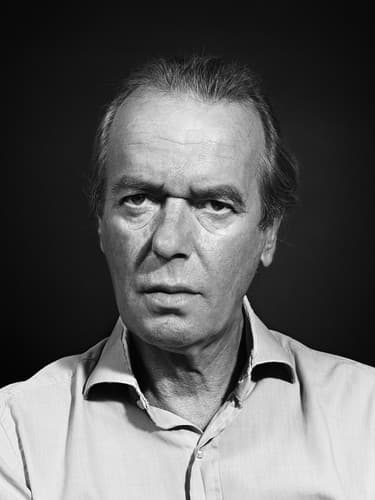
Sir Martin Louis Amis was an English novelist, essayist, memoirist, and screenwriter. He is best known for his novels Money (1984) and London Fields (1989). He received the James Tait Black Memorial Prize for his memoir Experience and was twice listed for the Booker Prize. Amis served as Professor of Creative Writing at the University of Manchester's Centre for New Writing from 2007 until 2011. In 2008, The Times named him one of the fifty greatest British writers since 1945.







