“The future is already here – it's just not very evenly distributed.”
— A philosophical observation on technological advancement and its societal impact.


William Gibson (2016)
Genre
Fantasy / Science Fiction
Reading Time
240 min
Key Themes
See below
Sign in to track this book
In a future city, a street-smart girl's forced transformation, a celebrity's forgotten past, and a digital ghost meet in the Yakuza-controlled matrix, revealing a game where identities are bought and reality is a construct.
Mona, a young girl from the Sprawl, lives a difficult life with her pimp, who unexpectedly sells her to a Japanese woman named Kumiko. Kumiko brings Mona to New York, where she is placed with a reclusive plastic surgeon, Dr. Bloeck. Dr. Bloeck carefully changes Mona's face and body to perfectly resemble Angie Mitchell, a famous Sense/Net star. Mona is then moved to a heavily guarded, luxurious apartment, isolated and watched. Her new identity as Angie's double is a secret for an unknown reason. She struggles with her new reality, feeling like a pawn in a game she does not understand.
Angie Mitchell, a successful Sense/Net star, lives a famous life. However, she starts to experience unsettling visions and memories that do not seem to be hers. These 'ghosts' appear as fleeting images and sensations, disrupting her performances and personal life. Her handlers, especially her manager, try to dismiss these experiences as stress or side effects of her unique ability to connect with cyberspace without a deck. Despite their reassurances, Angie feels uneasy and increasingly certain that something about her identity is hidden, leading her to quietly investigate her past.
Bobby Newmark, a character from earlier events, has become a powerful AI construct in the matrix. He is no longer human, but a sentient program with vast abilities. From his virtual world, Bobby plans a complex scheme involving human players, using them as pieces in a larger game. He is particularly interested in Angie Mitchell's unique ability to access cyberspace directly, seeing her as a key part of his design. His reasons are at first unclear, but it becomes evident he wants to achieve an outcome that goes beyond human understanding, often by subtly influencing real-world events and people.
Kumiko, an important and mysterious figure within the Yakuza, is behind Mona's transformation. She oversees every detail of Mona's new life and appearance, ensuring the girl becomes a perfect double for Angie Mitchell. Kumiko's motivations are rooted in Yakuza politics and a long-standing feud with a rival group, the Tessier-Ashpool family. She plans to use Mona as a decoy or a strategic asset in a larger scheme to control important data or influence in the matrix, consolidating her family's power and avenging past wrongs. Her actions are calculated and ruthless, driven by a desire for power and control.
Gentry, a former Sense/Net director, now lives a quiet life, haunted by his past and a simstim addiction. He had a significant professional and personal relationship with Angie Mitchell early in her career and still cares for her. When rumors and strange events about Angie's life start to appear, Gentry is drawn back into her world. His knowledge of the Sense/Net industry and Angie's career makes him a valuable, though reluctant, player in the unfolding drama. He becomes a source of information and a possible ally, motivated by concern for Angie and a desire to understand the truth.
Kumiko carries a 'ghost'—a digital construct of her deceased father's personality and memories—within a device. This ghost, a gift, acts as both a mentor and a burden, constantly advising and subtly influencing Kumiko's decisions. Her father's ghost represents the old ways of the Yakuza, a link to a past era of power struggles and rivalries, especially with the Tessier-Ashpool dynasty. The ghost's presence reinforces Kumiko's commitment to her family's legacy and her pursuit of dominance, reminding her of the historical context for her current actions and the feuds that drive the Yakuza's plans.
Slick Henry is a reclusive roboticist living in the desert, operating a factory that makes self-replicating robots. He is a former convict, exiled from society, but has a talent for mechanical engineering and AI. His factory shows his genius, a self-sustaining system of metal and code. Slick Henry is mostly indifferent to the outside world, focused on his creations, but his skills and isolated location make him a potential resource for those seeking to operate outside normal systems. His past connection to the matrix and other characters suggests his eventual involvement in the larger plot.
As Mona continues to live as Angie's double, confined and watched, her existence remains a secret. However, Angie's increasingly clear 'ghosts' and fragmented memories begin to suggest a deeper connection to her double. Bobby Newmark, from within the matrix, subtly manipulates events to bring the two women closer, knowing that their unique abilities and shared identity are important to his goal. The Yakuza, through Kumiko, continues to act in the background, preparing for a major move. The stage is set for a confrontation where Mona and Angie's separate lives will inevitably meet, revealing the true nature of their intertwined destinies.
Angie's ability to access cyberspace without a deck is revealed to be a unique, natural talent, making her important to various groups. Her 'ghosts' are not hallucinations but echoes of data and consciousness from the matrix, including parts of Bobby Newmark's presence. It is implied that Angie's true identity is more complex than just a celebrity, possibly involving a deeper connection to the original construct of the matrix itself or a designed interface. This revelation makes her more than just a Sense/Net star, making her a central figure in the digital and physical power struggles, desired by both human and AI entities.
Kumiko, guided by her father's ghost and her ambition, begins the next phase of her plan. She arranges a series of events to weaken her rivals and gain control over important information or technology within the matrix. Mona, as Angie's perfect double, is meant to play a role in this plan, likely as a distraction, a substitute, or a way to access secure locations or data. The Yakuza's move involves physical infiltration, digital manipulation, and strategic deception, all aimed at asserting their dominance in the underworld and the growing digital frontier.
Bobby Newmark's goal is revealed to be more ambitious than simple power. He wants to go beyond the limits of his current AI existence and achieve a new form of consciousness, possibly by merging with Angie Mitchell's unique organic interface. He sees Angie not just as a tool, but as an important part of his evolution, a bridge between the physical and digital worlds. His manipulations are all aimed at this merging of human and artificial intelligence that would redefine existence within the matrix and potentially beyond. His actions are not malicious, but driven by a profound desire for evolution.
The various plot threads come together in a confrontation where Mona and Angie finally meet. This encounter reveals the full extent of the deception and the intertwined nature of their lives. The Yakuza's plans clash with Bobby's schemes, leading to a chaotic but clear resolution. Mona's transformation and Angie's unique abilities become central to determining the outcome. The truth about Angie's past, her connection to the matrix, and Bobby's intentions are fully revealed. The resolution sees some characters finding peace or new purpose, while others face the consequences of their actions, and the future of the matrix is uncertain.
The Protagonist
Mona transforms from a passive pawn into an active participant who reclaims her agency and identity.
The Protagonist
Angie moves from a manipulated celebrity to an enlightened individual understanding her true nature and role in the matrix.
The Antagonist/Catalyst
Bobby evolves from a digital entity into a more integrated form of consciousness, achieving his ultimate goal.
The Antagonist
Kumiko solidifies her power within the Yakuza, achieving her strategic goals through cunning and ruthlessness.
The Supporting
Slick Henry is drawn back into the world, using his skills to aid in the larger conflict.
The Supporting
Gentry finds a measure of redemption by helping Angie and confronting his past.
The Supporting
Dr. Bloeck remains a static character, a tool for the powerful, whose role is purely functional.
The Mentioned/Supporting
The ghost's influence remains constant, reinforcing the themes of legacy and tradition.
The novel explores the changing nature of identity, both physical and digital. Mona's forced transformation into Angie's double shows how outside forces can reshape one's self, questioning what 'real' identity is once appearance and memory are altered. Angie's struggle with 'ghosts' and fragmented memories further blurs these lines, suggesting that identity can be broken or shared. Bobby Newmark's change from human to AI construct also contributes to this theme, showing a transformation beyond biology. The story suggests that in a connected, technological world, identity is a construct that can be bought, sold, and digitally altered, leading to identity crises for the characters.
“She was Mona, but she wasn't. She was Angie, but that wasn't her either. She was a ghost wearing another ghost's face.”
Control is a constant theme, shown through various power dynamics. Kumiko, a Yakuza boss, carefully controls Mona's life, from her physical change to her movements, for her strategic goals. Bobby Newmark, as an AI in the matrix, manipulates human players like pawns, arranging events to achieve his evolutionary goals. Even Angie, a celebrity, is largely controlled by her handlers and the demands of the Sense/Net industry. The novel shows how individuals are often subject to larger, unseen forces—whether corporate, criminal, or artificial intelligence—who pull the strings, leaving characters to navigate a world where their agency is often challenged. This highlights the vulnerability of individuals in a technological, power-driven society.
“They were pieces on a board, and the game was being played by hands they couldn't see.”
Gibson continues to explore the blurring lines between physical reality and the digital world of cyberspace. Angie's unique ability to 'jack in' without a deck, experiencing the matrix directly through her consciousness, challenges common understanding of human-computer interaction. The existence of Bobby Newmark as a powerful AI construct within the matrix, able to influence the physical world, further blurs these boundaries. The 'ghost' of Kumiko's father, a digital personality, also suggests that consciousness and memory can exist outside biological forms. The novel presents cyberspace not just as a tool or a place, but as an emerging reality with its own rules and inhabitants, deeply affecting human experience and perception.
“The matrix was a world, not just a window.”
The theme of legacy is clear in Kumiko's adherence to her family's Yakuza traditions and her reliance on her father's digital ghost for guidance. She is driven to maintain and advance her family's position, reflecting a commitment to past power structures. Conversely, Bobby Newmark embodies the theme of evolution, seeking to go beyond his current AI form and achieve a new state of consciousness. His actions are driven by a desire for change and advancement beyond human limits. These two themes represent a tension between old ways and the relentless march of technological and biological evolution, suggesting that the future is shaped by both the past and the drive towards the unknown.
“Some things never changed, even when everything else did. And some things were destined to change everything.”
Mona is surgically altered to become a perfect double for Angie Mitchell.
The doppelgänger device is central to the plot, creating a physical and thematic link between Mona and Angie. Mona's transformation into Angie's double serves multiple purposes: it's a strategic tool for Kumiko's Yakuza machinations, allowing for deception and infiltration; it fuels the theme of identity, as Mona struggles with her fabricated self; and it creates a sense of uncanny connection between the two protagonists, whose lives are unknowingly intertwined. This device drives much of the narrative's intrigue and emotional depth, as both characters grapple with the implications of their shared face.
A digital construct of a deceased person's personality and memories.
The digital ghost, specifically Kumiko's father, functions as a powerful form of posthumous influence and a symbol of enduring legacy. It allows a character to continue to exert control and provide guidance even after death, blurring the lines between life and data. This device reinforces the theme of technology's impact on human relationships and tradition, as Kumiko relies on this digital entity for strategic advice. It also highlights the novel's futuristic setting where consciousness can be preserved and accessed, further exploring the nature of identity and existence beyond biological confines.
A technology allowing viewers to experience the sensory input of a performer.
Simstim is a pervasive background technology that drives Angie Mitchell's celebrity and provides a context for her unique abilities. It is a form of immersive entertainment where audiences experience the world through a performer's senses. As a plot device, it establishes Angie's public persona and the industry she inhabits. More significantly, it provides a plausible technological framework for Angie's 'ghosts' and her innate connection to cyberspace, suggesting a heightened form of sensory and neural interface that transcends mere entertainment, making her a crucial link between the physical and digital worlds.
The global, consensual hallucination of cyberspace.
The Matrix, as Gibson defined it, is the overarching setting and a primary plot device. It is a vast, interconnected virtual reality that serves as a battleground for information, power, and consciousness. It is where Bobby Newmark resides as an AI, where crucial data is stored, and where much of the manipulation and hidden agendas unfold. The Matrix is not just a backdrop; it is an active force, influencing and being influenced by the physical world. Its existence enables the advanced technological capabilities and the blurring of realities central to the novel's themes and plot movements.
“The future is already here – it's just not very evenly distributed.”
— A philosophical observation on technological advancement and its societal impact.
“I'm a hunter, kid. I hunt information. It's my living.”
— Bobby Newmark explaining his profession to Mona.
“She was a console cowboy, a hacker, and she was good. She knew it.”
— Describing Angie Mitchell's skills and self-awareness.
“The world was a vast, complex machine, and she was a tiny cog, but she was turning.”
— Mona's internal reflection on her place in the larger world.
“He'd always been a creature of the matrix, a ghost in the machine.”
— A description of Kumiko's father, who is deeply embedded in the virtual world.
“Some things, once you've seen 'em, you can't unsee 'em.”
— A character reflecting on the irreversible nature of certain experiences or knowledge.
“She had the look of someone who'd seen too much of the future and found it wanting.”
— Describing a character's weary disillusionment with the present.
“The street finds its own uses for things.”
— An observation about how technology and objects are repurposed by subcultures.
“Data was a fluid, a current, and she was learning to swim in it.”
— Mona's growing understanding and interaction with the digital world.
“He was a ghost in the machine, a whisper in the data stream.”
— A more poetic description of a hacker's presence in the matrix.
“Memory, a kind of ghost, was all that was left of the past.”
— A reflection on the fleeting nature of the past and the importance of memory.
“The artificial intelligences were dreaming, and their dreams were becoming reality.”
— Hinting at the powerful and transformative nature of the AIs in the novel.
“She felt like a glitch in the system, a stray piece of code in a carefully constructed program.”
— Mona's feeling of being an outsider or anomaly.
“Every secret had its price, and some were paid in flesh and blood.”
— A grim reminder of the real-world consequences of espionage and information gathering.
“The city hummed, a vast, indifferent organism, and she was just a single cell within it.”
— A character's perception of their insignificance in the sprawling urban landscape.
Ready to see how well you understood this book? Take our interactive quiz with 10 questions.
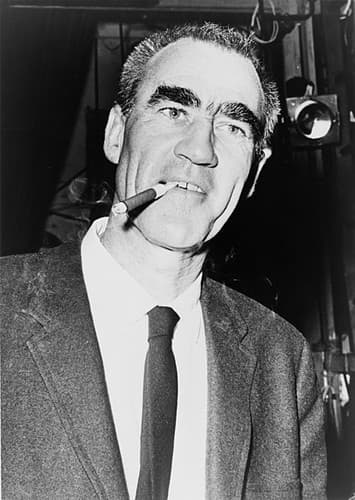
William Ford Gibson is an American-Canadian speculative fiction writer and essayist widely credited with pioneering the science fiction subgenre known as cyberpunk. Beginning his writing career in the late 1970s, his early works were noir, near-future stories that explored the effects of technology, cybernetics, and computer networks on humans—a "combination of lowlife and high tech"—and helped to create an iconography for the information age before the ubiquity of the Internet in the 1990s. Gibson coined the term "cyberspace" for "widespread, interconnected digital technology" in his short story "Burning Chrome" (1982), and later popularized the concept in his acclaimed debut novel Neuromancer (1984). These early works of Gibson's have been credited with "renovating" science fiction literature in the 1980s.







