“Being at a Loss for a Livelihood, and wanting Bread, I was at length reduc'd to the Necessity of going out to Service.”
— Moll reflects on her initial fall into poverty and the need to work.

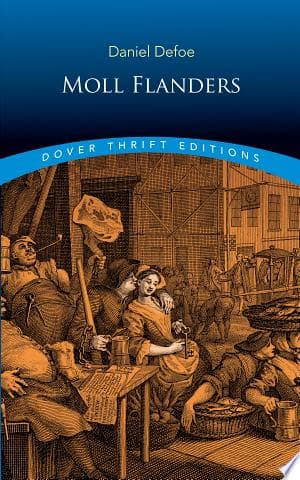
Daniel Defoe (1993)
Genre
Historical Fiction
Reading Time
7-8 hours
Key Themes
See below
Sign in to track this book
An orphan's journey from desperate marriages to master criminal, Moll Flanders tells one woman's bold, unsentimental, and ultimately successful quest for independence in a society set against her.
Moll Flanders is born in Newgate Prison. Her mother is transported to Virginia shortly after her birth. Abandoned, Moll is left to the care of the Colchester parish. A kind woman takes Moll in as a foster child, and Moll grows up wanting to be a 'gentlewoman' rather than a servant. She gets a basic education, learning to read and sew, spending her early years in a respectable, if simple, home. Her beauty and ambition appear early, setting up her future attempts to secure a better life through marriage and intelligence.
After her foster mother dies, Moll is taken in by a wealthy family as a companion to their daughters. The elder son soon seduces her, promising marriage but only offering money. Desperate to escape her uncertain position, Moll eventually marries the younger brother, Robin, who truly loves her. This marriage gives her social respectability and financial stability, letting her live as the 'gentlewoman' she always wanted. However, the marriage is short; Robin dies within five years, leaving Moll a widow with two children.
After Robin's death, Moll is in a difficult financial situation, having spent most of her inheritance. She leaves her children with her late husband's family and moves to London, determined to find another husband to keep her gentlewoman status. She meets a draper she believes is wealthy, and they marry quickly. However, she soon finds he is as financially ruined as she is, leading to their mutual disappointment and the marriage's end. This teaches Moll a harsh lesson about the deceptions in the marriage market.
After the draper flees to France to avoid debt, Moll is alone again. She meets a seemingly wealthy man and agrees to marry him, believing he owns a large estate in Virginia. They travel to the colony, where she discovers her mother, whom she thought dead, is alive and her new husband's mother. This means she has unknowingly married her own half-brother, a shocking act of incest. Distraught, Moll separates from him and returns to England, leaving behind her children and a deeply upsetting experience.
Back in England, Moll is in dire straits, having lost her fortune and social standing. She begins a relationship with a married banker who truly likes her and provides financial support. This period has affection and stability, but also moral compromises and constant fear of discovery. The banker eventually falls ill and, upon his wife's death, proposes marriage. Moll, always practical, declines due to his declining health and the potential for a difficult inheritance situation.
Moll, still seeking a respectable and financially secure marriage, meets a man she believes is a wealthy gentleman. They fall in love and marry, but soon after, they discover both misrepresented their wealth; he is a highwayman, and she has no fortune. This discovery, though initially shocking, creates a strange bond between them. They live together for a time, sharing secrets, but Moll eventually leaves him, unwilling to fully embrace his criminal life, though she has learned much about the underworld from him.
After running out of marriage options and finding herself in extreme poverty, Moll, driven by need and a desire for independence, turns to professional thievery. She starts with petty shoplifting, gradually becoming more skilled and bold. She works in London, using her wit and charm to avoid detection. This marks a big change in her character, as she loses her previous moral concerns and becomes good at navigating the criminal underworld, finding a strange freedom and self-sufficiency in her illegal acts.
Moll's career as a thief thrives. She becomes very good, gathering a lot of money through various thefts, including pickpocketing, shoplifting, and housebreaking. She uses different disguises and plans to avoid capture, often working alone. However, the risks of her job are always there. She has several close calls with the law, barely escaping arrest many times. These experiences show how uncertain her life is and the constant threat of discovery and punishment.
After a long and successful career as a thief, Moll is finally caught and sent to Newgate Prison, the very place she was born. Her imprisonment is a stark reminder of her beginnings and the harsh realities of justice in 18th-century England. Facing execution or transportation, Moll feels deep despair and regret for her past life of crime. It is during this time in Newgate that she has a significant spiritual change, thinking about her sins and seeking repentance.
While in Newgate, Moll unexpectedly reunites with her 'Lancashire husband,' James, who has also been arrested and imprisoned. They confess their true identities and past lives to each other, finding comfort and a renewed connection. Both are sentenced to transportation to the American colonies. This shared fate lets them leave England together, offering a chance for a new beginning away from their criminal pasts. The idea of transportation, initially dreaded, now seems like an opportunity for redemption.
Moll and James are transported to Virginia. Using the considerable fortune Moll had gathered from her thievery, they buy land and become respected planters. Moll also uses this chance to find her son from her incestuous marriage, who is now a prosperous gentleman. She tells him who she is, and he, surprisingly, receives her kindly and offers her half of his inheritance. This reunion allows Moll to make peace with her past and find a measure of peace and family connection she had long missed.
Moll Flanders and James live out their days in Virginia as wealthy and respected landowners. They continue to prosper, managing their estates and living a life free from the worries and dangers of their former criminal existence. Moll often reflects on her past actions, expressing true repentance for her sins. She and James eventually return to England in their old age, having lived a full and eventful life, finally finding a peaceful and morally good end to their tumultuous journey. Her story ends with a strong focus on her repentance and the lessons learned.
The Protagonist
Moll transforms from an innocent, ambitious girl into a hardened criminal, eventually finding redemption and a respectable life through repentance and hard work.
The Supporting/Love Interest
He transitions from a life of crime to a life of honest enterprise and repentance alongside Moll.
The Supporting
Her influence is primarily in Moll's early life, setting the stage for Moll's ambitions.
The Supporting/Antagonist
He serves as a catalyst for Moll's disillusionment and growing pragmatism.
The Supporting
He provides Moll with a brief taste of the respectable life she craves, before her circumstances shift again.
The Supporting
He serves as a figure of forgiveness and a means for Moll's ultimate financial and emotional security.
The Supporting
He provides Moll with a period of financial security and emotional attachment, but ultimately cannot offer the legitimate status she desires.
The novel focuses on Moll's constant search for social advancement and her desperate attempts to escape poverty and become a 'gentlewoman.' From her birth in Newgate to her final wealth in Virginia, Moll's actions are largely driven by her desire to improve her social standing. She uses marriage, cleverness, and eventually crime to navigate the strict class structure of 18th-century England. Her journey shows the limited ways women could achieve independence and respectability without inherited wealth, forcing them into practical, often morally difficult, choices. For example, her first marriage to Robin is only to secure a respectable position.
“''I was born in Newgate, and might be an honest woman, if I would.''”
Moll Flanders is a survivor, adapting to every misfortune and taking every chance. Her practicality drives her decisions, whether choosing a husband for his perceived wealth, leaving her children for better prospects, or turning to thievery when all other options fail. She always puts her own well-being and independence first, often ignoring traditional morality. Her resilience in the face of abandonment, poverty, and social exclusion shows a strong will to live and succeed, even if it means acting outside societal norms, as seen in her calculated approach to her many marriages.
“''Necessity was the mother of invention.''”
The novel explores how a life of crime can result from societal neglect and limited opportunities, followed by a journey toward repentance and redemption. Moll's career as a thief is shown not as inherent evil, but as a practical response to extreme poverty and a lack of other choices. Her detailed accounts of her crimes offer a look into the criminal underworld of the time. However, her eventual imprisonment in Newgate and subsequent transportation lead to a true spiritual awakening. Her confession, remorse, and eventual honest prosperity in Virginia show that one can change their life, even after a long history of wrongdoing.
“''I was now become a complete thief, and wanted nothing but to be discovered, and to be hanged, to be as famous as any of them.''”
A main theme is the uncertain position of women in 18th-century society and their struggle for economic independence. Moll's repeated marriages, her reliance on male support, and her eventual turn to crime are all direct results of her gender and lack of inherited wealth. Without secure money, marriage becomes a business deal, and self-sufficiency often means breaking societal rules. Her story shows how women were often forced into limited roles, and how a desire for independence could lead to unconventional and dangerous paths. Her final success as a planter in Virginia, achieved with her own money, represents her ultimate victory over these limitations.
“''A woman should never be without money, if she could help it.''”
The entire story is told from Moll Flanders's perspective.
The novel is presented as Moll Flanders's autobiography, written in the first person. This device allows for an intimate and subjective portrayal of her experiences, thoughts, and justifications. It gives the reader direct access to her pragmatic worldview, her moral struggles, and her eventual repentance. The narrative voice is candid and often self-serving, but also capable of profound reflection, inviting the reader to empathize with her despite her questionable actions. This narrative choice also contributes to the novel's realism, making Moll's extraordinary life feel believable and immediate.
A series of episodic adventures centered around a roguish protagonist.
Moll Flanders follows a picaresque structure, presenting a series of loosely connected episodes chronicling Moll's journey through various social strata and geographical locations. Each 'adventure' (marriage, affair, or criminal enterprise) leads to a new set of challenges and lessons, without a strict overarching plot arc in the traditional sense. This episodic nature emphasizes Moll's adaptability and resilience, as she continually reinvents herself to survive. It also allows Defoe to explore different facets of 18th-century English society, from domestic life to the criminal underworld and colonial America.
The author provides a preface and an epilogue that frame the story as a moral tale.
Defoe includes a preface (attributed to 'The Editor') and an epilogue that explicitly state the novel's moral purpose: to instruct readers on the dangers of a life of vice and the rewards of repentance. These framing devices attempt to legitimize the potentially scandalous content of Moll's story, presenting it as a cautionary tale rather than a celebration of immorality. While Moll's actions throughout the novel are often far from virtuous, the final redemption arc and the explicit moralizing aim to guide the reader's interpretation towards a didactic message about sin and salvation.
The novel uses subtle irony to critique societal norms and hypocrisy.
Defoe employs irony and satire throughout the novel, particularly in Moll's justifications for her actions and her observations on society. While Moll often presents her choices as born of necessity, there's an underlying irony in her relentless pursuit of respectability through dishonest means. The novel satirizes the hypocrisy of a society that condemns poverty while offering few legitimate paths out of it for women, and the transactional nature of marriage. This irony allows Defoe to critique social structures and moral pretenses without directly preaching, letting Moll's experiences speak for themselves while subtly shaping the reader's understanding.
“Being at a Loss for a Livelihood, and wanting Bread, I was at length reduc'd to the Necessity of going out to Service.”
— Moll reflects on her initial fall into poverty and the need to work.
“I was not above fifteen Years old when I made this false Step; but I was a Woman for all that.”
— Moll's early sexual encounter and her precocious understanding of her own womanhood.
“It is not possible to express the Anguish of my Mind, when I came to reflect upon this Horrid Fact, and to think what a Hell of Guilt I had plung'd myself into.”
— Moll's immediate remorse after committing her first major theft.
“I was now become a compleat Thief, and a Person of Quality too, for I had learnt all the Arts and Devices of the Trade.”
— Moll's growing proficiency and confidence in her thieving career.
“Wherever God Erects a House of Prayer, The Devil always Builds a Chapel there: And 'twill be found upon Examination, The latter has the largest Congregation.”
— Moll's cynical observation on the prevalence of vice even in proximity to virtue.
“Money, they say, makes the Man; and it is certain it makes the Woman too.”
— Moll's direct assertion about the power of money in shaping identity and status.
“I learned to curse, swear, lie, and cheat, as well as the worst of them.”
— Moll's description of her moral corruption and adaptation to her criminal environment.
“It is the easiest thing in the world to call a Woman a Whore, and the hardest to prove her one.”
— Moll's insight into the social double standards and ease of defamation against women.
“Necessity is the Mother of Invention, it is true; but it is also the Mother of Mischief.”
— Moll's reflection on how dire circumstances can lead to both ingenuity and illicit acts.
“I was now grown a great Lady, and had a great deal of Money, and was courted by abundance of Gentlemen.”
— Moll describes her period of prosperity and social standing achieved through illicit means.
“I was now, as I thought, compleatly Miserable, for I had no Friend, no Money, no Home, and no Hope.”
— Moll's despair during a particularly low point in her life, highlighting her isolation.
“My Case was such, that I was not to be talk'd out of it, or to be perswaded to be Honest, for I had no Way to Live.”
— Moll's justification for her continued life of crime, emphasizing her lack of alternatives.
“Thus all my Fortunes ran in a Circle; after I had been a Whore, and a Thief, and a Whore again, and then a Thief again, I was at last a rich Woman, and a penitent.”
— Moll's retrospective summary of her life's tumultuous journey and eventual transformation.
“I found that the best way to avoid being cheated was to cheat first myself.”
— Moll's cynical strategy for survival in a dishonest world.
Ready to see how well you understood this book? Take our interactive quiz with 10 questions.
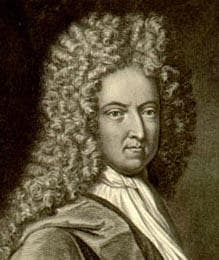
Daniel Defoe was an English writer, trader, journalist, pamphleteer and spy. He is most famous for his novel Robinson Crusoe, published in 1719, which is claimed to be second only to the Bible in its number of translations. He has been seen as one of the earliest proponents of the English novel, and helped to popularise the form in Britain with others such as Aphra Behn and Samuel Richardson. Defoe wrote many political tracts, was often in trouble with the authorities, and spent a period in prison. Intellectuals and political leaders paid attention to his fresh ideas and sometimes consulted him.







