“The past is a country we can never truly leave, only visit from time to time.”
— Lena reflecting on her past and the enduring influence of her childhood.

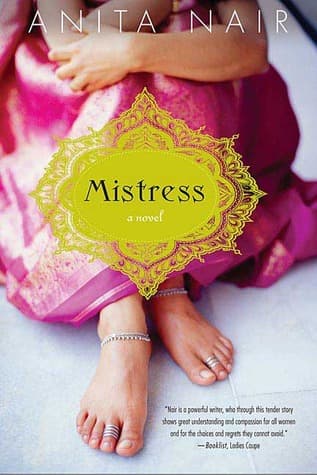
Anita Nair (2006)
Genre
Literary Fiction / Romance
Reading Time
9-10 hours
Key Themes
See below
Sign in to track this book
In Kerala, a travel writer's search into a dancer's past sparks a passionate affair, revealing hidden desires and betrayals within a marriage.
Christopher Stewart, a travel writer and cellist, arrives in rural Kerala, India. His stated reason is to interview Koman, a famous Kathakali dancer and Radha's uncle, for an article. He checks into a riverside resort, drawn by the serene atmosphere. His first meeting with Radha, Koman's niece and Shyam's wife, has a subtle tension. Chris is captivated by Radha's beauty and reserved manner, while Radha is intrigued by his Western charm, his cello, and his intense interest in her family's history, especially Koman's past and local traditions. His presence immediately disturbs the quiet balance of Radha and Shyam's marriage.
As Christopher begins his interviews with Koman, the elderly dancer, initially hesitant, slowly starts to tell his life story. Koman's tales are not in order but rather woven through memories of his childhood, his strict Kathakali training, his often turbulent relationships, and the sacrifices he made for his art. These stories include his thoughts on love, desire, and the fleeting nature of performance. Christopher, a careful listener, uses his cello to interpret Koman's narratives, creating a unique bond between them. Radha often watches these sessions, finding herself increasingly drawn into her uncle's life.
Radha's marriage to Shyam is traditional but emotionally unfulfilling. Shyam, a kind but somewhat passive man, struggles to understand Radha's deeper desires. He is a practical man, focused on their resort business, and lacks the artistic sensitivity that Radha values. Christopher's arrival shows the emptiness in Radha's life, as his intellectual curiosity, artistic passion, and direct gaze awaken feelings within her. She feels increasingly drawn to his intensity and the way he seems to see beyond her reserved exterior, a contrast to Shyam's comfortable but uninspired affection.
A local Kathakali performance, with Koman in a main role, becomes important for the characters. Christopher is deeply moved by the artistry and emotion of the performance, especially Koman's portrayal of a mythological character dealing with love and betrayal. Radha, watching Chris watch her uncle, feels a strong connection to both men. Shyam, while appreciating the cultural aspect, remains somewhat distant from the emotional currents. The performance acts as a symbol for the masks people wear and the hidden desires they hold, mirroring the unfolding drama between Radha, Christopher, and Shyam, and hinting at future events.
The unspoken attraction between Radha and Christopher leads to an affair. Drawn together by shared intellectual curiosity, artistic feelings, and an emotional connection, they find comfort and excitement in each other's company. Their secret meetings, often by the riverside or in secluded parts of the resort, are filled with both thrill and guilt. Radha, for the first time, experiences a deep sensual and emotional awakening, feeling truly seen and desired. Christopher finds a muse and a lover, and his cello playing expresses their growing bond. Shyam remains unaware of their relationship, busy with his daily routines.
As Koman continues to tell Christopher his life story, his tales of past loves and relationships, especially with women who went against social norms, begin to connect deeply with Radha's situation. He speaks of his affair with a married woman, his unreturned love for another, and the sacrifices he made for his art. These stories, full of longing, betrayal, and the complexities of human desire, are not just historical accounts but subtle reflections and warnings, creating a strong parallel between Koman's youthful mistakes and Radha's current affair. He acts as both an observer and a silent commentator, understanding the nuances of forbidden love.
Shyam, initially trusting, slowly starts to notice changes in Radha's behavior—her new energy, her secret glances, and her increased distance from him. Christopher's frequent presence at their resort, along with Radha's unexplained absences, fuels his growing suspicion. Though he tries to ignore his unease, the emotional gap between him and Radha widens. His attempts to reconnect with her are met with a new kind of resistance, further increasing his feelings of inadequacy and betrayal. The home atmosphere becomes more strained, overshadowed by unspoken worries and the threat of discovery.
The inevitable confrontation between Shyam and Radha happens, driven by Shyam's suspicions and Radha's guilt. The scene is emotionally intense, with Shyam expressing his pain and betrayal, and Radha struggling to explain her desires and reasons for her infidelity. The immediate aftermath is difficult for everyone. Radha is torn between her new passion for Christopher and the destruction of her family life. Shyam is heartbroken and humiliated, his world broken. Christopher, seeing the consequences, must face the results of his actions and the cultural complexities he has unintentionally disturbed. The resort, once peaceful, now feels like a place of raw emotions.
Christopher, having finished his interviews and become caught in the emotional turmoil, decides to leave Kerala. His departure is bittersweet, leaving Radha to deal with the aftermath of their affair and her broken marriage. Radha is at a crossroads, forced to face her choices and decide her future. She must weigh the passionate but uncertain future with Christopher against the stability and social expectations tied to Shyam. Her decision is not easy, and the way forward is full of uncertainty.
After Christopher leaves and her marriage collapses, Radha begins to find a new, independent path. While the immediate future is unclear, she has changed greatly. The affair, combined with Koman's life lessons, has made her aware of her own desires and strength. She no longer wants to live a life of quiet acceptance but seeks authenticity and self-expression. The ending suggests Radha's journey toward self-discovery continues, marked by both pain and empowerment, as she navigates her choices and the social expectations of her world.
The Protagonist
Radha transforms from a passively resigned wife into a woman who actively seeks her own fulfillment and identity, even if it means defying societal norms.
The Catalyst/Love Interest
Christopher initiates a profound change in Radha's life, but his own emotional journey remains somewhat ambiguous, leaving him as a catalyst rather than a fully transformed character.
The Supporting/Mentor
Koman's arc is largely one of reflection and sharing, solidifying his role as a wise elder who imparts lessons from his own tumultuous life.
The Supporting/Antagonist (in Radha's arc)
Shyam's arc is one of realization and heartbreak, as his comfortable world is shattered by Radha's affair, forcing him to confront the deficiencies in his marriage.
The Mentioned
Janaki's story is already complete within Koman's memory, serving as a cautionary tale and a mirror for Radha's present.
The Mentioned
Devaki's story, like Janaki's, is a past narrative that enriches Koman's character and thematic parallels.
The novel explores different kinds of love—passionate, forbidden, traditional, and unreturned—and the complexities of human desire. Radha's longing for a deeper connection beyond her conventional marriage to Shyam shows the difference between comfortable companionship and deep passion. Koman's life stories, especially his affairs with Janaki and Devaki, act as strong historical comparisons, showing that pursuing desire often conflicts with social expectations and brings both joy and sadness. The book suggests that true love often defies boundaries and conventional morality, leading characters to make difficult, life-changing choices.
“What is love, if not a dance between two souls, sometimes in harmony, sometimes in discord?”
The conflict between deep-seated cultural traditions and the desire for individual freedom is a main theme. Radha is caught between the expectations of her conservative Kerala society, which dictates a wife's dutiful role, and her desire for personal fulfillment and passionate love. Christopher, representing a modern, Western view, helps Radha rebel against traditional norms. Koman's life also shows this tension, as his artistic pursuits and personal relationships often challenged the customs of his time. The novel asks if true happiness can be found within tradition or if it requires breaking free, even at great personal cost.
“A woman's heart is a cage, and sometimes, the bird within longs to fly.”
Art, especially Kathakali and Christopher's cello music, is a strong way to express, understand, and even escape. Koman uses Kathakali not just as a performance art but as a way to show complex emotions and convey deep truths about life, love, and human nature. His stories are a form of art themselves. Christopher's cello playing often reflects the characters' emotional states, acting as a non-verbal language that crosses cultural barriers and allows a deeper connection with Radha and Koman. For Radha, art offers an intellectual and emotional escape from her daily life and a way to understand her own suppressed desires.
“The dancer tells a story not with words, but with the language of the soul, a language understood by all who dare to feel.”
The entire story structure is built around storytelling, mainly Koman's telling of his life to Christopher. These stories are not just biographical details; they are a way to preserve history, understand the present, and reflect on universal human experiences. Koman's memories, often mixed with myths and legends, provide context and depth to the contemporary drama between Radha, Christopher, and Shyam. Sharing and listening to these stories creates close bonds and allows characters to see similarities between past and present, showing how love, loss, and desire repeat across generations.
“Every life is a book, Christopher, waiting for someone to read its pages, to understand its hidden verses.”
Koman's life story frames and parallels the contemporary plot.
The novel employs a framing device where Koman's recounting of his life to Christopher serves as the overarching narrative structure. These embedded stories, rich with details of Koman's past loves, artistic struggles, and philosophical reflections, are not mere digressions but deeply interconnected with the main plot. They provide historical context, foreshadow events, and create thematic parallels, allowing the reader to understand the cyclical nature of human desire and the enduring tension between tradition and individual freedom. Koman's narratives act as a wise commentary on Radha's unfolding affair.
The traditional dance form symbolizes masks, hidden emotions, and dramatic storytelling.
Kathakali, the classical dance-drama of Kerala, is a pervasive symbol throughout the novel. Its elaborate costumes and makeup (masks) symbolize the hidden desires and true identities that characters, particularly Radha, conceal beneath their societal roles. The dramatic narratives of Kathakali, often depicting gods and heroes grappling with love, betrayal, and destiny, mirror the emotional turmoil experienced by the characters in the present. Koman, as a master of Kathakali, embodies the art form's ability to express profound emotions without words, serving as a metaphor for the unspoken passions and conflicts within the story.
Christopher's musical instrument symbolizes passion, communication, and emotional resonance.
Christopher's cello is more than just a musical instrument; it is a powerful symbol of his artistic soul, a means of non-verbal communication, and an embodiment of passion. Its music often reflects the emotional undercurrents of the story, particularly the burgeoning attraction between Christopher and Radha. When Christopher plays, he transcends language barriers, connecting with Koman's stories and Radha's unspoken desires on a deeper, more visceral level. The cello represents the universal language of emotion and art, capable of expressing what words cannot, and acts as a catalyst for emotional intimacy and awakening.
The resort location symbolizes a liminal space of transition and hidden depths.
The riverside resort in Kerala serves as a significant setting, symbolizing a liminal space where different worlds meet and transformations occur. The river itself often represents the flow of life, change, and the unconscious. The resort, a place of temporary stay for outsiders like Christopher, becomes a crucible for personal and emotional change for Radha. Its serene beauty belies the intense emotional drama unfolding within its confines. It is a place of both escape and confrontation, where traditional life intersects with modern desires, and secrets are gradually revealed, much like the hidden depths of the river itself.
“The past is a country we can never truly leave, only visit from time to time.”
— Lena reflecting on her past and the enduring influence of her childhood.
“Love, she thought, was not a grand gesture but a thousand small kindnesses woven together.”
— Rebecca observing the nuanced relationship between her parents.
“There are some silences that speak louder than any words, and carry more weight.”
— Shakuntala experiencing the unspoken tensions within her marriage.
“Music does not just fill the air; it fills the very spaces within us, shaping our memories and our dreams.”
— The narrator describing the profound impact of traditional music on the characters.
“Every woman carries a secret garden within her, some tended, some wild, some long forgotten.”
— A reflection on the inner lives and hidden depths of the female characters.
“To be truly free, one must first be free of the expectations of others.”
— Lena contemplating her choices and the societal pressures she faces.
“Grief is not a single wave, but an ocean with many currents, some gentle, some fierce.”
— A character processing a significant loss and the multifaceted nature of sorrow.
“The stories we tell ourselves are often the most powerful, and the most dangerous.”
— Rebecca realizing the subjective nature of truth and personal narratives.
“Sometimes, the only way to find your own path is to get lost first.”
— A character embarking on a journey of self-discovery, encountering uncertainty.
“The greatest art is not in perfection, but in the raw honesty of expression.”
— A musician discussing the philosophy behind their craft and the beauty of imperfection.
“Memory is a fickle thing, often rearranging the furniture of the past to suit the present.”
— Lena reflecting on how her memories of her mother have evolved over time.
“It is in the quiet moments, the unspoken glances, that the truest connections are forged.”
— Observing the subtle dynamics between two characters who share a deep understanding.
“Regret is a heavy cloak, but sometimes, it is the warmth of its weight that reminds us we are still alive.”
— A character grappling with past decisions but finding a strange comfort in the experience.
“The scent of jasmine, she thought, was the perfume of unspoken desires.”
— A sensual moment where the aroma evokes deep, hidden longings.
Ready to see how well you understood this book? Take our interactive quiz with 10 questions.

Anita Nair is an acclaimed Indian author known for her evocative storytelling and exploration of complex human relationships. Her notable works include the bestseller 'Mistress,' which delves into themes of desire and societal constraints. Nair's writing is characterized by its psychological depth and lyrical prose, earning her a significant readership in contemporary Indian fiction.







