“The greatest enemy of truth is not the lie—deliberate, contrived, and dishonest—but the myth—persistent, persuasive, and unrealistic.”
— A philosophical reflection on the nature of belief and misinformation.

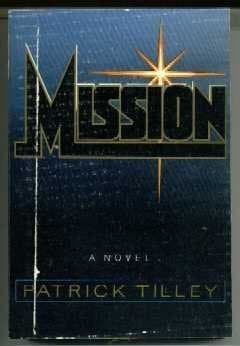
Patrick Tilley (1981)
Genre
Fantasy / Spirituality / Science Fiction
Reading Time
Given the depth and scope, likely 800-1000 min (assuming ~400 pages at 250 words/min)
Key Themes
See below
Sign in to track this book
A modern Manhattan hospital faces the impossible arrival of a crucified man, forcing humanity to confront its beliefs across 7,000 miles and 20 centuries.
On Easter Sunday, two paramedics bring a naked, seemingly 35-year-old man into Manhattan General Hospital's emergency room. He is dead. Dr. Ben Sagi, a skeptical physician, notices the man's unusual injuries: a two-inch stab wound below his rib cage and nail wounds through his feet and wrists. These wounds match the stigmata of Jesus Christ, unsettling Sagi and the staff. The man's sudden appearance, his injuries, and the timing of Easter create an immediate sense of unease among medical professionals, who rely on scientific reason but face an inexplicable event.
News of the mysterious body quickly reaches the Vatican. Father Anthony Scapulari, a brilliant and practical Jesuit priest, is sent to New York on a secret mission: to confirm the body's authenticity and manage the implications if it is Christ. Scapulari is a man of faith but also a seasoned investigator, aware of potential hoaxes. He immediately claims the Church's right over the body, clashing with the hospital's desire for a full scientific investigation. Scapulari's arrival starts a complex power struggle between faith and science, as both institutions compete for control over the narrative and the evidence.
Despite the Vatican's involvement, Dr. Ben Sagi conducts a preliminary autopsy. He finds no conventional explanation for the man's death or his wounds. The body shows no signs of decomposition, appearing as if death happened moments before arrival, yet paramedics reported finding him in an alley. Father Scapulari, meanwhile, consults theologians and biblical scholars, trying to reconcile the appearance with prophecy and doctrine. He arranges for the body to be moved to a secure, secret location, increasing tensions with Sagi and the authorities. Both men, driven by their fields, confront a reality that defies their established ways of thinking.
In a surprising turn, the dead man awakens. He is not Jesus Christ, but a being from an advanced extraterrestrial civilization, called 'The Visitor' or 'The Emissary.' He communicates telepathically, explaining that his species has subtly guided human spiritual and technological development for millennia. His 'crucifixion' was not a historical event but a re-enactment, a deliberate 'message' meant to get humanity's attention and cause a global spiritual crisis. The nail wounds and spear mark were self-inflicted, part of a complex simulation. This revelation shatters Scapulari's faith and forces Sagi to confront a reality beyond his scientific grasp.
The Visitor explains that his species, the 'Overseers,' has watched humanity for ages, stepping in at key moments to prevent self-destruction. He says humanity is nearing an evolutionary threshold, where its destructive tendencies could cause global catastrophe. His 'mission' is to deliver a direct message: humanity must evolve its collective consciousness, embrace unity, and overcome its primitive divisions, or face extinction. He states that the 'miracles' and 'prophecies' of Earth's religions were often misinterpreted messages or advanced technological interventions by his kind, meant to inspire moral development.
As the Visitor's presence and claims become known to a select few, including Scapulari, Sagi, and high-ranking government officials, the world's power structures are thrown into chaos. Religious leaders struggle to reconcile their doctrines with the extraterrestrial explanation; some dismiss it as a demonic deception, others face a deep crisis of faith. Governments fear global panic and the collapse of social order. The United States government, specifically General Maxwell, tries to control and weaponize the Visitor's advanced knowledge, while Scapulari grapples with the potential unraveling of Christianity itself. The world faces an existential crisis as its deepest beliefs are challenged.
General Maxwell and the military try to contain and study the Visitor, seeing him as a strategic asset or a threat. They try to interrogate him, but his telepathic abilities and advanced understanding make him immune to conventional methods. Father Scapulari, initially devastated, begins to see a new, universal truth in the Visitor's message, but struggles to convince the rigid Vatican hierarchy. Dr. Sagi, the scientist, finds himself caught between the military's aggressive tactics and Scapulari's spiritual re-evaluation, all while trying to apply a scientific lens to an utterly unscientific phenomenon. Each group tries to shape the Visitor's narrative to its own goals, showing humanity's inherent divisions.
The Visitor continues to share knowledge, explaining that the universe is full of life, and that spiritual evolution is a universal constant. He describes a cosmic consciousness, a unifying force that supports all existence, and that humanity's current path of conflict and materialism deviates from this. He demonstrates advanced technologies and knowledge, proving his claims beyond doubt to those who witness them. His teachings go beyond individual religions, offering a broader, more inclusive spiritual framework that emphasizes interconnectedness, empathy, and the pursuit of knowledge. He challenges humanity to look beyond Earth and embrace its place in a vast, intelligent cosmos.
The Visitor presents humanity with a clear choice: embrace unity and conscious evolution, or succumb to destructive tendencies, leading to self-annihilation. He clarifies that his species will not directly intervene to save humanity if it chooses the latter; their role is to guide, not dictate. This ultimatum creates intense debate and division among world leaders, scientists, and religious figures. Some advocate for immediate global change, others cling to old doctrines, and a few see an opportunity for power in the chaos. The weight of this decision falls on individuals like Scapulari and Sagi, who must decide how to share this profound truth with a world unprepared to receive it.
Having delivered his message and shown the implications of humanity's choices, the Visitor prepares to leave. He stresses that the 'mission' is now humanity's own. His departure is as mysterious as his arrival, leaving behind a world changed by his presence. Father Scapulari, now a man of universal faith, and Dr. Sagi, a scientist whose worldview has been shattered and rebuilt, are left to deal with the aftermath. They become unexpected allies, dedicated to spreading the Visitor's message of unity and cosmic awareness. The book concludes with humanity at a crossroads, with a new understanding of its place in the universe, but still facing the challenge of transforming its collective consciousness.
The Protagonist
Sagi's arc transforms him from a staunch materialist to an individual open to cosmic truths, integrating scientific inquiry with a broader, spiritual understanding.
The Protagonist/Antagonist (initially)
Scapulari undergoes a profound spiritual transformation, moving from dogmatic Catholicism to a universal, cosmic understanding of spirituality.
The Catalyst/Mentor
The Visitor's 'arc' is not personal development but the unfolding of his mission, culminating in the delivery of his message and his departure.
The Antagonist/Supporting
Maxwell's arc is largely static; he remains entrenched in his militaristic worldview, representing humanity's resistance to a non-combative, spiritual solution.
The Supporting
Ratzinger's arc is limited; he primarily serves as a foil to Scapulari's evolving understanding, representing the conservative forces of the Church.
The novel directly confronts the tension between scientific rationalism and religious belief. Dr. Ben Sagi represents the scientific view, demanding evidence and logical explanations for the Visitor's existence. Father Anthony Scapulari represents faith, initially trying to fit the event into Christian dogma. The Visitor's revelations force both characters, and humanity, to re-evaluate their frameworks. The book suggests that both science and faith, in rigid forms, can be limiting, and that true understanding may come from a broader, cosmic perspective that goes beyond earthly divisions. This is clear in Sagi's initial disbelief versus Scapulari's initial certainty, both of which are broken.
““Science seeks to explain the how, faith the why. But what if the why is simply a more complex how, and the how utterly beyond our current faith?””
The book explores spirituality, separating it from organized religion. The Visitor reveals that many religious figures and 'miracles' were misinterpreted guidance or interventions from his species, meant to encourage moral and ethical development. This challenges the basic narratives of Earth's religions. The theme argues that true spirituality is about interconnectedness, empathy, and universal consciousness, rather than specific dogmas. Scapulari's journey from a devout Catholic to someone embracing a universal, cosmic spirituality shows this redefinition, suggesting a broader understanding of the divine.
““You built your churches around the shadows we cast, not the light itself. The truth is far vaster than your sacred texts.””
A central theme is humanity's turning point: either evolve its collective consciousness toward unity and peace, or face self-destruction due to its conflicts. The Visitor's mission is a direct warning and a call to action. The book highlights humanity's tribalism, materialism, and inability to overcome old divisions as major threats to its survival. The various reactions to the Visitor — from military attempts to control him (General Maxwell) to religious denial (Cardinal Ratzinger) — show the resistance to this necessary evolution. The narrative suggests that true progress is not technological but spiritual and ethical, requiring a shift in global consciousness.
““Your species stands at a precipice. The choice to ascend or to fall is now, irrevocably, yours.””
The novel examines the deep impact of a challenging truth on individuals and institutions. The Visitor's revelations shatter the foundations of established religions, scientific ideas, and government authority. For characters like Scapulari, the truth brings existential crisis before a new understanding. For others, like General Maxwell, it creates fear and a desire for control. The book explores how difficult it is for humanity to accept a truth that undermines its deepest beliefs and comfortable illusions, showing the psychological and societal upheaval that comes with radical shifts in understanding. The initial disbelief in Manhattan General is a small example of the global reaction.
““The greatest burden is not the truth itself, but the unpreparedness of those who must bear it.””
A seemingly impossible event that immediately hooks the reader and sets the central mystery.
The sudden appearance of a man with stigmata-like wounds, dead on arrival on Easter Sunday in a modern hospital, serves as a powerful inciting incident. This device immediately establishes an atmosphere of profound mystery and challenges the reader's assumptions. It creates an undeniable hook, forcing characters like Dr. Sagi and Father Scapulari, and by extension the reader, to confront an event that defies rational explanation and religious dogma. It is the catalyst for all subsequent plot developments and the central question that drives the narrative forward.
A re-contextualization of a sacred event to convey an urgent, universal message.
The revelation that the Visitor's 'crucifixion' was a staged event, a meticulously planned re-enactment rather than a historical or divine occurrence, functions as a powerful re-contextualization. This device not only shatters religious expectations but also highlights the Visitor's intelligence and his species' long-term engagement with humanity. It transforms a symbol of suffering and redemption into a calculated communication strategy, emphasizing that the message (unity, evolution) is more important than the literal historical event, and that humanity's interpretations have often missed the deeper intent.
A means for the Visitor to impart knowledge directly and bypass linguistic barriers.
The Visitor's ability to communicate telepathically serves as a crucial plot device, allowing for direct and immediate transmission of complex ideas and universal truths without the limitations of spoken language or cultural interpretation. This bypasses potential misunderstandings or mistranslations, ensuring his message is received clearly by characters like Sagi and Scapulari. It also underscores his advanced nature and subtly reinforces the theme of interconnectedness, as thoughts and feelings are shared directly, creating a profound, intimate, and undeniable connection with his audience.
“The greatest enemy of truth is not the lie—deliberate, contrived, and dishonest—but the myth—persistent, persuasive, and unrealistic.”
— A philosophical reflection on the nature of belief and misinformation.
“Fear is a choice. You can choose to let it paralyze you, or you can choose to use it as fuel.”
— An internal monologue during a moment of extreme danger.
“Sometimes, the only way to find your true path is to get lost.”
— A character reflecting on their journey and unexpected detours.
“Power is not about what you can do to others, but what you can do for them.”
— A leader's advice on the true nature of leadership.
“The universe doesn't care about your plans. It cares about your intention.”
— A spiritual guide offering wisdom on cosmic forces.
“To truly see, you must first close your eyes to what you think you know.”
— A lesson on perception and overcoming preconceived notions.
“Every ending is just a new beginning, disguised as a tragedy.”
— A comforting thought offered during a period of loss.
“The most dangerous chains are not those visible to the eye, but those forged in the mind.”
— A character contemplating mental barriers and self-limitation.
“Silence is not empty. It's full of answers waiting to be heard.”
— A moment of meditation and listening to inner wisdom.
“We are all connected, not just by shared experience, but by the very fabric of existence.”
— A realization about the interconnectedness of life.
“The future is not something you wait for; it's something you create.”
— An empowering statement about agency and destiny.
“Truth often whispers, while lies shout.”
— A warning about discerning genuine information from deception.
“Compassion is the bridge between worlds, between hearts, between species.”
— A reflection on empathy and understanding across differences.
“Sometimes, the only way to save something is to let it go.”
— A painful but necessary lesson learned in a moment of sacrifice.
“The universe speaks in symbols. It is up to us to learn its language.”
— A character's insight into interpreting signs and omens.
Ready to see how well you understood this book? Take our interactive quiz with 10 questions.







