“I can't believe I'm doing this. I can't believe I'm actually going to Florida, to live with my dad, who I haven't seen in like, five years.”
— Jessica Mastriani's internal thoughts as she's about to leave for Florida.

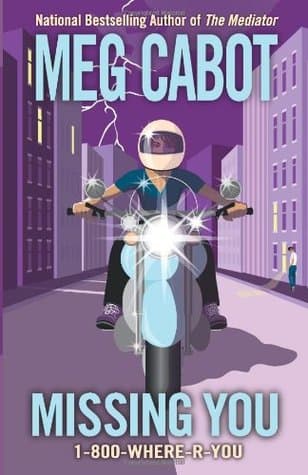
Meg Cabot (2006)
Genre
Thriller / Mystery
Reading Time
268 min
Key Themes
See below
Sign in to track this book
A burnt-out psychic known as 'Lightning Girl,' stripped of her powers and identity, must confront her past when a ghost from home forces her to find a missing person, even as she herself remains lost.
Months after the traumatic events that led to the disappearance of her psychic abilities, Jessica Mastriani, formerly known as 'Lightning Girl,' has moved to New York City. She tries to live a normal life, working as a waitress and avoiding anything that reminds her of her past as a government-employed psychic. She shares an apartment with her friend Micky, who knows about Jess's former life but respects her desire for anonymity. Jess is haunted by memories of her last mission and its emotional toll, making her desperate to believe her powers are truly gone and she can finally be a regular person.
Jessica's fragile peace is broken when Rob Wilkins, a boy from her hometown of Bloomville, Indiana, and the brother of her deceased boyfriend, Gavin, unexpectedly shows up at her apartment. Rob is desperate, his younger sister, Suzanne, has gone missing in New York City. He explains that Suzanne, an art student, came to the city for an internship but has vanished, leaving her friends and family worried. Rob, knowing about Jess's past abilities, has come to her as a last resort, believing she is the only one who can find Suzanne, despite Jess's insistence that her powers are gone.
Initially, Jessica refuses to help Rob, stating she no longer has her psychic abilities and is terrified of them returning. She explains the trauma of her last mission, where she saw horrific events through her visions. However, Rob's genuine distress and the memory of Gavin eventually sway her. She agrees to help him search for Suzanne through conventional means, like checking her apartment and talking to her friends, hoping to find her without needing her powers. This decision forces Jess to confront the past she tried to outrun.
Jessica and Rob begin their investigation by visiting Suzanne's apartment, finding it undisturbed but with no immediate clues. They then interview Suzanne's friends and fellow art students, who describe Suzanne as talented but sometimes naive. They learn that Suzanne was excited about her internship at a prestigious art gallery and had recently started dating a much older, mysterious artist named Julian. This new relationship raises red flags for Jess, as it seems unusual for Suzanne to be involved with someone so much older and potentially secretive.
While looking at one of Suzanne's unfinished art pieces, Jessica experiences a sudden, disorienting flash—a brief, disturbing vision of a dark, confined space and a sense of fear. This fleeting moment terrifies Jess, confirming her worst fears: her psychic abilities are beginning to return. She tries to suppress it, but the experience shakes her confidence in controlling her powers. Rob, noticing her distress, presses her, and Jess reluctantly admits to the vision, making it clear she is not ready to fully embrace her role as 'Lightning Girl' again.
As Jess's visions become more frequent, though still fragmented, she and Rob investigate Julian, Suzanne's mysterious older boyfriend. They discover that Julian is a reclusive artist with a reputation for being manipulative and possessive. One of Suzanne's friends reveals that Julian had been pressuring Suzanne to move in with him and isolating her from her friends. Jess's visions start to focus on images of Julian's studio, showing glimpses of his art, which seems to have a disturbing, almost predatory quality, and a growing unease surrounding Suzanne's involvement with him.
Jessica and Rob find Julian and confront him about Suzanne's disappearance. Julian, a charismatic but unsettling man, pretends ignorance and concern, claiming Suzanne simply left him without a word. He tries to deflect their suspicions, suggesting Suzanne was prone to impulsive behavior. However, Jess's returning visions show her flashes of Julian's true nature—his possessiveness and a dark secret he is trying to hide. Despite his smooth demeanor, Jess senses deep deceit, and his answers only confirm her belief that he is involved in Suzanne's disappearance.
Jessica's visions become clearer and more frequent, revealing that Julian is not just an artist, but a member of a dangerous cult that preys on vulnerable young women. The cult leader, a charismatic and manipulative figure, uses art as a cover for their illicit activities, which include human trafficking and exploitation. Jess sees Suzanne held captive, drugged and disoriented, in a hidden location. The visions also reveal that Julian is directly involved in Suzanne's captivity. As Jess gets closer to the truth, she realizes she and Rob are also in danger, as the cult becomes aware of their investigation.
With her powers fully restored, Jessica accurately pinpoints Suzanne's location: a secluded warehouse on the outskirts of the city, used as a cult compound. She, Rob, and Micky plan to infiltrate the compound and rescue Suzanne. The mission is dangerous, as they know the cult members are violent. Jess uses her psychic abilities to navigate the compound, avoiding traps and anticipating the movements of the cult members, while Rob and Micky provide support and protection. They find Suzanne, weak but alive, and manage to free her from her captors.
Following a tense confrontation, Julian and other key cult members are apprehended by the authorities, thanks to the evidence Jess's visions provided. Suzanne is reunited with Rob, relieved but traumatized by her ordeal. Jessica, having faced her fears and successfully used her powers to save a life, finally begins to accept her unique abilities. She realizes that while her powers come with a heavy burden, they also allow her to do good. The experience brings her and Rob closer, and while the future remains uncertain, Jess finds purpose and renewed hope for healing.
The Protagonist
Jessica moves from denying and fearing her psychic powers to reluctantly re-engaging with them, ultimately accepting them as a part of herself and a tool for good, finding purpose in helping others.
The Supporting
Rob starts as a desperate brother seeking help, evolving into a brave and supportive partner to Jessica, confronting danger to save his sister.
The Supporting
Suzanne goes from an ambitious art student to a vulnerable victim, ultimately being rescued and beginning her recovery from trauma.
The Antagonist
Julian is introduced as a suspicious figure, his true nature as a manipulative cult member is gradually revealed, leading to his apprehension.
The Supporting
Micky remains a steadfast friend, evolving from a supportive roommate to an active participant in Jess's dangerous mission.
The Mentioned
N/A (deceased)
The novel explores the psychological impact of trauma, especially on Jessica. Her past missions as 'Lightning Girl' left her emotionally scarred, leading her to suppress her abilities and seek a normal life. Her initial reluctance to help Rob comes from a deep fear of reliving past horrors and the burden of her powers. The search for Suzanne forces her to confront her past, acknowledge her pain, and ultimately begin a path toward healing and accepting her unique identity. This is clear in her nightmares and her initial resistance to her visions returning.
“''I was just Jess, waitress, not Jess, Lightning Girl, psychic freak show, who saw dead people and kidnapped people and all the awful things humans did to each other.'”
A central theme is Jessica's journey to accept her identity as a psychic. Initially, she sees her powers as a curse, a source of pain and isolation. She tries to deny them, believing they are gone, and attempts to create a new, ordinary life. However, Rob's plea and the urgent need to find Suzanne force her to use her abilities again. Through the struggle and eventual success of the rescue mission, Jess comes to understand that her powers, while burdensome, are part of who she is and can be used for good. This acceptance is important for her personal growth and finding purpose.
“'Maybe my powers weren't a curse. Maybe they were a gift. Maybe they were me.'”
The story highlights the heavy responsibility that comes with extraordinary abilities. Jessica's past experiences with the government show how her powers were exploited, leading to burnout and trauma. When Rob seeks her help, she struggles with the moral obligation to assist versus her desire for self-preservation. The narrative explores the internal conflict of someone who can make a difference but is deeply scarred by the cost of doing so. Ultimately, Jess chooses to shoulder this burden, recognizing that her unique gift comes with a duty to protect the innocent.
“'With great power comes great responsibility.'”
The novel examines the insidious nature of evil, particularly through Julian and the cult he belongs to. It shows how charismatic individuals can exploit vulnerability and use seemingly harmless fronts (like art) to hide sinister intentions. The deception around Suzanne's disappearance and Julian's true motives reveals a darker side of society, where innocence can be easily manipulated and exploited. Jess's visions expose this hidden evil, forcing her and Rob to confront a world far more dangerous than they initially imagined.
“'He looked like an artist, but his eyes... they held something cold and calculating, something utterly devoid of warmth.'”
Jessica's ability to see past, present, and future events related to missing persons.
Jessica's psychic visions are the central plot device. Initially suppressed, their gradual return drives the mystery forward, providing crucial clues about Suzanne's whereabouts and the nature of her captors. The visions are often fragmented and disturbing, reflecting Jess's trauma and adding to the suspense. They serve as a unique form of exposition, revealing information that conventional investigation cannot, and directly enabling the climax of the story by pinpointing Suzanne's location.
The disappearance of Suzanne Wilkins as the inciting incident and central mystery.
The disappearance of Suzanne Wilkins serves as the classic 'missing person' trope, which acts as the inciting incident for the entire plot. It compels Rob to seek Jess's help and forces Jess to confront her past. This device creates immediate urgency and suspense, providing a clear goal for the protagonists. It allows for the gradual unfolding of clues, interviews with various characters, and the eventual unmasking of the antagonist, all centered around the quest to find the missing individual.
Julian's mysterious and isolated nature as a source of suspicion and danger.
Julian, the enigmatic artist, embodies the reclusive antagonist trope. His isolation, artistic facade, and older age create an aura of mystery and make him a prime suspect. This device allows for a gradual revelation of his true, sinister nature. His ability to manipulate and mislead, combined with his hidden life, heightens the sense of danger and makes him a formidable opponent for Jessica and Rob, who must penetrate his layers of deception to uncover the truth.
Jessica's journey of losing her psychic abilities and gradually getting them back.
This device focuses on Jessica's arc of having seemingly lost her psychic powers due to trauma, only for them to slowly resurface as she confronts a new crisis. This narrative structure allows for exploration of her internal conflict, her fear of her abilities, and her eventual reluctant acceptance. The gradual return of her powers builds suspense and signifies her emotional healing, as she reclaims not just her abilities but also a sense of purpose and self.
“I can't believe I'm doing this. I can't believe I'm actually going to Florida, to live with my dad, who I haven't seen in like, five years.”
— Jessica Mastriani's internal thoughts as she's about to leave for Florida.
“You know, some people think it’s a good idea to just move on. Forget the past. But I don’t think you ever really can. Not completely.”
— Jessica reflecting on her past and the murder of her friend, Jeremy.
“It’s funny how you can think you know someone, really know them, and then they just… disappear. And you realize you didn’t know them at all.”
— Jessica musing on the disappearance of her friend Jeremy, and the secrets that followed.
“My dad always said that when you're scared, the best thing to do is face whatever's scaring you head-on. Don't run from it.”
— Jessica recalling her father's advice as she confronts a difficult situation.
“There are no coincidences. Only connections we haven't made yet.”
— A recurring theme Jessica considers as she pieces together clues.
“Sometimes the people you think you can trust the most are the ones who let you down.”
— Jessica's growing realization about the people around her in Florida.
“It's hard to tell who's telling the truth when everyone has something to hide.”
— Jessica's frustration with the conflicting stories she hears.
“You can't outrun your past, no matter how far you go.”
— Jessica's internal monologue about how her past in Indiana follows her to Florida.
“The truth is rarely simple, and it's almost never what you expect.”
— Jessica's reflection as the mystery deepens and becomes more complicated.
“Sometimes, the most dangerous lies are the ones you tell yourself.”
— Jessica considering her own self-deception or denial about certain events.
“It's amazing how much you can miss someone, even if you didn't realize how much they meant to you until they were gone.”
— Jessica thinking about her friend Jeremy and the impact of his absence.
“Everybody has secrets. It's just a matter of finding out which ones are deadly.”
— Jessica's detective mindset as she uncovers hidden information.
“Sometimes, you have to break a few rules to do the right thing.”
— Jessica contemplating taking unconventional steps to solve the mystery.
Ready to see how well you understood this book? Take our interactive quiz with 10 questions.

Biography coming soon.







