“The thing about people who are gone is that they're still here, in your head, in your memories, in your heart. They never really leave.”
— Summer's reflection on missing May

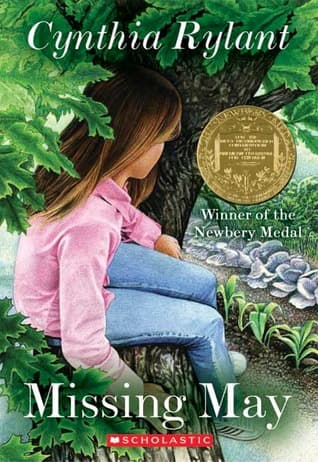
Cynthia Rylant (1989)
Genre
Children's / Young Adult
Reading Time
90 min
Key Themes
See below
Sign in to track this book
After Aunt May dies, a young girl and her uncle search for a sign of her presence, eventually learning that grief and the quiet continuation of life can exist together.
Six years ago, Summer moved in with her Aunt May and Uncle Ob in a small West Virginia town. They gave her a loving home, and May became a mother figure. The story begins shortly after May's sudden death in her garden, a loss that has left Summer and Ob in deep grief. The house, once full of May's presence and Ob's creative energy, is now silent. Ob, a skilled artist who made detailed whirligigs, has stopped working on them, and his workshop collects dust. Summer feels a profound emptiness, struggling to adjust to life without May's comforting presence.
Uncle Ob, consumed by grief, believes May's spirit is trying to send them a message from the afterlife. He talks about her constantly, often as if she is still there, and interprets small events as signs from her. Summer, initially skeptical and more practical in her grief, tries to humor him, desperate for her uncle to find some peace. Ob's conviction grows, fueled by his longing for May and his inability to accept her absence. He thinks that if they find the right sign, they will know what May wants them to do next, and their lives can move forward.
Believing he received a sign from May, Ob decides to attend the annual All-State Whirligig Convention in Charleston. He carefully prepares his most elaborate whirligig, one May particularly liked. Summer and Ob pack their old pickup truck, the whirligig secured in the back, and begin their journey. This trip is a significant step for Ob; it is the first time he has engaged with his art since May's death, driven by his belief that May will make her presence known at the convention, guiding them through their sorrow.
During their drive to Charleston, Summer and Ob meet Cletus, a hitchhiker. Cletus is a gentle, somewhat naive boy with a unique view of life and a fascination with unusual things. He says he is looking for a pet iguana. Despite Summer's initial doubts about picking up a stranger, Ob, in his grief, sees Cletus as another possible sign from May. Cletus's innocent curiosity and unusual observations start to subtly change the mood in the truck, offering a small distraction from their heavy grief.
At the All-State Whirligig Convention, Ob proudly displays his intricate whirligig. He waits, hoping for a clear sign from May. However, as the day passes, no such sign appears. The convention is full of other whirligig enthusiasts and their creations, but for Ob, the experience feels empty without May. Summer observes her uncle's quiet disappointment, realizing how deeply he longs for a final message from his wife. The lack of a definitive sign leaves them both with a renewed sense of loss and uncertainty.
As they leave the convention, disheartened, Cletus makes a simple observation. He tells Ob that May is not 'gone' but is simply 'in everything.' He points out the beauty in the trees, the sky, and the air around them, suggesting May's spirit is in the natural world and the love they shared. This simple statement, free from the complexities of adult grief, deeply affects Summer and starts to give her understanding. Cletus's uncomplicated view offers a fresh perspective, hinting that May's presence might be found not in a single sign, but in the ongoing life around them.
The drive back home is quieter than the trip there, but a subtle change has occurred. Cletus's words stay with Summer, and she begins to look at the landscape with new eyes, seeing the ordinary beauty May had always cherished. Ob remains somewhat withdrawn, still processing the day, but a new feeling might be stirring within him. The immediate need for a direct sign from May has lessened, replaced by a new understanding that her memory and spirit are not confined to a single message, but are part of their lives and the world around them.
Back home, Summer suggests they visit the river, a place May loved. As they sit by the water, remembering May, Summer tells a story about May teaching her to skip stones. In this shared moment of remembrance, free from the desperate search for a sign, they feel peaceful. The river, the familiar surroundings, and their shared memories become a real connection to May, rather than a painful reminder of her absence. This visit marks a turning point, as they begin to accept that May's presence can be felt in their memories and the lasting love they shared.
Inspired by their journey and Cletus's wisdom, Ob slowly returns to his workshop. He starts working on a new whirligig, his hands finding their familiar rhythm. This is a significant step, showing his gradual emergence from deep grief. The act of creation, a passion he shared with May and that she encouraged, becomes a way for him to honor her memory and reconnect with his own identity. Summer watches him, relieved to see the return of the creative man she knew before May's death. This return to art means new hope and a way forward.
The story ends with Summer and Ob learning to live with their grief, not by forgetting May, but by making her memory part of their daily lives. They still miss her deeply, but their sadness no longer consumes them. They find May's spirit in the beauty of their home, in Ob's creative work, and in their shared love for her. Summer understands that May is not 'gone' but is part of who they are and how they experience the world. They realize that missing May is part of loving her, and that life, while forever changed, can still be full of purpose and quiet joy.
The Protagonist
Summer moves from a state of profound grief and confusion to a more mature understanding of loss, accepting that May's spirit lives on in memories and the natural world.
The Supporting Character / Co-protagonist in grief
Ob transitions from a paralyzing grief and desperate search for a literal sign to a gradual acceptance of May's enduring presence in his memories and his renewed passion for creating.
The Central, though deceased, character
May's 'arc' is explored through the characters' memories, showing her enduring impact and the way her spirit continues to guide and inspire them even after her death.
The Supporting Character
Cletus remains largely unchanged, serving as a catalyst for the main characters' emotional development through his innocent wisdom.
The Mentioned
N/A, a static, minor character.
The main theme explores the deep effect of loss and the difficult, non-linear process of healing. Summer and Ob's initial grief is paralyzing, marked by silence, stagnation, and a desperate search for a physical sign of May. Ob's obsession with finding May's spirit at the whirligig convention (Scene 5) shows the denial and longing common in grief. The gradual change, influenced by Cletus's simple wisdom (Scene 6) and their shared memories by the river (Scene 8), shows that healing is not about forgetting, but about incorporating the loss into life and finding new ways to connect with the memory of the deceased. Ob's return to art (Scene 9) symbolizes the reawakening of life after deep sorrow.
“You can be missing May, and she can be everywhere.”
This theme looks at how loved ones stay present even after death. Initially, Ob looks for a literal, supernatural sign from May, believing her spirit is separate and needs to communicate. However, the story shows that May's presence is found not in a single message, but in memories, the beauty she cherished, the love she gave, and the very fabric of their lives. Cletus's insight that May is 'in everything' (Scene 6) changes Summer's and eventually Ob's understanding. May is present in the whirligigs Ob makes, the garden where she died, the river she loved (Scene 8), and the values she taught them. Her lasting influence shapes their path forward.
“She was in the green of the trees, and the blue of the sky, and the white of the clouds. She was in everything.”
Art, specifically Uncle Ob's whirligigs, is a strong symbol for life, passion, and a way to heal. Before May's death, Ob's whirligigs were a joyful expression of his creativity, encouraged by May. In his grief, he abandons his art, symbolizing his internal stagnation and loss of joy (Scene 1). The decision to take his whirligig to the convention (Scene 3) is a hesitant step back toward life, driven by his search for May. Ultimately, his return to making whirligigs (Scene 9), not as a desperate plea for a sign, but as a genuine expression of himself and a way to honor May's memory, shows his acceptance of grief and his renewed engagement with life. Art becomes a way to process emotion and find purpose.
“He would not make another whirligig until May told him to.”
The story highlights how deep insights can come from unexpected places, especially from those with a simple, unburdened view. Cletus, the quirky hitchhiker, first seems like a minor, almost funny character. However, his innocent observations and simple understanding of life and death prove to be the most impactful. His statement about May being 'in everything' (Scene 6) cuts through Summer and Ob's complex grief and spiritual searching, offering a clarity adults often lose. His wisdom, free from societal expectations or overthinking, helps the main characters have an emotional breakthrough and a new way of seeing their loss.
“She's not gone. She's just in everything.”
Ob's intricate whirligigs symbolize creativity, life, and the cyclical nature of existence.
Uncle Ob's whirligigs are central symbols in the novel. Initially, they represent his joyful creativity and the vibrant life he shared with May. After her death, his inability to work on them symbolizes his paralyzing grief and the stagnation of his life. The whirligig he takes to the convention represents his desperate hope for a sign from May. Ultimately, his return to making whirligigs signifies his healing, his acceptance of May's enduring presence, and the cyclical nature of life continuing despite loss. They embody the beauty and movement that May brought into their world, now reinterpreted through memory and renewed purpose.
The journey to the whirligig convention serves as a physical and emotional quest.
The road trip to the All-State Whirligig Convention is more than just a physical journey; it's a quest for understanding and a catalyst for change. It takes Summer and Ob out of their isolated grief, exposing them to new people (Cletus) and different perspectives. The anticipation of finding a sign at the convention builds their hope, and the absence of one forces them to confront the reality of their loss. The return journey is marked by a subtle but significant shift in their emotional landscape, allowing them to process Cletus's wisdom and begin their healing process. The journey physically separates them from their grief-stricken home, allowing for new insights.
The story is told primarily through Summer's eyes, filtering events through her innocent yet perceptive lens.
The novel is told from a third-person limited perspective, primarily focusing on Summer's thoughts, feelings, and observations. This allows the reader to experience the grief, confusion, and gradual understanding through the eyes of a child who has lost her primary caregiver. Summer's perspective highlights her innocence, her deep love for both May and Ob, and her unique way of processing profound loss. It also allows for the subtle introduction of Ob's eccentricities and Cletus's wisdom, as seen and interpreted by Summer, making their impact more profound and relatable to a young adult audience.
“The thing about people who are gone is that they're still here, in your head, in your memories, in your heart. They never really leave.”
— Summer's reflection on missing May
“It was like the world had gone from color to black and white, and I was just waiting for someone to paint it back.”
— Summer describing her feelings after May's death
“Sometimes the best way to find something is to stop looking for it.”
— Aunt May's philosophy, often recalled by Summer
“Love is like a big, warm blanket. It keeps you safe and cozy, even when the world outside is cold.”
— Summer remembering May's comforting words about love
“You can't hurry grief. It's like a river, it has its own pace.”
— Ob trying to explain the process of mourning to Summer
“The greatest treasure isn't something you can hold in your hand. It's the people you love.”
— Summer's realization about what truly matters
“Sometimes the quietest people have the loudest hearts.”
— Summer observing Ob's silent grief and love for May
“There's no such thing as a perfect family, but there is such a thing as a family that tries.”
— Summer's thoughts on her unconventional family
“When someone you love dies, it's like a part of you dies with them. But then, a part of them lives on in you.”
— Summer's evolving understanding of death and connection
“It's okay to be sad. It's okay to cry. It's even okay to be angry. Just don't forget to live.”
— A message Summer takes to heart from May's example
“We were all just trying to make sense of a world that had suddenly lost its brightest star.”
— Summer reflecting on how May's death affected Ob and herself
“Home isn't a place, it's a feeling. It's wherever the people you love are.”
— Summer's realization about her changing understanding of home
“Even when things are broken, they can still be beautiful.”
— Summer finding beauty in the imperfections of life and people
“The world keeps turning, even when your heart feels like it's stopped.”
— Summer's observation about the persistence of life despite personal sorrow
Ready to see how well you understood this book? Take our interactive quiz with 10 questions.

Cynthia Rylant is a celebrated American author known for her poignant and often heartwarming children's and young adult literature. Her notable works include the Newbery Medal-winning 'Missing May' and the acclaimed novel 'A Fine White Dust.' Rylant's writing is characterized by its lyrical prose and deep empathy for her characters, often exploring themes of family, loss, and resilience.

Dan Gemeinhart
4.5
Kate O'Hearn
4.4

Jeanne Birdsall
4.4

Jen Wang
4.4

Wendelin Van Draanen
4.3

John Marsden
4.3

Chris Van Allsburg
4.3
Jennifer A. Nielsen
4.2