“There’s a difference between wanting to know something and being prepared for what you learn.”
— Lynley reflecting on his own desire for truth versus the potential pain it brings.

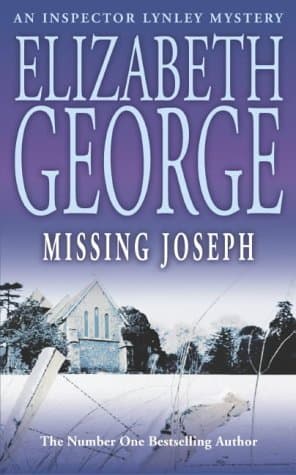
Elizabeth George (1993)
Genre
Thriller / Mystery
Reading Time
10-12 hours
Key Themes
See below
Sign in to track this book
In wintery Lancashire, a vicar's 'accidental' death exposes a village's hidden passions, grief, and murderous intent, drawing a detective into a mystery where healing a marriage might also mean exposing a killer.
Deborah and Simon St. James travel to Winslough, Lancashire, for a winter holiday, hoping to improve their marriage. They plan to visit Vicar Robert Gibson, a former schoolmate of Simon's. Upon their arrival, they learn of Gibson's death. The initial police investigation, led by Constable David Sydeham, calls the death an accident, caused by digitalis poisoning from a foxglove leaf in Gibson's herbal tea. Juliet Spence, a local homeopathic healer and the vicar's close friend, prepared the tea. Simon, a forensic scientist, immediately suspects the quick ruling and lack of thoroughness, especially noting Sydeham's close relationship with Juliet. This prompts him to contact his friend, Detective Inspector Thomas Lynley, to investigate further.
Detective Inspector Thomas Lynley and Detective Sergeant Barbara Havers arrive in Winslough, a remote village, to conduct an unofficial investigation into Robert Gibson's death. They find a community reluctant to speak, protective of its secrets, and wary of outsiders. Juliet Spence, who prepared the fatal tea, maintains her innocence and is distressed by the indirect accusation. As Lynley and Havers investigate, they discover the vicar was a complex man, involved in various community activities and personal relationships. They learn about his close friendship with Juliet, his recent engagement to Maggie Thorley, and his role as a mentor to several local teenagers, including Jamie Thorley, Maggie's younger brother.
As Lynley and Havers continue their investigation, they uncover details of Robert Gibson's past. They learn about an event years prior: the death of a young boy named Joseph, who was in Gibson's care during a school trip. Joseph drowned under unclear circumstances, and the incident deeply affected Gibson, leading him to leave his teaching career and become a vicar, seeking to make amends. This past tragedy connects several characters in the present. The investigators also learn about Gibson's difficult relationship with his mother, Mrs. Gibson, who deeply resents Juliet Spence, believing she was too close to her son and somehow responsible for his death.
Juliet Spence becomes a central figure in the investigation, and her past is closely examined. Lynley and Havers discover that Juliet was previously married to Giles and they had a son, Adam, who died in a house fire. This personal tragedy, along with the breakdown of her marriage, brought Juliet to Winslough, where she sought comfort and a new start as a homeopathic healer. Her deep connection with Robert Gibson, based on shared grief and understanding of loss, becomes clear. The investigators consider if her past trauma could be a motive, or if someone is framing her by using her history.
Lynley and Havers focus on Maggie Thorley, Gibson's fiancée, and her younger brother, Jamie. Maggie, a quiet and seemingly innocent young woman, expresses her deep love for Robert and her grief over his death. However, her brother Jamie is different. He is a troubled teenager with a history of misbehavior, including arson and cruelty to animals, and he resented Gibson, believing the vicar was manipulating his sister. Jamie's erratic behavior and known dislike for Gibson make him a person of interest. The investigators also learn about the Thorleys' difficult family life, marked by their father's absence and their mother's struggles.
Simon St. James, using his forensic expertise, carefully examines the details of the poisoning. He confirms that the digitalis came from a foxglove leaf, but questions how it could have ended up in Gibson's tea without Juliet's knowledge. Lynley, meanwhile, focuses on the practical aspects of the crime. He discovers that a foxglove plant grew near the vicarage and it would have been easy for someone to pick a leaf and put it into the tea preparation. The investigation also considers if the poison was introduced earlier and took effect later, making it harder to pinpoint the exact moment or perpetrator.
As the investigation progresses, the close-knit community of Winslough slowly reveals its secrets. Lynley and Havers discover that many villagers had reasons, both small and significant, to dislike or resent Robert Gibson. Some thought he was too involved, others felt he was judgmental, and still others held old grudges. The close relationships between characters, such as Constable Sydeham's protectiveness of Juliet, and Mrs. Gibson's dislike of her, show a complex network of loyalties and resentments. The investigators also learn about Gibson's attempts to help Jamie Thorley, which Jamie often resisted and suspected.
The investigation takes a darker turn with a second death in Winslough. This event, which initially seems like a suicide, further complicates the case and increases pressure on Lynley and Havers. The second victim has connections to both Robert Gibson and the earlier tragedy involving Joseph, suggesting a deliberate attempt to silence someone or cover up a deeper conspiracy. This development leads Lynley to believe that the deaths are not isolated incidents but part of a plan, forcing him to re-evaluate all evidence and suspect everyone in the small community. The villagers become even more guarded, fearing for their safety and suspicious of each other.
Through careful investigation and interviews, Lynley and Havers finally uncover the truth behind Joseph's death years ago. Joseph did not drown accidentally but was murdered by Jamie Thorley. Jamie, even as a young boy, showed disturbing tendencies and killed Joseph out of cruelty. Robert Gibson, knowing the truth and wanting to protect Jamie's mother, Maggie's mother, had covered up the murder, allowing it to be ruled an accident. This act of protection had haunted Gibson for years and led him to become a vicar, seeking redemption. This revelation changes the focus of the current murders.
Maggie Thorley is revealed as Robert Gibson's killer. She had discovered Gibson's long-held secret about Jamie murdering Joseph and his cover-up. Maggie, deeply disturbed by her brother's past and Gibson's involvement, decided to kill Gibson to prevent him from ever revealing the truth, which would destroy her family. She carefully planned the poisoning, using her knowledge of the vicarage and local plants. Maggie also orchestrated the second death to eliminate someone getting too close to the truth. Her innocent appearance hid a cunning and desperate mind, driven by loyalty to her brother and a desire to protect her family's reputation. The investigation concludes with Maggie's arrest, ending the complex web of secrets and murder in Winslough.
The Protagonist
Lynley begins the investigation with a professional detachment, but as the case unravels, he becomes increasingly emotionally invested in the tragic lives of the Winslough residents, deepening his understanding of human darkness.
The Protagonist
Havers initially approaches the case with her usual cynicism and suspicion of the upper class, but she gradually develops a nuanced understanding of the Winslough community and the complexities of human grief and malice.
The Supporting
Simon begins the story grappling with marital difficulties and personal unease, finding a renewed sense of purpose through his forensic work on the case, which also indirectly helps him confront his personal issues.
The Supporting
Deborah starts feeling detached and uncertain in her marriage, but her immersion in the Winslough mystery and her observations of human nature lead her to a deeper understanding of herself and her relationship with Simon.
The Victim
As a deceased character, his 'arc' is revealed retrospectively, showing his transformation from a man haunted by a tragic secret to a vicar seeking redemption, ultimately leading to his murder.
The Suspect/Supporting
Juliet endures intense scrutiny and grief, her past traumas resurfacing as she struggles to prove her innocence and mourn her friend, ultimately finding a measure of peace after the truth is revealed.
The Antagonist
Maggie's character arc is a slow reveal from a grieving fiancée to a calculated killer, demonstrating the lengths she will go to protect her family's dark secret.
The Supporting
Jamie's character is largely static in his troubled nature, but the revelation of his past act of murder serves as the catalyst for the entire series of events in the present.
The Supporting
Sydeham's arc shows his initial confidence in his own judgment eroding as Lynley and Havers uncover the deeper truths, forcing him to confront his biases and professional shortcomings.
The Mentioned
Her character remains largely static, consumed by grief and resentment, serving as a representation of a mother's unyielding love and denial.
This theme is central to Robert Gibson's character. He became a vicar to make amends for his part in covering up Joseph's murder. His life is an ongoing act of seeking forgiveness, which eventually leads to his own death. The theme also touches on Juliet Spence's grief and her search for meaning after her son's death, and Maggie Thorley's twisted sense of guilt and protection, leading her to commit further crimes to 'redeem' her family from exposure.
“He had sought to redeem himself through service, but some sins, it seemed, could not be absolved.”
The novel explores the nature of evil through Jamie Thorley. As a child, he committed murder without remorse. His tendencies, hidden beneath a troubled youth, are the cause of the initial tragedy and the later murders. The story examines how such evil can develop within a community and how others, out of misguided love or protection, can become involved in its concealment, leading to more destruction.
“Some darkness, Lynley mused, was not born of circumstance but was inherent, a twisted core within the soul.”
The entire plot depends on the impact of long-held secrets within the seemingly peaceful village of Winslough. Robert Gibson's secret about Joseph's death, Juliet's past trauma, and the Thorley family's desperate attempts to hide Jamie's true nature all show how secrets can harm relationships, warp lives, and lead to violence. The investigation uncovers these buried truths, revealing the community's fragile foundations.
“A secret was a poison, Lynley thought, slowly seeping into every corner of a life, eventually corrupting everything it touched.”
Various forms of love and loyalty, both healthy and destructive, drive many characters' actions. Maggie Thorley's intense, obsessive love and loyalty for her brother Jamie lead her to commit murder. Juliet Spence's deep love for her lost son and her friendship with Robert Gibson are central to her character. Constable Sydeham's unspoken affection for Juliet influences his professional judgment. The novel explores the line between protective love and dangerous obsession, and how these emotions can blind individuals to truth and morality.
“Love, in its most twisted form, could be the most dangerous weapon of all.”
Winslough shows how insular communities work. Outsiders are viewed with suspicion, and community members protect their own, often at the expense of justice. The villagers' reluctance to speak, their ingrained loyalties, and their collective silence about past events make Lynley and Havers' investigation difficult. This theme highlights how close-knit communities can become places for secrets and how local biases can hinder the search for truth.
“The village had its own rules, its own silent pacts, and outsiders were not welcome to disturb them.”
Confines the suspects to a small, isolated community.
The novel employs the classic closed-circle mystery format, limiting the pool of suspects to the inhabitants of the remote village of Winslough. This device heightens the tension and suspicion, as everyone knows everyone else, and hidden connections and resentments are gradually exposed. The isolation of the setting, particularly in the winter landscape, reinforces the sense of entrapment and the idea that the killer must be one of their own, forcing Lynley and Havers to delve deeply into the community's intricate web of relationships and secrets.
Gradual revelation of a past tragedy that motivates present crimes.
The narrative slowly unveils a significant past trauma – the death of the boy Joseph years ago – which acts as the foundational event for the subsequent murders. This device creates suspense as the investigators piece together fragments of information, understanding that the present crimes are deeply rooted in unresolved historical events. The gradual revelation of this past trauma not only provides motive but also offers insight into the characters' long-standing emotional burdens and their desperate attempts to cope or conceal.
The collective silence and misdirection of the villagers.
While not a single unreliable narrator, the community of Winslough collectively acts as an unreliable 'witness' to the events. Villagers offer incomplete information, misdirect, or remain silent, either out of loyalty, fear, or a desire to protect their own secrets. This device forces Lynley and Havers to constantly question what they are told and to look beyond superficial appearances, highlighting the difficulty of extracting truth from a community determined to guard its privacy and its past.
Simon St. James's expertise drives the initial suspicion and provides key evidence.
Simon St. James's role as a forensic scientist is crucial. His immediate suspicion of the initial 'accidental' ruling, based on his scientific knowledge of poisons and crime scenes, is the catalyst for Lynley's involvement. Throughout the investigation, Simon provides precise forensic analysis and insights, challenging assumptions and guiding the direction of the inquiry. This device grounds the mystery in scientific reality, adding credibility to the unfolding plot and contrasting with the emotional and psychological aspects of the crime.
“There’s a difference between wanting to know something and being prepared for what you learn.”
— Lynley reflecting on his own desire for truth versus the potential pain it brings.
“The truth, like any potent poison, has a way of working through the system, no matter how slowly.”
— A general observation about the inevitability of truth's revelation.
“Grief was a country no one wanted to visit, but once there, it was hard to leave.”
— Helen Clyde's thoughts on the enduring nature of sorrow.
“Secrets had a way of festering, of poisoning everything around them, even the innocent.”
— Inspector Lynley's internal monologue about the destructive power of hidden truths.
“Sometimes the most monstrous acts are committed by those who believe they are doing good.”
— A reflection on the misguided motivations behind some crimes.
“The past was never truly dead; it merely lay dormant, waiting for the right moment to awaken and wreak havoc.”
— The lingering impact of past events on the present investigation.
“There was a certain cruelty in hope, especially when it was false.”
— Characters facing the dashed expectations of a positive outcome.
“People saw what they wanted to see, believed what they wanted to believe, regardless of the evidence.”
— The subjective nature of perception and its effect on the investigation.
“Love, in its purest form, was also its most dangerous.”
— Exploring the darker, obsessive aspects of love within the story.
“Every family had its ghosts, some more restless than others.”
— The hidden histories and unresolved issues within the families involved.
“The silence could be as telling as any spoken word, if you only knew how to listen to it.”
— Lynley's detective skills in observing unspoken cues.
“It was impossible to truly know another person, not even someone you loved.”
— Characters grappling with the hidden depths and complexities of their loved ones.
“Forgiveness was not a single act but a continuous process, often more for the forgiver than the forgiven.”
— Characters struggling with the concept and act of forgiveness.
“The weight of expectation could crush a person more effectively than any physical blow.”
— Characters burdened by the demands and hopes placed upon them.
Ready to see how well you understood this book? Take our interactive quiz with 10 questions.

Biography coming soon.







